Finding Building Material Disposal Near Me: A Contractor's Guide
Learn how to find building material disposal near me, compare C&D recycling costs, and navigate local dumping regulations for your next construction project.
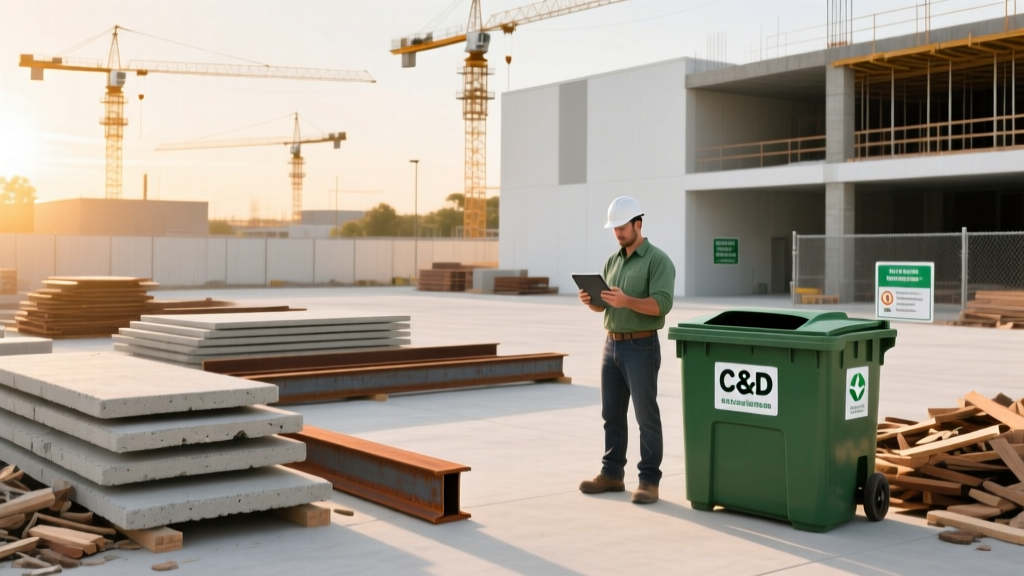
The Hidden Complexities of Construction and Demolition Waste
When contractors and project managers type building material disposal near me into a search engine, the results often present a confusing mix of municipal solid waste (MSW) landfills, specialized recycling centers, and scrap yards. Disposing of construction and demolition (C&D) debris is rarely as simple as dropping off household trash. The EPA estimates that over 600 million tons of C&D debris are generated in the United States annually, and local regulations regarding its disposal are becoming increasingly stringent. Choosing the wrong facility can result in rejected loads, exorbitant mixed-waste tipping fees, or severe environmental compliance fines.
This guide provides a systematic framework for locating, vetting, and utilizing local C&D disposal facilities, ensuring your project remains compliant, cost-effective, and environmentally responsible.
Decoding Local C&D Waste Regulations
Before identifying a facility, you must understand the regulatory landscape governing your specific job site. Municipalities increasingly ban certain C&D materials from standard landfills to extend landfill lifespans and promote circular economy initiatives. According to the EPA's Sustainable Management of Construction and Demolition Materials guidelines, materials like clean wood, concrete, asphalt, and gypsum drywall are heavily targeted for diversion mandates.
Common Local Landfill Bans
- Gypsum (Drywall): Banned in many states (e.g., Massachusetts, Washington) because it decomposes anaerobically in landfills, releasing hydrogen sulfide gas.
- Clean Wood and Pallets: Often banned to encourage biomass fuel conversion and mulching.
- Concrete and Asphalt: Frequently restricted from MSW landfills; must be routed to aggregate recyclers.
- Asbestos-Containing Materials (ACM): Federally regulated under NESHAP; requires specialized, permitted hazardous waste landfills.
Under the Resource Conservation and Recovery Act (RCRA), the generator of the waste (the contractor or property owner) retains "cradle-to-grave" liability. If your hauled materials are illegally fly-tipped or dumped at an unlicensed site, you are subject to federal and state fines that can exceed $70,000 per day, per violation. Always verify a facility's state-issued C&D permit number.
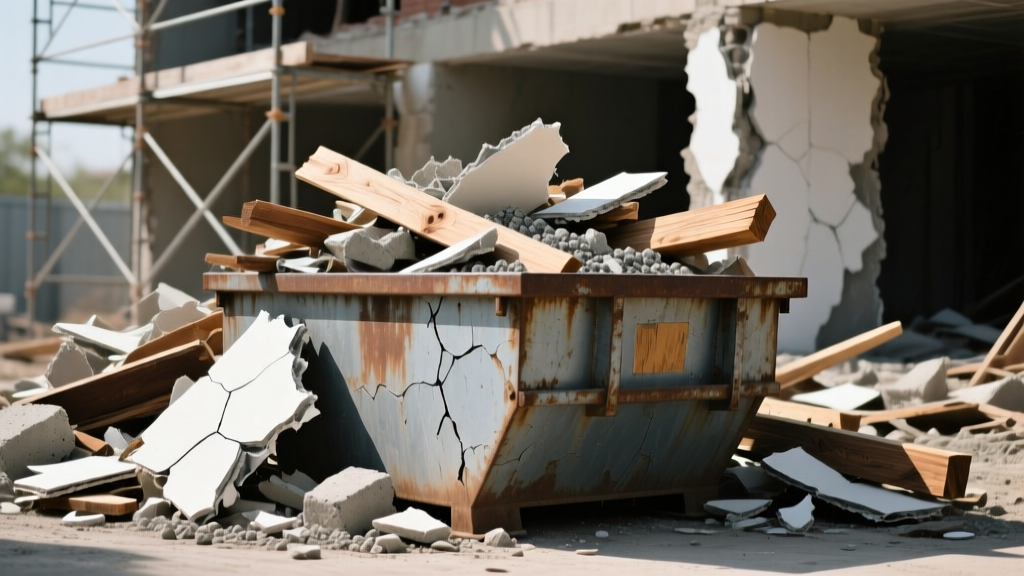
The Search Strategy: Finding the Right Facility
To effectively find building material disposal near me that aligns with your project's waste stream, bypass generic search results and utilize specialized industry directories. Standard map applications rarely differentiate between a municipal dump (which may reject your load) and a C&D materials recovery facility (MRF).
- Utilize the CDRA Directory: The Construction & Demolition Recycling Association maintains a database of certified C&D recyclers. These facilities are equipped with impact crushers, wind sifters, and magnetic separators to handle heavy debris.
- Leverage Earth911 for Niche Materials: If you are dealing with specific architectural salvage, untreated lumber, or leftover insulation, Earth911's recycling directory allows you to search by exact material type and zip code to find specialized drop-off points.
- Contact the Local MSW Department: County solid waste departments publish annual "Waste Characterization and Diversion" reports. These documents list every permitted C&D landfill and transfer station in the jurisdiction, along with their current tipping fee schedules.
Material-Specific Disposal Matrix
Not all disposal sites accept all materials. Routing your waste to the correct specialized facility is the primary method for controlling disposal costs. The matrix below outlines standard industry acceptance criteria and estimated 2026 tipping fees.
| Material Type | Standard MSW Landfill | Specialized C&D Recycler | Est. Tipping Fee (per Ton) |
|---|---|---|---|
| Mixed C&D Debris | Accepted (Subject to bans) | Accepted (Sorted on-site) | $85 - $135 |
| Clean Concrete / Brick | Usually Banned | Required | $25 - $50 (or Free) |
| Gypsum / Drywall | Banned in 15+ States | Required (New cutoffs only) | $40 - $75 |
| Untreated Dimensional Lumber | Restricted / Penalized | Required (Biomass/Mulch) | $35 - $60 |
| Treated Wood / Creosote | Accepted (Special Cells) | Rejected | $110 - $160 |
| Scrap Metals (Steel/Copper) | Banned / Penalized | Scrap Yard Required | Payout (You get paid) |
2026 Cost Analysis: Roll-Off Dumpsters vs. Self-Hauling
Once you have identified the target facility, the next decision is logistics. How you transport the materials drastically impacts your bottom line.
Roll-Off Dumpster Rentals
For mid-to-large scale renovations, renting a 20-yard or 30-yard roll-off dumpster remains the industry standard. In 2026, the national average base rate for a 20-yard C&D dumpster ranges from $450 to $650 for a 7-day rental, which typically includes up to 2 tons (4,000 lbs) of waste. However, C&D debris is exceptionally dense. A 20-yard dumpster filled entirely with concrete or roofing shingles will easily exceed 10 tons, triggering overweight penalties that typically run $75 to $120 per additional ton. Always order a 10-yard or 15-yard dumpster for heavy masonry loads to stay within legal road weight limits.
Self-Hauling via Pickup or Trailer
For smaller projects (e.g., a single bathroom gut or deck demolition), self-hauling to a local C&D transfer station is often more economical. A standard half-ton pickup truck can safely carry roughly 1,000 to 1,500 lbs of debris. At an average mixed C&D tipping fee of $100/ton, a single truckload will cost between $50 and $75 at the scale house. Factor in fuel, labor hours, and vehicle wear-and-tear to determine if self-hauling is genuinely cheaper than a flat-rate junk removal service (which typically charges $350–$600 per truckload).
Site Sorting: The Secret to Slashing Tipping Fees
The most effective way to reduce disposal costs is source separation. When you search for building material disposal near me, look for facilities that offer "clean load" discounts. If you throw clean gypsum, untreated wood, and concrete into a single dumpster, the facility must manually sort it, and they will charge you the premium "mixed C&D" tipping fee.
Pro-Tip for Site Superintendents: Dedicate specific zones on the job site for source-separated materials. Use a 10-yard box for clean wood, a designated pile for concrete (which is often accepted for free by aggregate recyclers), and a separate bin for mixed trash. This single practice can reduce overall disposal costs by 20% to 40% on commercial build-outs.
Handling Hazardous Edge Cases
Older renovations frequently uncover hazardous materials. Lead-painted wood, asbestos mastic, and mercury-containing thermostats cannot enter standard C&D streams. If your project was built before 1978, an EPA-certified lead-safe renovator must test and document the waste stream. Disposing of undocumented hazardous waste at a standard C&D facility will result in immediate load rejection and potential environmental reporting triggers.
Frequently Asked Questions
Can I dispose of roofing shingles at a standard landfill?
Asphalt shingles are heavily regulated due to their petroleum content. Many states ban them from MSW landfills. You must locate a specialized shingle recycler that grinds them for use in hot-mix asphalt paving. Tipping fees for clean shingle loads are often significantly lower than mixed C&D, sometimes as low as $30 per ton.
What is the difference between a C&D landfill and a C&D transfer station?
A C&D landfill is the final resting place for the debris, where it is buried and compacted. A C&D transfer station is a sorting facility where debris is dropped off, separated into recyclable commodities (metals, wood, concrete), and the remaining residual trash is loaded onto massive semi-trailers to be hauled to a distant landfill. Transfer stations usually charge slightly higher tipping fees to cover the sorting labor, but they provide the necessary diversion documentation for LEED-certified projects.
How do I verify a hauler's legitimacy?
Always request the hauler's state-issued waste transport license and a copy of their commercial auto insurance. When the load is dropped at the disposal facility, the scale house generates a "weigh ticket" or "tipping receipt." Require your hauler to provide these original receipts as proof of legal disposal before releasing their final payment.
Written by
Elena RodriguezElena Rodriguez is a civil engineer and technical writer specializing in concrete technology, masonry systems, and ASTM/ACI compliance. She earned her B.S. in Civil Engineering from Texas A&M University and spent a decade at a materials testing laboratory, performing over 2,000 concrete compressive strength tests and masonry prism evaluations. Elena is an ACI-certified Field Testing Technician (Grade I) and a member of ASTM Committee C12 on Natural Building Stone. She currently consults on forensic engineering cases involving concrete failures and moisture intrusion. Based in San Antonio, TX, Elena is a proud member of the Society of Women Engineers (SWE) and coaches her daughter's FIRST Robotics team.
More from Elena Rodriguez
View all
Walls & Panels
Cost Analysis: Light Gauge Steel Framing Advantages and Disadvantages
Evaluate light gauge steel framing advantages and disadvantages through a strict cost analysis lens, comparing material, labor, and lifecycle expenses.
Aug 4, 2026

Walls & Panels
Gypsum Board Types: Exact Specifications, Thickness & Dimensions
Compare standard, Type X, and moisture-resistant gypsum board types. Get exact specifications, thicknesses, dimensions, and ASTM standards for your project.
Aug 4, 2026

Fire Resistance
Best Fire-Resistant Outdoor Decking Materials: 2026 Buyer Guide
Discover the best fire-resistant outdoor decking materials for 2026. Compare Class A PVC, aluminum, and hardwood options for WUI compliance and safety.
Aug 4, 2026