How to Hand Over Building Materials to Skier Logistics Teams
Learn how to hand over building materials to skier logistics teams for remote alpine construction, covering weight limits, modular packaging, and costs.
The Rise of Zero-Impact Alpine Micro-Logistics
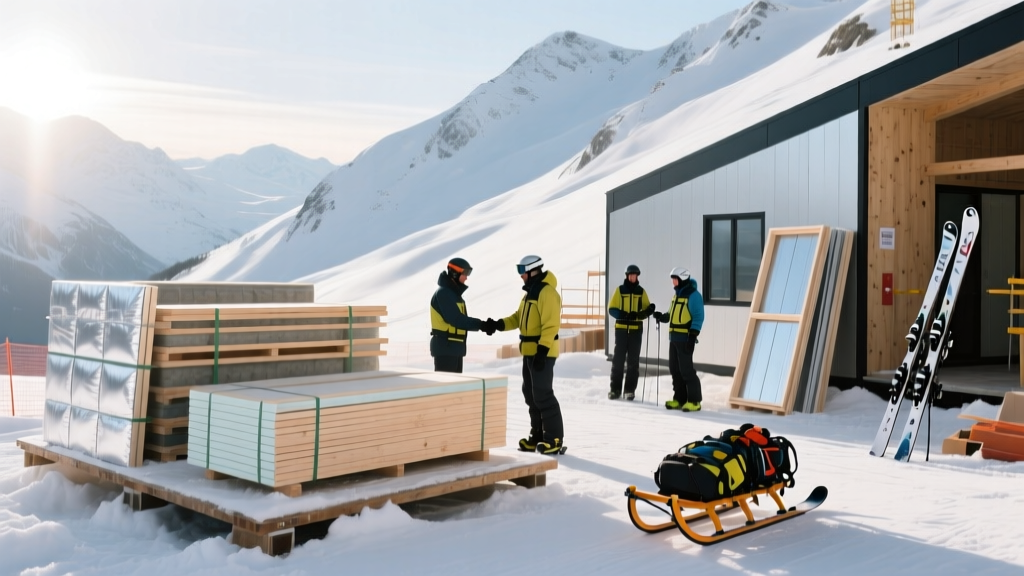
Alpine construction is undergoing a radical operational shift in 2026. With stricter environmental protections enforced over fragile permafrost zones and high-altitude tree lines, heavy mechanized transport is increasingly banned from remote build sites. This regulatory environment has given rise to a specialized niche in the building materials supply chain: last-mile alpine micro-logistics. When snowcats and helicopters are grounded by weather or restricted by zero-emission mandates, project managers must hand over building materials to skier logistics teams. These highly trained ski-mountaineers use specialized wide skis and cargo pulks to ferry modular components to summit build sites without scarring the alpine tundra.
According to the Alpine Convention, protecting high-altitude permafrost from thermal and mechanical disruption is now a primary directive for European and North American alpine infrastructure projects. Consequently, understanding the precise protocol for staging, packaging, and transferring materials to human-powered ski couriers is no longer a fringe skill—it is a core competency for high-altitude general contractors.

Engineering Materials for the Skier Handoff
You cannot hand a ski-mountaineer a standard 80-pound bag of Portland cement or a 4x8 sheet of OSB. Materials destined for skier transport must be fundamentally re-engineered for weight distribution, aerodynamic drag, and moisture resistance. The physical handover at basecamp requires materials to be pre-portioned into strict weight classes.
Weight and Dimension Constraints
- Maximum Pulk Payload: 35kg to 45kg (77-99 lbs) per skier, depending on snow density and gradient.
- Maximum Cassette Dimensions: 1.2m x 0.6m x 0.3m. Anything wider creates fatal drag on side-hill traverses.
- Center of Gravity: Materials must be packed so the densest components sit at the bottom center of the pulk sled to prevent tip-overs on 30-degree inclines.
Optimal Material Selection for Micro-Logistics
To maximize the efficiency of the handover, architects are specifying ultra-lightweight, high-performance materials. Aspen Aerogels' Spaceloft insulation blankets are currently the industry standard for these builds, offering an R-value of 10.3 per inch at a fraction of the weight of rigid foam. Structural framing has shifted from heavy steel to modular Cross-Laminated Timber (CLT) cassettes, pre-cut at the valley factory to exact micro-dimensions, and joined using lightweight titanium structural nodes rather than heavy steel gusset plates.
Step-by-Step: Executing the Basecamp Handover
The physical process to hand over building materials to skier couriers requires a disciplined staging protocol. A disorganized handover leads to unbalanced sleds, delayed departures, and severe safety risks on the ascent.
- Basecamp Weight Auditing: Every modular package is weighed on a digital hanging scale. Packages exceeding 22kg are paired with lighter vapor barriers or fasteners to create a balanced 40kg total sled load.
- Sled Rigging and Lashing: Materials are placed inside heavy-duty TPU-coated dry bags. Skier couriers use 6mm Dyneema core cords to lash the bags to the pulk frame. Unlike nylon, Dyneema does not stretch when wet or freeze into unmanageable knots at -20°C.
- The Physical Transfer: The handover occurs on a leveled, packed-snow staging pad. The basecamp crew lifts the rigged pulk to waist height, allowing the skier to back into the harness and clip the carabiners without bending over, preserving their lower back for the ascent.
- Manifest Verification: The skier and the staging manager scan the RFID tag on the pulk's primary dry-bag, syncing the material's departure with the cloud-based BIM (Building Information Modeling) tracker.
Last-Mile Transport Matrix: Skier vs. Mechanized
Understanding when to utilize skier logistics versus traditional methods is critical for budget forecasting. The following matrix breaks down the 2026 cost and operational realities of alpine last-mile delivery.
| Transport Method | Max Payload | Cost per kg (Last Mile) | Permafrost Impact | Weather Tolerance |
|---|---|---|---|---|
| Heavy-Lift Helicopter | 2,000+ kg | $45 - $65 | Low (Ground) | Poor (Grounds in high winds) |
| Tracked Snowcat | 1,500 kg | $8 - $12 | Severe | Moderate |
| Skier Courier (Pulk) | 45 kg | $18 - $25 | Zero | High (Operates in whiteouts) |
While the per-kilogram cost of skier logistics is higher than snowcats, the elimination of environmental remediation costs and the ability to operate during low-visibility conditions often make human-powered transport the most financially viable option for remote sensor stations and high-altitude rescue huts.
Managing Temperature-Sensitive Components
A critical, often overlooked aspect of the handover process is thermal management. Structural epoxies, PVC roofing membranes, and specialized alpine adhesives lose their chemical efficacy if they freeze during the multi-hour ascent. When handing over these specific materials to skier teams, basecamp crews must utilize active thermal packaging.
Materials are sealed in insulated reflective pouches alongside phase-change material (PCM) heat packs that are engineered to maintain an internal temperature of 15°C (59°F) for up to eight hours in -25°C ambient conditions. The handover protocol dictates that these thermal pouches must be the last items loaded onto the pulk, minimizing their exposure to the ambient basecamp air before the skier begins the climb.
Troubleshooting Handoff and Transit Failures
Even with meticulous planning, the extreme alpine environment introduces unique failure modes. Anticipating these edge cases during the material packaging and handover phase prevents catastrophic delays on the mountain.
- Side-Hill Pulk Tip-Overs: Cause: Top-heavy packaging or uneven lashing. Fix: Mandate that all dense structural titanium nodes are packed in the bottom third of the dry-bag, and use a 3-point bungee stabilization system connecting the pulk to the skier's hip belt to auto-correct sled tilt.
- Zipper Blowouts on Dry-Bags: Cause: Overstuffing TPU bags and relying on standard YKK zippers, which shatter when frozen and placed under tension. Fix: Eliminate zippers entirely on primary load-bearing bags. Use roll-top closures secured with aluminum carabiners and Dyneema cord.
- Moisture Ingress in CLT Panels: Cause: Condensation forming inside the dry-bag due to the skier's body heat radiating backward. Fix: Include 50g silica gel desiccant packets inside the CLT vacuum-sealing layer before the basecamp handover.
'The success of an alpine build isn't determined by the crane at the summit; it is determined by the gram-count and lashing tension at the basecamp handoff. If you hand a skier an unbalanced, poorly sealed pulk, you aren't just risking the material—you are risking their life on a 35-degree ice field.'
— Elias Thorne, Director of Alpine Micro-Logistics, HighAltitude Build Corp.
Mastering the logistics of high-altitude material transport requires a departure from traditional construction supply chain mentalities. By engineering materials for micro-logistics, enforcing strict weight-auditing protocols, and respecting the physical limits of human-powered transport, contractors can successfully execute complex builds in the world's most unforgiving environments while adhering to the strict ecological mandates of 2026.
Written by
Sarah WhitfieldSarah Whitfield is a chartered quantity surveyor (MRICS) and construction cost analyst with 15 years of experience in material pricing, procurement strategy, and project budgeting. She earned her degree in Construction Management from the University of Reading (UK) and has worked on projects ranging from $2M custom homes to $180M mixed-use developments across North America and Europe. Sarah currently leads cost estimating for BuildMat Insight, maintaining a proprietary database of 4,000+ material price points updated quarterly. She is a frequent contributor to RSMeans cost data panels and has presented at the International Cost Engineering Council (ICEC) congress. Based in Denver, CO, Sarah is an avid trail runner and volunteer mentor for Women in Construction.
More from Sarah Whitfield
View all
Wood & Lumber
What Are the Different Types of Wood? A Builder's Guide
Compare structural softwoods, finish hardwoods, and engineered lumber. Analyze Janka ratings, MOE values, and 2026 pricing for construction.
Aug 4, 2026

Walls & Panels
Steel Framing vs Wood Framing: Corrosion and Moisture Defense
Compare steel framing vs wood framing for moisture resistance. Learn about galvanized coatings, condensation risks, and corrosion protection strategies.
Jul 21, 2026

Stone & Masonry
How to Cut Stone Veneer: Wet Saw vs Grinder Comparison
Compare the best tools for cutting stone veneer. We review wet saws, angle grinders, and chop saws to help you achieve clean, chip-free cuts.
Jul 21, 2026