2nd Hand Building Materials vs New: A 2026 Cost & Quality Review
Compare 2nd hand building materials against new inventory. Discover 2026 pricing, structural grades, and sourcing tips for reclaimed wood, brick, and steel.

The Core Comparison Matrix: Reclaimed vs. Virgin Materials
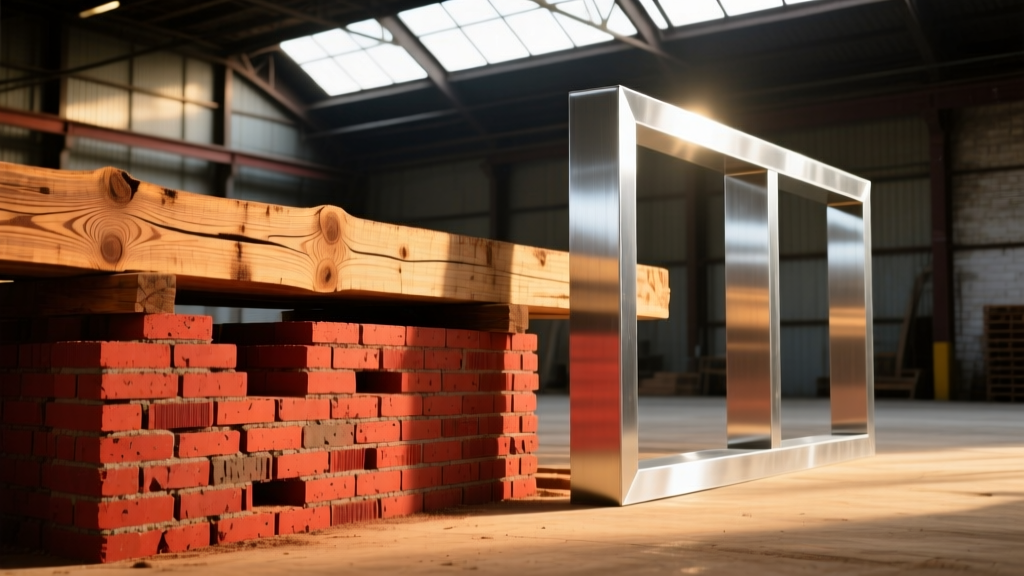
Procuring 2nd hand building materials is no longer just an environmental statement; it is a complex financial and structural calculation. As supply chain fluctuations continue to impact virgin material pricing in 2026, salvaged and surplus inventory offers distinct advantages—and specific liabilities. Before committing to a demolition salvage yard or a surplus liquidator, contractors and architects must evaluate materials across four critical vectors: baseline cost, processing overhead, embodied carbon reduction, and structural predictability.
According to the Environmental Protection Agency (EPA), the construction and demolition sector generates over 600 million tons of debris annually in the US alone. Diverting high-value materials from this stream requires precise grading and processing. The matrix below establishes a baseline comparison for the three most commonly salvaged structural and envelope materials.
| Material Category | New Unit Cost (2026 Avg) | 2nd Hand Unit Cost (Raw) | Processing & Prep Overhead | Embodied Carbon Reduction |
|---|---|---|---|---|
| Dimensional Lumber / Beams | $3.50 - $5.00 / bf | $1.50 - $3.00 / bf | High (De-nailing, kiln-drying) | 85% - 95% |
| Clay Face Brick | $550 - $700 / 1,000 | $300 - $450 / 1,000 | Medium (Mortar removal, washing) | 70% - 80% |
| Structural Steel (W-Shapes) | $1,100 - $1,300 / ton | $500 - $750 / ton | High (NDT testing, re-drilling) | 65% - 75% |
Material Deep-Dives: Structural Integrity and Application
Reclaimed Timber vs. New Growth Lumber
The primary advantage of 2nd hand timber is density. Old-growth species like Longleaf Heart Pine or Douglas Fir possess tight growth rings (often 15-20 per inch), yielding Janka hardness ratings up to 40% higher than modern plantation-grown Southern Yellow Pine. However, raw salvage timber is a liability until properly processed.
Financially, while raw 2nd hand timber can be sourced for $1.50 per board foot (bf), the milling, metal detection, and kiln-drying process pushes the final delivered cost to $8.00–$14.00/bf for premium grades. This makes reclaimed wood economically unviable for standard framing, but highly competitive for exposed architectural beams, heavy timber flooring, and feature cladding where new old-growth equivalents are either unavailable or prohibitively expensive.
Salvaged Brick and Masonry vs. New Clay Units
Salvaged brick offers unmatched aesthetic variation and historical color profiles that modern extruded bricks cannot replicate. However, structural reuse requires strict adherence to Building Materials Reuse Association (BMRA) guidelines regarding freeze-thaw durability. Bricks manufactured prior to 1940 were often fired at lower temperatures, resulting in high porosity. If these bricks were originally used on interior wythes and are repurposed for exterior veneers, they will rapidly spall in freeze-thaw climates.
When budgeting for 2nd hand brick, factor in the cleaning cost. Hand-cleaning mortar from pallets of salvaged brick costs between $250 and $400 per 1,000 units in 2026. Only specify salvaged brick for projects where the aesthetic premium justifies a final installed cost that is roughly 20% higher than new modular clay brick.
Surplus Structural Steel vs. New W-Shapes
The reuse of structural steel is heavily governed by the American Institute of Steel Construction (AISC). While AISC sustainability initiatives heavily promote steel reuse to lower embodied carbon, the engineering verification required for 2nd hand W-shapes creates a significant bottleneck. New A992 steel comes with certified mill test reports guaranteeing yield strength (50 ksi minimum) and chemical composition.
Surplus or salvaged steel lacks this chain of custody. To reuse a salvaged W12x26 beam, the structural engineer of record must mandate Non-Destructive Testing (NDT). This typically involves ultrasonic thickness testing to verify the web and flange dimensions haven't been compromised by corrosion, and Charpy V-Notch testing on coupon samples to ensure the steel isn't susceptible to brittle fracture. This testing adds approximately $120 to $180 per ton to the material cost. Consequently, 2nd hand steel is best utilized in non-critical load paths, mezzanines, or architectural canopies where the engineering sign-off is less rigorous than primary seismic-force-resisting systems.
Calculating the True Landed Cost of Salvage
The sticker price of 2nd hand building materials is deceptive. A comprehensive procurement model must account for the 'salvage tax'—the hidden labor and logistics required to make the material building-code compliant. Use this framework to calculate your true landed cost:
- Base Acquisition: The raw purchase price at the salvage yard or demolition site.
- Deconstruction vs. Demolition Premium: If you are sourcing directly from a tear-down, paying a crew to carefully deconstruct (hand-prying rather than excavator-crushing) adds 15-25% to the demolition labor budget, though it preserves the material yield.
- Remediation & Processing: Metal detection and de-nailing for wood; acid washing for brick; abrasive blasting for steel.
- Waste Factor Adjustment: New lumber carries a standard 10% waste factor. Reclaimed timber, due to checking, splitting, and hidden rot, requires a 20%-25% waste factor. Adjust your total volume orders accordingly.
- Logistics & Staging: Salvage yards rarely offer just-in-time delivery. You must budget for secure, dry on-site staging to prevent moisture re-absorption or theft.
Verification Protocol for 2nd Hand Procurement
To mitigate risk when specifying reclaimed or surplus materials, implement the following verification protocol during the bidding and procurement phases:
- Demand Chain of Custody: Require suppliers to provide the origin address of the salvage. This is critical for lead-paint abatement; materials sourced from pre-1978 residential or agricultural structures must undergo XRF (X-ray fluorescence) testing for lead-based paint before milling.
- Verify Grading Stamps: For structural timber, ensure the salvage yard employs a certified lumber grader. Reclaimed beams must be stamped with a recognized grading agency mark (e.g., WWPA or SPIB) to satisfy local building inspectors.
- Mock-Up Requirements: For salvaged brick and architectural metals, mandate a physical mock-up. Batch variations in 2nd hand materials are extreme; a mock-up ensures the blend of colors and patinas meets the architectural intent before the full order is shipped.
- Check Fastener Compatibility: Older materials often have different chemical profiles. Reclaimed oak, for instance, has high tannin content that will cause severe black staining if fastened with standard zinc-plated screws. Specify hot-dipped galvanized or stainless steel fasteners for all high-tannin salvaged wood.
Successfully integrating 2nd hand building materials requires shifting from a commodity-purchasing mindset to a curation-and-processing mindset. By accurately forecasting the processing overhead and strictly enforcing grading protocols, project teams can leverage salvaged inventory to achieve superior architectural character and measurable carbon reductions without compromising structural integrity.
Written by
Elena RodriguezElena Rodriguez is a civil engineer and technical writer specializing in concrete technology, masonry systems, and ASTM/ACI compliance. She earned her B.S. in Civil Engineering from Texas A&M University and spent a decade at a materials testing laboratory, performing over 2,000 concrete compressive strength tests and masonry prism evaluations. Elena is an ACI-certified Field Testing Technician (Grade I) and a member of ASTM Committee C12 on Natural Building Stone. She currently consults on forensic engineering cases involving concrete failures and moisture intrusion. Based in San Antonio, TX, Elena is a proud member of the Society of Women Engineers (SWE) and coaches her daughter's FIRST Robotics team.
More from Elena Rodriguez
View all
Walls & Panels
Cost Analysis: Light Gauge Steel Framing Advantages and Disadvantages
Evaluate light gauge steel framing advantages and disadvantages through a strict cost analysis lens, comparing material, labor, and lifecycle expenses.
Aug 4, 2026

Walls & Panels
Gypsum Board Types: Exact Specifications, Thickness & Dimensions
Compare standard, Type X, and moisture-resistant gypsum board types. Get exact specifications, thicknesses, dimensions, and ASTM standards for your project.
Aug 4, 2026

Fire Resistance
Best Fire-Resistant Outdoor Decking Materials: 2026 Buyer Guide
Discover the best fire-resistant outdoor decking materials for 2026. Compare Class A PVC, aluminum, and hardwood options for WUI compliance and safety.
Aug 4, 2026