How to Build a Bamboo Hut: A 2026 Sustainability Analysis
Discover the true environmental impact when you build a bamboo hut. Our 2026 sustainability analysis compares carbon sequestration, treatment, and lifecycle costs.

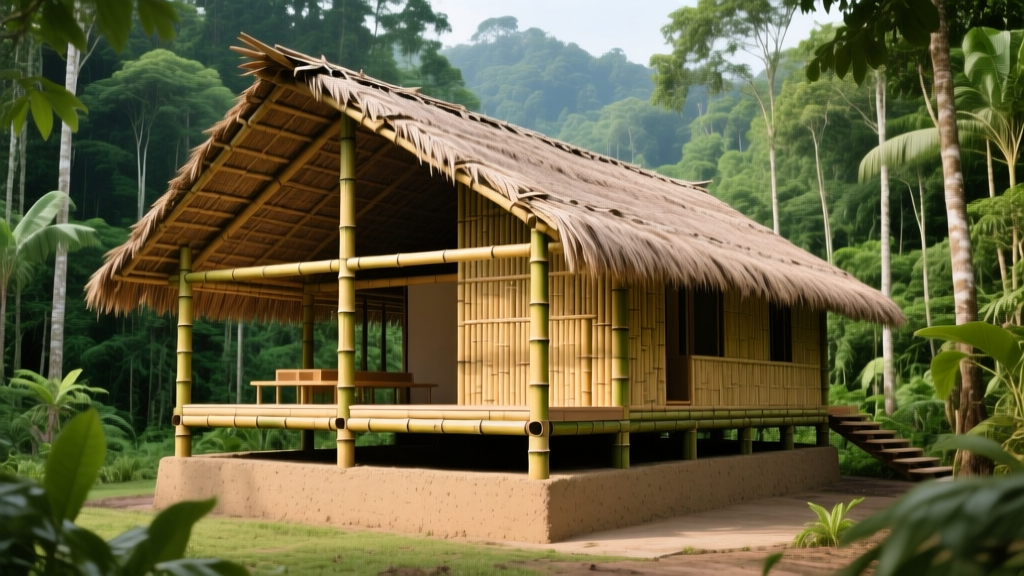
Building with bamboo has evolved from a traditional vernacular practice into a highly engineered, data-driven approach to sustainable architecture. When you set out to build a bamboo hut, you are not just constructing a shelter; you are participating in a complex carbon cycle. In 2026, lifecycle assessment (LCA) data allows us to quantify exactly how much carbon a bamboo structure sequesters versus how much is emitted during harvest, treatment, and transport. This analysis breaks down the ecological reality of bamboo construction, moving past greenwashing to provide actionable, metric-driven insights for builders and eco-conscious developers.
The Carbon Math: Sequestration vs. Embodied Energy
Bamboo is frequently marketed as a "carbon-negative" material. While the plant itself is a massive carbon sink, the process to build a bamboo hut introduces embodied energy that must be accounted for. According to lifecycle assessments published by the International Bamboo and Rattan Organization (INBAR), a mature bamboo culm can sequester up to 12 tons of CO2 per hectare annually. However, the treatment and joining processes alter this equation.
Net Carbon Balance of a Standard 400 sq ft Hut
| Project Phase | CO2 Sequestered (kg) | CO2 Emitted (kg) | Net Impact |
|---|---|---|---|
| Material Growth (3-5 years) | + 2,400 | - 50 | + 2,350 |
| Harvesting & Transport (50km) | 0 | - 180 | - 180 |
| Borax/Boric Acid Treatment | 0 | - 45 | - 45 |
| Steel Joinery & Concrete Footings | 0 | - 620 | - 620 |
| Total (Per Structure) | + 2,400 | - 895 | + 1,505 (Net Negative) |
Expert Insight: The largest carbon penalty when you build a bamboo hut comes from the foundation and joinery. Replacing steel brackets with traditional lashed joints (using treated rattan or hemp) and swapping concrete pier footings for compacted rammed-earth or urbanite (recycled concrete rubble) can reduce the emitted carbon by up to 40%, pushing the structure deeper into carbon-negative territory.
Species Selection: The Ecological Hierarchy
Not all bamboo is created equal. The sustainability of your project hinges on selecting a species that matches your local climate, structural load requirements, and harvest cycle. In 2026, the global market is dominated by three primary structural species, each with distinct ecological footprints.
- Guadua angustifolia (South America): The gold standard for structural integrity. It boasts a tensile strength that rivals mild steel (up to 400 MPa). Ecologically, it requires high rainfall and thrives in tropical/subtropical zones. Its thick walls make it highly resistant to splitting, reducing waste during construction.
- Dendrocalamus asper (Southeast Asia): Known as "Giant Bamboo," it features massive culms ideal for primary load-bearing columns. It has a slightly lower tensile strength than Guadua but offers superior compressive strength. It requires careful management to prevent over-harvesting, which can destabilize local soil.
- Phyllostachys edulis / Moso (China): While heavily used for engineered bamboo flooring and laminated beams, raw Moso is less ideal for traditional round-pole hut construction due to its tendency to taper significantly and its thinner walls relative to its diameter. It is best utilized in processed, engineered formats rather than raw structural poles.
Non-Toxic Preservation: Extending Lifecycle Without Ecological Harm
Raw, untreated bamboo contains high levels of starch, making it highly susceptible to powder-post beetles (Dinoderus minutus) and fungal decay. An untreated bamboo hut may fail structurally within 2 to 3 years. The traditional response was to use highly toxic chemical preservatives like CCA (Chromated Copper Arsenate), which leaches heavy metals into the surrounding soil, entirely negating the environmental benefits of the material.
The Boron Solution
Modern sustainable construction relies on a borax and boric acid solution (typically mixed in a 1:1.5 ratio with water). This treatment is lethal to borers and fungi but remains safe for mammals and the surrounding soil ecosystem.
"The key to effective boron treatment is the Boucherie method or vertical soak. Simply brushing the solution onto the exterior of the culm is ineffective, as the treatment must penetrate the inner vascular bundles. For a 10-meter culm, a vertical soak tank requires a minimum 7-day submersion to achieve the recommended 1.5% retention rate in the dry wood."
— Journal of Tropical Forest Science, Wood Preservation Metrics
Harvesting Protocols: The 5-Year Rule
Sustainability is not just about the material; it is about the management of the resource. Bamboo is a grass, and its culms reach maximum structural maturity between 3 to 5 years. Harvesting too early results in high moisture content, leading to severe shrinkage and splitting as the poles dry. Harvesting too late (7+ years) results in a loss of tensile flexibility and increased brittleness.
Seasonal Timing for Minimum Starch Content
To minimize the risk of insect infestation before treatment even begins, bamboo should be harvested during the dry season, specifically in the late autumn or early winter months (depending on the hemisphere). During this dormant period, the plant's metabolic activity slows, and the starch content within the culm drops significantly. Studies referenced by the Food and Agriculture Organization (FAO) indicate that bamboo harvested during the dormant dry season has up to 60% less starch than bamboo cut during the spring growth flush, drastically reducing its attractiveness to pests.
Foundation Systems: Keeping Bamboo Dry
The single greatest threat to a bamboo hut is ground moisture. Bamboo wicks water through its capillary vessels. If a culm is in direct contact with soil, it will rot at the base within a single wet season, compromising the entire structure. Sustainable design requires elevating the bamboo above the splash zone and soil contact.
Eco-Friendly Footing Options
- Urbanite Piers: Utilizing broken or recycled concrete chunks (urbanite) stacked and bound with a thin layer of lime mortar. This repurposes existing waste material, avoiding the massive carbon emissions associated with pouring new concrete.
- Driven Steel Pipe Piles: While steel has a high embodied carbon cost, driving small-diameter steel pipes into the ground and capping them with a saddle joint allows the bamboo to be easily replaced in 50 years without destroying the foundation. This modularity extends the overall lifecycle of the site infrastructure.
- Rammed Earth Plinths: For larger huts, a continuous rammed earth stem wall, stabilized with 5% Portland cement or lime, provides a beautiful, low-carbon barrier that elevates the bamboo framing at least 18 inches above grade.
Joinery: Designing for Disassembly
A truly sustainable structure considers its end-of-life. When you build a bamboo hut using modern bolted gusset plates, you create a composite material that is difficult to recycle or compost. Traditional lashed joinery, utilizing rattan or synthetic hemp, allows the structure to be disassembled. When the bamboo eventually reaches the end of its usable life, the lashings are removed, and the culms can be chipped for mulch or burned for biomass energy, returning nutrients to the soil or offsetting fossil fuel use.
Conclusion: The Verdict on Bamboo Huts
To build a bamboo hut in 2026 is to engage with one of the most ecologically responsive materials on the planet. However, the sustainability of the project is not guaranteed simply by choosing bamboo over timber or steel. It requires rigorous adherence to proper species selection, precise harvesting windows, non-toxic boron preservation, and intelligent foundation design that prevents moisture ingress. By focusing on these technical details, builders can create structures that are not only carbon-negative but also resilient, beautiful, and deeply integrated with their local ecosystems.
Written by
Elena RodriguezElena Rodriguez is a civil engineer and technical writer specializing in concrete technology, masonry systems, and ASTM/ACI compliance. She earned her B.S. in Civil Engineering from Texas A&M University and spent a decade at a materials testing laboratory, performing over 2,000 concrete compressive strength tests and masonry prism evaluations. Elena is an ACI-certified Field Testing Technician (Grade I) and a member of ASTM Committee C12 on Natural Building Stone. She currently consults on forensic engineering cases involving concrete failures and moisture intrusion. Based in San Antonio, TX, Elena is a proud member of the Society of Women Engineers (SWE) and coaches her daughter's FIRST Robotics team.
More from Elena Rodriguez
View all
Walls & Panels
Cost Analysis: Light Gauge Steel Framing Advantages and Disadvantages
Evaluate light gauge steel framing advantages and disadvantages through a strict cost analysis lens, comparing material, labor, and lifecycle expenses.
Aug 4, 2026

Walls & Panels
Gypsum Board Types: Exact Specifications, Thickness & Dimensions
Compare standard, Type X, and moisture-resistant gypsum board types. Get exact specifications, thicknesses, dimensions, and ASTM standards for your project.
Aug 4, 2026

Fire Resistance
Best Fire-Resistant Outdoor Decking Materials: 2026 Buyer Guide
Discover the best fire-resistant outdoor decking materials for 2026. Compare Class A PVC, aluminum, and hardwood options for WUI compliance and safety.
Aug 4, 2026