Structural Textile Engineering: What is the Best Material for Bras?
Analyze the structural engineering, polymer chemistry, and tensile specifications to determine the best material for bras and support garments.

The Biomechanics of Kinetic Load Management
Determining the best material for bras requires moving beyond basic textile aesthetics and approaching the garment as a dynamic structural system. A high-performance support garment must manage kinetic loads ranging from 1G during static posture to over 5G during high-impact locomotion. The engineering challenge lies in balancing high tensile modulus (to restrict excessive tissue displacement) with adequate moisture vapor transmission rate (MVTR) and elastic hysteresis (to prevent fatigue failure over repeated stretch cycles). In 2026, advancements in bio-based elastomers and 3D-warp knitting have redefined the material specifications required for optimal load-bearing intimate apparel.
Elastomeric Polymers: The Foundation of Load-Bearing Support
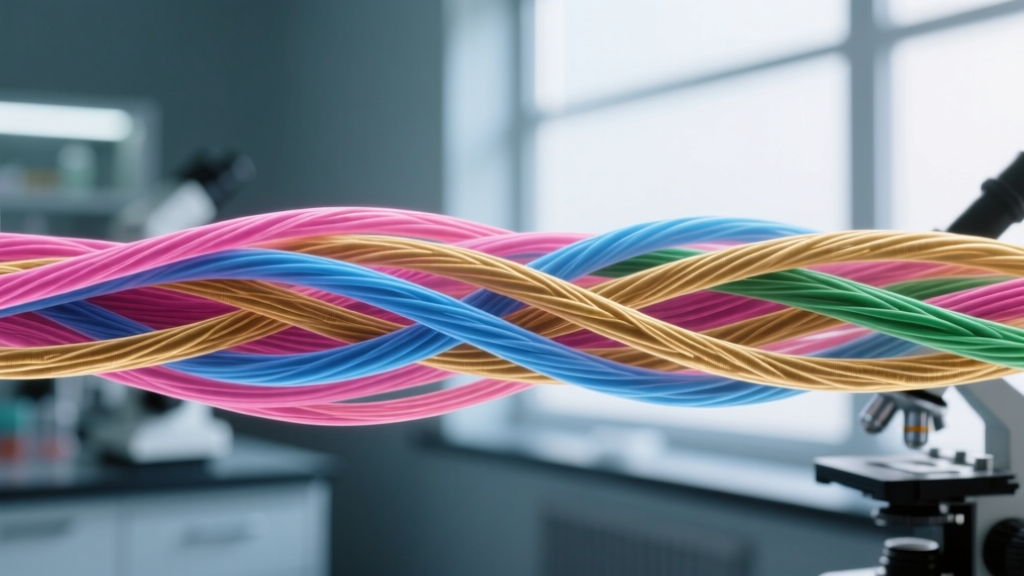
The primary structural component responsible for dynamic compression and recovery is the elastomeric fiber. While often referred to generically as 'spandex,' the technical specification is a segmented polyurethane-polyurea copolymer. The ratio of the 'hard' polyurea segments to the 'soft' polyether or polyester segments dictates the fiber's modulus of elasticity and thermal stability.
| Material | Elongation at Break | Elastic Recovery (at 300% strain) | Thermal Degradation Point | Primary Application |
|---|---|---|---|---|
| Standard Elastane (Polyurethane-Polyurea) | 500% - 700% | 95% - 98% | 175°C - 200°C | High-compression chassis, underbands |
| Thermoplastic Polyurethane (TPU) Film | 300% - 500% | 90% - 94% | 120°C - 150°C | Seamless bonding, structural boning |
| Bio-Based Elastane (PTT/PEG blends) | 400% - 600% | 88% - 92% | 160°C - 180°C | Sustainable everyday support, light compression |
| Natural Rubber Latex | 600% - 800% | 85% - 90% | 80°C - 100°C | Obsolete (high allergen risk, poor UV/ozone resistance) |
For maximum structural integrity, engineers specify elastane with a minimum denier of 40D to 70D for the underband, ensuring the garment maintains its compressive force without suffering from 'growth' (permanent deformation) after 500+ wash cycles. According to polymer databases maintained by UL Prospector, high-modulus TPU films are increasingly replacing traditional sewn boning in 2026, providing directional rigidity without the risk of metal or plastic strut failure.
Chassis and Shell Materials: Tensile Strength vs. MVTR
The chassis material must act as a tensile membrane, distributing point loads across a broader surface area to prevent tissue strangulation and skin shear. The two dominant synthetic polymers used here are Nylon 6,6 (polyamide) and Polyester PET (polyethylene terephthalate).
Nylon 6,6 vs. Polyester PET
Nylon 6,6 remains the superior choice for the primary chassis due to its lower bending stiffness and higher moisture regain (approx. 4.5% compared to PET's 0.4%). This higher moisture regain translates to a softer hand-feel and better static dissipation. However, PET offers superior UV resistance and lower cost. In high-performance applications, a warp-knit Nylon 6,6 tricot is specified for its multi-directional stretch capabilities and resistance to runs, a critical failure mode in circular knits.
When sourcing chassis fabrics, do not rely on generic 'microfiber' labels. Specify the exact denier and filament count. A 40D/34F (40 denier, 34 filaments) yarn provides a balance of durability and drape, while a 20D/24F yarn maximizes MVTR but sacrifices burst strength. For high-impact load management, a minimum burst strength of 350 kPa (tested per ASTM D3786) is required.
Impact Attenuation and Spacer Fabrics
In the cups and impact zones, solid foams are being rapidly replaced by 3D-warp spacer fabrics. Spacer fabrics consist of two outer knitted layers connected by a monofilament polyester pile, creating an engineered void space. This structure provides exceptional impact attenuation, breathability, and compressibility without the hysteresis heat buildup associated with closed-cell polyurethane (PU) foams.
- Standard PU Foam: Density 25-30 kg/m³. High thermal retention, prone to oxidative yellowing and compression set over 12 months.
- 3D Spacer Fabric (PET Monofilament): Density 150-250 g/m². MVTR >15,000 g/m²/24h. Zero compression set, highly resistant to moisture degradation.
- Non-Woven Meltblown PP: Used as an ultra-lightweight interlining for localized stiffness without adding mass.
Research from the NC State University Wilson College of Textiles highlights that optimizing the monofilament diameter in spacer fabrics (typically between 0.15mm and 0.30mm) allows engineers to tune the compressive stiffness of the cup, providing customized impact attenuation based on the kinetic load profile of the end-user.
Hardware Anchoring and Shear Stress
The mechanical failure of a support garment most frequently occurs at the hardware anchoring points—specifically the strap adjusters, hook-and-eye closures, and underwire casings. These components must withstand repetitive shear stress and cyclic loading.
Modern specifications dictate the use of Polyoxymethylene (POM) for plastic rings and sliders due to its high tensile strength (approx. 70 MPa), low coefficient of friction, and excellent fatigue endurance. For metal components, zinc alloys (Zamak) with a high-grade electroplated anti-corrosion coating are standard, though aerospace-grade anodized aluminum is increasingly specified in ultra-lightweight, high-end performance garments to reduce overall mass while maintaining a yield strength exceeding 250 MPa.
Environmental Degradation and Fatigue Life
Material selection must account for the harsh microenvironment the garment operates within. Exposure to sebum (human skin oils), lactic acid, chlorinated water, and UV radiation accelerates polymer chain scission, particularly in elastomeric fibers.
Standard polyurethane-based elastane is highly susceptible to degradation from unsaturated fatty acids found in human sebum and from chlorine. For swimwear or high-sweat applications, specify chlorine-resistant elastane (often modified with specialized end-capping agents or blended with PBT - Polybutylene Terephthalate) to prevent the 'bagging out' failure mode within the first 50 wear cycles.
Testing protocols such as ASTM D4970 (Martindale Abrasion) are critical for validating the chassis material's resistance to friction against outerwear, while cyclic stretch testing in synthetic sebum baths is required to validate the elastomer's projected lifespan.
Frequently Asked Questions (Technical Specifications)
What is the optimal elastane percentage for high-impact support?
For high-impact kinetic load management, the chassis fabric should contain between 25% and 35% elastane by weight, integrated via a warp-knit structure. The underband, which provides 70-80% of the foundational support, should feature a higher concentration (up to 40%) and utilize a heavier denier (70D+) elastomer to minimize elastic creep during repetitive motion.
How do bio-based elastomers compare to traditional spandex in 2026?
Modern bio-based elastomers (derived from renewable feedstocks like castor oil or corn glucose) have achieved near-parity with petroleum-based elastane in terms of elongation at break. However, they currently exhibit a slightly lower elastic recovery rate (88-92% vs 95-98%) and are more susceptible to thermal degradation during high-heat molding processes. They are best specified for low-to-medium impact applications where sustainability metrics are prioritized over maximum cyclic fatigue life.
Why is warp-knitting preferred over circular-knitting for structural chassis?
Warp-knitting creates interlocking loops in the longitudinal (warp) direction, resulting in a fabric with high dimensional stability, lower stretch-to-recovery hysteresis, and absolute resistance to runs (laddering). Circular knits, while cheaper and softer, rely on weft insertion and are prone to catastrophic unraveling if a single yarn is severed, making them unsuitable for high-stress load-bearing zones.
Written by
Marcus ChenMarcus Chen is a licensed structural engineer (PE) and building materials analyst with over 12 years of experience across residential, commercial, and industrial construction. He holds a Master of Science in Civil Engineering from UC Berkeley and spent six years at Thornton Tomasetti before transitioning to independent consulting and technical writing. Marcus specializes in material selection for seismic-prone regions, concrete reinforcement strategies, and lifecycle cost analysis. His work has been cited by the American Concrete Institute (ACI) and the Structural Engineers Association of California (SEAOC). When he is not on a job site or at his desk, you will find him hiking the Sierra Nevada or restoring a 1920s craftsman bungalow in Oakland, CA.
More from Marcus Chen
View all
Construction Cost
How Much Did the Eiffel Tower Cost to Build?
How much did the Eiffel Tower cost to build in 1889? We adjust for inflation and compare its budget to modern skyscraper construction.
Aug 4, 2026

Fire Resistance
What Is a Fire Resistant Material? Testing & Certification Guide
Discover what is a fire resistant material through ASTM and UL testing. Learn how fire ratings, certifications, and assemblies work in construction.
Aug 4, 2026

Construction Cost
How Much Did the Burj Khalifa Cost to Build?
How much did the Burj Khalifa cost to build? We break down the $1.5B project and extract 5 money-saving strategies for your next build.
Jul 30, 2026