Best Material for Screen Protector Applications in Smart Glazing
Discover the best material for screen protector applications in commercial construction, protecting smart glass, architectural glazing, and lobby kiosks.

The Evolution of Architectural Glass Protection
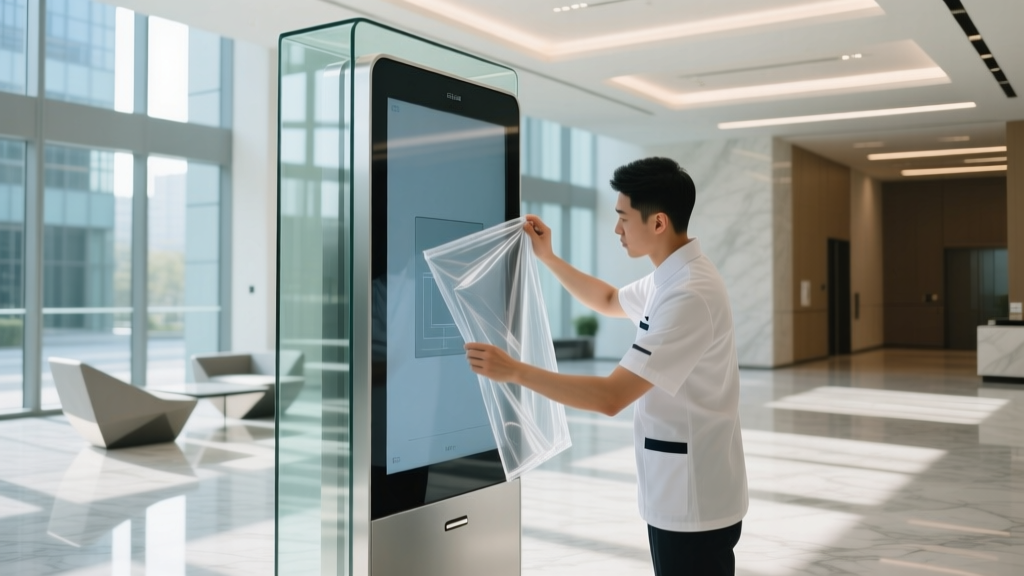
Commercial construction in 2026 heavily integrates interactive building directories, smart glass partitions, automated climate control kiosks, and exterior architectural glazing. These high-value building assets require robust protection against vandalism, environmental degradation, impact, and daily wear. When facility managers, architects, and glazing contractors search for the best material for screen protector applications in a commercial context, they are not looking for consumer electronics accessories. Instead, they require architectural-grade protective films, laminates, and security coatings engineered to meet stringent building codes and optical clarity standards.
Selecting the correct protective barrier for architectural screens and smart glazing involves balancing optical transparency, tensile strength, adhesive longevity, and compliance with safety standards like ASTM F1233 and GSA blast-mitigation guidelines. A failure in material selection can result in delamination, optical distortion (haze), or catastrophic failure during a forced-entry or weather event.
Evaluating the Best Material for Screen Protector Applications
The architectural glazing industry relies on three primary polymer families for protective films. Each serves a distinct functional purpose depending on the building's threat model and environmental exposure.
Polyethylene Terephthalate (PET) for Surface Defense
PET is the industry standard for anti-graffiti and basic scratch-resistant applications. In commercial lobbies and retail storefronts, interactive touchscreens and glass partitions are highly susceptible to micro-scratches and chemical etching from vandalism. Modern architectural PET films feature a hard-coat layer that achieves a 3H to 4H pencil hardness rating. For interior smart glass and building automation kiosks, a 4-mil to 7-mil PET film provides optimal optical clarity (typically >89% visible light transmission) while sacrificing the sacrificial layer instead of the underlying expensive smart glass substrate.
Thermoplastic Polyurethane (TPU) for Impact and Curved Glass
While PET is rigid, TPU is an elastomeric polymer that offers superior impact absorption and conformability. TPU is the best material for screen protector applications on curved architectural glass, elevator touchscreens, and exterior wayfinding kiosks that experience wide thermal fluctuations. TPU's molecular structure allows for "self-healing" top coats, where minor abrasions disappear under ambient heat or UV exposure. Furthermore, TPU maintains its flexibility down to -20°F, preventing the brittle cracking often seen in PET films during harsh winter conditions on exterior-facing building directories.
Polycarbonate and Laminated Interlayers for Forced-Entry
When the requirement shifts from scratch protection to life-safety and blast mitigation, heavy-duty polycarbonate laminates and multi-layer PET security films (ranging from 8-mil to 14-mil+) are deployed. These materials act as a heavy-duty glass screen protector, holding shattered glazing intact within the frame during extreme weather, seismic events, or forced-entry attempts. They are frequently specified in government buildings, healthcare facilities, and ground-floor commercial spaces.
When specifying protective films for exterior-facing architectural screens or smart glass, standard pressure-sensitive adhesives (PSA) will yellow and degrade under UV exposure within 24 to 36 months. For exterior applications, you must specify UV-stable, weatherable acrylic adhesives or UV-cured resin interlayers to ensure a 10+ year lifespan without optical distortion.
Comparative Material Matrix for Commercial Glazing
The following matrix breaks down the technical specifications and cost parameters for the primary protective materials used in commercial construction as of 2026.
| Material Type | Thickness Range | Primary Function | Tensile Strength | Est. Installed Cost (per sq. ft.) |
|---|---|---|---|---|
| Standard PET (Anti-Graffiti) | 4 - 7 mil | Scratch/Chemical Defense | ~25,000 PSI | $2.50 - $4.50 |
| TPU (Elastomeric) | 6 - 8 mil | Impact/Curved Conformity | ~8,000 PSI | $5.00 - $8.50 |
| Security PET (Multi-Layer) | 8 - 14 mil | Forced-Entry/Shatter Retention | ~32,000 PSI | $9.00 - $16.00 |
| Polycarbonate Laminate | 1/16" - 1/4" | Blast Mitigation/Ballistic | ~9,500 PSI | $25.00 - $45.00+ |
Edge-Anchoring and Structural Silicone Integration
A critical, often overlooked aspect of applying heavy-duty protective materials to architectural glass is edge-anchoring. If a 14-mil security film is applied to a storefront window or a large lobby kiosk without anchoring the edges to the frame, the glass will simply pop out of the mullion upon heavy impact, rendering the "screen protector" useless for life-safety purposes.
- Wet-Glaze Method: Involves removing the existing glass gaskets and replacing them with structural silicone (e.g., Dow Corning 995 or GE SSG4000) that bonds the protective film's edge directly to the aluminum frame.
- Mechanical Anchoring: Utilizes aluminum batten strips screwed into the frame, trapping the film edge. This is preferred for retrofitting existing building automation screens where wet-glazing is impractical.
- Adhesive Transfer: Ensuring the film's aggressive acrylic adhesive fully cures (which can take 21 to 30 days depending on humidity and temperature) before subjecting the architectural screen to mechanical stress.
Compliance with GSA and ASTM Security Standards
For commercial and institutional projects, the chosen protective material must meet rigorous testing standards. The General Services Administration (GSA) Facility Protection Guidelines dictate specific performance criteria for window films and glass protectors used in federal and high-risk commercial buildings to mitigate blast threats. Furthermore, materials must be tested to International Window Film Association (IWFA) standards and ASTM F1233 (Standard Practice for Security Glazing Materials and Systems) to ensure they resist manual attacks using tools like hammers, crowbars, and glass breakers.
"Optical clarity is the primary failure point in thick security films. When specifying a 14-mil protective laminate for a smart building directory, contractors must demand materials with a haze rating of less than 1.5% to ensure the underlying LCD or OLED touch sensors remain fully calibrated and visible to end-users."
Specialized Coatings: Privacy and Solar Rejection
Beyond physical protection, architectural screen protectors frequently serve dual purposes. In modern office construction, smart glass partitions often require protective films that integrate privacy switching or solar rejection. Sputtered metal and ceramic nano-layer coatings can be embedded within the PET or TPU layers. These advanced 3M Safety & Security Window Films block up to 99.9% of UV rays, protecting the interior furnishings and the delicate liquid crystal layers of smart privacy glass from solar degradation, while simultaneously providing the physical scratch resistance required in high-traffic corridors.
Decision Framework for Facility Managers
To finalize your material specification, apply this decision framework based on the installation environment:
- Interior, Low-Traffic Touchscreens: Specify 4-mil PET with a hard-coat. Focus on optical clarity and oleophobic (anti-fingerprint) top layers.
- Exterior, Curved, or High-Vibration Kiosks: Specify 6-mil TPU with UV-stable acrylic adhesive to prevent thermal cracking and edge-lift.
- Ground-Floor, High-Risk Glazing: Specify 8-mil to 14-mil multi-layer PET, coupled with a structural silicone wet-glaze edge-anchoring system to meet forced-entry code requirements.
By aligning the polymer chemistry with the specific environmental and security demands of the building, architects and contractors can ensure that architectural glass and smart displays remain functional, safe, and visually pristine throughout the lifecycle of the structure.
Written by
David NakamuraDavid Nakamura is a licensed architect (AIA) and construction technology writer focused on sustainable building methods, mass timber engineering, and high-performance building envelopes. He holds a Master of Architecture from the University of Washington and is a certified Passive House Consultant (CPHC). David spent eight years at the Seattle firm Mithun, where he led the design of three LEED Platinum projects, before founding his own practice specializing in net-zero residential design. He serves on the editorial advisory board of GreenBuilder Magazine and has authored peer-reviewed papers on cross-laminated timber (CLT) connections for the Journal of Structural Engineering. In his spare time, David teaches woodworking at Pratt Fine Arts Center and kayaks the Puget Sound.
More from David Nakamura
View all
Construction Cost
Labor Cost to Build a Deck Per Sq Ft: 2026 Installation Guide
Discover the exact labor cost to build a deck per sq ft in 2026. This installation guide breaks down contractor rates, complexity factors, and hidden fees.
Aug 4, 2026

Construction Cost
How Much Does It Cost to Build a 3 Bedroom House? Financing Guide
Learn exactly how much it costs to build a 3 bedroom house and explore 2026 financing options, construction loan types, and budget frameworks for your build.
Aug 4, 2026

Construction Cost
Cost to Build a Tennis Court: 2026 Guide
How much does it cost to build a tennis court in 2026? Breakdowns for asphalt, concrete, and synthetic surfaces plus fencing and lighting.
Jul 30, 2026