Best Material for Quilts: Thermal Insulation Guide
Discover the best material for quilts used in building insulation. Compare mineral wool, fiberglass, and aerogel quilts for R-value, fire resistance, and cost.

Defining Insulation Quilts in Building Envelopes
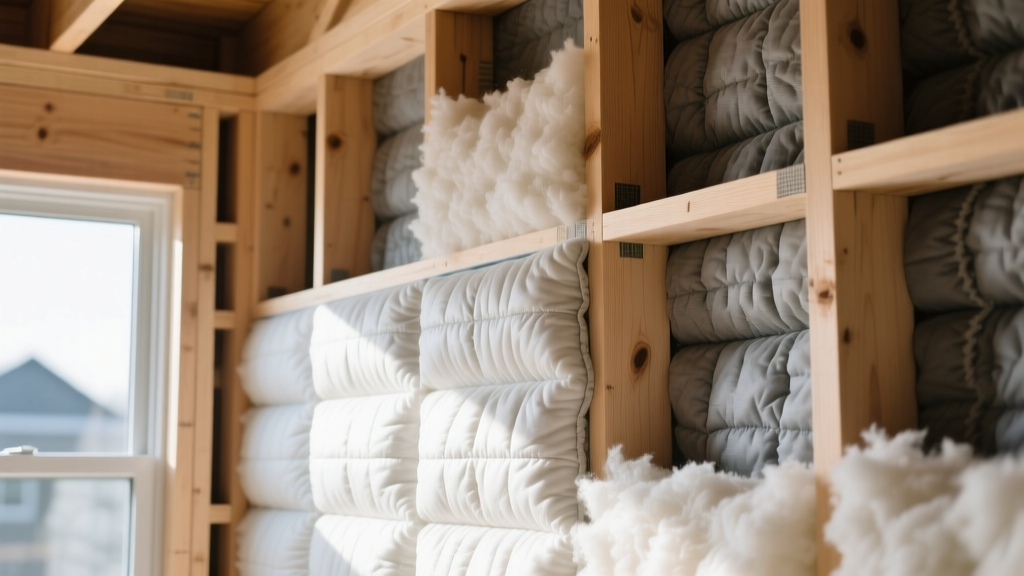
In commercial and high-performance residential construction, flexible insulation blankets are frequently specified as 'quilts.' Unlike rigid foam boards or spray polyurethane foam, these quilted mats are designed to conform to irregular framing, wrap around complex structural geometries, and provide continuous thermal and acoustic resistance. When architects and builders search for the best material for quilts in thermal and acoustic envelope design, the answer depends entirely on the specific performance criteria of the project, including fire resistance, moisture permeability, and spatial constraints.
According to the National Institute of Building Sciences, selecting the correct flexible insulation matrix is critical for preventing thermal bridging in steel-framed and timber-framed assemblies. This comprehensive guide evaluates the top materials used to manufacture construction-grade insulation quilts, providing exact specifications, 2026 pricing metrics, and installation protocols.
Evaluating the Best Material for Quilts by Application
Mineral Wool (Stone Wool) Quilts
Mineral wool remains the industry benchmark for high-performance insulation quilts. Manufactured by spinning molten basalt rock and slag into dense fibers, stone wool quilts (such as Rockwool Flexi or Thermafiber Soundbloc) offer an exceptional balance of thermal resistance and acoustic dampening. As of 2026, modern mineral wool quilts utilize bio-based binders, eliminating off-gassing concerns associated with older phenol-formaldehyde resins.
- Thermal Performance: R-4.0 to R-4.3 per inch.
- Acoustic Performance: High-density variants (60-80 kg/m³) achieve a Noise Reduction Coefficient (NRC) of up to 1.05 in partition walls.
- Fire Resistance: Inherently non-combustible. Withstands temperatures exceeding 1,000°C (1,800°F) and meets ASTM E136 standards.
- Moisture Management: Hydrophobic and vapor-permeable, allowing wall assemblies to dry outward while resisting liquid water intrusion.
High-Density Fiberglass Quilts
Fiberglass insulation quilts, such as Knauf Earthwool or Owens Corning EcoTouch, are manufactured from fine glass fibers. While standard fiberglass batts are common, high-density fiberglass 'quilts' are specifically engineered for commercial metal buildings and exterior sheathing applications where compression resistance is required.
- Thermal Performance: R-3.2 to R-3.8 per inch (high-density variants).
- Weight & Handling: Significantly lighter than mineral wool, reducing structural load and installer fatigue.
- Cost Efficiency: Generally 30-40% less expensive than equivalent stone wool products.
Silica Aerogel Insulation Quilts
For retrofit projects and environments with severe spatial constraints, silica aerogel quilts (like Aspen Aerogels Spaceloft) represent the absolute pinnacle of insulation technology. Aerogel is a synthetic porous ultralight material derived from a gel, in which the liquid component has been replaced with a gas. When laminated into flexible quilt blankets, it provides unparalleled thermal resistance in a fraction of the thickness.
- Thermal Performance: R-10.3 per inch (more than double that of mineral wool).
- Thickness: Achieves R-10 in a blanket barely 10mm (0.4 inches) thick.
- Use Case: Historic building retrofits, interior masonry walls, and structural steel fireproofing where preserving floor space is paramount.
When specifying the best material for quilts in multi-family or commercial construction, always verify the surface burning characteristics. Ensure the selected quilt material carries an ASTM E84 Class A rating (Flame Spread Index ≤ 25, Smoke Developed Index ≤ 50). Mineral wool and fiberglass inherently meet this, but some composite aerogel blankets require specific intumescent facings to achieve Class A compliance in exposed plenums.
Technical Specification Matrix
The following matrix compares the core physical properties of the leading insulation quilt materials available on the market today.
| Material Type | R-Value per Inch | Density (kg/m³) | Fire Rating (ASTM E84) | Vapor Permeability |
|---|---|---|---|---|
| Stone Wool Quilt | 4.2 | 40 - 80 | Class A (Non-combustible) | High (Vapor Open) |
| HD Fiberglass Quilt | 3.6 | 25 - 45 | Class A (Non-combustible) | High (Vapor Open) |
| Silica Aerogel Quilt | 10.3 | 150 - 200 | Class A (with facing) | Low (Vapor Retarder) |
| Recycled Denim Quilt | 3.5 | 30 - 40 | Class B (Requires Borate) | High (Vapor Open) |
2026 Cost Analysis and ROI Metrics
Material selection must be weighed against both initial capital expenditure and long-term energy ROI. Based on Q1 2026 national average pricing for commercial distributors, here is the cost breakdown per square foot (uninstalled):
- Standard Fiberglass Quilts: $0.65 - $0.95 / sq. ft.
- Mineral Wool Acoustic/Thermal Quilts: $1.40 - $2.20 / sq. ft.
- Silica Aerogel Blankets/Quilts: $9.50 - $14.00 / sq. ft.
- Recycled Cotton/Denim Quilts: $1.10 - $1.60 / sq. ft.
While aerogel quilts carry a massive premium, their ROI is realized in projects where square footage is monetized. In high-rise commercial real estate, saving 4 inches of wall thickness per exterior foot using aerogel quilts instead of mineral wool can yield thousands of dollars in leasable floor space over the life of the building. For standard residential and low-rise commercial builds, mineral wool offers the highest performance-to-cost ratio, particularly when factoring in the elimination of secondary fire-stopping materials.
Precision Installation Protocols
The U.S. Department of Energy emphasizes that the effective R-value of any insulation quilt is heavily dependent on installation quality. A 1% gap in insulation coverage can result in a 10% reduction in overall thermal performance due to convective looping.
Step-by-Step Fitting Best Practices
- Measurement and Cutting: Measure the cavity width at multiple points. Add 15mm (0.5 inches) to the widest measurement to ensure a compression friction fit. Critical Tip: Always use a 9-inch serrated insulation knife. Using a standard utility blade compresses the edges of mineral wool and fiberglass, destroying the R-value at the seam and creating thermal bridges.
- Friction Fitting: Push the quilt into the cavity from the center outward. Do not pull the material from the edges, as this thins the center of the quilt and reduces its thermal mass.
- Managing Obstructions: For electrical boxes and plumbing stacks, cut the quilt in an 'L' or 'U' shape rather than punching a hole. Tuck the offcuts tightly behind the obstruction to maintain continuous coverage.
- Perimeter Sealing: Apply an acoustical sealant (e.g., Tremco Acoustical Sealant) along the top and bottom plates where the quilt meets the framing. This prevents air infiltration from bypassing the insulation matrix entirely.
Expert Insight: 'The most common failure mode we see in building envelope audits is the compression of insulation quilts behind HVAC ductwork and electrical wiring. If a 6-inch mineral wool quilt is compressed into a 3-inch space to accommodate a pipe, its R-value does not remain R-24; it drops to roughly R-12, while its density increases, altering its acoustic profile. Always use shallow electrical boxes or frame out service cavities to preserve the quilt's loft.'
— Senior Building Envelope Consultant, 2025 Field Audit Report
Frequently Asked Questions
Can insulation quilts be used in below-grade foundation walls?
No. While mineral wool quilts are hydrophobic and will not absorb water, they lack the compressive strength required for below-grade applications where soil backfill exerts lateral pressure. For below-grade foundations, rigid extruded polystyrene (XPS) or high-density mineral wool boards (not flexible quilts) must be used.
Do mineral wool quilts require a vapor barrier?
In most mixed-humid and heating-dominated climates, mineral wool quilts should be paired with a Class II or Class III vapor retarder (like a smart membrane) rather than a polyethylene Class I barrier. This allows the wall assembly to dry to the interior during summer months, preventing trapped moisture and mold growth within the stud cavity.
How do I safely handle and cut fiberglass insulation quilts?
Modern fiberglass quilts are manufactured with bio-based binders that significantly reduce skin irritation compared to legacy products. However, installers should still wear N95 respirators, long sleeves, and nitrile gloves. Cutting should be done on a flat surface using a straight edge and a specialized serrated blade to prevent fiber shedding and edge compression.
Written by
David NakamuraDavid Nakamura is a licensed architect (AIA) and construction technology writer focused on sustainable building methods, mass timber engineering, and high-performance building envelopes. He holds a Master of Architecture from the University of Washington and is a certified Passive House Consultant (CPHC). David spent eight years at the Seattle firm Mithun, where he led the design of three LEED Platinum projects, before founding his own practice specializing in net-zero residential design. He serves on the editorial advisory board of GreenBuilder Magazine and has authored peer-reviewed papers on cross-laminated timber (CLT) connections for the Journal of Structural Engineering. In his spare time, David teaches woodworking at Pratt Fine Arts Center and kayaks the Puget Sound.
More from David Nakamura
View all
Construction Cost
Labor Cost to Build a Deck Per Sq Ft: 2026 Installation Guide
Discover the exact labor cost to build a deck per sq ft in 2026. This installation guide breaks down contractor rates, complexity factors, and hidden fees.
Aug 4, 2026

Construction Cost
How Much Does It Cost to Build a 3 Bedroom House? Financing Guide
Learn exactly how much it costs to build a 3 bedroom house and explore 2026 financing options, construction loan types, and budget frameworks for your build.
Aug 4, 2026

Construction Cost
Cost to Build a Tennis Court: 2026 Guide
How much does it cost to build a tennis court in 2026? Breakdowns for asphalt, concrete, and synthetic surfaces plus fencing and lighting.
Jul 30, 2026