How to Build a House in Materials Only: Sourcing & Cost Guide
Learn how to plan, source, and budget a materials-only home build. Get current cost breakdowns, pro sourcing strategies, and value engineering tips.

Defining the Materials-Only Build Scope
Executing a materials-only home build requires isolating the hard physical goods from the soft costs and labor associated with traditional construction. When you calculate the cost to build a house in materials only, you are strictly pricing the physical components: concrete, lumber, fasteners, drywall, plumbing fixtures, and mechanical equipment. This metric explicitly excludes land acquisition, architectural design fees, building permits, heavy equipment rentals, and subcontractor labor.
For owner-builders and self-managed projects, understanding this baseline is critical. According to the National Association of Home Builders (NAHB), materials typically account for 40% to 50% of the total construction cost of a standard single-family home. By stripping away labor and overhead, you can accurately forecast the capital required to secure the physical shell and interior finishes before hiring tradespeople.
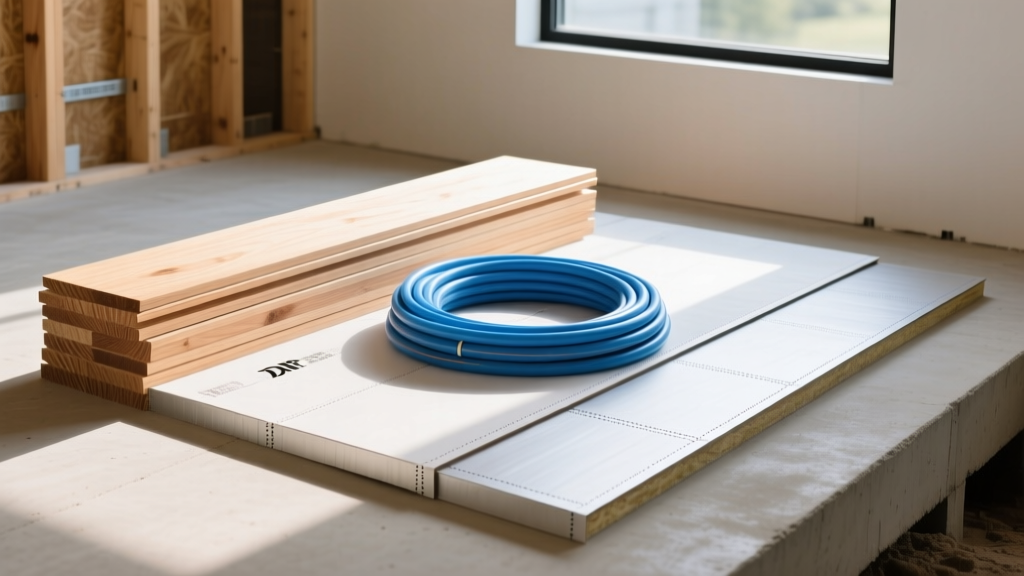
The Materials-Only Cost Matrix
The following matrix breaks down the estimated materials-only costs per square foot for a 2,000-square-foot, single-story home built to standard 2026 energy codes. These figures assume mid-grade finishes and standard structural specifications.
| Construction Phase | Key Material Components | Cost per Sq. Ft. | Estimated Total (2,000 sq ft) |
|---|---|---|---|
| Site & Foundation | 3,000 PSI concrete, #4 rebar, gravel base, vapor barrier | $12 - $16 | $24,000 - $32,000 |
| Framing & Sheathing | 2x6 SPF lumber, engineered I-joists, ZIP System sheathing | $22 - $28 | $44,000 - $56,000 |
| Exterior Envelope | Architectural shingles, vinyl siding, double-pane windows | $18 - $25 | $36,000 - $50,000 |
| MEP Rough-In | PEX-A tubing, PVC DWV, Romex SIMpull, HVAC units | $15 - $22 | $30,000 - $44,000 |
| Interior Finishes | 5/8" drywall, LVP flooring, solid core doors, base trim | $28 - $40 | $56,000 - $80,000 |
| Total Materials | All Hard Goods | $95 - $131 | $190,000 - $262,000 |
Strategic Sourcing Channels for Owner-Builders
Retail big-box stores are rarely the most cost-effective option for a full-home material procurement. To achieve true materials-only pricing, you must access wholesale and contractor-tier supply chains.
- Independent Lumberyards: Establish a cash account with regional suppliers (e.g., 84 Lumber, McCoy's, or local independents). They offer volume-based tiered pricing, often 12% to 18% below big-box retail on dimensional lumber and engineered wood products.
- Direct-from-Manufacturer: For high-ticket items like metal roofing, standing seam panels, or custom cabinetry, purchasing directly from regional fabricators eliminates the distributor markup.
- Wholesale Plumbing & Electrical Houses: Suppliers like Ferguson or Winsupply require a business license or a registered owner-builder permit to open a pro account, granting access to commercial-grade fixtures and bulk wire pricing.
The Hidden Material Costs That Derail Budgets
When calculating the cost to build a house in materials only, amateur estimators frequently miss the "miscellaneous" category. According to U.S. Census Bureau construction data, material price volatility and supply chain friction can inflate baseline estimates by up to 8% annually if not properly buffered.
Never order exact square footage for roofing, siding, or flooring. You must apply a 10% to 12% waste factor for cutting errors, damaged goods, and pattern matching. Failing to order this upfront results in paying premium freight rates for small pallet deliveries mid-project.
Commonly Overlooked Line Items
- Structural Connectors: Simpson Strong-Tie hangers, tie-downs, and holdowns can easily cost $3,500 to $5,000 for a standard 2,000 sq ft home.
- Fasteners and Adhesives: Boxes of structural screws, framing nails, subfloor adhesive (e.g., Loctite PL 400), and housewrap tape routinely exceed $2,500.
- Dumpsters and Site Consumables: While technically a service, roll-off dumpsters, saw blades, drill bits, and scaffolding are consumable material costs that must be budgeted.
Phased Procurement Timeline
Ordering all materials on day one is a logistical nightmare that leads to site damage, theft, and material degradation. Use this phased delivery schedule aligned with the FEMA Building Science guidelines for moisture management and site safety.
- Phase 1: Pre-Site Work (8-12 Weeks Out)
Order custom windows and exterior doors. Aluminum-clad wood windows currently carry 14- to 20-week manufacturing lead times. Order septic systems and specialized foundation forms. - Phase 2: Foundation & Framing (2-3 Weeks Out)
Order rebar, concrete (scheduled daily with the batch plant), and the complete framing package. Lumber should be delivered 48 hours before framing begins to minimize weather exposure. - Phase 3: Drying In (Upon Sheathing Completion)
Order roofing materials, exterior siding, and exterior trim. Do not deliver roofing bundles to the site until the trusses are set and sheathing is complete to prevent ground moisture damage. - Phase 4: MEP Rough-In (Just Prior to Inspections)
Order HVAC units, PEX tubing, electrical wire, and plumbing stacks. These high-theft items should be delivered only when the structure is lockable or when trades are actively on-site. - Phase 5: Interior Finishes (Post-Drywall)
Order hardwood or LVP flooring, interior doors, trim, and cabinets. Flooring requires 48 to 72 hours of acclimation inside the climate-controlled home before installation.
Value Engineering: Material Swaps for Maximum ROI
Value engineering is the practice of substituting materials to reduce costs or improve performance without altering the architectural design. Here are three high-impact swaps for a materials-only build:
1. Sheathing and Weather Barrier
Traditional: 7/16" OSB + Tyvek Housewrap + 1" Rigid Foam Insulation.
Value Swap: Huber ZIP System R-Sheathing (with integrated polyiso foam).
Result: While the ZIP panel costs roughly 25% more per sheet than raw OSB, it eliminates the labor and material cost of separate housewrap, tape, and rigid foam installation, resulting in a net savings of 8% on the total envelope material budget while guaranteeing a continuous air barrier.
2. Plumbing Distribution
Traditional: Type L Copper with soldered fittings.
Value Swap: PEX-A (Uponor) with expansion fittings.
Result: PEX-A materials cost approximately 60% less than copper. Furthermore, expansion fittings utilize the thermal memory of the PEX-A tubing, creating a joint that is physically stronger than the pipe itself and highly resistant to freeze-burst damage.
3. Interior Wall Substrate
Traditional: Standard 1/2" drywall on 2x4 studs at 16" O.C.
Value Swap: 5/8" lightweight drywall on 2x4 studs at 24" O.C. (where local code permits advanced framing).
Result: Advanced framing reduces the lumber package by up to 15%. Upgrading to 5/8" lightweight drywall (such as USG Sheetrock UltraLight) compensates for the wider stud spacing, preventing wall sag while providing superior fire resistance and sound attenuation.
Frequently Asked Questions
Can I get a construction loan for a materials-only build?
Yes, but lenders require a highly detailed Bill of Materials (BOM) and a fixed-price contract for the labor portion. Owner-builder construction loans typically require a 20% to 30% down payment and mandate that you act as your own general contractor, assuming all liability for schedule and budget overruns.
How do I calculate the exact lumber takeoff for my house?
Do not attempt to calculate a full lumber takeoff manually. Purchase a digital plan set and submit it to a professional estimating service (like Home Innovation Research Labs or a dedicated lumberyard estimator). They use CAD-integrated software to count every stud, header, and joist hanger, generating a precise materials list that accounts for local snow and wind load engineering requirements.
Are material prices locked in when I sign a contract with a supplier?
Rarely. Most lumberyards and suppliers offer price quotes valid for only 7 to 14 days due to commodity market fluctuations. To lock in materials-only pricing for a long-term build, negotiate a "price lock" agreement, which may require a 10% to 20% non-refundable deposit upfront to hedge the supplier against market volatility.
Written by
David NakamuraDavid Nakamura is a licensed architect (AIA) and construction technology writer focused on sustainable building methods, mass timber engineering, and high-performance building envelopes. He holds a Master of Architecture from the University of Washington and is a certified Passive House Consultant (CPHC). David spent eight years at the Seattle firm Mithun, where he led the design of three LEED Platinum projects, before founding his own practice specializing in net-zero residential design. He serves on the editorial advisory board of GreenBuilder Magazine and has authored peer-reviewed papers on cross-laminated timber (CLT) connections for the Journal of Structural Engineering. In his spare time, David teaches woodworking at Pratt Fine Arts Center and kayaks the Puget Sound.
More from David Nakamura
View all
Construction Cost
Labor Cost to Build a Deck Per Sq Ft: 2026 Installation Guide
Discover the exact labor cost to build a deck per sq ft in 2026. This installation guide breaks down contractor rates, complexity factors, and hidden fees.
Aug 4, 2026

Construction Cost
How Much Does It Cost to Build a 3 Bedroom House? Financing Guide
Learn exactly how much it costs to build a 3 bedroom house and explore 2026 financing options, construction loan types, and budget frameworks for your build.
Aug 4, 2026

Construction Cost
Cost to Build a Tennis Court: 2026 Guide
How much does it cost to build a tennis court in 2026? Breakdowns for asphalt, concrete, and synthetic surfaces plus fencing and lighting.
Jul 30, 2026