Sound Control Guide: Industrial Insulation Materials for Noise
Explore the best industrial insulation materials for sound control. Compare mineral wool, fiberglass, and melamine foam for industrial noise reduction.
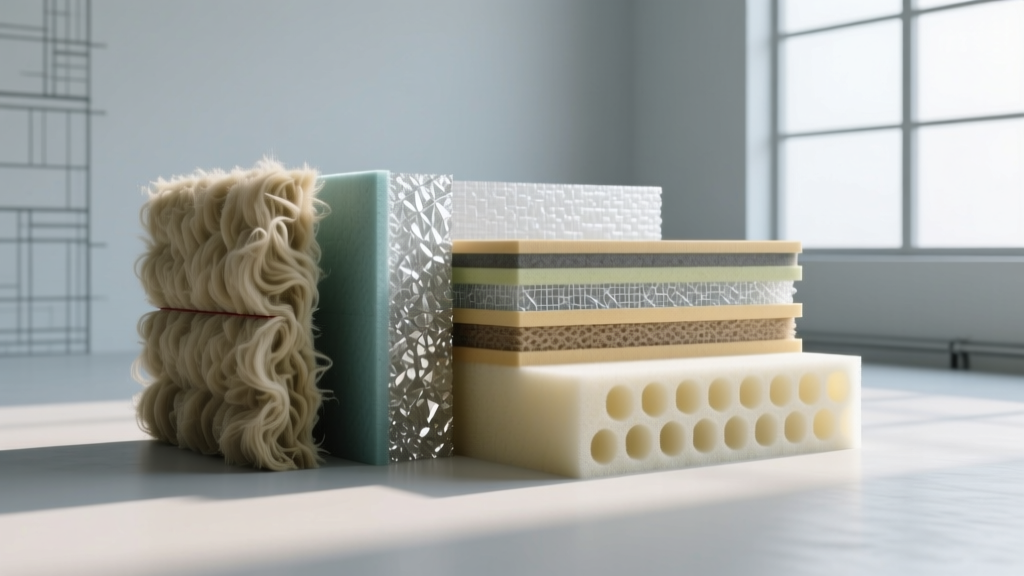
The Physics of Industrial Noise and Material Selection
Industrial environments generate complex acoustic profiles, ranging from the high-frequency whine of CNC routers to the low-frequency, structure-borne rumble of heavy stamping presses and industrial air compressors. Selecting the correct industrial insulation materials for sound control requires a fundamental understanding of acoustic physics. Acoustic treatment in these settings is divided into two distinct disciplines: sound absorption and sound blocking.
Key Acoustic Metrics Defined
Noise Reduction Coefficient (NRC): Measures sound absorption. Rated from 0.0 (perfect reflection) to 1.0 (perfect absorption). Crucial for reducing reverberation and echo within a factory floor.
Sound Transmission Class (STC): Measures sound blocking. Indicates how well a partition (wall, ceiling, enclosure) prevents sound from traveling into adjacent spaces. Crucial for isolating plant offices or protecting neighboring properties.
Misapplying materials based on these metrics is the most common failure mode in industrial acoustic design. For instance, using a high-NRC open-cell foam to build a partition wall will do almost nothing to stop noise transmission, while relying solely on dense mass without absorptive insulation inside a wall cavity will result in severe low-frequency resonance.
Top Industrial Insulation Materials for Acoustic Treatment
The following materials represent the current industry standard for heavy-duty acoustic control, balancing thermal requirements, fire safety, and acoustic performance.
1. High-Density Mineral Wool (Rock and Slag Wool)
Mineral wool is the workhorse of industrial insulation materials. Manufactured by spinning molten basalt rock or slag into fibers, it offers exceptional thermal resistance (up to 1,200°F) and superior acoustic damping. For sound control, density is the critical variable. While standard thermal batts sit around 2.5 lbs/ft³ (pcf), acoustic-grade mineral wool like Rockwool ProRox SL 960 or Thermafiber SAFB ranges from 6.0 to 8.0 pcf. This higher density increases internal friction, effectively converting acoustic energy into trace amounts of heat.
- Best Application: Machinery enclosures, HVAC duct liners, and interior wall cavities of plant offices.
- Acoustic Profile: NRC of 0.95 to 1.05 (at 2-3 inches thickness); adds 4-6 STC points when used in a standard steel-stud partition.
- Cost: $1.80 - $2.60 per square foot.
2. Rigid Fiberglass Acoustic Boards
Unlike standard fluffy fiberglass batts, rigid acoustic boards (such as Owens Corning 703 and 705) are resin-bonded to maintain their shape and structural integrity. They are typically wrapped in acoustically transparent fabrics or perforated metal facings when used as exposed wall or ceiling baffles in manufacturing facilities. Type 703 (3.0 pcf) is optimal for mid-to-high frequency absorption, while the denser Type 705 (6.0 pcf) performs better on lower frequencies.
- Best Application: Suspended acoustic baffles, anechoic testing chambers, and equipment room wall treatments.
- Acoustic Profile: NRC of 0.85 to 1.10 depending on thickness and air gap behind the board.
- Cost: $3.20 - $4.50 per square foot.
3. Melamine Foam (Basotect)
For high-temperature environments where mineral wool is too heavy or rigid fiberglass cannot be used, melamine foam is the premier choice. Originally developed for aerospace, open-cell melamine foam (often branded as Basotect) is extremely lightweight (0.6 pcf) and can withstand continuous temperatures up to 400°F. Its intricate 3D web structure provides excellent broadband sound absorption.
- Best Application: Engine bays, industrial exhaust silencers, compressor housings, and clean-room environments.
- Acoustic Profile: NRC of 0.70 to 0.90. Poor STC contribution (must be paired with mass).
- Cost: $6.50 - $9.00 per square foot.
4. Mass Loaded Vinyl (MLV) and TPE Composites
While not a thermal insulator, MLV is an essential component in industrial acoustic composites. Traditional PVC-based MLV is being rapidly replaced by Thermoplastic Elastomer (TPE) composites due to stricter 2025 EPA indoor air quality regulations regarding plasticizers. MLV acts as a limp mass barrier, reflecting sound waves rather than absorbing them. A standard 1 lb/sq ft MLV provides an STC of 27 on its own.
- Best Application: Wrapping noisy PVC drain pipes, lining the interior of sheet metal machinery guards, and decoupling drywall layers.
- Acoustic Profile: NRC near 0.05; STC 27 (1lb) to 32 (2lb).
- Cost: $1.50 - $3.50 per square foot.
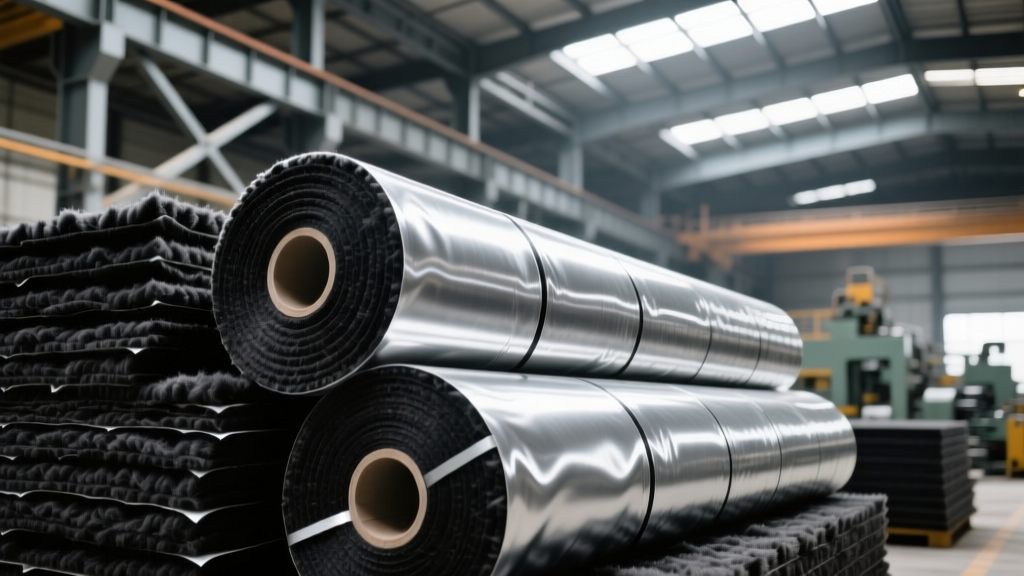
Material Comparison and Performance Matrix
| Material | Primary Function | NRC Rating | Max Temp Limit | Avg Cost (USD/sq ft) |
|---|---|---|---|---|
| Mineral Wool (8 pcf) | Absorption / Cavity Fill | 0.95 - 1.05 | 1,200°F | $1.80 - $2.60 |
| Rigid Fiberglass (705) | Absorption / Baffles | 0.90 - 1.10 | 450°F | $3.20 - $4.50 |
| Melamine Foam | Absorption / High Temp | 0.70 - 0.90 | 400°F | $6.50 - $9.00 |
| TPE Mass Loaded Vinyl | Blocking / Mass Barrier | 0.05 | 180°F | $1.50 - $3.50 |
Application Framework: Matching Material to the Noise Source
Choosing the right industrial insulation materials requires diagnosing the specific acoustic failure. Use this decision framework to specify your materials:
- Scenario A: High Reverberation on the Plant Floor (Echo)
Symptom: Workers cannot hear verbal instructions over the ambient hum; overall dBA is elevated by reflected sound.
Solution: Install suspended baffles made of Rigid Fiberglass (Type 703) or wall-mounted Mineral Wool panels. Focus on upper wall and ceiling treatments to intercept first-reflection points. - Scenario B: Low-Frequency Rumble Penetrating Office Walls
Symptom: Heavy machinery vibration and sub-250 Hz noise bleed through standard drywall partitions into control rooms.
Solution: Build a decoupled staggered-stud wall. Fill the cavity with 3-inch 8 pcf Mineral Wool, and apply a layer of 2 lb/sq ft MLV behind two layers of 5/8-inch Type X gypsum board. Seal all perimeters with acoustic caulk. - Scenario C: Air Compressor or Generator Enclosure Overheating
Symptom: The machinery is too loud, but enclosing it in standard acoustic foam causes thermal throttling.
Solution: Line the interior of the steel enclosure with Melamine Foam backed by a thin layer of 1 lb MLV. Ensure intake and exhaust louvers are fitted with acoustic labyrinth baffles to allow airflow while trapping sound waves.
Installation Best Practices and Common Failure Modes
Even the most expensive industrial insulation materials will fail if installed incorrectly. Acoustic energy behaves like water; it will find the path of least resistance. A gap comprising just 1% of a wall's surface area can reduce its overall STC rating by up to 50%.
"The most frequent error in industrial acoustic retrofits is the compression of insulation. Contractors will often force a 4-inch mineral wool batt into a 3-inch stud cavity to save time. While this slightly increases the mass, it destroys the material's internal air pockets, effectively reducing its NRC and eliminating its ability to dampen cavity resonance."
Critical Installation Rules:
- Decouple the Structure: Never rigidly connect the interior drywall of a control room to the exterior plant wall. Use resilient channels spaced at 24 inches on center, or build completely independent staggered-stud frames.
- Seal Flanking Paths: Electrical outlets, HVAC ducts, and pipe penetrations are primary flanking paths. Use non-hardening acoustic putty pads behind all electrical boxes and wrap pipe penetrations with MLV and acoustic sealant.
- Avoid Vapor Barrier Traps: In exterior-facing industrial walls, placing a standard polyethylene vapor barrier over acoustic mineral wool can create a reflective acoustic surface, bouncing sound back into the cavity. Use a 'smart' vapor retarder or rely on the facing of the insulation itself if climate conditions permit.
Regulatory Standards and Compliance
Implementing acoustic industrial insulation materials is not just about comfort; it is a strict regulatory requirement. Under OSHA Standard 1910.95, occupational noise exposure is limited to a Time-Weighted Average (TWA) of 90 dBA over an 8-hour shift. However, the National Institute for Occupational Safety and Health (NIOSH) recommends a more stringent exposure limit of 85 dBA to prevent long-term hearing loss.
When testing and certifying your acoustic assemblies, ensure your materials are rated according to ASTM C423 for sound absorption (NRC) and ASTM E90 for airborne sound transmission loss (STC). Specifying materials without verified third-party laboratory testing data leaves your facility vulnerable to compliance failures during OSHA audits.
Frequently Asked Questions
Can I use standard thermal fiberglass batts for industrial soundproofing?
Standard thermal fiberglass (typically 0.7 to 1.5 pcf) is too light and lacks the internal friction required to effectively dampen industrial noise. While it will provide a marginal improvement over an empty wall cavity, it will fail to absorb low-frequency machinery rumble. Always specify high-density acoustic mineral wool or rigid fiberglass for industrial applications.
How do I handle sound control around high-heat industrial exhaust pipes?
For exhaust piping operating above 250°F, standard MLV and faced fiberglass will melt or off-gas toxic chemicals. Use unfaced, high-density mineral wool (rated to 1,200°F) wrapped in an aluminum or stainless steel jacket. For extreme heat up to 1,000°F, specify ceramic fiber blankets (like Kaowool), though note that ceramic fiber has a lower NRC than mineral wool and may require a secondary outer acoustic shell.
Written by
Marcus ChenMarcus Chen is a licensed structural engineer (PE) and building materials analyst with over 12 years of experience across residential, commercial, and industrial construction. He holds a Master of Science in Civil Engineering from UC Berkeley and spent six years at Thornton Tomasetti before transitioning to independent consulting and technical writing. Marcus specializes in material selection for seismic-prone regions, concrete reinforcement strategies, and lifecycle cost analysis. His work has been cited by the American Concrete Institute (ACI) and the Structural Engineers Association of California (SEAOC). When he is not on a job site or at his desk, you will find him hiking the Sierra Nevada or restoring a 1920s craftsman bungalow in Oakland, CA.
More from Marcus Chen
View all
Construction Cost
How Much Did the Eiffel Tower Cost to Build?
How much did the Eiffel Tower cost to build in 1889? We adjust for inflation and compare its budget to modern skyscraper construction.
Aug 4, 2026

Fire Resistance
What Is a Fire Resistant Material? Testing & Certification Guide
Discover what is a fire resistant material through ASTM and UL testing. Learn how fire ratings, certifications, and assemblies work in construction.
Aug 4, 2026

Construction Cost
How Much Did the Burj Khalifa Cost to Build?
How much did the Burj Khalifa cost to build? We break down the $1.5B project and extract 5 money-saving strategies for your next build.
Jul 30, 2026