Insulated Material Cost Analysis: 2026 Price Guide
Compare 2026 insulated material costs per square foot. Detailed pricing for spray foam, fiberglass, and mineral wool to optimize your building budget.
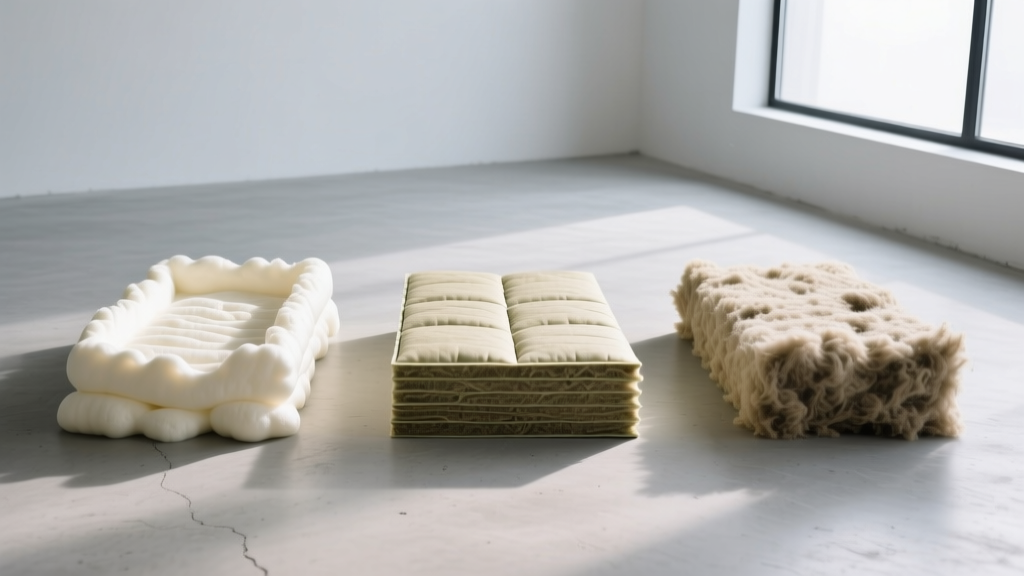
Executive Summary: The 2026 Insulated Material Market
Navigating the 2026 construction landscape requires precise budget forecasting, particularly when selecting the right insulated material for thermal and acoustic performance. Over the past 24 months, supply chain stabilization and the widespread adoption of next-generation blowing agents have shifted the cost dynamics of residential and commercial insulation. While raw material prices for fiberglass and mineral wool have plateaued, closed-cell spray foam costs have adjusted due to the industry-wide transition to low-global-warming-potential (GWP) hydrofluoroolefin (HFO) blowing agents. According to the U.S. Department of Energy, proper insulation selection and installation can reduce a building's heating and cooling costs by up to 20%, making the initial capital expenditure a critical factor in long-term operational ROI.
• Most Economical: Fiberglass Batts ($0.85 - $1.40 / sq. ft. material only)
• Best Air & Moisture Barrier: Closed-Cell Spray Foam ($1.30 - $1.80 / board ft.)
• Premium Fire & Acoustic: Mineral Wool Batts ($1.30 - $1.75 / sq. ft.)
Cost Breakdown by Insulated Material Type
To build an accurate budget, contractors and homeowners must separate material costs from installed labor costs. Labor rates in 2026 average between $0.60 and $1.50 per square foot, heavily dependent on site accessibility, ceiling height, and regional union prevailing wages.
Fiberglass Batts and Rolls
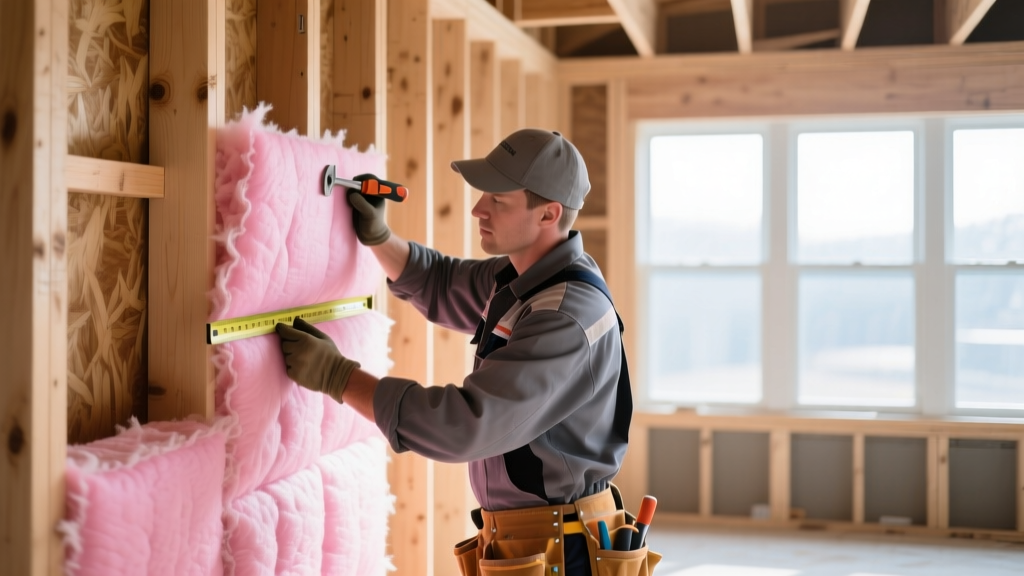
Fiberglass remains the baseline for cost-effective thermal resistance. In 2026, high-density products like Owens Corning EcoTouch R-38 are priced between $1.10 and $1.35 per square foot for material. A critical failure mode to avoid during installation is compression. Stuffing an R-19 batt (designed for a 6.25-inch cavity) into a standard 3.5-inch 2x4 wall cavity does not yield R-19 performance; it compresses the glass fibers, reducing the trapped air pockets and dropping the effective R-value to approximately R-13. Always match the batt thickness to the exact framing depth to protect your investment.
Closed-Cell vs. Open-Cell Spray Foam
Spray polyurethane foam (SPF) provides both insulation and an air barrier, but the two primary chemistries carry vastly different price tags. Open-cell foam (e.g., Demilec Sealection 500) costs roughly $0.65 to $0.90 per board foot. It is vapor-permeable and excellent for interior sound dampening, but it requires a separate vapor retarder in cold climates. Closed-cell foam (e.g., Demilec Heatlok XT HFO) costs $1.30 to $1.80 per board foot. The 2026 shift to HFO blowing agents has slightly increased closed-cell material costs compared to legacy HFC formulas, but it eliminates the severe off-gassing and environmental penalties associated with older chemistries. Closed-cell foam adds structural rigidity and acts as a Class II vapor retarder, justifying the premium for below-grade and roof deck applications.
Mineral Wool and Rigid Foam Boards
Mineral wool, such as ROCKWOOL Comfortbatt R-15, commands a premium ($1.30 - $1.75 per sq. ft.) due to its superior fire resistance (non-combustible up to 2,150°F per ASTM E119) and acoustic dampening (STC ratings of 45-52 in standard wall assemblies). Rigid foam boards offer high R-values per inch. Extruded Polystyrene (XPS) like Owens Corning FOAMULAR NGX 250 costs about $0.95 per square foot for a 1-inch panel, while Polyisocyanurate (Polyiso) boards offer the highest R-value per inch (R-6.5) at roughly $0.75 to $1.00 per square foot, though Polyiso performance degrades in extremely cold temperatures due to thermal drift.
Comprehensive Insulated Material Cost Matrix
| Insulated Material Type | R-Value per Inch | Material Cost (per sq. ft.) | Installed Cost (per sq. ft.) | Best Application |
|---|---|---|---|---|
| Fiberglass Batts (Standard) | R-3.1 - R-3.4 | $0.85 - $1.15 | $1.50 - $2.20 | Standard wall cavities, attics |
| Fiberglass Batts (High-Density) | R-3.7 - R-4.3 | $1.10 - $1.40 | $1.80 - $2.60 | Cathedral ceilings, tight framing |
| Open-Cell Spray Foam | R-3.5 - R-3.7 | $0.65 - $0.90 / bd ft | $1.20 - $1.60 / bd ft | Interior walls, soundproofing |
| Closed-Cell Spray Foam | R-6.0 - R-7.0 | $1.30 - $1.80 / bd ft | $2.20 - $3.10 / bd ft | Roof decks, crawlspaces, exteriors |
| Mineral Wool Batts | R-4.0 - R-4.3 | $1.30 - $1.75 | $2.10 - $3.00 | Fire-stopping, exterior shear walls |
| XPS Rigid Foam (1-inch) | R-5.0 | $0.90 - $1.10 | $1.60 - $2.30 | Below-grade, under-slab |
| Polyiso Rigid Foam (1-inch) | R-6.0 - R-6.5 | $0.75 - $1.00 | $1.50 - $2.10 | Exterior continuous insulation |
Hidden Costs and Edge Cases in Insulation Projects
Budget overruns rarely stem from the primary insulated material itself; they emerge from site preparation, code compliance, and remediation. When modeling your 2026 project costs, integrate the following variables:
- Air Sealing Preparation: The Pacific Northwest National Laboratory (PNNL) emphasizes that insulation without air sealing is highly inefficient. Professional air sealing using two-part expanding foam and mastic at top plates and rim joists adds $0.25 to $0.45 per square foot to the project but is mandatory for achieving modern IECC blower door test standards (typically 3 to 5 ACH50).
- Ignition Barriers for Spray Foam: Building codes require exposed spray foam in living spaces or mechanical rooms to be covered by a thermal or ignition barrier. If you are leaving closed-cell foam exposed in a basement or shop, you must apply an intumescent coating like DC315. This specialized paint adds $0.40 to $0.65 per square foot in material and requires certified application.
- Old Insulation Removal: If retrofitting an attic, removing and disposing of degraded cellulose or rodent-infested fiberglass costs between $1.20 and $2.50 per square foot. If the existing material contains vermiculite (which may harbor asbestos), abatement protocols will spike costs to $5.00 - $8.00 per square foot.
- Knob-and-Tube Wiring: In pre-1950s homes, you cannot legally or safely bury active knob-and-tube wiring in any insulated material. An electrical audit and partial rewiring must precede insulation, adding $2,500 to $6,000 to the overall project scope.
ROI and Energy Payback Calculation Framework
To determine which insulated material offers the best financial return, calculate the Simple Payback Period (SPP). Divide the total installed cost of the insulation upgrade by the projected annual energy savings.
'Upgrading from R-13 to R-38 in an attic in Climate Zone 5 yields an average annual heating savings of $450. If the installed cost of blown-in cellulose or fiberglass is $2,200, the simple payback is 4.8 years. Upgrading to closed-cell spray foam for the same R-value might cost $5,500, extending the payback to 12.2 years, making it a poor purely financial choice for attics unless structural air-sealing is the primary goal.'
For a more rigorous analysis, utilize the ENERGY STAR portfolio manager tools or RESNET-accredited software to model whole-house energy loads, factoring in local utility rates which are projected to rise 3-5% annually through 2030.
How to Choose the Right Insulated Material for Your Budget
Selecting the optimal material requires mapping the product's physical properties to your specific climate zone and structural requirements. Use this decision matrix to guide your procurement:
Climate Zone Decision Matrix
- Zones 1-3 (Hot/Humid & Hot/Dry): Prioritize open-cell spray foam or standard fiberglass batts. Ensure vapor-permeable materials are used to allow the structure to dry to the exterior. Budget focus: Radiant barriers in attics ($0.30/sq. ft.) yield higher ROI than extreme R-value upgrades.
- Zones 4-5 (Mixed & Cold): Hybrid approaches dominate here. Use closed-cell spray foam (2 inches) against the interior roof deck or exterior sheathing to prevent condensation, then fill the remainder of the cavity with cost-effective fiberglass or mineral wool. This 'flash-and-batt' method optimizes both budget and building science.
- Zones 6-8 (Very Cold & Subarctic): Continuous exterior insulation is non-negotiable to prevent thermal bridging through wood studs. Budget for 2 to 4 inches of exterior Polyiso or mineral wool boards, combined with dense-pack cellulose or closed-cell foam in the cavities. The material cost is high, but the prevention of ice damming and interstitial condensation saves thousands in structural repairs.
Frequently Asked Questions
Does the brand of insulated material significantly impact the price?
Yes, but primarily at the premium tier. Commodity fiberglass from brands like Johns Manville or Knauf is highly price-competitive, often varying by only $0.05 to $0.10 per square foot between manufacturers. However, specialized products like ROCKWOOL's stone wool or BASF's Enertite spray foam carry a 15% to 25% brand premium due to proprietary manufacturing processes, third-party certifications (like Greenguard Gold), and stricter quality control regarding R-value degradation over time.
Is it cheaper to install insulated material myself?
DIY installation saves the $0.60 to $1.50 per square foot labor cost, but it introduces severe risk regarding performance. Fiberglass batts are DIY-friendly, but improper cutting around electrical boxes or failing to maintain the vapor retarder orientation can reduce overall wall performance by up to 30%. Spray foam and blown-in cellulose require specialized rental equipment ($150-$250/day) and carry high risks of uneven density or chemical exposure. For complex geometries or air-barrier requirements, professional installation ensures code compliance and warranty validation.
Written by
Sarah WhitfieldSarah Whitfield is a chartered quantity surveyor (MRICS) and construction cost analyst with 15 years of experience in material pricing, procurement strategy, and project budgeting. She earned her degree in Construction Management from the University of Reading (UK) and has worked on projects ranging from $2M custom homes to $180M mixed-use developments across North America and Europe. Sarah currently leads cost estimating for BuildMat Insight, maintaining a proprietary database of 4,000+ material price points updated quarterly. She is a frequent contributor to RSMeans cost data panels and has presented at the International Cost Engineering Council (ICEC) congress. Based in Denver, CO, Sarah is an avid trail runner and volunteer mentor for Women in Construction.
More from Sarah Whitfield
View all
Wood & Lumber
What Are the Different Types of Wood? A Builder's Guide
Compare structural softwoods, finish hardwoods, and engineered lumber. Analyze Janka ratings, MOE values, and 2026 pricing for construction.
Aug 4, 2026

Walls & Panels
Steel Framing vs Wood Framing: Corrosion and Moisture Defense
Compare steel framing vs wood framing for moisture resistance. Learn about galvanized coatings, condensation risks, and corrosion protection strategies.
Jul 21, 2026

Stone & Masonry
How to Cut Stone Veneer: Wet Saw vs Grinder Comparison
Compare the best tools for cutting stone veneer. We review wet saws, angle grinders, and chop saws to help you achieve clean, chip-free cuts.
Jul 21, 2026