Which Material Is Typically Used as a Thermal Insulator? Expert Guide
Discover which material is typically used as a thermal insulator. Compare R-values, costs, and applications for fiberglass, spray foam, and rigid boards.

Defining the Standard: Which Material Is Typically Used as a Thermal Insulator?
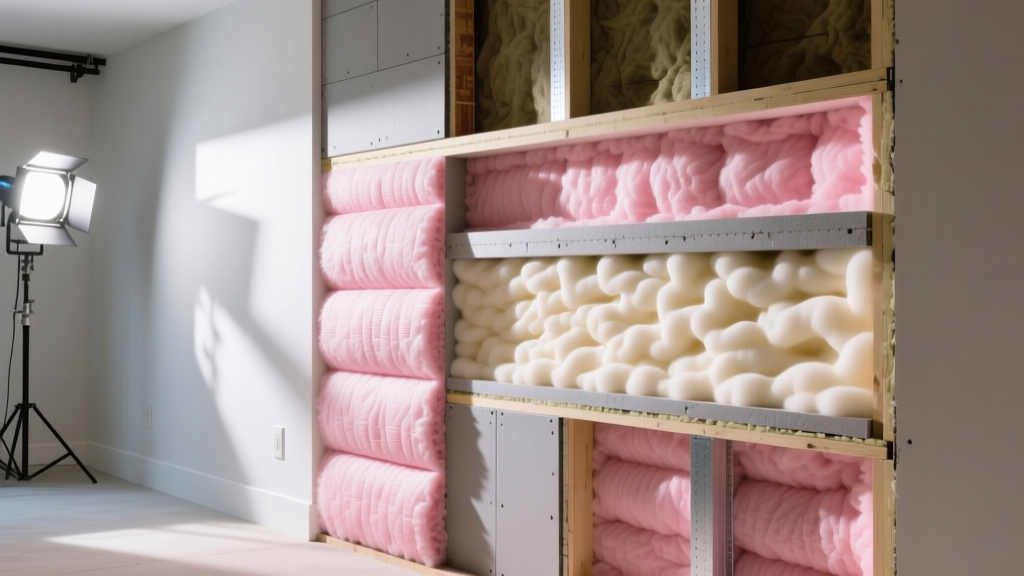
When evaluating building envelopes, the question of which material is typically used as a thermal insulator does not have a single answer; it depends on the specific assembly, climate zone, and budget. However, the industry relies on four primary categories: fiberglass, mineral wool, spray polyurethane foam (SPF), and rigid foam boards (XPS, EPS, and Polyiso). According to the U.S. Department of Energy, these materials function by trapping millions of microscopic air pockets or utilizing low-conductivity blowing agents to resist heat flow.
Selecting the correct thermal insulator requires looking beyond the basic R-value printed on the packaging. Real-world performance is dictated by installation quality, vapor permeability, thermal bridging, and temperature-dependent R-value degradation. This guide breaks down the exact specifications, failure modes, and applications for each standard thermal insulator.
Core Thermal Insulators: Performance and Cost Matrix
The following matrix compares the baseline metrics for the most common thermal insulators used in residential and commercial construction. Costs reflect 2026 material averages and exclude professional installation labor.
| Material Type | R-Value per Inch | Avg. Material Cost (per sq. ft.) | Vapor Permeability | Primary Application |
|---|---|---|---|---|
| Fiberglass Batts | 2.9 - 3.8 | $0.40 - $1.20 | High (Permeable) | Standard stud cavities, attics |
| Mineral Wool | 4.0 - 4.3 | $1.10 - $1.60 | High (Permeable) | Fire-rated assemblies, exterior walls |
| Open-Cell SPF | 3.5 - 3.8 | $0.45 - $0.75 (per board ft.) | High (Permeable) | Rooflines, interior soundproofing |
| Closed-Cell SPF | 6.0 - 7.0 | $1.50 - $3.00 (per board ft.) | Low (Class II Retarder) | Flood zones, tight cavities, metal buildings |
| XPS Rigid Foam | 5.0 | $0.80 - $1.30 | Low (Semi-Impermeable) | Below-grade, continuous exterior |
| Polyiso Rigid Foam | 6.0 - 6.5 (at 75°F) | $0.90 - $1.50 | Low (Foil-faced) | Above-grade continuous exterior, roofing |
Fiberglass: The Baseline Standard and Its Hidden Flaws
Fiberglass remains the most widely installed thermal insulator in North America. Products like Owens Corning EcoTouch and Knauf Earthwool dominate the market due to their low cost and ease of transport. Fiberglass works by trapping air between spun glass fibers. However, its thermal resistance is highly vulnerable to installation errors.
A common mistake on job sites is forcing an R-19 fiberglass batt (designed for a 6.25-inch 2x6 cavity) into a 3.5-inch 2x4 wall cavity. Compressing the batt does not yield R-19; it reduces the R-value to approximately R-14 because the insulating air pockets are crushed out of the material. Always match the batt thickness to the exact cavity depth.
Furthermore, fiberglass is completely vapor-permeable. In cold climates, if warm, moist interior air bypasses the drywall and enters a fiberglass-insulated cavity, it will condense on the cold exterior sheathing. This mandates the use of a dedicated interior vapor retarder (like a 6-mil polyethylene sheet or a smart vapor retarder like CertainTeed MemBrain) in IECC Climate Zones 5 and higher.
Mineral Wool: Fire, Acoustics, and Hydrophobic Performance
Mineral wool (often referred to by the leading brand name, Rockwool) is manufactured from spun basalt rock and slag. It is typically used when the project demands higher fire resistance, superior acoustic dampening, and moisture resilience. Rockwool Comfortbatt and Thermafiber SAFB are the industry standards for cavity insulation.
Why Choose Mineral Wool Over Fiberglass?
- Fire Resistance: Mineral wool is naturally non-combustible and can withstand temperatures exceeding 1,800°F (1,000°C), making it mandatory for fire-stopping applications and protecting structural steel.
- Moisture Management: Unlike fiberglass, which sags and loses R-value when wet, mineral wool is hydrophobic. It will not absorb water, and if it gets wet during construction, it retains its structural integrity and R-value once it dries.
- Acoustic Dampening: The dense, interlocking stone fibers absorb sound waves far more effectively than lightweight fiberglass, making it the preferred choice for interior partition walls between bedrooms and bathrooms.
Spray Polyurethane Foam (SPF): The Ultimate Air Sealer
When evaluating which material is typically used as a thermal insulator in complex geometries or high-performance envelopes, Spray Polyurethane Foam (SPF) is the premier choice. SPF provides both insulation and an air barrier in a single application. The Environmental Protection Agency notes that while SPF is highly effective, it requires strict adherence to safety protocols during installation due to the isocyanates used in the chemical reaction.
Open-Cell vs. Closed-Cell SPF
Open-Cell SPF (e.g., Demilec Sealection 500) has a lower density (0.5 lbs/cu ft) and an R-value of about R-3.6 per inch. It is highly vapor-permeable and expands significantly (up to 100 times its liquid volume), making it excellent for filling deep, irregular cavities like cathedral ceilings. However, it cannot be used in below-grade applications.
Closed-Cell SPF (e.g., Icynene ProSeal) is dense (2.0 lbs/cu ft) and delivers R-6.5 to R-7.0 per inch. Crucially, closed-cell foam acts as a Class II vapor retarder when applied at a minimum thickness of 1.5 inches. It also adds structural rigidity to wall assemblies, increasing racking strength by up to 300%.
Rigid Foam Boards and the Polyiso Cold-Weather Anomaly
Rigid foam boards are the standard for continuous insulation (ci), which is required by modern energy codes to prevent thermal bridging through wood or steel framing. As detailed by the Building Science Corporation, continuous insulation is critical because framing members can account for 20% to 30% of a wall's surface area, acting as thermal highways that bypass cavity insulation.
The Polyiso Temperature Degradation Factor
Polyisocyanurate (Polyiso) is the most common rigid foam used in above-grade commercial and residential roofing and wall assemblies due to its high rated R-value (R-6.0 to R-6.5 per inch). However, builders in northern climates must understand a critical material science anomaly: Polyiso experiences thermal drift in freezing temperatures.
The blowing agents trapped in the closed cells of Polyiso condense at low temperatures. When the exterior temperature drops below freezing, the effective R-value of Polyiso can degrade by 15% to 20%. Conversely, Extruded Polystyrene (XPS), like Owens Corning FOAMULAR, maintains a steady R-5.0 per inch regardless of how cold it gets. For continuous exterior insulation in IECC Climate Zones 6, 7, and 8, XPS or a hybridized mineral wool board (like Rockwool Comfortboard 80) is often a more reliable thermal choice than Polyiso.
Climate Zone Decision Framework
To definitively answer which material is typically used as a thermal insulator for your specific project, apply this decision framework based on your local IECC Climate Zone:
- Zones 1-3 (Hot/Humid & Hot/Dry): Focus on radiant barriers and open-cell SPF in rooflines to allow inward drying. Use standard fiberglass batts in walls, but ensure a highly effective exterior air barrier and reflective sheathing to block solar heat gain.
- Zones 4-5 (Mixed & Cool): This is the hybrid zone. Use closed-cell SPF or XPS rigid foam as continuous exterior insulation to keep the interior sheathing above the dew point. Fill the remaining cavity with mineral wool or dense-pack cellulose.
- Zones 6-8 (Cold & Subarctic): Maximize continuous exterior insulation. Avoid interior polyethylene vapor barriers if using exterior XPS or closed-cell SPF, as this can trap moisture inside the wall cavity. Utilize mineral wool for its high R-value and vapor permeability, allowing the assembly to dry to the interior during the summer months.
Ultimately, the best thermal insulator is the one that is installed flawlessly within a holistic building envelope strategy. Matching the material's vapor profile and temperature-dependent R-value to your specific climate zone will ensure long-term durability and energy efficiency.
Written by
Marcus ChenMarcus Chen is a licensed structural engineer (PE) and building materials analyst with over 12 years of experience across residential, commercial, and industrial construction. He holds a Master of Science in Civil Engineering from UC Berkeley and spent six years at Thornton Tomasetti before transitioning to independent consulting and technical writing. Marcus specializes in material selection for seismic-prone regions, concrete reinforcement strategies, and lifecycle cost analysis. His work has been cited by the American Concrete Institute (ACI) and the Structural Engineers Association of California (SEAOC). When he is not on a job site or at his desk, you will find him hiking the Sierra Nevada or restoring a 1920s craftsman bungalow in Oakland, CA.
More from Marcus Chen
View all
Construction Cost
How Much Did the Eiffel Tower Cost to Build?
How much did the Eiffel Tower cost to build in 1889? We adjust for inflation and compare its budget to modern skyscraper construction.
Aug 4, 2026

Fire Resistance
What Is a Fire Resistant Material? Testing & Certification Guide
Discover what is a fire resistant material through ASTM and UL testing. Learn how fire ratings, certifications, and assemblies work in construction.
Aug 4, 2026

Construction Cost
How Much Did the Burj Khalifa Cost to Build?
How much did the Burj Khalifa cost to build? We break down the $1.5B project and extract 5 money-saving strategies for your next build.
Jul 30, 2026