2026 Cost Analysis: Top Wall Insulation Materials & ROI
Compare 2026 costs for top wall insulation materials. Analyze R-value, price per square foot, and long-term ROI for fiberglass, spray foam, and mineral wool.
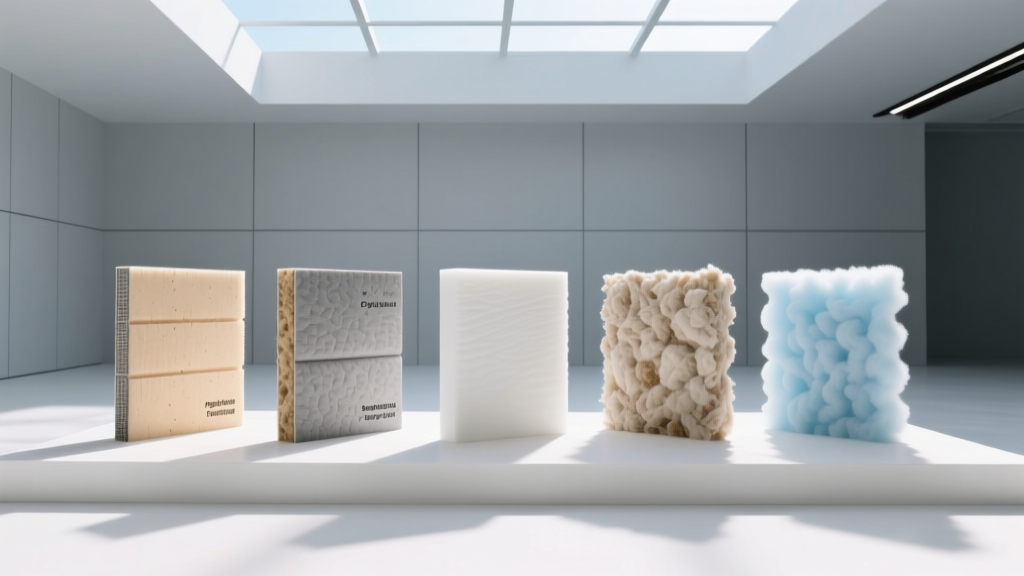
The True Cost of Wall Insulation: Beyond the Price Tag
When evaluating wall insulation materials for residential or light commercial construction in 2026, looking solely at the upfront cost per square foot is a critical mistake. Modern building codes, including the latest IECC updates, demand higher continuous insulation (ci) thresholds and stricter air-sealing metrics. Consequently, the true cost of insulation encompasses material pricing, specialized labor, air-barrier integration, and long-term energy payback. A cheaper batt insulation might require an additional $1,500 in house-wrap and caulking to meet blower-door test requirements, whereas a premium spray foam might eliminate those secondary costs entirely.
2026 Quick Cost Snapshot
Fiberglass Batts: $0.45 - $0.70 / sq. ft. (Material)
Mineral Wool: $0.95 - $1.30 / sq. ft. (Material)
Closed-Cell Spray Foam: $1.30 - $1.60 / board foot (Material)
Rigid Polyiso Board: $0.85 - $1.15 / sq. ft. (Material)
Note: Installed costs typically multiply material costs by 2x to 3.5x depending on regional labor rates and site accessibility.
2026 Material-by-Material Cost & Performance Matrix
The following matrix breaks down the core financial and thermal metrics for the most widely specified wall insulation materials in 2026. These figures reflect national averages for material costs before regional markups and contractor overhead.
| Material Type | R-Value per Inch | Material Cost (per sq. ft.) | Installed Cost (per sq. ft.) | Air Sealing Capability |
|---|---|---|---|---|
| Fiberglass Batts (Unfaced) | R-3.1 to R-3.4 | $0.45 - $0.70 | $1.20 - $1.80 | None (Requires separate barrier) |
| Mineral Wool Batts | R-4.2 to R-4.3 | $0.95 - $1.30 | $2.20 - $3.10 | Minimal (Dense, but not airtight) |
| Closed-Cell Spray Foam (2lb) | R-6.5 to R-7.0 | $1.30 - $1.60 (per board ft) | $6.50 - $8.50 | Excellent (Acts as Class II vapor retarder) |
| Rigid Polyiso (Foil-Faced) | R-6.0 to R-6.5 | $0.85 - $1.15 | $2.50 - $3.80 | Excellent (When seams are taped) |
Deep Dive: Pricing and Edge Cases by Material
Fiberglass Batts: The Budget Baseline
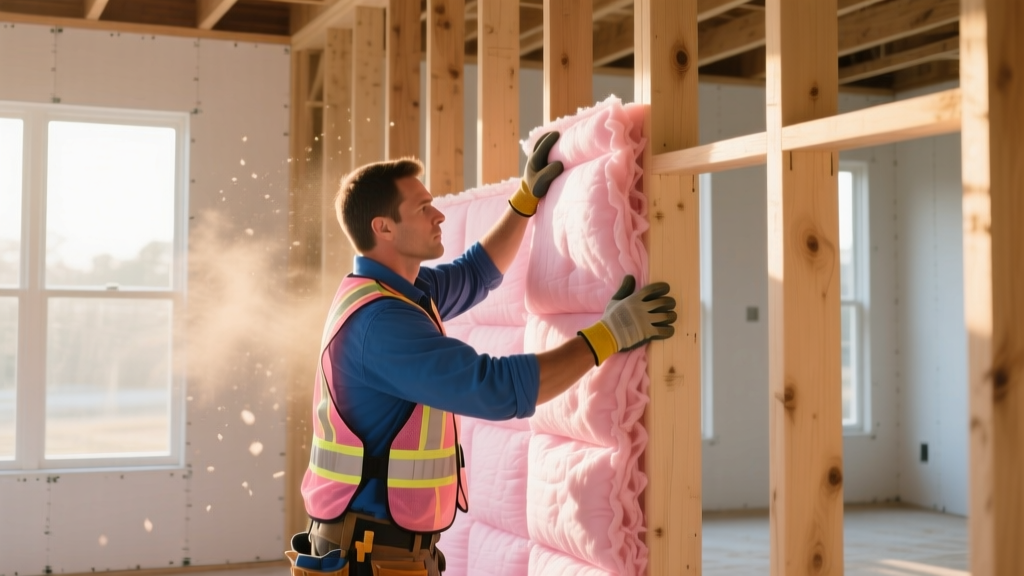
Fiberglass remains the most ubiquitous wall insulation material due to its low upfront cost and ease of installation. In 2026, standard R-15 unfaced batts designed for 2x4 framing cost approximately $0.55 per square foot. However, the U.S. Department of Energy warns that fiberglass is highly susceptible to installation defects. Compressing an R-19 batt into a 2x4 cavity does not yield R-19; it drops the effective R-value to roughly R-13 while increasing the cost. Furthermore, fiberglass is entirely air-permeable. To meet modern energy codes, contractors must pair it with a meticulously detailed exterior weather-resistive barrier (WRB) and interior air-sealing protocols, which adds $0.40 to $0.80 per square foot in hidden labor and material costs.
Mineral Wool: The Acoustic and Fire Upgrade
Mineral wool, specifically stone wool products like ROCKWOOL Comfortbatt, commands a 60% to 80% premium over fiberglass. For a standard 2x6 wall cavity, expect to pay around $1.15 per square foot for R-23 batts. The ROI on mineral wool extends beyond thermal resistance. Its dense, hydrophobic composition provides superior acoustic dampening (STC ratings of 45-50 in standard partitions) and is non-combustible up to 2,150°F. In fire-prone regions or multi-family dwellings where fire-blocking and sound transmission class (STC) ratings dictate insurance premiums, mineral wool offers a secondary financial return that fiberglass cannot match.
Closed-Cell Spray Foam (ccSPF): The Premium Air Barrier
Closed-cell spray polyurethane foam is the most expensive cavity insulation, costing between $6.50 and $8.50 per square foot installed for a standard 3.5-inch depth. Despite the steep initial capital, ccSPF provides a monolithic air barrier, a Class II vapor retarder, and increases the racking strength of wood-framed walls by up to 300%. For custom builds in extreme climate zones (Zones 6-8), the elimination of separate vapor barriers, house wraps, and extensive caulking can offset 20% to 25% of the foam's premium cost.
Rigid Polyisocyanurate (Polyiso): Continuous Insulation
To combat thermal bridging, modern codes increasingly mandate continuous exterior insulation. Foil-faced polyiso boards (like Huber ZIP System R-sheathing or Dow Thermax) offer an impressive R-6.5 per inch. A 1.5-inch layer applied over wall sheathing costs roughly $1.40 per square foot for materials. When calculating costs, factor in the requirement for longer, specialized structural fasteners to penetrate through the foam into the studs, which can add $0.15 per square foot to the hardware budget.
The Hidden Cost: Thermal Bridging and Whole-Wall R-Value
One of the most expensive mistakes builders make is confusing the "center-of-cavity" R-value with the "whole-wall" R-value. Wood studs act as thermal bridges, conducting heat outward at a much faster rate than the insulation between them. According to research published by the Building Science Corporation, a standard 2x6 wood-framed wall with R-21 fiberglass batts actually performs at an effective whole-wall R-value of only R-15 to R-16 due to the framing lumber, plates, and headers.
The Thermal Bridging Tax: If you pay for R-21 cavity insulation but only get R-15 performance, you are effectively paying a 30% premium for wasted thermal resistance. Upgrading to a hybrid "flash-and-batt" system (1 inch of closed-cell foam against the sheathing, plus a fiberglass batt) or adding exterior rigid polyiso restores the true R-value and maximizes your insulation ROI.
Installation Variables That Spike Your Budget
When soliciting bids for wall insulation, ensure the following line items are explicitly addressed to avoid change orders mid-project:
- Cavity Prep and Cleaning: Spray foam requires clean, dry cavities. If framers leave sawdust, mud, or off-cuts in the bays, the foam will adhere to the debris rather than the wood, creating air channels. Budget $0.05/sq. ft. for dedicated prep labor.
- Vapor Retarder Classification: Using kraft-faced fiberglass in a hot, humid climate (like Florida) can trap moisture inside the wall cavity, leading to mold remediation costs exceeding $10,000. Always specify unfaced batts paired with a variable-permeance membrane (like CertainTeed MemBrain) in mixed climates.
- Electrical and Plumbing Chases: Insulating around complex wiring runs and PEX plumbing manifolds takes 3x longer than open bays. Contractors often add a 15% "complexity surcharge" for walls with high electrical density.
ROI Framework: Calculating Your Energy Payback
The ENERGY STAR Seal and Insulate Program estimates that properly air-sealing and insulating a home can save an average of 15% on heating and cooling costs. To calculate your specific simple payback period (SPP), use this framework:
SPP = Total Installed Insulation Cost / Annual Energy Savings
Example Scenario (2,000 sq. ft. home in Climate Zone 5):
Upgrading from code-minimum R-13 fiberglass to a high-performance R-21 mineral wool + R-5 exterior polyiso assembly costs an additional $4,200. If the home's annual HVAC bill is $2,400, a 20% reduction yields $480 in annual savings. The simple payback period is 8.75 years. Given that premium insulation lasts the 50+ year lifespan of the structure, the net-positive ROI over the lifecycle of the building is substantial, not accounting for rising utility rates or increased property resale value.
Final Decision Matrix: Matching Budget to Building Science
Selecting the right wall insulation materials requires aligning your budget with your specific performance goals. Use this decision matrix to finalize your specification:
- Choose Fiberglass Batts if: You are building on a strict budget in a mild climate (Zones 2-3), have a highly skilled air-sealing crew, and need to minimize upfront material costs.
- Choose Mineral Wool if: You require enhanced fire resistance, superior acoustic privacy for multi-family units, or a moisture-resilient cavity insulation that will not sag over time.
- Choose Closed-Cell Spray Foam if: You are building in extreme climates, have complex framing geometries where batts cannot fit, or want to maximize structural rigidity and eliminate separate vapor barriers.
- Choose Rigid Polyiso if: You need to meet strict continuous insulation (ci) code requirements, eliminate thermal bridging, and maintain a high R-value per inch on the exterior envelope.
Written by
Elena RodriguezElena Rodriguez is a civil engineer and technical writer specializing in concrete technology, masonry systems, and ASTM/ACI compliance. She earned her B.S. in Civil Engineering from Texas A&M University and spent a decade at a materials testing laboratory, performing over 2,000 concrete compressive strength tests and masonry prism evaluations. Elena is an ACI-certified Field Testing Technician (Grade I) and a member of ASTM Committee C12 on Natural Building Stone. She currently consults on forensic engineering cases involving concrete failures and moisture intrusion. Based in San Antonio, TX, Elena is a proud member of the Society of Women Engineers (SWE) and coaches her daughter's FIRST Robotics team.
More from Elena Rodriguez
View all
Walls & Panels
Cost Analysis: Light Gauge Steel Framing Advantages and Disadvantages
Evaluate light gauge steel framing advantages and disadvantages through a strict cost analysis lens, comparing material, labor, and lifecycle expenses.
Aug 4, 2026

Walls & Panels
Gypsum Board Types: Exact Specifications, Thickness & Dimensions
Compare standard, Type X, and moisture-resistant gypsum board types. Get exact specifications, thicknesses, dimensions, and ASTM standards for your project.
Aug 4, 2026

Fire Resistance
Best Fire-Resistant Outdoor Decking Materials: 2026 Buyer Guide
Discover the best fire-resistant outdoor decking materials for 2026. Compare Class A PVC, aluminum, and hardwood options for WUI compliance and safety.
Aug 4, 2026