The Complete Guide to Chimney Stone Veneer: Materials, Costs, and Installation
Explore the complete guide to chimney stone veneer. Compare natural vs. manufactured materials, 2026 costs, weight limits, and installation best practices.

Understanding Chimney Stone Veneer Systems
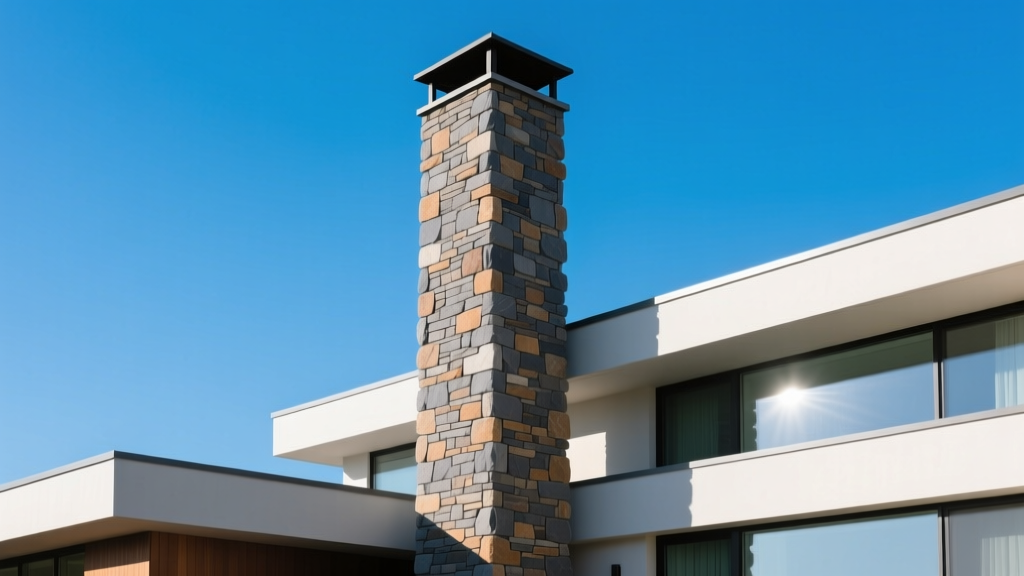
Chimney stone veneer transforms a standard masonry block or wood-framed chimney chase into a striking architectural focal point. Unlike full-bed stone, which requires a structural concrete footing to support 35 to 45 pounds per square foot (psf), veneer systems are adhered directly to a prepared substrate. This reduces the dead load to between 10 and 15 psf, allowing installation on existing structures without foundational reinforcement. However, the extreme thermal cycling and moisture exposure unique to chimney exteriors demand rigorous material selection and precise installation protocols to prevent delamination and efflorescence.
Natural vs. Manufactured Stone Veneer (MSV) for Chimneys
Choosing between natural thin stone and manufactured stone veneer (MSV) dictates the project budget, weight load, and aesthetic outcome. MSV is cast from Portland cement, lightweight aggregates, and iron oxide pigments in molds taken from real stone. Natural thin veneer is quarried stone sliced to a 0.75-inch to 1.25-inch thickness.
| Feature | Manufactured Stone Veneer (MSV) | Natural Thin Stone Veneer |
|---|---|---|
| Average Weight | 10 - 12 lbs / sq ft | 13 - 15 lbs / sq ft |
| Material Cost (2026) | $6.50 - $10.00 / sq ft | $9.00 - $16.00 / sq ft |
| Thickness | 0.75" - 1.5" | 0.75" - 1.25" |
| Color Consistency | High (batch controlled) | Low (natural variation) |
| Chipping / Scratching | Reveals concrete aggregate core | Solid color throughout |
Material Profiles: Top Choices for Chimney Exteriors
Manufactured Stone Veneer (MSV)
Brands like Eldorado Stone and Cultured Stone dominate the MSV market. For chimneys, dry-stack profiles (e.g., Eldorado's Dry-Stack Ledgestone) are highly recommended because they lack visible mortar joints, which are prone to cracking under the thermal expansion and contraction of the chimney flue. MSV is also highly resistant to freeze-thaw cycles when manufactured to ASTM C1670 standards.
Natural Thin Stone Veneer
Natural options like Tumble Creek Thin Veneer or Ozark Mountain Stone offer unmatched authenticity. For chimney applications, specify dense, low-porosity stones like slate, quartzite, or dense sandstone. Avoid highly porous limestones or soft sandstones for the upper chimney crown, as they can absorb water and spall during winter freezes.
Stacked Stone Panels
Pre-assembled mesh-backed stone panels (typically 6" x 24") offer rapid installation. While excellent for flat walls, they are problematic for chimneys. The rigid mesh backing struggles to conform to the tight corners and uneven substrates often found on chimney chases, leading to visible seam lines and compromised mortar adhesion. Use individual stones for chimney corners and transitions.
2026 Cost Breakdown: Materials and Labor
A standard residential chimney chase measures roughly 4 feet wide by 20 feet tall, yielding approximately 160 square feet of veneer area (accounting for all four sides and subtracting the flue cap). Below is the projected cost matrix for a 160 sq ft chimney project in 2026.
Estimated Project Costs (160 Sq Ft Chimney)
- MSV Materials (Stone, Mortar, Lath): $1,400 - $2,100
- Natural Thin Veneer Materials: $1,900 - $3,000
- Substrate Prep (WRB, Weep Screed, Cement Board): $450 - $700
- Professional Masonry Labor: $2,200 - $3,800 (at $14 - $24 per sq ft)
- Scaffolding Rental: $300 - $600
- Total Estimated Range: $4,350 - $10,200
Critical Installation Requirements for Chimneys
The Masonry Veneer Manufacturers Association (MVMA) outlines strict protocols for exterior adhered veneer. Chimneys introduce unique variables that require enhanced detailing.
Moisture Management and Flashing
Water is the primary enemy of chimney veneer. The assembly must begin with a corrosion-resistant weep screed installed at the base, a minimum of 4 inches above grade or 2 inches above paved surfaces. Over the structural sheathing, apply a weather-resistant barrier (WRB) like Tyvek CommercialWrap, followed by a self-furring, 2.5 lb per square yard galvanized steel lath. The lath must be fastened with corrosion-resistant nails or staples penetrating the structural framing by at least 1 inch. A 0.5-inch Type S mortar scratch coat is then applied and scored horizontally to provide a mechanical key for the setting bed.
Clearance to Combustibles
When veneering a wood-framed chimney chase that houses a factory-built metal flue, you must adhere to NFPA 211 standards. The stone veneer and its mortar bed cannot encroach upon the manufacturer-specified clearance to combustibles (typically a 2-inch air space around the metal flue pipe). The chase framing must be protected by a fire-rated assembly, and the veneer must not block any designed ventilation louvers at the top or bottom of the chase.
Common Failure Modes and How to Avoid Them
Chimney stone veneer failures are rarely caused by the stone itself; they are almost always substrate or moisture-related.
- Efflorescence (White Staining): Caused by water-soluble salts migrating through the porous mortar and stone. Fix: Use low-alkali Portland cement in your mortar mix, ensure proper chimney crown flashing, and apply a breathable, silane-siloxane penetrating sealer 28 days after installation.
- Delamination (Stones Falling Off): Occurs when the shear weight of the stone exceeds the bond strength of the mortar, often exacerbated by freeze-thaw expansion. Fix: Never butter the back of the stone and press it into a dry scratch coat. The scratch coat must be dampened, and a generous layer of Type S mortar must be applied to the back of each stone (back-buttering) to ensure 100% coverage and eliminate air pockets.
- Thermal Cracking at the Flue Liner: The masonry immediately surrounding the active flue liner expands significantly when the fireplace is in use. Fix: Install an expansion joint (compressible backer rod and high-temperature elastomeric sealant) where the stone veneer meets the metal flue cap or masonry crown to absorb thermal movement.
FAQ: Chimney Stone Veneer
Can I install stone veneer over an existing brick chimney?
Yes, provided the existing brick is unpainted, structurally sound, and free of efflorescence. You must clean the brick with a high-pressure washer and a mild muriatic acid solution (diluted 1:10) to remove soot and laitance. Because brick is highly absorptive, it must be thoroughly dampened before applying the scratch coat to prevent it from sucking the moisture out of the mortar too quickly.
Do I need to seal my chimney stone veneer?
Sealing is highly recommended for chimneys due to their exposure to driving rain and snow. Use a breathable, penetrating sealer (not a film-forming acrylic, which will trap moisture inside and cause spalling). Reapply the sealer every 3 to 5 years depending on local UV and weather exposure.
What mortar type is required for exterior chimney veneer?
Type S mortar is mandatory for exterior veneer applications. It offers a minimum compressive strength of 1,800 psi and higher flexural bond strength than Type N, which is critical for resisting the lateral wind loads and thermal shifting experienced by tall chimney structures.
Written by
Elena RodriguezElena Rodriguez is a civil engineer and technical writer specializing in concrete technology, masonry systems, and ASTM/ACI compliance. She earned her B.S. in Civil Engineering from Texas A&M University and spent a decade at a materials testing laboratory, performing over 2,000 concrete compressive strength tests and masonry prism evaluations. Elena is an ACI-certified Field Testing Technician (Grade I) and a member of ASTM Committee C12 on Natural Building Stone. She currently consults on forensic engineering cases involving concrete failures and moisture intrusion. Based in San Antonio, TX, Elena is a proud member of the Society of Women Engineers (SWE) and coaches her daughter's FIRST Robotics team.
More from Elena Rodriguez
View all
Walls & Panels
Cost Analysis: Light Gauge Steel Framing Advantages and Disadvantages
Evaluate light gauge steel framing advantages and disadvantages through a strict cost analysis lens, comparing material, labor, and lifecycle expenses.
Aug 4, 2026

Walls & Panels
Gypsum Board Types: Exact Specifications, Thickness & Dimensions
Compare standard, Type X, and moisture-resistant gypsum board types. Get exact specifications, thicknesses, dimensions, and ASTM standards for your project.
Aug 4, 2026

Fire Resistance
Best Fire-Resistant Outdoor Decking Materials: 2026 Buyer Guide
Discover the best fire-resistant outdoor decking materials for 2026. Compare Class A PVC, aluminum, and hardwood options for WUI compliance and safety.
Aug 4, 2026