Natural Stone Veneer Near Me: 2026 Cost & Sourcing Guide
Discover 2026 costs for natural stone veneer near you. Compare local quarry pricing, regional stone types, freight savings, and installation budgets.
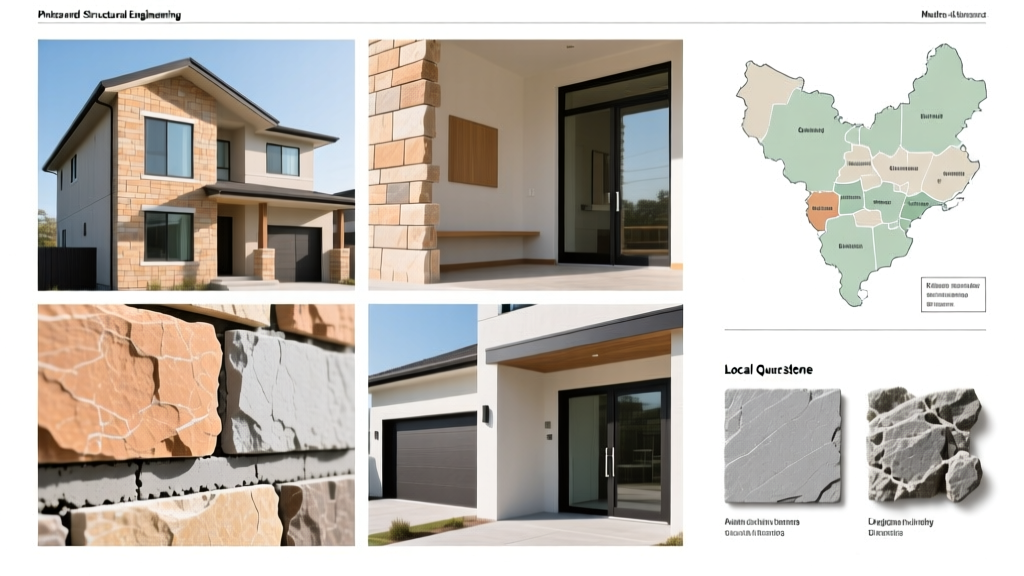
The Freight Factor: Why Local Sourcing Dictates Your Budget
When contractors and homeowners search for natural stone veneer near me, the primary motivation is rarely just convenience—it is freight economics. Natural stone veneer typically weighs between 12 and 15 pounds per square foot. For a standard 1,500-square-foot exterior facade, you are moving over 20,000 pounds of material. In 2026, Less-Than-Truckload (LTL) freight rates for heavy building materials average $2.50 to $4.50 per loaded mile. Sourcing stone from a regional distributor within a 150-mile radius rather than a national supplier can save between $1,800 and $3,500 in shipping fees alone, effectively reducing your total project cost by 10% to 15%.
Beyond raw freight costs, local sourcing minimizes the risk of transit breakage and allows you to physically inspect the color variance and bedding planes of the stone before purchasing. Natural stone is a geological product; the batch you see online may differ significantly in iron oxidation or quartz banding from the pallet that arrives on your driveway.
2026 Price Breakdown: Material, Labor, and Hidden Extras
Understanding the true cost requires separating the stone itself from the ancillary masonry supplies and skilled labor required for a code-compliant installation. The Natural Stone Institute emphasizes that proper substrate preparation and mortar selection are just as critical as the stone itself to prevent delamination.
| Cost Component | 2026 Average Price Range | Notes & Variables |
|---|---|---|
| Natural Stone Veneer (Flats) | $8.50 – $18.00 / sq.ft. | Varies by stone density, cut (sawn vs. split-face), and regional quarry availability. |
| Corner Pieces | $15.00 – $35.00 / lin.ft. | Sold by the linear foot, not square foot. Crucial for wrapping exterior corners realistically. |
| Mortar, Lath & Fasteners | $2.50 – $4.50 / sq.ft. | Includes Type S or Type N mortar, 2.5 lb galvanized metal lath, and corrosion-resistant nails. |
| Weather Resistive Barrier (WRB) | $0.75 – $1.50 / sq.ft. | House wrap and weep screeds required by IRC building codes for exterior moisture management. |
| Professional Masonry Labor | $14.00 – $28.00 / sq.ft. | Highly dependent on regional union rates, scaffold requirements, and pattern complexity. |
| Total Installed Cost | $25.75 – $52.00 / sq.ft. | For a 1,000 sq.ft. project, expect total budgets between $25,750 and $52,000. |
Regional Stone Availability and Pricing Matrix
Geology dictates local pricing. If you are sourcing natural stone veneer near you, your most cost-effective options will be stones quarried within your specific geological zone. Importing a stone from outside your region negates the financial benefits of local sourcing.
North America Regional Stone Guide
- Northeast & Mid-Atlantic: Pennsylvania Bluestone, Granite, and Fieldstone are abundant. Expect to pay $11–$16/sq.ft. locally. Importing limestone from the Midwest will double the price.
- Midwest: Wisconsin Dolomite, Indiana Limestone, and Kasota stone dominate. Local pricing is highly competitive, often ranging from $8–$13/sq.ft. due to high quarry density.
- South & Southwest: Texas Lueders Limestone, Oklahoma Sandstone, and Arizona Flagstone. These porous stones are softer and require specific sealers, but local material costs are low ($9–$14/sq.ft.).
- West & Pacific Northwest: Basalt, Slate, and Quartzite. Harder, denser stones that are more expensive to quarry and cut. Local costs range from $14–$22/sq.ft.
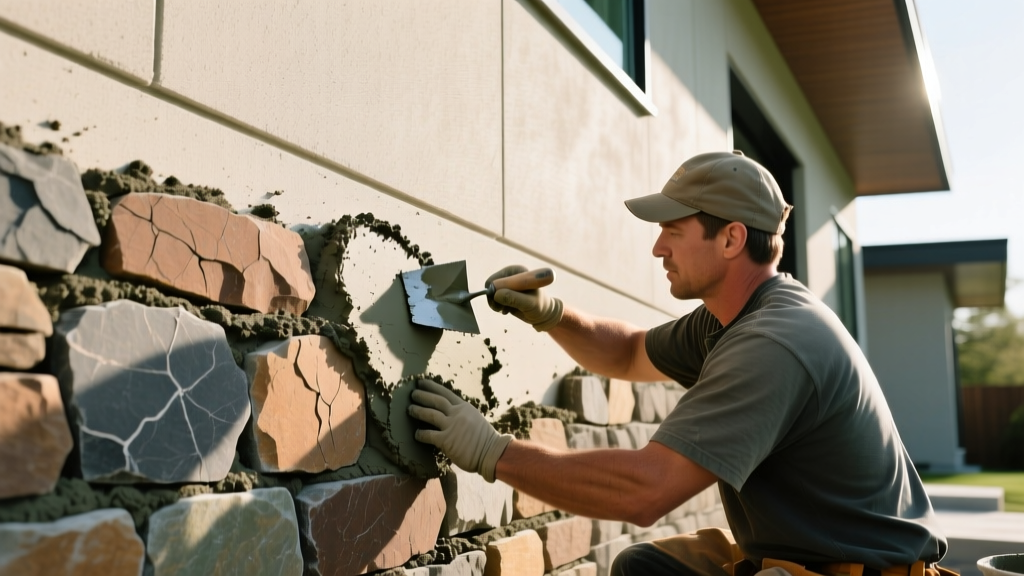
Evaluating Local Suppliers: Quarries vs. Masonry Yards
When you map out suppliers in your area, you will generally encounter two distinct business models. Choosing the right one depends on your project scale and your contractor's requirements.
Direct from Regional Quarries
Best for: Large projects (2,000+ sq.ft.), custom builders, and budget-conscious buyers willing to handle logistics.
Pros: Lowest possible material cost; direct access to bulk pallets; ability to request specific color ranges or thicknesses.
Cons: High minimum order quantities (often 500+ sq.ft.); stone may be sold in 'rough' form requiring the mason to do more on-site shaping; limited corner piece inventory.
Specialty Masonry Supply Yards
Best for: Residential renovations, smaller accents (fireplaces, wainscoting), and DIYers.
Pros: Curated, pre-sorted pallets with consistent thickness (typically 1 to 1.5 inches for veneer); full accessory stock (corners, lintels, sealers); expert advice on mortar pairing.
Cons: 20% to 40% markup over quarry-direct pricing; smaller selection of hyper-local geological varieties.
The Corner Piece Trap: A Common Sourcing Mistake
'The most frequent budget overrun in stone veneer projects stems from miscalculating corner pieces. Homeowners calculate square footage for the flats but forget that corners are sold by the linear foot and cost up to three times more per unit than flat stones.'
When requesting quotes from local suppliers, always provide both the square footage of flat wall space and the linear footage of all outside corners. For a standard two-story home with multiple architectural bumps and bays, corner pieces can account for up to 18% of the total material budget. Furthermore, always order 10% to 15% overage for flats, and a strict 20% overage for corners, as corner pieces are highly susceptible to chipping during transit and on-site cutting.
Technical Specifications: Mortar and Substrate Requirements
According to Angi's masonry cost and installation guidelines, improper mortar selection is a leading cause of veneer failure. The type of mortar you purchase from your local supplier must match the compressive strength and porosity of your chosen stone.
Mortar Selection Framework
- Type S Mortar: High compressive strength (minimum 1,800 psi). Required for dense, heavy stones like granite, basalt, and thick quartzite. It provides the structural bond necessary to hold heavier units to the lath.
- Type N Mortar: Medium compressive strength (minimum 750 psi) with higher lime content. Mandatory for softer, more porous stones like limestone and sandstone. Using a mortar that is harder than the stone will trap moisture, leading to spalling and freeze-thaw fracturing in colder climates.
Always ensure your local supplier provides a mortar that meets ASTM C270 specifications, and verify that your mason is using a corrosion-resistant weep screed at the base of the wall to allow trapped moisture to escape the cavity.
Step-by-Step Guide to Getting Accurate Local Quotes
To ensure you are getting a true apples-to-apples comparison when contacting local stone yards, use this exact checklist when calling or visiting suppliers:
- Specify the Cut Profile: Clearly state if you need 'sawn-back' (flat on the back for easier installation) or 'split-face' (irregular back requiring more mortar and skill). Sawn-back veneer costs roughly $1.50 more per sq.ft. but saves significantly on labor.
- Ask for the Weight per Pallet: Confirm your local delivery truck can handle the payload. Standard residential driveways can crack under the point-load of a forklift dropping a 4,000 lb pallet.
- Request Batch Photos: Ask the supplier to text or email photos of the exact pallets currently in the yard. Natural stone varies wildly from the marketing brochure.
- Verify Sealer Compatibility: If installing exterior sandstone or limestone, ask the supplier which breathable, siloxane-based penetrating sealer they recommend. Film-forming sealers will trap moisture and destroy the stone from the inside out.
- Confirm Return Policies on Overages: Many local yards will accept returns of unopened, undamaged pallets of flat stones, but will not accept returns on corner pieces. Factor this into your overage calculations.
By prioritizing regional geology and understanding the hidden logistics of heavy masonry materials, you can leverage local suppliers to secure premium natural stone veneer while keeping your 2026 construction budget strictly under control.
Written by
Sarah WhitfieldSarah Whitfield is a chartered quantity surveyor (MRICS) and construction cost analyst with 15 years of experience in material pricing, procurement strategy, and project budgeting. She earned her degree in Construction Management from the University of Reading (UK) and has worked on projects ranging from $2M custom homes to $180M mixed-use developments across North America and Europe. Sarah currently leads cost estimating for BuildMat Insight, maintaining a proprietary database of 4,000+ material price points updated quarterly. She is a frequent contributor to RSMeans cost data panels and has presented at the International Cost Engineering Council (ICEC) congress. Based in Denver, CO, Sarah is an avid trail runner and volunteer mentor for Women in Construction.
More from Sarah Whitfield
View all
Wood & Lumber
What Are the Different Types of Wood? A Builder's Guide
Compare structural softwoods, finish hardwoods, and engineered lumber. Analyze Janka ratings, MOE values, and 2026 pricing for construction.
Aug 4, 2026

Walls & Panels
Steel Framing vs Wood Framing: Corrosion and Moisture Defense
Compare steel framing vs wood framing for moisture resistance. Learn about galvanized coatings, condensation risks, and corrosion protection strategies.
Jul 21, 2026

Stone & Masonry
How to Cut Stone Veneer: Wet Saw vs Grinder Comparison
Compare the best tools for cutting stone veneer. We review wet saws, angle grinders, and chop saws to help you achieve clean, chip-free cuts.
Jul 21, 2026