Outdoor Veneer Stone Panels: Top 4 Brands Compared (2026)
Compare the best outdoor veneer stone panels for 2026. We analyze Eldorado, Versetta, and Cultured Stone on cost, installation, and weather resistance.
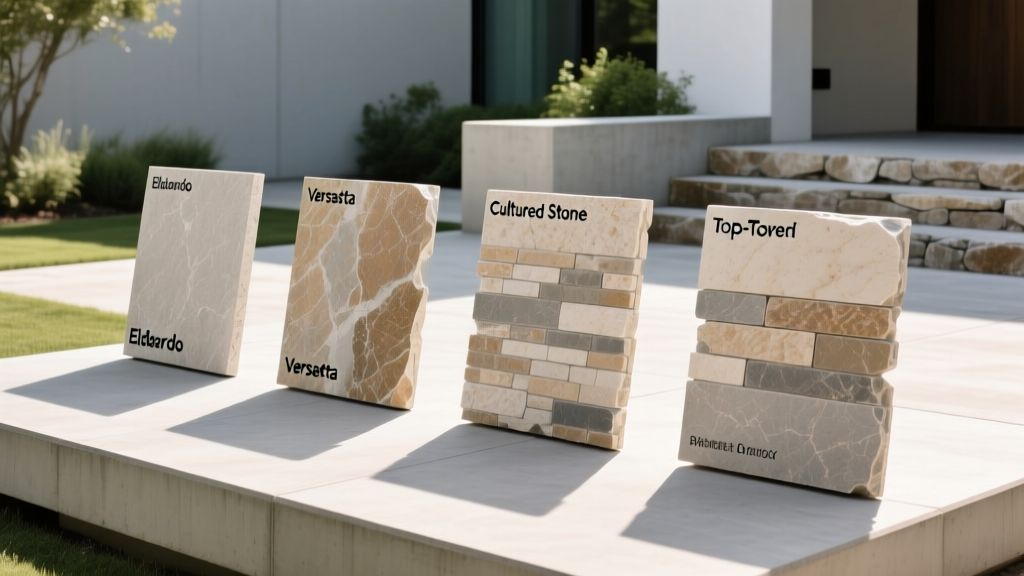
The Shift to Manufactured Exterior Cladding
Specifying exterior cladding requires balancing aesthetic authenticity with structural limitations and labor costs. Natural stone, while beautiful, imposes severe dead-load penalties and requires specialized masonry expertise. In 2026, high-density outdoor veneer stone panels dominate the commercial and high-end residential markets by replicating natural geology at a fraction of the weight. Adhered manufactured stone masonry veneer (AMSMV) typically weighs between 8 and 15 pounds per square foot, compared to 40+ pounds for full-bed natural stone.
However, not all manufactured panels perform equally in exterior environments. Freeze-thaw cycling, UV degradation, and moisture intrusion can cause catastrophic spalling if the wrong product or installation method is chosen. This comparison review evaluates the top outdoor veneer stone panel systems based on ASTM C1670 compliance, installation methodology, lifecycle cost, and real-world failure resistance.
2026 Comparison Matrix: Top Exterior Veneer Systems
| Brand / System | Installation Type | Avg. Weight | Material Cost (per sq. ft.) | Best Application |
|---|---|---|---|---|
| Eldorado Stone (Pro-Fit) | Mortar / Thin-Set | 10-12 lbs | $8.50 - $12.00 | High-end residential, commercial facades |
| Versetta Stone (Boral/Westlake) | Mortarless / Mechanical | 11 lbs (panelized) | $14.00 - $18.50 | DIY, rapid commercial build-outs, retrofits |
| Cultured Stone (Traditional) | Mortar / Lath | 8-10 lbs | $7.00 - $10.50 | Custom artisan blends, curved walls |
| Coronado Stone (Classic) | Mortar / Lath | 9-11 lbs | $7.50 - $11.00 | Large-scale tract housing, budget-conscious |
Brand Deep-Dives & Performance Profiles
Eldorado Stone (Pro-Fit Modular Series)
Eldorado Stone’s Pro-Fit series utilizes a high-density concrete mix cast in molds taken from actual quarried stone. The modular panels interlock horizontally, which drastically reduces installation time compared to individual piece veneers while maintaining a randomized, natural shadow line.
- Pros: Exceptional color consistency; deep relief profiles (up to 3.5 inches); highly resistant to UV fading due to iron-oxide pigment integration.
- Cons: Requires a traditional scratch coat and metal lath over a Weather Resistive Barrier (WRB); heavier than some competitors.
- Technical Insight: The Pro-Fit system’s compressive strength exceeds 4,000 PSI. For exterior applications in climate zones with heavy freeze-thaw cycles, specifiers must ensure the mortar joints are fully tooled and sealed with a breathable, silane-siloxane water repellent to prevent water ingress behind the veneer.
Versetta Stone by Westlake Royal (Mortarless System)
Versetta Stone revolutionized the exterior cladding market by integrating the stone veneer, metal lath, and air-gap drainage plane into a single 2-foot by 4-foot galvanized steel-backed panel. It attaches directly to structural sheathing or rigid insulation using exterior-grade screws.
- Pros: No mortar mixing or troweling required; built-in 1-inch air gap manages bulk water drainage; can be installed in freezing temperatures since wet materials are eliminated.
- Cons: Highest material cost; limited to linear, flat-plane applications (cannot wrap tight radii); panel seams require precise cutting to hide the mechanical flanges.
- Technical Insight: Because Versetta integrates a drainage matrix, it bypasses the need for a traditional weep screed at the base, provided the bottom starter course utilizes their specific weep-hole trim accessory. According to Westlake Royal Building Products, this system can withstand wind loads up to 150 mph when fastened at 12 inches on-center into structural framing.
Cultured Stone (Traditional Veneer)
Owned by Westlake Royal, Cultured Stone offers the broadest catalog of individual shapes and colors. Unlike modular panels, this system relies on the mason’s skill to blend individual stones over a mortar bed, allowing for complete customization of the joint profile (dry-stack, raked, or overgrouted).
- Pros: Unmatched design flexibility; lower material cost; excellent for wrapping columns and non-standard geometries.
- Cons: Highest labor cost; installation speed is entirely dependent on mason skill; high risk of efflorescence if mixed with high-alkali cements.
- Technical Insight: When specifying Cultured Stone for exterior retaining walls or outdoor kitchen bases, mandate the use of a Type S mortar mixed with a latex bonding admixture. Standard Type N mortar lacks the tensile strength required to resist lateral hydrostatic pressure in below-grade or grade-adjacent applications.
Hidden Costs: Material vs. Labor vs. Prep
A common mistake in project estimating is quoting outdoor veneer stone panels based solely on the pallet price. Exterior installations require rigorous moisture management. Below is a realistic 2026 cost breakdown per square foot for a standard 1,000 sq. ft. exterior facade.
| Cost Component | Traditional Mortar System (Eldorado/Cultured) | Mortarless Panel System (Versetta) |
|---|---|---|
| WRB & Flashing Prep | $1.50 - $2.25 | $1.50 - $2.25 |
| Lath / Furring | $0.80 - $1.20 | $0.00 (Integrated) |
| Mortar / Thin-Set | $1.00 - $1.50 | $0.00 |
| Stone Material | $8.50 - $11.00 | $15.00 - $18.50 |
| Labor (Installation) | $12.00 - $18.00 | $5.00 - $8.00 |
| Total Installed Cost | $23.80 - $33.95 | $21.50 - $28.75 |
Note: Mortarless systems often yield a lower total installed cost on commercial projects due to the drastic reduction in skilled masonry labor, despite the higher upfront material cost.
Critical Failure Modes & Prevention Strategies
Warning: Freeze-Thaw Spalling
The primary cause of outdoor veneer stone panel failure is water absorption followed by freezing expansion. According to The Masonry Society, adhered veneers must maintain an absorption rate below 28% per ASTM C1670. However, in northern climates, specifiers should demand products with absorption rates below 15%. Always apply a breathable penetrating sealer (never a film-forming acrylic) 30 days after installation to allow initial moisture to escape while blocking future bulk water.
Best Practice: Weep Screeds and Grade Clearance
Never install exterior stone veneer directly into the soil or concrete slab. Building codes require a minimum 4-inch clearance from unpaved grade and 2 inches from paved surfaces. A weep screed conforming to ASTM C1063 must be installed at the base to allow trapped moisture behind the WRB to drain. Blocking the weep screed with landscaping mulch or soil guarantees rot and efflorescence.
Decision Framework: Which System Fits Your Project?
Use this conditional framework to finalize your material specification:
- If the project is a DIY exterior renovation or a tight-deadline commercial facade: Choose Versetta Stone. The elimination of wet trades and the integrated drainage plane mitigate the highest risks of exterior installation errors.
- If the design features curved retaining walls, radiused columns, or requires a specific regional geology match: Choose Cultured Stone or Eldorado Stone individual pieces. The mortar bed allows for infinite geometric manipulation that rigid panels cannot achieve.
- If the budget is constrained but a premium look is required: Choose Eldorado Stone Pro-Fit. The modular interlocking system reduces masonry labor time by roughly 30% compared to traditional individual stones, bridging the gap between material cost and installation speed.
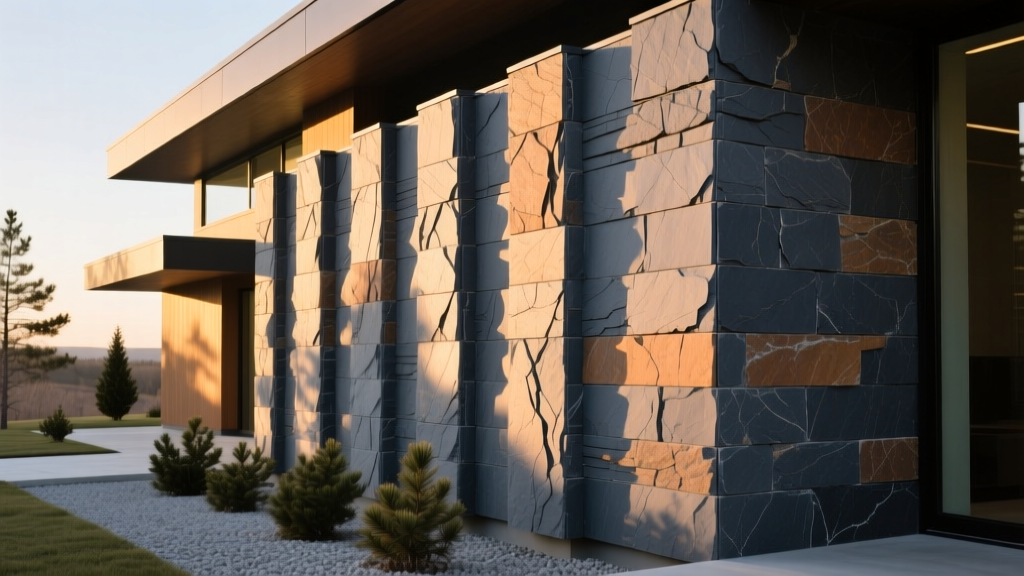
Final Specification Notes
Regardless of the brand selected, the longevity of outdoor veneer stone panels relies entirely on the water management system behind them. Always specify a high-performance fluid-applied WRB or two layers of Grade D building paper. Ensure kick-out flashing is installed at all roof-to-wall intersections to divert roof runoff away from the veneer. For comprehensive installation tolerances and fastening schedules, always consult the manufacturer's current technical resource library and adhere strictly to local building code amendments regarding exterior adhered masonry.
Written by
Elena RodriguezElena Rodriguez is a civil engineer and technical writer specializing in concrete technology, masonry systems, and ASTM/ACI compliance. She earned her B.S. in Civil Engineering from Texas A&M University and spent a decade at a materials testing laboratory, performing over 2,000 concrete compressive strength tests and masonry prism evaluations. Elena is an ACI-certified Field Testing Technician (Grade I) and a member of ASTM Committee C12 on Natural Building Stone. She currently consults on forensic engineering cases involving concrete failures and moisture intrusion. Based in San Antonio, TX, Elena is a proud member of the Society of Women Engineers (SWE) and coaches her daughter's FIRST Robotics team.
More from Elena Rodriguez
View all
Walls & Panels
Cost Analysis: Light Gauge Steel Framing Advantages and Disadvantages
Evaluate light gauge steel framing advantages and disadvantages through a strict cost analysis lens, comparing material, labor, and lifecycle expenses.
Aug 4, 2026

Walls & Panels
Gypsum Board Types: Exact Specifications, Thickness & Dimensions
Compare standard, Type X, and moisture-resistant gypsum board types. Get exact specifications, thicknesses, dimensions, and ASTM standards for your project.
Aug 4, 2026

Fire Resistance
Best Fire-Resistant Outdoor Decking Materials: 2026 Buyer Guide
Discover the best fire-resistant outdoor decking materials for 2026. Compare Class A PVC, aluminum, and hardwood options for WUI compliance and safety.
Aug 4, 2026