Top Eco Friendly Materials for Building in 2026: A Guide
Discover the top eco friendly materials for building in 2026. Compare costs, R-values, and carbon footprints for hempcrete, mass timber, and rammed earth.
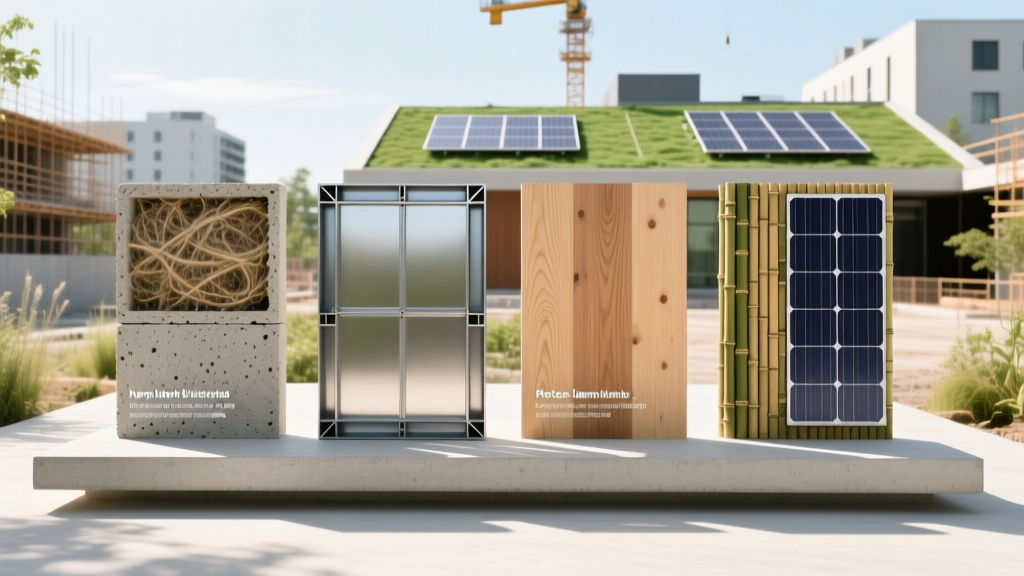
The 2026 Paradigm: Embodied Carbon vs. Operational Carbon
As building codes tighten and the grid decarbonizes, the focus of sustainable construction has shifted from operational energy to embodied carbon. According to Architecture 2030, embodied carbon—emissions associated with material extraction, manufacturing, and transport—will account for nearly half of total new construction emissions between now and 2050. Selecting the right eco friendly materials for building is no longer just about LEED points; it is a structural necessity for meeting 2026 International Green Construction Code (IgCC) mandates.
This guide bypasses surface-level greenwashing to provide exact specifications, pricing, and failure modes for the most viable low-carbon materials currently available for residential and light-commercial projects.
Load-Bearing and Structural Systems
The structural frame represents the largest single slice of a building's embodied carbon footprint. Replacing steel and Portland cement with bio-based alternatives requires understanding load paths and moisture dynamics.
Cross-Laminated Timber (CLT)
CLT panels consist of kiln-dried lumber boards stacked in alternating directions and bonded with structural adhesives. For 2026 multi-family and commercial builds, 5-ply and 7-ply panels are the standard.
- Specifications: Must be PRG-320 certified. Standard panel thicknesses range from 4.75 inches (3-ply) to 12.5 inches (7-ply).
- Cost: $9.00 to $14.00 per square foot for panels, excluding erection and craning.
- Carbon Profile: Acts as a carbon sink. Sequesters approximately 1.5 tons of CO2 per cubic meter of wood.
- Failure Mode & Edge Case: Acoustic transmission. Bare CLT floors fail Impact Insulation Class (IIC) ratings for multi-family units. You must specify a 1.5-inch concrete topping slab or a specialized acoustic mat (e.g., Regupol E48) to meet IBC code requirements.
Hempcrete (Hemp-Lime) Blocks
Hempcrete is a bio-composite made from the inner woody core of the hemp plant mixed with a lime-based binder. Unlike poured hempcrete, pre-cast blocks (like those from Hempitecture or IsoCann) drastically reduce on-site labor and curing times.
- Specifications: Non-load-bearing. Requires a post-and-beam structural frame (timber or steel). Standard block dimensions are typically 12" x 12" x 24".
- Cost: $3.50 to $5.50 per block (roughly $4.00 to $6.50 per square foot of wall area).
- Thermal Performance: R-2.4 to R-3.0 per inch. A 12-inch thick wall yields an R-value of roughly R-30 to R-36, but its true value lies in high thermal mass and vapor permeability.
- Failure Mode & Edge Case: Moisture trapping. Applying vapor-impermeable acrylic stucco or cement-based renders over hempcrete traps interior moisture, leading to rot in the structural timber frame. You must exclusively use vapor-open lime-based renders or clay plasters.
Structural Material Comparison Matrix
| Material | Embodied Carbon (kgCO2e/m3) | Load-Bearing? | Avg. Cost (USD/sq ft) | Primary Limitation |
|---|---|---|---|---|
| Traditional Concrete | 350 - 450 | Yes | $6.00 - $9.00 | High carbon, thermal bridging |
| Cross-Laminated Timber | -600 (Net Negative) | Yes | $9.00 - $14.00 | Acoustic transmission, fire coating reqs |
| Hempcrete Blocks | -50 to -100 | No | $4.00 - $6.50 | Requires secondary structural frame |
| Rammed Earth | 40 - 80 | Yes (Low-rise) | $15.00 - $25.00 | Labor intensive, poor insulation without core |
Thermal Envelope: Bio-Based Insulation
Standard fiberglass and XPS foam rely on petrochemicals and high-heat manufacturing. The 2026 market has standardized around two high-performance bio-based alternatives that comply with EPA Green Building guidelines for indoor air quality and lifecycle sustainability.
Dense-Pack Cellulose
Made from 80% post-consumer recycled newsprint treated with borates for fire and pest resistance. It is the most cost-effective eco-friendly insulation available.
- R-Value: R-3.5 to R-3.7 per inch.
- Installed Cost: $1.40 to $2.10 per board foot.
- Installation Specifics: Must be installed at a density of 3.5 lbs per cubic foot to prevent settling in wall cavities. If the installer uses a standard 2.5 lb density, the material will settle up to 20% over three years, leaving uninsulated gaps at the top of the wall plates.
Wood Fiber Insulation Boards
Manufacturers like Gutex and Steico produce rigid wood fiber boards from timber industry waste. These are used primarily as exterior continuous insulation (ci) to eliminate thermal bridging through studs.
- R-Value: R-3.6 per inch.
- Installed Cost: $2.80 to $4.00 per square foot (material only).
- Failure Mode: Wood fiber is highly hygroscopic. It cannot be exposed to bulk rain during the construction phase. If the weather barrier is delayed, the boards will swell, compromising the taped seams and ruining the air-sealing integrity.
When combining bio-based insulation (wood fiber, hemp, cellulose) with exterior cladding, never use a Class I vapor retarder (like polyethylene sheeting) on the interior warm side. These materials rely on "breathability" to dry to the interior if they absorb moisture. Use a smart vapor retarder (e.g., Pro Clima Intello) that adjusts its permeability based on seasonal humidity levels.
Interior Finishes: Health and Biophilia
Interior finishes dictate the immediate indoor air quality (IAQ) of a structure. The U.S. Green Building Council's LEED v5 framework heavily penalizes materials that off-gas volatile organic compounds (VOCs).
Unfired Clay Plaster
Clay plaster (brands like American Clay or Clayworks) replaces gypsum drywall mud and paint in high-end sustainable builds. It is applied in three coats over a substrate of drywall or wood fiberboard.
- Cost: $4.50 to $7.00 per square foot installed.
- Performance: Acts as a passive humidity buffer, absorbing excess moisture when indoor relative humidity exceeds 60% and releasing it when it drops below 40%. This reduces the latent load on HVAC systems by up to 15%.
- Limitation: Highly susceptible to abrasion and water damage. Not suitable for kitchens, bathrooms, or high-traffic corridors without a specialized natural wax topcoat.
Marmoleum (Natural Linoleum)
Often confused with vinyl (PVC), true linoleum is made from linseed oil, pine rosin, wood flour, and jute backing. Forbo's Marmoleum remains the industry benchmark.
- Cost: $5.00 to $8.00 per square foot for click-tile or sheet goods.
- Lifespan: 30 to 40 years with proper maintenance, vastly outlasting LVT (Luxury Vinyl Tile) which typically requires replacement every 10-15 years.
- Maintenance Edge Case: Requires a pH-neutral cleaner. Using alkaline floor strippers will saponify the linseed oil binder, leaving a permanently sticky, degraded surface.
Decision Framework: Selecting Materials by Climate Zone
An eco-friendly material in one climate can be a liability in another. Use this framework to align material properties with local environmental stressors.
- IECC Climate Zones 1-3 (Hot/Humid): Prioritize vapor-open exterior insulation (wood fiber) and avoid interior vapor retarders. Hempcrete excels here due to its high moisture-buffering capacity, preventing mold growth in high-humidity environments.
- IECC Climate Zones 4-5 (Mixed): Dense-pack cellulose paired with a smart vapor retarder is the most cost-effective and code-compliant assembly. CLT is highly viable for structural framing, provided exterior continuous insulation is added to prevent interstitial condensation.
- IECC Climate Zones 6-8 (Cold): Focus on extreme airtightness. Rammed earth with an insulated core is excellent for passive solar heat retention. Avoid hempcrete in below-grade applications, as frost heave and bulk ground moisture will compromise the lime binder.
Mandatory Certifications and EPDs to Demand
To verify the environmental claims of any material, do not rely on manufacturer marketing. Require the following documentation during the submittal phase:
- Environmental Product Declarations (EPDs): A third-party verified document (ISO 14025) that details the exact global warming potential (GWP) of the product. Demand Type III EPDs, not industry-wide averages.
- Declare Labels: Issued by the International Living Future Institute, this functions as a "nutrition label" for building materials, listing 100% of ingredients and verifying Red List (toxic chemical) compliance.
- Cradle to Cradle (C2C) Certification: Look for Silver or Gold ratings, which ensure the material can be safely composted or infinitely recycled at the end of its lifecycle.
By specifying materials backed by rigorous, third-party data, architects and builders can guarantee that their projects meet the stringent carbon-reduction targets required in 2026 and beyond.
Written by
David NakamuraDavid Nakamura is a licensed architect (AIA) and construction technology writer focused on sustainable building methods, mass timber engineering, and high-performance building envelopes. He holds a Master of Architecture from the University of Washington and is a certified Passive House Consultant (CPHC). David spent eight years at the Seattle firm Mithun, where he led the design of three LEED Platinum projects, before founding his own practice specializing in net-zero residential design. He serves on the editorial advisory board of GreenBuilder Magazine and has authored peer-reviewed papers on cross-laminated timber (CLT) connections for the Journal of Structural Engineering. In his spare time, David teaches woodworking at Pratt Fine Arts Center and kayaks the Puget Sound.
More from David Nakamura
View all
Construction Cost
Labor Cost to Build a Deck Per Sq Ft: 2026 Installation Guide
Discover the exact labor cost to build a deck per sq ft in 2026. This installation guide breaks down contractor rates, complexity factors, and hidden fees.
Aug 4, 2026

Construction Cost
How Much Does It Cost to Build a 3 Bedroom House? Financing Guide
Learn exactly how much it costs to build a 3 bedroom house and explore 2026 financing options, construction loan types, and budget frameworks for your build.
Aug 4, 2026

Construction Cost
Cost to Build a Tennis Court: 2026 Guide
How much does it cost to build a tennis court in 2026? Breakdowns for asphalt, concrete, and synthetic surfaces plus fencing and lighting.
Jul 30, 2026