Top Eco-Friendly Roofing Materials: 2026 Selection Guide
Compare top eco-friendly roofing materials for 2026. Expert selection criteria covering solar tiles, metal, and recycled synthetics with real costs.

The Core Metrics for Evaluating Sustainable Roofs
Selecting eco-friendly roofing materials requires moving beyond basic recyclability claims. In 2026, architectural specifications and high-performance residential builds demand rigorous quantification of environmental impact. When evaluating products, procurement teams and homeowners must prioritize two primary metrics: Environmental Product Declarations (EPDs) and the Solar Reflectance Index (SRI).
An EPD provides a transparent, third-party verified report of a product's embodied carbon—measuring the greenhouse gases emitted during raw material extraction, manufacturing, and transport. According to the U.S. Green Building Council, LEED v4.1 heavily incentivizes materials with published EPDs under the 'Building Product Disclosure and Optimization' credit. Meanwhile, the SRI measures a roof's ability to reject solar heat. A high SRI (typically 50+ for steep-slope and 82+ for low-slope) drastically reduces the urban heat island effect and lowers cooling loads. The Cool Roof Rating Council maintains the definitive database for verified SRI ratings across all major roofing manufacturers.
Material Deep-Dive: Performance, Cost, and Edge Cases
Below is an analysis of the top three sustainable roofing categories, detailing specific product lines, current installed costs, and non-obvious failure modes.
24-Gauge Standing Seam Metal (Galvalume AZ50)
Metal roofing remains the benchmark for sustainable steep-slope applications due to its 100% recyclability at end-of-life and high recycled content (often 25-95% depending on the mill). For 2026 installations, 24-gauge Galvalume with an AZ50 coating (0.50 oz of aluminum-zinc per square foot) offers the optimal balance of structural rigidity and corrosion resistance.
Installed Cost: $14.50 – $19.00 per square foot.
Lifespan: 50–70 years.
Edge Case / Failure Mode: Thermal expansion. A 40-foot metal panel can expand up to 1.5 inches in extreme temperature swings. Installers must use floating mechanical clips rather than fixed fasteners to prevent panel buckling and fastener back-out, which compromises the weathertight seal.
Building-Integrated Photovoltaics (BIPV) Shingles
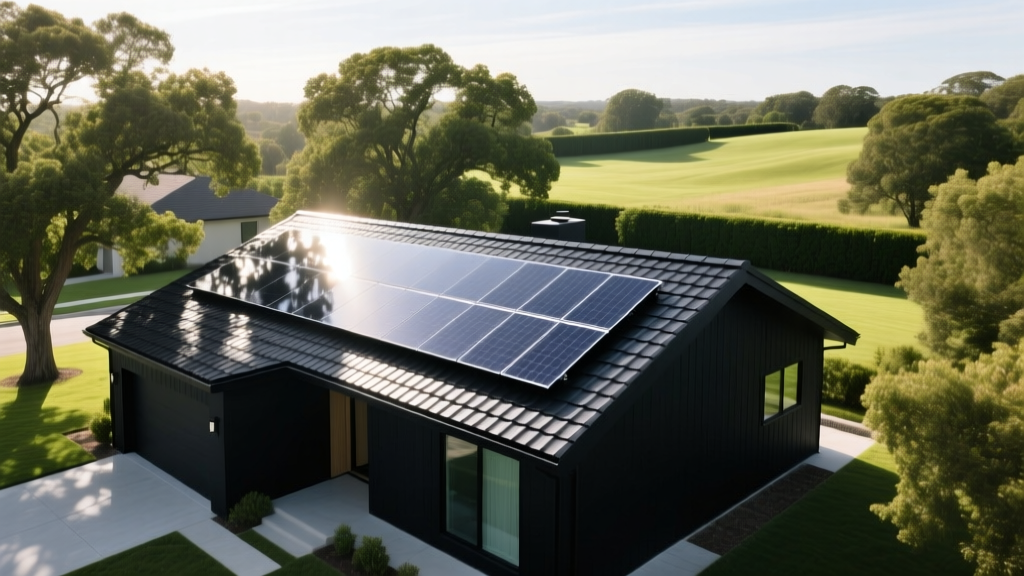
BIPV systems replace traditional roofing materials with active solar generators. The GAF Timberline Solar system dominates the 2026 residential market by integrating nailing-flange solar shingles directly into standard asphalt shingle courses, eliminating the need for heavy aluminum racking.
Installed Cost: $22.00 – $32.00 per square foot (roofing portion only; inverter and electrical rough-in add $4,000–$7,000).
Lifespan: 25-year power warranty; 30-year weatherization warranty.
Edge Case / Failure Mode: Heat degradation and micro-inverter failure. BIPV shingles sit flush against the roof deck, restricting airflow compared to rack-mounted panels. This increases operating temperatures, which can reduce solar conversion efficiency by 10-15% in high-heat climates. Furthermore, if a micro-inverter fails, roofers must carefully unseal and remove surrounding shingles to access the wiring harness.
For deeper technical specifications on BIPV integration and grid-tied performance, refer to the National Renewable Energy Laboratory (NREL) guidelines on integrated photovoltaics.
Recycled Polymer Slate
Engineered from post-industrial plastics and rubber (such as reclaimed automotive bumpers and PVC pipe offcuts), polymer slate mimics the aesthetic of natural quarried slate at a fraction of the weight and embodied carbon. EcoStar’s Majestic Niagara line is a premier example, offering Class 4 impact resistance and a 1-inch profile.
Installed Cost: $11.00 – $16.00 per square foot.
Lifespan: 50 years.
Edge Case / Failure Mode: UV stabilizer depletion. While highly impact-resistant, early-generation polymer slates suffered from chalking and brittleness after 20 years of intense UV exposure. Ensure the selected product utilizes advanced co-extruded UV inhibitors and carries a specific warranty against color fading and impact degradation in high-altitude, high-sun zones.
2026 Cost, Lifespan, and Carbon Comparison Matrix
The following matrix synthesizes the financial and environmental trade-offs of leading sustainable roofing systems. Embodied carbon values represent industry averages for products with verified EPDs.
| Material Type | Installed Cost (per sq ft) | Expected Lifespan | Embodied Carbon (kg CO2e/m²) | Cool Roof Potential (SRI) |
|---|---|---|---|---|
| Standing Seam Metal (Cool Pigment) | $14.50 – $19.00 | 50–70 Years | 12.5 – 18.0 | 45 – 65 (Steep Slope) |
| BIPV Solar Shingles | $22.00 – $32.00 | 25–30 Years | 35.0 – 45.0 | 15 – 25 (Low Reflectance) |
| Recycled Polymer Slate | $11.00 – $16.00 | 50 Years | 8.0 – 12.0 | 20 – 40 (Color Dependent) |
| Clay/Concrete Tile (Recycled Aggregate) | $15.00 – $22.00 | 75–100 Years | 25.0 – 35.0 | 30 – 75 (Glaze Dependent) |
Climate-Specific Decision Framework
Sustainability is inherently tied to durability; a roof that fails prematurely and requires replacement doubles its environmental footprint. Use this framework to match materials to regional climate stressors.
High-Wind and Hurricane Zones (Gulf Coast, Southeast)
- Primary Selection: 24-gauge or 22-gauge standing seam metal with concealed fasteners.
- Specification Requirement: Require Miami-Dade County NOA (Notice of Acceptance) certification, which mandates uplift resistance testing up to 180 mph. Avoid BIPV shingles in these zones, as wind-driven debris can easily fracture the tempered glass surfaces, voiding both the weatherization and power warranties.
Heavy Snow and Freeze-Thaw Cycles (Northeast, Mountain West)
- Primary Selection: Metal roofing with a snow-retention system, or recycled polymer slate.
- Specification Requirement: Metal roofs shed snow rapidly, creating dangerous avalanches. Install tubular snow guards in a staggered pattern calculated by a structural engineer based on roof pitch and ground snow load. For polymer slate, ensure the underlayment is a self-adhering ice and water shield extending at least 36 inches past the interior warm wall line to prevent ice dam water infiltration.
High-Heat and Arid Environments (Southwest)
- Primary Selection: Metal roofing with specialized cool-roof PVDF (Kynar 500) paint systems, or light-colored clay tiles.
- Specification Requirement: Prioritize SRI over embodied carbon in these regions. The operational energy saved by reflecting solar radiation vastly outweighs the initial manufacturing carbon. Specify a minimum SRI of 50 for steep-slope applications to maximize HVAC energy reductions.
Navigating LEED v4.1 and Local Rebate Requirements
For commercial projects or high-end residential builds pursuing green certification, material selection must align with specific compliance pathways. Under LEED v4.1, projects can earn up to 4 points in the Materials and Resources (MR) category by sourcing products with Type III EPDs and demonstrating reduced global warming potential (GWP).
Furthermore, the financial viability of eco-friendly roofing is heavily influenced by local utility rebates. Many municipal utilities in 2026 offer tiered incentives for cool roofing. For example, installing a metal roof with an SRI above 50 may qualify for a $0.15 per square foot rebate, while integrating BIPV shingles unlocks the 30% Federal Residential Clean Energy Credit, which applies to the total installed cost of the solar-integrated system. Always verify the specific SRCC (Solar Rating & Certification Corporation) rating of BIPV products to ensure they meet the minimum efficiency thresholds required for federal and state tax incentives.
Ultimately, the optimal eco-friendly roof is one that balances low embodied carbon, high solar reflectance, and extreme durability tailored to the local microclimate. By demanding EPDs, specifying correct gauges and coatings, and anticipating material-specific failure modes, builders can deliver roofs that perform flawlessly for half a century while minimizing their ecological footprint.
Written by
Elena RodriguezElena Rodriguez is a civil engineer and technical writer specializing in concrete technology, masonry systems, and ASTM/ACI compliance. She earned her B.S. in Civil Engineering from Texas A&M University and spent a decade at a materials testing laboratory, performing over 2,000 concrete compressive strength tests and masonry prism evaluations. Elena is an ACI-certified Field Testing Technician (Grade I) and a member of ASTM Committee C12 on Natural Building Stone. She currently consults on forensic engineering cases involving concrete failures and moisture intrusion. Based in San Antonio, TX, Elena is a proud member of the Society of Women Engineers (SWE) and coaches her daughter's FIRST Robotics team.
More from Elena Rodriguez
View all
Walls & Panels
Cost Analysis: Light Gauge Steel Framing Advantages and Disadvantages
Evaluate light gauge steel framing advantages and disadvantages through a strict cost analysis lens, comparing material, labor, and lifecycle expenses.
Aug 4, 2026

Walls & Panels
Gypsum Board Types: Exact Specifications, Thickness & Dimensions
Compare standard, Type X, and moisture-resistant gypsum board types. Get exact specifications, thicknesses, dimensions, and ASTM standards for your project.
Aug 4, 2026

Fire Resistance
Best Fire-Resistant Outdoor Decking Materials: 2026 Buyer Guide
Discover the best fire-resistant outdoor decking materials for 2026. Compare Class A PVC, aluminum, and hardwood options for WUI compliance and safety.
Aug 4, 2026