Sustainable Roof Materials: 2026 Cost vs Benefit Analysis
Compare the 2026 costs, lifespan, and energy ROI of sustainable roof materials including metal, cool membranes, solar shingles, and green roofs.

The 2026 Financial Reality of Sustainable Roofing
Transitioning to eco-friendly roofing is no longer just an environmental statement; it is a calculated financial decision driven by energy codes, material longevity, and localized utility rebates. When evaluating sustainable roof materials, builders and homeowners must look past the initial invoice. The true metric of value is the Levelized Cost of Energy (LCOE) and the lifecycle replacement cost. In 2026, supply chain stabilization has normalized prices for recycled metals and photovoltaic integrations, making the ROI timelines for premium sustainable roofs shorter than they were five years ago.
Material Matrix: Upfront Cost vs Lifetime Value
The following matrix breaks down the installed costs, expected lifespans, and primary financial benefits of the top four sustainable roofing systems currently dominating the market.
| Material Type | 2026 Installed Cost (per sq. ft.) | Expected Lifespan | Primary Financial Benefit | Key Metric (SRI / Efficiency) |
|---|---|---|---|---|
| Recycled Standing Seam Metal | $16.00 - $24.00 | 50 - 70 Years | Zero replacement cycles; high scrap value | SRI: 45-65 (depending on coating) |
| High-SRI Cool Roof (TPO/PVC) | $9.00 - $14.00 | 25 - 30 Years | 10-15% reduction in peak cooling loads | SRI: 82 - 105 |
| Integrated Solar Shingles | $22.00 - $32.00 | 25 - 30 Years (Roof) / 25 Years (PV) | Offset utility costs; net metering revenue | Efficiency: 17% - 20% |
| Extensive Green Roof (Sedum) | $28.00 - $45.00 | 40 - 50+ Years (Membrane protected) | Stormwater fee reductions; HVAC extension | Retains 50-60% annual rainfall |
Material Deep Dive: Upfront Costs vs Lifetime ROI
Recycled Standing Seam Metal (The Durability Champion)
Modern standing seam metal roofs, particularly those utilizing 24-gauge Galvalume steel with a Kynar 500 fluoropolymer finish, contain up to 95% recycled content and are 100% recyclable at the end of their life. The upfront cost of $16 to $24 per square foot is steep compared to architectural asphalt shingles ($5 to $8 per square foot). However, the break-even point occurs around year 18, which is precisely when a standard asphalt roof requires its first full tear-off and replacement.
Edge Case Consideration: Metal roofs require specialized flashing details around penetrations. Improper installation of neoprene washers or butyl tape sealants at the ridge caps will lead to micro-leaks that void manufacturer warranties. Always specify a concealed-fastener system with a minimum 1.5-inch seam height for snow-load regions.
High-SRI Cool Roof Membranes (The Commercial Standard)
For low-slope commercial and modern residential applications, 60-mil Thermoplastic Polyolefin (TPO) or Polyvinyl Chloride (PVC) single-ply membranes represent the most cost-effective sustainable option. By reflecting up to 85% of solar radiation, these membranes drastically reduce the urban heat island effect. According to the U.S. Department of Energy, cool roofs can reduce peak cooling demand by 10% to 15%, which directly lowers utility demand charges for commercial buildings.
The Catch: TPO membranes are susceptible to puncture from hail or heavy foot traffic. To protect your investment in high-traffic areas (like around HVAC units), specify a walkway pad system and increase the membrane thickness to 80-mil.
Integrated Solar Shingles (The Energy Generator)
Products like the GAF Timberline Solar system have bridged the gap between traditional roofing and solar arrays. Unlike bulky rack-mounted panels, these nailable solar shingles integrate directly with standard asphalt shingles, reducing wind uplift risks and aesthetic friction. At $22 to $32 per square foot (blended cost for the entire roof area and solar components), the initial capital expenditure is the highest on this list.
However, the financial benefit is twofold: you are simultaneously purchasing a roof and a power plant. With the 30% Federal Solar Investment Tax Credit (ITC) extended through 2032, a $35,000 solar roof installation yields a $10,500 tax credit, effectively dropping the net cost to parity with premium metal or slate alternatives.
Extensive Living Roofs (The Stormwater Manager)
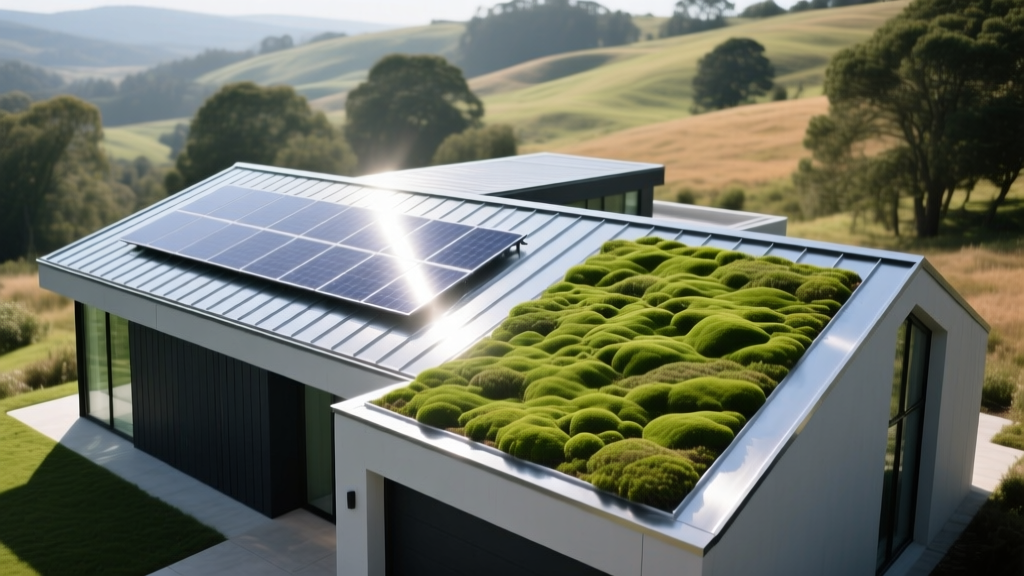
Extensive green roofs utilize shallow growing media (2.5 to 4 inches deep) planted with drought-resistant sedum mats, such as the Xero Flor XF301 system. Weighing only 15 to 20 pounds per square foot when saturated, they can often be retrofitted onto existing structures without major steel reinforcement. The Environmental Protection Agency (EPA) notes that green roofs not only insulate the building envelope but also significantly reduce localized ambient temperatures.
Financial Offset: Many municipalities (e.g., Washington D.C., Portland, Toronto) offer stormwater utility fee credits or direct density bonuses for retaining rainwater on-site. An extensive green roof can retain up to 60% of annual rainfall, potentially eliminating the need for expensive underground retention cisterns in new commercial builds.
Before selecting a green roof or heavy solar tile system, mandate a structural load analysis. A saturated 4-inch green roof adds roughly 20 lbs/sq ft. If your existing roof joists were engineered only for standard dead loads (10-15 lbs/sq ft) plus local snow loads, you will need to sister the joists or add steel I-beams. This structural reinforcement can add $8,000 to $15,000 to a residential project, instantly destroying the ROI timeline if not caught during the feasibility phase.
The Break-Even Framework: When to Choose What
Selecting the right sustainable roof material depends entirely on your building's geometry, local climate, and ownership horizon. Use this decision matrix to guide your specification:
- Choose Metal if: You are building a steep-slope residential home in a wildfire-prone or heavy snow region, and you plan to hold the property for 20+ years. The fire resistance (Class A) and snow-shedding capabilities provide unmatched risk mitigation.
- Choose Cool Membranes if: You are developing a commercial warehouse or flat-roof multi-family building in a cooling-dominated climate (ASHRAE Zones 1-3). The HVAC downsizing alone will pay for the roof premium.
- Choose Solar Shingles if: Local utility rates exceed $0.25/kWh, net metering policies are favorable, and the roof has a southern exposure with minimal tree canopy shading.
- Choose Green Roofs if: You are in an urban center with strict stormwater management mandates, high ambient summer temperatures, and a desire to maximize rooftop amenity space or achieve LEED Platinum certification.
Offsetting Costs: LEED v4.1 and Financial Incentives
For commercial developers, sustainable roof materials are a direct pathway to achieving LEED v4.1 credits. Specifically, the Sustainable Sites (SS) Credit: Heat Island Reduction requires a minimum of 75% of the roof area to have a 3-year aged Solar Reflectance Index (SRI) of 32 or higher (for steep slopes) or 78 or higher (for low slopes). Utilizing high-SRI cool membranes or vegetated roofs secures up to 2 points toward certification, which translates to higher tenant lease premiums and access to green building financing with lower interest rates.
Furthermore, always consult the DSIRE database (Database of State Incentives for Renewables & Efficiency) before finalizing your budget. State-level rebates for cool roof installations or solar integrations can shave 10% to 20% off the net material cost, drastically accelerating the payback period.
Sustainable Roof Materials FAQ
Do cool roofs lose their reflectivity over time?
Yes. Dirt, algae, and weathering can reduce a cool roof's initial SRI by 15% to 20% within the first three years. To maintain LEED compliance and energy savings, specify membranes with self-cleaning surface technologies or schedule low-pressure washings every 24 months. Always use the 3-year aged SRI value for your energy modeling, not the day-one factory value.
Can I install solar shingles on an existing older roof?
It is highly discouraged to install integrated solar shingles over an existing roof deck that is more than 10 years old. Because the solar components have a 25-year warranty and are woven directly into the roofing matrix, replacing the underlying deck later requires dismantling the entire solar array. Always plan a solar shingle installation to coincide with a full roof replacement.
Are metal roofs louder during rainstorms?
This is a myth perpetuated by uninsulated agricultural pole barns. In a modern residential or commercial application, the metal panels are installed over a continuous synthetic underlayment, rigid polyiso insulation, and a solid plywood or OSB deck. The acoustic dampening provided by the insulation and interior drywall makes a standing seam metal roof indistinguishable from asphalt shingles during heavy rain.
Written by
Sarah WhitfieldSarah Whitfield is a chartered quantity surveyor (MRICS) and construction cost analyst with 15 years of experience in material pricing, procurement strategy, and project budgeting. She earned her degree in Construction Management from the University of Reading (UK) and has worked on projects ranging from $2M custom homes to $180M mixed-use developments across North America and Europe. Sarah currently leads cost estimating for BuildMat Insight, maintaining a proprietary database of 4,000+ material price points updated quarterly. She is a frequent contributor to RSMeans cost data panels and has presented at the International Cost Engineering Council (ICEC) congress. Based in Denver, CO, Sarah is an avid trail runner and volunteer mentor for Women in Construction.
More from Sarah Whitfield
View all
Wood & Lumber
What Are the Different Types of Wood? A Builder's Guide
Compare structural softwoods, finish hardwoods, and engineered lumber. Analyze Janka ratings, MOE values, and 2026 pricing for construction.
Aug 4, 2026

Walls & Panels
Steel Framing vs Wood Framing: Corrosion and Moisture Defense
Compare steel framing vs wood framing for moisture resistance. Learn about galvanized coatings, condensation risks, and corrosion protection strategies.
Jul 21, 2026

Stone & Masonry
How to Cut Stone Veneer: Wet Saw vs Grinder Comparison
Compare the best tools for cutting stone veneer. We review wet saws, angle grinders, and chop saws to help you achieve clean, chip-free cuts.
Jul 21, 2026