Board and Batten Siding Materials: Weather Resistance Guide
Compare the weather resistance of top board and batten siding materials. Analyze moisture, wind, and UV performance for fiber cement, wood, and steel.

The Physics of Vertical Siding Exposure
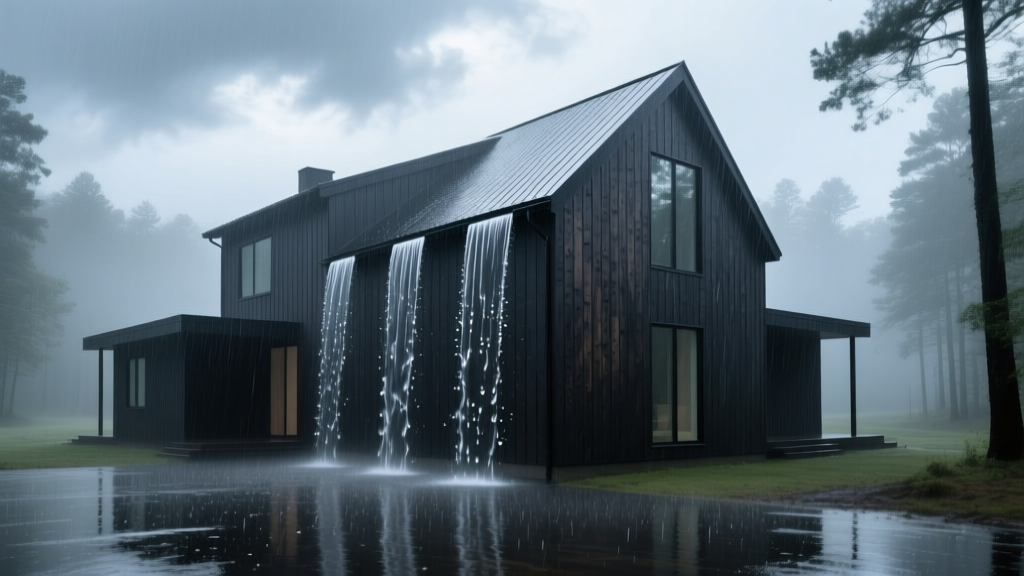
Board and batten siding relies on vertical orientation to shed water, utilizing gravity to channel rainwater down the face of the boards and away from the structural envelope. Unlike horizontal lap siding, where water can pool in the horizontal laps, the vertical profile of board and batten siding materials inherently reduces hydrostatic pressure buildup. However, the intersection where the batten overlaps the board creates a capillary break that must be managed. According to the Building Science Corporation, managing rainwater in vertical assemblies requires a continuous drainage plane and careful attention to the horizontal transitions, such as window headers and foundation flashings, where vertical water flow is interrupted.
Capillary Action and Batten Overlaps
When wind-driven rain strikes a vertical wall at an angle, water can be forced upward or sideways into the batten-to-board joint. If the batten material is highly absorptive (like untreated cedar) or if the joint lacks a proper weather-resistive barrier (WRB) behind it, capillary action will draw moisture into the wall cavity. To mitigate this, modern building codes require a minimum 3/8-inch drainage gap (rainscreen) behind the boards when installed in high-precipitation zones, allowing any intruding moisture to drain freely to the foundation weep system.
Material Weather Resistance Matrix
The performance of board and batten siding materials varies drastically based on the substrate. The following matrix compares the four primary materials used in modern construction across critical weather-resistance metrics.
| Material Substrate | Moisture & Rot Resistance | Wind Load Tolerance | UV & Thermal Stability | Required Maintenance Cycle |
|---|---|---|---|---|
| Fiber Cement (e.g., James Hardie) | Exceptional (Impervious to rot) | High (Up to 130 mph with proper nailing) | Excellent (Minimal expansion/contraction) | 10-15 years (Paint/Coating) |
| Engineered Wood (e.g., LP SmartSide) | High (Zinc borate treated) | Moderate-High (Class 3/4 impact rated) | Moderate (Requires expansion gaps) | 5-10 years (Paint/Coating) |
| Natural Wood (Clear Cedar) | Moderate (Prone to cupping/splitting) | Moderate (Vulnerable to uplift) | Poor (Degrades under UV without stain) | 3-5 years (Stain/Sealant) |
| Steel (24-Gauge PVDF Coated) | Exceptional (Galvalume core) | Exceptional (Up to 150+ mph) | High (Subject to thermal oil-canning) | 20+ years (Fade warranty) |
Fiber Cement: Freeze-Thaw and Moisture Dynamics
Fiber cement remains the dominant choice for board and batten siding materials in mixed and northern climates due to its dimensional stability. Products like the James Hardie Artisan Collection (5/8-inch thickness) are manufactured to ASTM C1186 standards, ensuring they will not warp, rot, or delaminate when exposed to prolonged moisture.
The critical weather-resistance feature of modern fiber cement is its climate-specific engineering. Hardie's HZ5 product line, designed for northern climates, features a proprietary drip edge and a denser core formulation to withstand aggressive freeze-thaw cycling. In contrast, the HZ10 line is optimized for southern and coastal climates, focusing on UV resistance and moisture shedding in high-humidity environments.
Engineered Wood: Impact and Humidity Tolerance
Engineered wood board and batten, notably LP SmartSide, utilizes a strand-board core treated with zinc borate to resist fungal decay and termite infestation. From a weather perspective, engineered wood excels in hail-prone regions. The SmartSide ExpertFinish line carries a Class 3 or Class 4 impact resistance rating (tested via UL 2218), meaning it can withstand 1.75-inch to 2-inch hail strikes without the shattering or cracking commonly seen in fiber cement or vinyl.
However, engineered wood is highly susceptible to linear expansion and contraction. In environments with extreme humidity swings (e.g., the US Southeast), boards can expand up to 1/8-inch per 16-foot length. Installers must leave a precise 3/16-inch gap at all end joints and batten intersections, sealing the gap with a high-quality, paintable polyurethane sealant (such as OSI Quad Max) that can accommodate up to 25% joint movement without tearing.
Steel: Wind Uplift and Coastal Salt Spray
For coastal zones and hurricane-prone regions, steel board and batten siding materials offer unmatched structural resilience. A 24-gauge Galvalume steel panel with a PVDF (Kynar 500) fluoropolymer coating will withstand salt spray corrosion and Category 4 wind uplift when fastened correctly. According to FEMA's Home Builder's Guide to Coastal Construction, continuous metal panels or structurally fastened metal battens provide superior resistance to wind-borne debris compared to brittle or wood-based alternatives.
The primary weather-related challenge with steel is thermal expansion and "oil-canning" (visible waviness in the flat pans of the panels). To mitigate this in high-sun exposure zones, specify panels with stiffening ribs or striations in the flat areas, and use slotted fastening holes that allow the metal to expand and contract laterally without buckling against the fastener shaft.
Real-World Failure Modes and Edge Cases
Even the most advanced board and batten siding materials will fail if specific edge cases are ignored during the detailing phase. The following failure modes account for the majority of weather-related warranty claims:
- Bottom-Edge Wicking: When horizontal battens are used as an architectural accent across a vertical board field, the top edge of the horizontal batten can trap water. If the horizontal batten is not beveled (sloped at least 5 degrees) or capped with Z-flashing, water will pool, leading to localized rot in wood or efflorescence in fiber cement.
- The "Zipper Effect" in High Winds: If battens are nailed only into the underlying sheathing (OSB/Plywood) rather than directly into the structural studs, a high-wind event can create a vacuum that pulls the sheathing off the framing, taking the siding with it. Battens must always be fastened into studs using minimum 2-1/2-inch ring-shank nails or structural screws.
- Tannin Bleed and Flashing Stains: When using natural cedar boards, heavy rainfall will leach tannins from the wood. If the roof flashings above the siding are uncoated galvanized steel, the acidic tannin water will rapidly corrode the flashing, causing rust streaks. Always pair natural wood siding with aluminum or copper flashings, or use a tannin-blocking primer on the wood end-grains.
- UV Degradation of Caulk: In deep-shadow profiles (where 1x4 battens overlap 1x10 boards), the vertical joints are often caulked to prevent wind intrusion. Standard acrylic latex caulks will chalk and fail within 3 years under direct UV exposure. Specify UV-stable silicone or polyurethane sealants, or better yet, rely on the WRB and rainscreen gap rather than caulking vertical joints, allowing the assembly to breathe.
Installation Tolerances for Extreme Weather Zones
To maximize the weather resistance of board and batten assemblies, adhere to these strict installation tolerances based on the regional climate threat:
Zone 1: Heavy Rain and High Humidity (Pacific Northwest, Gulf Coast)
Mandate a 3/4-inch furring strip rainscreen behind all boards. Use a fluid-applied WRB (such as Henry Blueskin) rather than traditional housewrap, as fluid-applied membranes seal around fastener penetrations, preventing wind-driven rain from bypassing the drainage plane.
Zone 2: High Wind and Hurricane Corridors (Atlantic Seaboard, Florida)
Upgrade fastener schedules. While standard code requires nails every 16 inches on center, high-wind zones require fastening every 8 inches on center at the perimeter of the wall (corners, eaves, and rakes). Use 3-inch stainless steel ring-shank nails for wood and engineered wood to prevent withdrawal under cyclic wind loading.
Zone 3: Extreme Freeze-Thaw (Upper Midwest, Northeast)
Never use blind-nailing techniques where the nail head is hidden by the overlapping batten if the board itself requires face-nailing for structural shear. Ensure all cut edges of fiber cement or engineered wood are sealed with a dedicated edge-sealer (like James Hardie ColorPlus touch-up) before installation to prevent microscopic water intrusion that expands upon freezing, causing the board face to delaminate.
Written by
Elena RodriguezElena Rodriguez is a civil engineer and technical writer specializing in concrete technology, masonry systems, and ASTM/ACI compliance. She earned her B.S. in Civil Engineering from Texas A&M University and spent a decade at a materials testing laboratory, performing over 2,000 concrete compressive strength tests and masonry prism evaluations. Elena is an ACI-certified Field Testing Technician (Grade I) and a member of ASTM Committee C12 on Natural Building Stone. She currently consults on forensic engineering cases involving concrete failures and moisture intrusion. Based in San Antonio, TX, Elena is a proud member of the Society of Women Engineers (SWE) and coaches her daughter's FIRST Robotics team.
More from Elena Rodriguez
View all
Walls & Panels
Cost Analysis: Light Gauge Steel Framing Advantages and Disadvantages
Evaluate light gauge steel framing advantages and disadvantages through a strict cost analysis lens, comparing material, labor, and lifecycle expenses.
Aug 4, 2026

Walls & Panels
Gypsum Board Types: Exact Specifications, Thickness & Dimensions
Compare standard, Type X, and moisture-resistant gypsum board types. Get exact specifications, thicknesses, dimensions, and ASTM standards for your project.
Aug 4, 2026

Fire Resistance
Best Fire-Resistant Outdoor Decking Materials: 2026 Buyer Guide
Discover the best fire-resistant outdoor decking materials for 2026. Compare Class A PVC, aluminum, and hardwood options for WUI compliance and safety.
Aug 4, 2026