How to Choose Cheap Siding Materials: A 2026 Selection Framework
Evaluate cheap siding materials using our 2026 selection framework. Compare lifecycle costs, thickness specs, and hidden traps for budget exteriors.
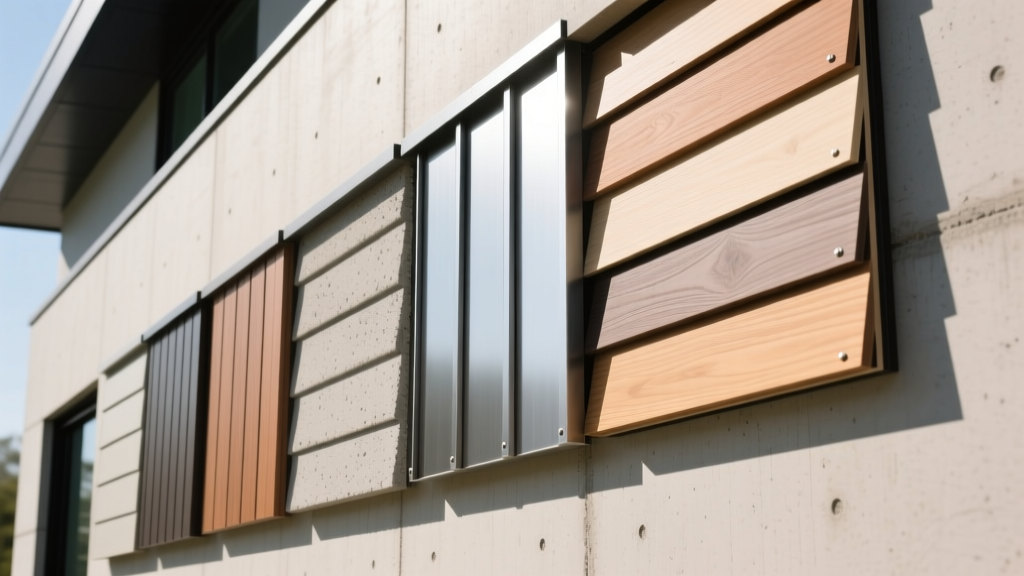
Selecting budget-friendly exterior cladding requires looking past the per-square-foot sticker price. The cheapest material upfront often carries the highest lifecycle cost due to premature fading, impact damage, or moisture intrusion. When evaluating cheap siding materials in 2026, contractors and homeowners must balance initial capital expenditure with long-term structural performance. This selection framework provides a technical, data-driven approach to identifying budget siding that actually protects your building envelope without draining your wallet in maintenance.
The True Cost Matrix: Initial Price vs. Lifecycle Value
Before diving into specific products, it is critical to understand the Total Cost of Ownership (TCO). The table below breaks down the 2026 market averages for the three most viable budget siding categories, factoring in material, baseline installation, and projected 30-year maintenance.
| Material Category | Material Cost (per sq.ft.) | Installed Cost (per sq.ft.) | Expected Lifespan | 30-Year Maintenance Cost |
|---|---|---|---|---|
| Premium Vinyl (.042" - .046") | $1.80 - $3.20 | $4.50 - $7.50 | 30 - 40 Years | $0 (Wash only) |
| Engineered Wood (Strand Substrate) | $2.50 - $4.50 | $6.00 - $9.50 | 30 - 50 Years | $2.50 - $4.00 (Repaint) |
| Corrugated Steel (29-Gauge) | $2.00 - $3.50 | $5.50 - $8.50 | 40 - 60 Years | $0.50 (Fastener check) |
| Builder-Grade Vinyl (.035" - .040") | $1.20 - $1.70 | $3.50 - $5.50 | 15 - 20 Years | $4.00 (Early replacement) |
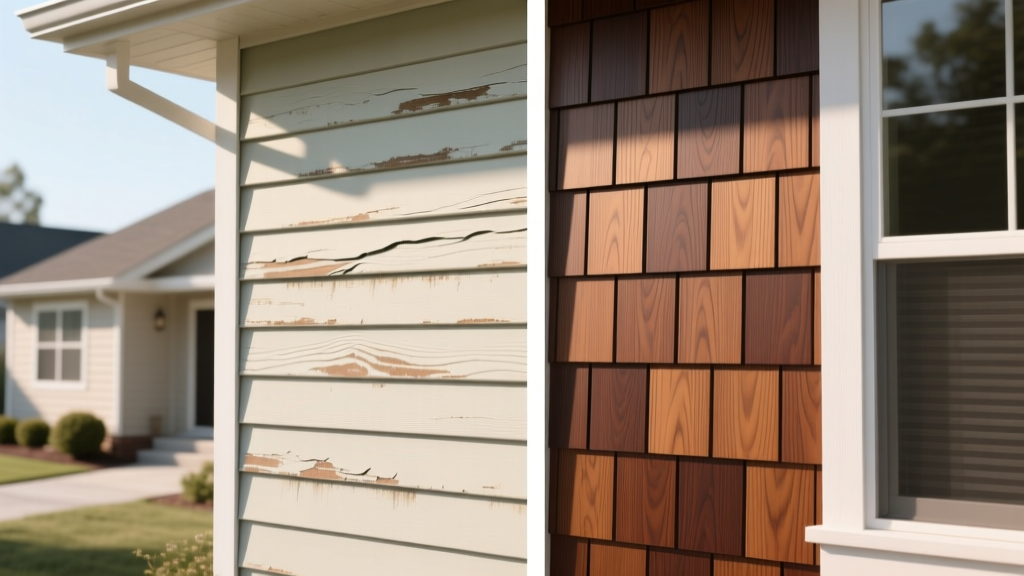
The 4-Step Selection Framework for Budget Siding
To avoid the false economy of ultra-low-grade materials, run your project through this four-step evaluation matrix.
Step 1: Climate and Moisture Tolerance Profiling
Budget materials fail primarily through moisture intrusion and thermal expansion. If you are building in a high-humidity or coastal region, engineered wood requires strict adherence to manufacturer gap tolerances (typically a 1/8-inch gap at all end joints) to prevent edge swelling. Conversely, in regions with extreme freeze-thaw cycles, rigid vinyl becomes brittle. According to the Vinyl Siding Institute, vinyl installed in northern climates must meet ASTM D3679 standards for impact resistance at lower temperatures. Always verify the material's specific impact rating (measured in inch-pounds) against your local weather data.
Step 2: Substrate and Prep Requirements
The hidden cost of cheap siding materials is often the substrate preparation they demand. Corrugated agricultural steel, for example, requires a perfectly plumb framing structure or a continuous layer of horizontal furring strips to prevent the metal from telegraphing every minor stud imperfection. Engineered wood requires a high-quality weather-resistive barrier (WRB) like Tyvek or Zip System, as trapped moisture will compromise the wood strands if the flashing tape fails at the window heads.
Step 3: Profile, Gauge, and Thickness Specifications
Never purchase siding based on the product line name alone; always check the spec sheet for physical dimensions.
- Vinyl: Reject anything under .040 inches thick. Builder-grade .035" vinyl will warp, ripple, and tear easily during high winds. Target .042" to .046" for structural rigidity.
- Metal: 29-gauge Galvalume is the budget standard for exposed-fastener corrugated panels. Do not drop to 32-gauge for residential wall applications, as it lacks the stiffness to span standard purlin spacing without oil-canning (visible rippling).
- Engineered Wood: Opt for 7/16-inch thickness over 3/8-inch for lap profiles to ensure the nailing hem can hold a ring-shank nail securely without blowout.
Step 4: Warranty Loophole Analysis
Read the prorated warranty schedule. Many budget vinyl manufacturers offer a "Lifetime Warranty" that covers 100% of material defects for only the first two years, dropping to 50% in year three and depreciating annually. Furthermore, fading warranties on dark-colored budget vinyl often exclude "chalking" or color shifts of less than 5 Delta E units, which is visually noticeable on a large exterior facade.
Material Deep-Dive: Top Budget Contenders Evaluated
Vinyl Siding: The Baseline Contender
Vinyl remains the most ubiquitous budget option. In 2026, supply chain stabilization has kept premium vinyl prices competitive. Brands like Mastic (by Ply Gem) and CertainTeed offer entry-level premium lines (such as Mastic Quest) that provide deep wood-grain embossing and .042" thickness at a budget price point.
Pro-Tip: To maximize the lifespan of budget vinyl, specify a light-reflective value (LRV) of 50 or higher. Darker colors absorb more UV radiation and heat, causing the PVC to expand and contract more violently, leading to premature joint separation and nail-hem tearing.
Engineered Wood: The Aesthetic Upgrade
LP SmartSide Strand Substrate siding bridges the gap between cheap vinyl and expensive fiber cement. Treated with zinc borate to resist termite and fungal degradation, it offers the deep shadow lines of real cedar at a fraction of the cost.
However, the critical failure mode for engineered wood is improper edge sealing. Every cut end must be primed and sealed in the field before installation. If your contractor plans to pre-cut all boards on a sawhorse and leave the ends raw until the final coat of paint, you are inviting moisture wicking into the substrate core.
Corrugated Steel: The Modern Industrial
Often overlooked in residential construction, 29-gauge corrugated steel panels (typically used in agricultural settings) are increasingly popular for modern, budget-conscious builds. When installed vertically over a rainscreen gap, it sheds water instantly and is completely impervious to rot and insects. The National Association of Home Builders notes a steady increase in alternative material adoption for modern farmhouse and contemporary designs. The primary drawback is the noise during heavy rain and the requirement for specialized metal-cutting shears to avoid voiding the Galvalume coating warranty.
When installing cheap siding materials, do not skip the continuous exterior insulation. Budget vinyl and thin metal offer virtually zero R-value. The U.S. Department of Energy strongly recommends continuous exterior insulation to prevent thermal bridging through the wall studs. Adding a 1/2-inch layer of rigid foam or mineral wool board behind your budget siding will drastically improve your building's energy efficiency and prevent interior condensation issues.
Decision Tree: Matching Your Scenario to the Right Material
Use this logical flow to determine which cheap siding material fits your specific project constraints:
- Scenario A: You are flipping a property, need the lowest absolute upfront cost, and plan to sell within 3 years.
- Selection: Builder-Grade Vinyl (.040"). Focus on neutral colors (white, beige) to minimize heat distortion and appeal to the broadest buyer pool.
- Scenario B: You are building a modern, low-maintenance cabin in a heavily wooded, fire-prone area (WUI Zone).
- Selection: 29-Gauge Corrugated Steel. Vinyl and engineered wood will melt or ignite; steel provides a non-combustible exterior shell on a budget.
- Scenario C: You are building your forever home but need to allocate more budget to the interior and roof.
- Selection: Engineered Wood (LP SmartSide). It provides the high-end curb appeal of natural wood or fiber cement, allowing you to save money compared to James Hardie products while maintaining excellent structural integrity.
Hidden Cost Traps to Avoid in 2026
When soliciting bids for cheap siding materials, contractors often lowball the estimate by excluding essential trim and accessory pieces. Ensure your contract explicitly includes the following line items, which can account for up to 20% of the total material cost:
- Corner Posts and J-Channels: Budget vinyl siding requires matching vinyl corner posts and J-channels around every window. Upgrading to aluminum coil-stock trim wrapped on-site costs an additional $2.50 to $4.00 per linear foot but eliminates the cheap, plastic look of vinyl trim.
- House Wrap and Flashing Tape: Never reuse old house wrap. Specify a modern, fluid-applied WRB or a high-quality woven membrane with compatible butyl flashing tape at all penetrations.
- Tear-Off and Disposal: If replacing existing siding, verify whether the bid includes tear-off. Leaving old wood siding in place and installing vinyl over it is a code violation in many municipalities and traps moisture against the sheathing.
- Starter Strips and Utility Blocks: Ensure the bid includes proper vinyl starter strips at the foundation line and exterior-rated mounting blocks for all light fixtures and hose bibs to prevent water infiltration behind the siding panels.
By applying this framework, you can confidently select cheap siding materials that deliver long-term durability, energy efficiency, and aesthetic appeal, ensuring your budget exterior stands the test of time.
Written by
Sarah WhitfieldSarah Whitfield is a chartered quantity surveyor (MRICS) and construction cost analyst with 15 years of experience in material pricing, procurement strategy, and project budgeting. She earned her degree in Construction Management from the University of Reading (UK) and has worked on projects ranging from $2M custom homes to $180M mixed-use developments across North America and Europe. Sarah currently leads cost estimating for BuildMat Insight, maintaining a proprietary database of 4,000+ material price points updated quarterly. She is a frequent contributor to RSMeans cost data panels and has presented at the International Cost Engineering Council (ICEC) congress. Based in Denver, CO, Sarah is an avid trail runner and volunteer mentor for Women in Construction.
More from Sarah Whitfield
View all
Wood & Lumber
What Are the Different Types of Wood? A Builder's Guide
Compare structural softwoods, finish hardwoods, and engineered lumber. Analyze Janka ratings, MOE values, and 2026 pricing for construction.
Aug 4, 2026

Walls & Panels
Steel Framing vs Wood Framing: Corrosion and Moisture Defense
Compare steel framing vs wood framing for moisture resistance. Learn about galvanized coatings, condensation risks, and corrosion protection strategies.
Jul 21, 2026

Stone & Masonry
How to Cut Stone Veneer: Wet Saw vs Grinder Comparison
Compare the best tools for cutting stone veneer. We review wet saws, angle grinders, and chop saws to help you achieve clean, chip-free cuts.
Jul 21, 2026