2026 5/8 Gypsum Board Price Analysis: Costs and Budgeting
Analyze the 2026 5/8 gypsum board price per sheet and installed square foot. Compare Type X, acoustic, and standard drywall costs for accurate budgeting.
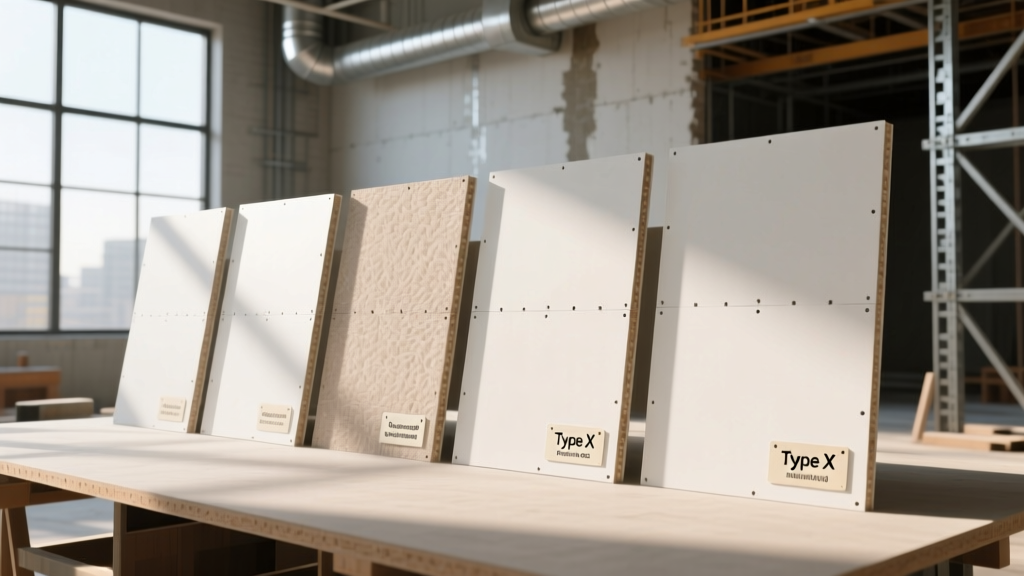
The True Cost of 5/8-Inch Drywall in 2026
Calculating an accurate project budget requires moving beyond basic per-sheet estimates. The 5/8 gypsum board price in 2026 is heavily influenced by raw material extraction costs, synthetic gypsum availability from coal plant closures, and regional freight surcharges. While 1/2-inch panels dominate residential interiors, 5/8-inch panels remain the undisputed standard for commercial partitions, multi-family shaft walls, and high-performance acoustic assemblies.
According to the Gypsum Association, 5/8-inch panels provide superior sag resistance on ceiling grids and are mandatory for achieving specific 1-hour and 2-hour fire-resistance ratings under ASTM E119. However, this performance comes with a physical and financial premium. A standard 4x8-foot sheet of 5/8-inch drywall weighs approximately 70.4 pounds—nearly 37% heavier than its 1/2-inch counterpart. This weight differential directly impacts both the material logistics and the labor installation rates.
2026 National Pricing Snapshot
- Material Only (Standard 5/8"): $0.45 - $0.55 per sq. ft.
- Material Only (Type X 5/8"): $0.58 - $0.72 per sq. ft.
- Total Installed Cost (Commercial): $2.85 - $4.10 per sq. ft.
- Freight Surcharge Average: 8% - 14% of base material cost
Price Breakdown by Board Type and Application
The base 5/8 gypsum board price fluctuates significantly depending on the core additives and facing materials. Below is a detailed cost matrix for standard 4x8-foot and 4x12-foot panels, reflecting Q1 2026 distributor pricing for full-unit (truckload) purchases.
| Panel Type | Primary Use Case | 4x8 Sheet Price | 4x12 Sheet Price | ASTM Standard |
|---|---|---|---|---|
| Standard Core | Basic commercial ceilings/walls | $14.50 - $17.00 | $22.00 - $25.50 | C1396 |
| Type X (Fire-Rated) | Shaft walls, fire partitions | $18.50 - $23.00 | $28.00 - $34.50 | C1396 / E119 |
| Moisture/Mold Resistant | Commercial restrooms, kitchens | $24.00 - $29.00 | $36.00 - $43.50 | D3273 |
| Acoustic/Sound-Damping | Multi-family demising walls | $48.00 - $65.00 | $75.00 - $98.00 | E90 / E497 |
Hidden Cost Variables: Regional Freight and Surcharges
Gypsum is a high-weight, low-value commodity. The National Association of Home Builders (NAHB) consistently highlights that transportation accounts for a disproportionate percentage of the final delivered cost of heavy building materials. Because a single 4x12 sheet of 5/8-inch Type X board weighs over 105 pounds, a full truckload maxes out on weight before it maxes out on volume. If your project is located more than 150 miles from a manufacturing plant or major distribution hub, expect freight surcharges to inflate your base 5/8 gypsum board price by 12% to 18%.
Material vs. Labor: Calculating the Total Installed Cost
Focusing solely on the material invoice is a critical budgeting error. In commercial drywall contracting, labor represents 60% to 75% of the total installed cost. The physical properties of 5/8-inch board dictate specific installation constraints that drive up labor hours.
⚠️ Labor Multiplier Warning: Ceiling Installations
Hanging 5/8-inch panels on ceilings requires specialized equipment. A standard 1/2-inch panel can sometimes be maneuvered by a two-person crew using a T-lifter. A 70+ pound 5/8-inch panel mandates the use of a motorized drywall lift or a three-person crew. Factor in an additional $0.35 to $0.50 per square foot in labor costs for ceiling grids compared to vertical wall partitions.
Commercial Hanging Rates: An experienced two-person union crew will typically hang between 1,200 and 1,500 square feet of 1/2-inch drywall per day. When switching to 5/8-inch board, fatigue and handling complexities reduce that daily output to roughly 900 to 1,100 square feet. This 20% drop in productivity must be modeled into your labor estimates.
Waste Factor and Yield Calculations
Standard estimating software often defaults to a 10% waste factor for drywall. However, 5/8-inch boards are frequently utilized in complex commercial assemblies—such as elevator shaft walls, stairwells, and rated corridor partitions. These areas are dense with MEP (Mechanical, Electrical, and Plumbing) penetrations, requiring extensive cutting.
- Open Office / Large Retail Spaces: 7% - 10% waste factor (large, uninterrupted wall planes).
- Multi-Family Corridors & Shaft Walls: 12% - 15% waste factor (high density of cutouts for fire-stopping and electrical boxes).
- Complex Curved or Angled Assemblies: 18%+ waste factor (5/8-inch board does not bend easily; requires kerfing or wetting, increasing breakage rates).
Strategic Purchasing: How to Optimize Your Budget
To secure the best possible 5/8 gypsum board price, general contractors and procurement managers should leverage the following purchasing frameworks:
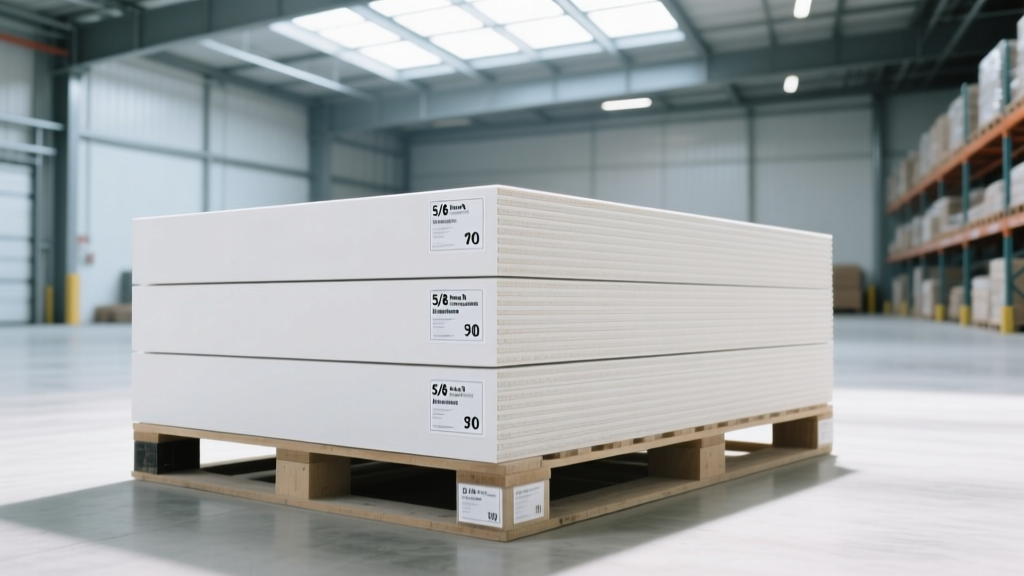
- Consolidate Truckloads (FTL vs. LTL): Never order 5/8-inch board via Less-Than-Truckload (LTL) freight if it can be avoided. LTL shipments of heavy gypsum are subject to extreme handling fees and high damage rates. Always bundle your 5/8-inch requirements with your 1/2-inch and metal framing orders to achieve Full Truckload (FTL) status, which drops the per-sheet freight cost by up to 40%.
- Leverage Synthetic Gypsum Markets: Plants located near coal-fired power plants utilizing flue-gas desulfurization (FGD) synthetic gypsum often have lower raw material costs. Sourcing from regional manufacturers like USG or National Gypsum near these hubs can yield a 5% to 8% discount on base material pricing.
- Specify 4x12 Sheets for High Ceilings: While 4x12 sheets cost more per square foot and require mechanical lifts, they eliminate the horizontal butt joints on 10-foot and 11-foot walls. The material premium is almost always offset by the labor savings in taping, mudding, and sanding one less seam per stud bay.
When to Upgrade: Is the Premium for Specialty Boards Worth It?
Value engineering is a standard phase in commercial construction. When evaluating whether to downgrade from a specialty 5/8-inch board to a standard panel, use this decision matrix:
"Never value-engineer the core thickness on a rated shaft wall to save $4 a sheet. The cost of re-inspection, fire-stopping corrections, and potential liability far outweighs the marginal material savings on Type X assemblies."
— Senior Commercial Estimator, Top 50 ENR Contractor
Upgrade Justification Matrix
- Upgrade to Type X: Mandatory if local building codes or the architectural fire-rating schedule dictates a 1-hour or 2-hour assembly. Do not substitute.
- Upgrade to Moisture-Resistant (Purple/Green): Highly Recommended for any 5/8-inch ceiling installed in unconditioned spaces prior to HVAC commissioning. The $6 per sheet premium prevents thousands of dollars in sagging and mold remediation.
- Upgrade to Acoustic (e.g., QuietRock, SilentFX): Conditional. Only justify the 300% price premium if the architectural STC (Sound Transmission Class) requirement cannot be met by adding standard 5/8-inch layers, mass-loaded vinyl (MLV), or resilient channels. Often, adding a second layer of standard 5/8-inch Type X with Green Glue damping compound is more cost-effective than a single layer of proprietary acoustic board.
Accurate budgeting for 5/8-inch drywall requires synthesizing material costs, freight logistics, labor multipliers, and assembly-specific waste factors. By understanding the physical and regulatory drivers behind the 5/8 gypsum board price, project managers can prevent budget overruns and ensure code-compliant, high-performance wall and ceiling systems.
Written by
Sarah WhitfieldSarah Whitfield is a chartered quantity surveyor (MRICS) and construction cost analyst with 15 years of experience in material pricing, procurement strategy, and project budgeting. She earned her degree in Construction Management from the University of Reading (UK) and has worked on projects ranging from $2M custom homes to $180M mixed-use developments across North America and Europe. Sarah currently leads cost estimating for BuildMat Insight, maintaining a proprietary database of 4,000+ material price points updated quarterly. She is a frequent contributor to RSMeans cost data panels and has presented at the International Cost Engineering Council (ICEC) congress. Based in Denver, CO, Sarah is an avid trail runner and volunteer mentor for Women in Construction.
More from Sarah Whitfield
View all
Wood & Lumber
What Are the Different Types of Wood? A Builder's Guide
Compare structural softwoods, finish hardwoods, and engineered lumber. Analyze Janka ratings, MOE values, and 2026 pricing for construction.
Aug 4, 2026

Walls & Panels
Steel Framing vs Wood Framing: Corrosion and Moisture Defense
Compare steel framing vs wood framing for moisture resistance. Learn about galvanized coatings, condensation risks, and corrosion protection strategies.
Jul 21, 2026

Stone & Masonry
How to Cut Stone Veneer: Wet Saw vs Grinder Comparison
Compare the best tools for cutting stone veneer. We review wet saws, angle grinders, and chop saws to help you achieve clean, chip-free cuts.
Jul 21, 2026