Code Guide: Moisture Proof Gypsum Board for Wet Areas
Navigate building codes for moisture proof gypsum board. Learn ASTM standards, wet area restrictions, and installation specs to pass inspections.
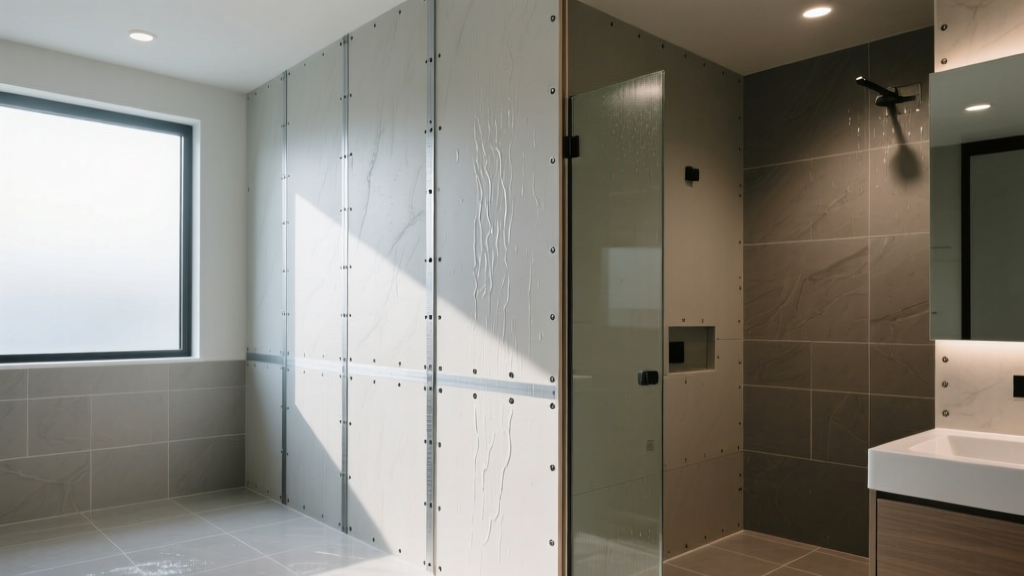
The 'Moisture Proof' Misconception: Decoding Building Terminology
In construction parlance, the term moisture proof gypsum board is frequently used by homeowners and general contractors to describe any drywall intended for damp environments. However, building codes do not recognize the phrase "moisture proof." Instead, the International Building Code (IBC) and International Residential Code (IRC) strictly differentiate between water-resistant (WR), mold-resistant (MR), and glass-mat faced gypsum panels. Understanding this distinction is the difference between passing a rough-in inspection and tearing out a completed tile shower.
ASTM Standards & Material Classifications
To specify the correct material, you must align your procurement with the corresponding ASTM International standards. The Gypsum Association categorizes these panels based on their core treatment and facing material.
| Panel Type | ASTM Standard | Facing Material | Industry Examples | Code Allowance |
|---|---|---|---|---|
| Paper-Faced MR | ASTM C1396 | Treated Green Paper | USG Sheetrock Mold Tough, Gold Bond XP | Non-tile wet areas, high-humidity rooms |
| Glass-Mat Faced | ASTM C1178 | Fiberglass Mat | GP DensArmor Plus, Fiberock Aqua-Tough | Tile backers, showers, exterior soffits |
| Cement Board | ASTM C1325 | Portland Cement / Mesh | HardieBacker, Durock | Heavy-duty wet areas, steam rooms |
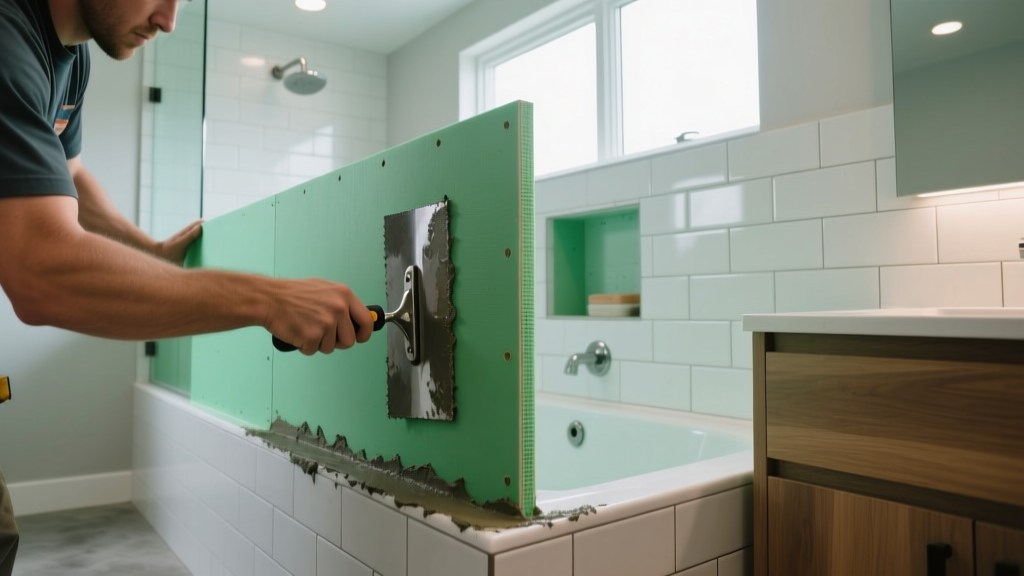
IBC & IRC Wet Area Restrictions: Where Can You Use It?
The International Code Council (ICC) outlines precise limitations for gypsum products in wet areas. According to IRC Section R307.2 and IBC Section 1210.4, the application of moisture proof gypsum board is governed by the following parameters:
- Shower and Tub Surrounds (Direct Water Exposure): Paper-faced MR board is banned. You must use glass-mat gypsum panels (ASTM C1178), cementitious backer units, or fiber-cement board. If using glass-mat gypsum, it must be covered with a liquid-applied waterproofing membrane or a sheet membrane (e.g., Schluter-Kerdi) before tiling.
- Bathroom Ceilings & Non-Tile Walls: Paper-faced MR board (ASTM C1396) is fully compliant and recommended for bathroom ceilings, walls outside the shower enclosure, and behind vanities where ambient humidity is high but direct water impingement is absent.
- Kitchen Backsplashes: Standard MR board is acceptable behind kitchen sinks, provided the surface is properly sealed with paint or covered with a tile setting bed.
- Garage and Unconditioned Spaces: Glass-mat faced panels are required in unconditioned areas prone to condensation, as the fiberglass facing will not support mold growth even if the panel gets wet during construction delays.
High-Risk Failure Modes & Installation Specifications
Even when the correct ASTM-rated material is selected, improper installation will void the manufacturer's warranty and compromise the assembly. Based on field forensic analysis, here are the most common failure modes and their code-compliant solutions:
- The Vapor Barrier Trap: When installing glass-mat gypsum over a wood-framed shower stall, do not install a polyethylene vapor retarder behind the board if you are applying a surface-applied liquid waterproofing membrane. This creates a "mold sandwich" where moisture gets trapped between the membrane and the vapor barrier. Choose one primary waterproofing layer.
- Fastener Spacing Violations: For 1/2-inch panels on walls, screws must be spaced a maximum of 8 inches on center (o.c.) at the edges and 12 inches o.c. in the field. For ceilings, spacing tightens to 7 inches o.c. at edges and 12 inches o.c. in the field. Always use corrosion-resistant, hot-dipped galvanized or ceramic-coated drywall screws to prevent rust bleed through the waterproofing membrane.
- Incorrect Joint Treatment: Standard paper drywall tape will rot in high-moisture environments. You must use alkali-resistant fiberglass mesh tape embedded in a setting-type joint compound (e.g., USG Durabond 90) for all seams, corners, and fastener heads before applying the waterproofing membrane.
- Bottom Edge Wicking: Gypsum cores will wick standing water from a shower pan or subfloor. Code requires a minimum 1/4-inch to 1/2-inch gap between the bottom edge of the gypsum board and the shower pan flange or tub lip. This gap must be sealed with a high-quality silicone sealant or covered by the waterproofing membrane flashing.
Pro-Tip: The 'Splash Test' During Rough-In
Before the insulation inspection, splash a small amount of water on the face of your installed moisture proof gypsum board. On glass-mat panels (like DensArmor Plus), the water should bead up and roll off. If it absorbs into the mat within 60 seconds, the panel has been compromised by jobsite dust, mud, or physical abrasion and must be replaced or sealed with a primer before waterproofing.
2026 Procurement & Cost Data
Budgeting accurately requires understanding the premium associated with code-compliant wet-area panels. While standard drywall is a commodity, specialized moisture-resistant products carry distinct price tiers. Below is the current market pricing for a standard 4x8 foot, 1/2-inch thick sheet.
Standard MR (Paper-Faced)
$16.00 - $22.00
Per 4x8 Sheet. Best for bathroom walls/ceilings outside the shower.
Glass-Mat Faced (ASTM C1178)
$28.00 - $36.00
Per 4x8 Sheet. Required for tile backers and high-humidity unconditioned spaces.
Cement Board (ASTM C1325)
$14.00 - $20.00
Per 3x5 Sheet. Cheaper per panel, but heavier, harder to cut, and requires specialized carbide scoring tools.
Expert Verdict: Specifying for Longevity
When planning a bathroom renovation or commercial wet-area buildout, eliminate the colloquial term "moisture proof" from your architectural specifications and material takeoffs. For general bathroom humidity, specify ASTM C1396 Mold-Resistant Gypsum Board. For any surface that will receive tile and direct water exposure, specify ASTM C1178 Glass-Mat Gypsum Panels paired with a continuous liquid or sheet waterproofing membrane. For comprehensive technical data sheets and installation manuals, always refer directly to the manufacturer resources provided by USG Corporation or the specific panel manufacturer. By aligning your material procurement strictly with ASTM standards and IRC wet-area limitations, you guarantee code compliance, pass inspections on the first attempt, and prevent catastrophic mold remediation costs down the line.
Written by
Elena RodriguezElena Rodriguez is a civil engineer and technical writer specializing in concrete technology, masonry systems, and ASTM/ACI compliance. She earned her B.S. in Civil Engineering from Texas A&M University and spent a decade at a materials testing laboratory, performing over 2,000 concrete compressive strength tests and masonry prism evaluations. Elena is an ACI-certified Field Testing Technician (Grade I) and a member of ASTM Committee C12 on Natural Building Stone. She currently consults on forensic engineering cases involving concrete failures and moisture intrusion. Based in San Antonio, TX, Elena is a proud member of the Society of Women Engineers (SWE) and coaches her daughter's FIRST Robotics team.
More from Elena Rodriguez
View all
Walls & Panels
Cost Analysis: Light Gauge Steel Framing Advantages and Disadvantages
Evaluate light gauge steel framing advantages and disadvantages through a strict cost analysis lens, comparing material, labor, and lifecycle expenses.
Aug 4, 2026

Walls & Panels
Gypsum Board Types: Exact Specifications, Thickness & Dimensions
Compare standard, Type X, and moisture-resistant gypsum board types. Get exact specifications, thicknesses, dimensions, and ASTM standards for your project.
Aug 4, 2026

Fire Resistance
Best Fire-Resistant Outdoor Decking Materials: 2026 Buyer Guide
Discover the best fire-resistant outdoor decking materials for 2026. Compare Class A PVC, aluminum, and hardwood options for WUI compliance and safety.
Aug 4, 2026