Galvanized Steel Decking Material: Cost, Specs & Installation Guide
Explore galvanized steel decking material specs, 2026 pricing, zinc coating grades, and installation techniques for composite and form decks.

Understanding Galvanized Steel Decking Material
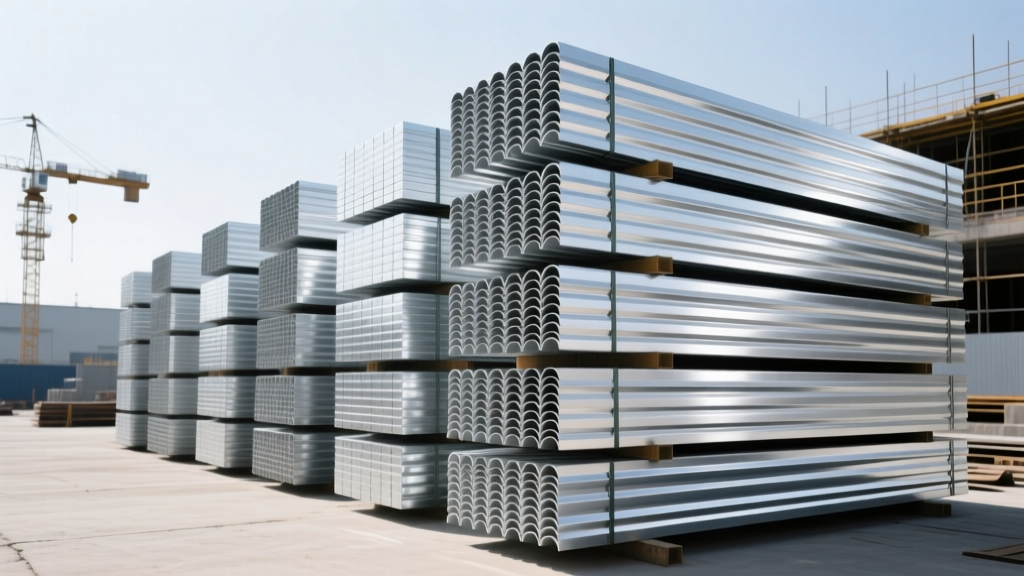
Galvanized steel decking material serves as the foundational diaphragm in commercial and multi-family construction, providing immediate working platforms and permanent formwork for concrete slabs. The galvanization process—coating cold-formed steel sheets in a molten zinc bath—protects the substrate from corrosion during the concrete curing phase and throughout the building's lifespan. According to the Steel Deck Institute (SDI), over 85% of multi-story commercial floor systems in North America rely on composite steel deck profiles due to their high strength-to-weight ratio and rapid installation speed.
Quick Technical Specifications
- Material Standard: ASTM A653 (Zinc-Coated Steel Sheet)
- Yield Strength: 33 ksi to 80 ksi (Grade 33 to Grade 80)
- Standard Gauges: 22, 20, 18, and 16 (Thicker steel = lower gauge number)
- Common Rib Depths: 1.5-inch, 2-inch, and 3-inch
- Zinc Coatings: G60 (0.60 oz/ft²) and G90 (0.90 oz/ft²)
Profile Depths and Structural Applications
Selecting the correct rib depth is dictated by the unsupported span between structural steel beams and the required fire rating of the floor assembly. Deeper profiles allow for longer spans and thicker concrete slabs, which increase the floor's load-bearing capacity and acoustic dampening.
| Profile Depth | Typical Gauges | Max Unshored Span | Primary Application |
|---|---|---|---|
| 1.5-inch (Type F or W) | 22, 20, 18, 16 | 10 ft 0 in | Roof decks, light-duty floors, mezzanines |
| 2.0-inch (Type W) | 20, 18, 16 | 12 ft 6 in | Standard commercial floors, parking garages |
| 3.0-inch (Type W) | 18, 16, 14 | 15 ft 0 in | Long-span floors, heavy live-load assemblies |
Composite vs. Form Decking Mechanics
Composite galvanized steel decking material features embossed patterns or deformations rolled into the vertical ribs. When wet concrete is poured over the deck, these embossments create a mechanical interlock. As the concrete cures, the steel and concrete act as a single unified beam (composite action), drastically reducing the amount of structural steel framing required below. Form decking, conversely, has smooth ribs and acts solely as a stay-in-place formwork; the reinforced concrete slab must carry all structural loads independently.
Zinc Coating Grades: G60 vs. G90
The GalvInfo Center emphasizes that zinc coating thickness is the primary determinant of the deck's corrosion resistance. The designation refers to the total weight of zinc on both sides of the sheet per square foot.
Expert Rule of Thumb: Always specify G60 for standard interior, climate-controlled environments where the deck will be concealed by a suspended ceiling. Upgrade to G90 for exposed soffits, parking garages, high-humidity interiors (like natatoriums), or coastal environments where salt spray accelerates zinc depletion.
2026 Pricing and Material Cost Factors
As of early 2026, supply chain stabilization and normalized hot-rolled coil indexes have steadied deck pricing, though regional logistics and zinc surcharges still cause fluctuations. Pricing is typically calculated per square foot of coverage (which includes standard side-lap overlap).
Current Material Cost Ranges (Per Sq. Ft.)
- 1.5" Form Deck (22 Ga, G60): $2.15 - $2.60
- 1.5" Composite Deck (20 Ga, G60): $2.85 - $3.40
- 2.0" Composite Deck (18 Ga, G60): $3.75 - $4.50
- 3.0" Composite Deck (16 Ga, G90): $5.80 - $6.95
*Note: Prices reflect material only, FOB job site for standard orders exceeding 10,000 sq ft. Include an additional $1.20 - $1.80 per sq ft for welded shear studs and installation labor.
Installation Protocols and Critical Failure Modes
Improper handling and installation of galvanized steel decking material compromise both the structural diaphragm and the corrosion resistance. Ironworkers and erectors must adhere to strict SDI guidelines to avoid costly rework.
- Preventing Wet Storage Stain (White Rust): When galvanized sheets are bundled tightly and exposed to condensation or rain without airflow, zinc oxidizes into a bulky white powder known as wet storage stain. This depletes the zinc layer rapidly. Action: Never store bundled decks under non-breathable tarps. If bundles get wet, separate the sheets immediately to allow air circulation.
- Puddle Welding Parameters: Decks are typically secured to structural beams using 5/8-inch diameter arc spot (puddle) welds. If the welding amperage is too high, the arc will burn completely through the steel and vaporize the surrounding zinc, leaving a bare, unprotected halo. Action: Calibrate welders daily and use zinc-rich cold galvanizing compound (minimum 93% zinc dust) to touch up any burn-throughs or cut edges within 24 hours.
- Side-Lap Fastening: Longitudinal joints between adjacent panels must be secured to transfer shear forces across the diaphragm. While button-punching (mechanical clinching) is faster and cheaper, it provides lower shear capacity than top-seam arc welding or screw fastening. Action: Always cross-reference the structural engineer's diaphragm shear requirements before defaulting to button-punching.
- Shear Stud Installation: For composite action, headed shear studs are welded through the steel deck directly into the structural beam. The arc must melt through the galvanized coating without trapping zinc vapor, which causes porosity in the weld collar. Action: Use ceramic ferrules specifically designed for through-deck welding and ensure the deck is completely dry before striking an arc.
When ordering acoustical deck (which features factory-punched holes in the ribs to absorb sound), ensure the perforations are located only in the vertical webs, never in the top flanges. Top-flange perforations will compromise the composite bond with the concrete and create leak paths during the pouring phase.
Technical FAQ
Can galvanized steel decking be painted or powder-coated for exposed ceilings?
Yes, but it requires specific preparation. The zinc coating is designed to resist adhesion. Before applying architectural paint or powder coating to an exposed soffit, the deck must be treated with a chromate or non-chromate passivation layer at the mill, followed by a specialized zinc-phosphate primer. Painting directly over untreated G60 or G90 galvanized steel will result in peeling within months.
What is the maximum allowable cut-out size for MEP penetrations?
According to standard SDI specifications, core drilling or plasma cutting holes up to 6 inches in diameter is generally permitted without structural reinforcement, provided the hole is at least 6 inches away from any shear stud or beam support. Openings larger than 6 inches, or those cutting through multiple ribs, require the general contractor to install steel trim angles or pour-in-place reinforcing headers.
How does galvanization affect the fire rating of the floor assembly?
The zinc coating itself does not alter the fire rating. The fire resistance (typically 1-hour or 2-hour) is achieved through the specific thickness of the concrete slab poured over the deck and the application of sprayed fire-resistive material (SFRM) or intumescent paint to the underside of the steel framing. However, the galvanized deck protects the steel from rusting away in the event of minor concrete spalling during a fire.
Written by
Elena RodriguezElena Rodriguez is a civil engineer and technical writer specializing in concrete technology, masonry systems, and ASTM/ACI compliance. She earned her B.S. in Civil Engineering from Texas A&M University and spent a decade at a materials testing laboratory, performing over 2,000 concrete compressive strength tests and masonry prism evaluations. Elena is an ACI-certified Field Testing Technician (Grade I) and a member of ASTM Committee C12 on Natural Building Stone. She currently consults on forensic engineering cases involving concrete failures and moisture intrusion. Based in San Antonio, TX, Elena is a proud member of the Society of Women Engineers (SWE) and coaches her daughter's FIRST Robotics team.
More from Elena Rodriguez
View all
Walls & Panels
Cost Analysis: Light Gauge Steel Framing Advantages and Disadvantages
Evaluate light gauge steel framing advantages and disadvantages through a strict cost analysis lens, comparing material, labor, and lifecycle expenses.
Aug 4, 2026

Walls & Panels
Gypsum Board Types: Exact Specifications, Thickness & Dimensions
Compare standard, Type X, and moisture-resistant gypsum board types. Get exact specifications, thicknesses, dimensions, and ASTM standards for your project.
Aug 4, 2026

Fire Resistance
Best Fire-Resistant Outdoor Decking Materials: 2026 Buyer Guide
Discover the best fire-resistant outdoor decking materials for 2026. Compare Class A PVC, aluminum, and hardwood options for WUI compliance and safety.
Aug 4, 2026