Light Steel Framing Corrosion Protection: Coatings & Moisture Control
Discover how to prevent corrosion in light steel framing. Compare G60, G90, and ZAM coatings, and learn moisture management strategies for lasting durability.
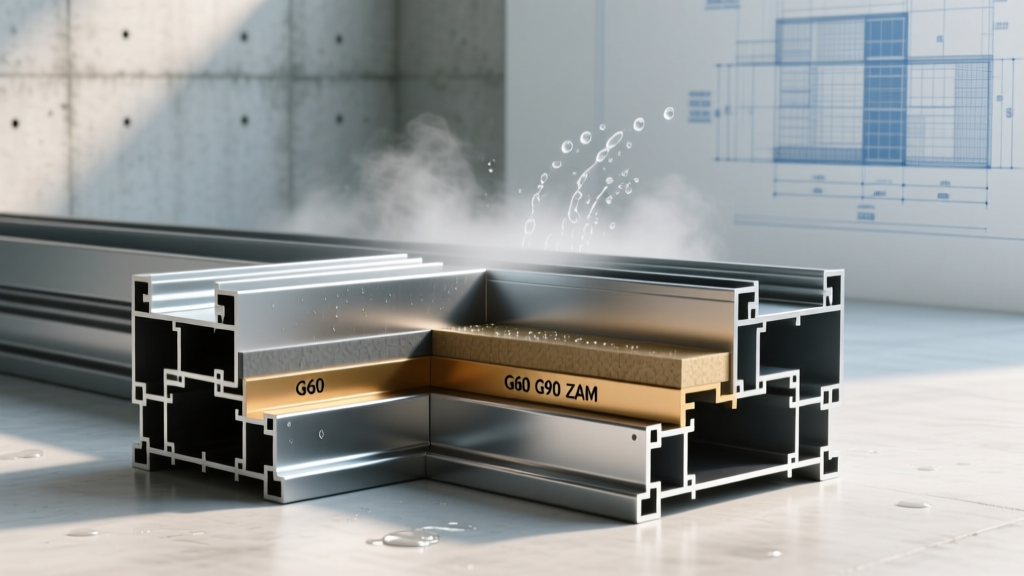
Light steel framing (LSF) offers unmatched dimensional stability, fire resistance, and precision for modern construction. However, its structural longevity relies entirely on effective corrosion protection. When exposed to unmanaged moisture, bare carbon steel oxidizes rapidly, compromising load-bearing capacity. In 2026, the industry has shifted heavily toward advanced metallic coatings and rigorous moisture management protocols to ensure light steel framing survives the lifespan of the building envelope.
The Science of Zinc: G60 vs. G90 vs. ZAM Coatings
The primary defense for light steel framing is a sacrificial zinc coating applied via the hot-dip galvanizing process during coil manufacturing. The designation (e.g., G60 or G90) refers to the total weight of zinc on both sides of the steel sheet in ounces per square foot.
- G60 (0.60 oz/ft²): The baseline for interior, climate-controlled residential framing. It provides approximately 0.5 mils (12.5 microns) of zinc per side.
- G90 (0.90 oz/ft²): The standard for exterior load-bearing walls, unheated spaces, and commercial LSF. It delivers roughly 0.75 mils (19 microns) per side, offering 50% more sacrificial mass than G60.
- ZAM (Zinc-Aluminum-Magnesium): A next-generation alloy coating (typically 90% Zn, 6% Al, 3% Mg). ZAM provides superior corrosion resistance at lower coating weights and features a unique 'self-healing' mechanism at cut edges.
Upgrading from G60 to G90 typically adds $0.05 to $0.08 per linear foot of stud material. Upgrading to ZAM adds $0.10 to $0.15 per linear foot. However, ZAM eliminates the need for field touch-ups on cut edges, often resulting in a net labor savings of $0.12 to $0.20 per linear foot on complex framing layouts.
Environmental Exposure Categories (ISO 12944) for LSF
Specifying the correct light steel framing coating requires mapping the project to the ISO 12944 environmental corrosivity categories. Misclassifying the exposure environment is the leading cause of premature LSF failure in coastal and industrial zones.
| Category | Environment Description | Required LSF Coating | Additional Protection |
|---|---|---|---|
| C1 / C2 | Heated interiors, rural atmospheres | G60 | None required |
| C3 | Unheated spaces, condensation risk, urban | G90 or ZAM | Proper vapor retarders |
| C4 | Industrial, moderate coastal salinity | ZAM (Heavy) or G90 | Epoxy primer + topcoat |
| C5 | Severe coastal, offshore, high salinity | Hot-dip after fabrication | Marine-grade paint system |
The Cut-Edge Vulnerability: Field Modifications & Touch-Ups
When framers use aviation snips, band saws, or torches to modify light steel framing in the field, they expose bare carbon steel. In standard galvanized (G60/G90) studs, this exposed edge becomes an anode, accelerating localized rust. According to the Steel Framing Industry Association (SFIA), all field cuts on standard galvanized studs must be treated.
Field Touch-Up Protocol for G90 Studs:
- Clean the Edge: Remove all metal burrs, slag, and oil using a wire brush and solvent. The surface must be entirely bare and dry.
- Apply Zinc-Rich Compound: Use a cold galvanizing compound containing a minimum of 93% zinc dust in the dry film (e.g., Galvafroid or Rust-Oleum Cold Galvanizing Compound). Do not use standard 'galvanized-look' spray paints, which contain acrylic binders and zero sacrificial zinc.
- Verify DFT: Apply the compound until the Dry Film Thickness (DFT) matches the surrounding coating (approx. 0.75 mils for G90). This usually requires two coats applied 15 minutes apart.
Note: If using ZAM-coated light steel framing, the magnesium ions in the alloy naturally migrate to the cut edge when exposed to moisture, forming a stable zinc hydroxychloride layer that halts oxidation. Field touch-ups are generally not required for ZAM.
Galvanic Corrosion: Fastener and Cladding Compatibility
Galvanic corrosion occurs when two dissimilar metals are in electrical contact in the presence of an electrolyte (moisture). The less noble metal (anode) corrodes rapidly to protect the more noble metal (cathode).
Never use uncoated carbon steel fasteners with light steel framing; the fastener will rust and fail. Never use aluminum flashing or cladding directly against bare steel studs; the aluminum will rapidly corrode. Always isolate dissimilar metals using peel-and-stick butyl membranes or heavy-duty polymer slip sheets.
Approved Fasteners for Light Steel Framing:
- Zinc-Flake Coated Screws: (e.g., Stalgard GB or equivalent). These provide 1,000+ hours of salt-spray resistance and are the standard for structural LSF connections.
- 410 Stainless Steel Self-Drillers: Required for exterior sheathing, cement board, and high-moisture areas. 410 SS is magnetic and heat-treated hard enough to drill through 54-mil steel without snapping.
- 304/316 Stainless Steel: Reserved for severe coastal (C5) environments. Note that 300-series stainless is softer and may require pre-drilling when attaching to heavy-gauge structural steel tracks.
Moisture Management & Condensation Control
Corrosion in light steel framing rarely stems from bulk water leaks; it is almost always driven by interstitial condensation. Steel is a highly conductive material with an R-value of roughly 1.4 per inch. A 6-inch steel stud conducts heat approximately 400 times faster than the surrounding wood or fiberglass insulation, creating a severe thermal bridge.
Vapor Retarder Placement & Thermal Bridging
During winter, warm, moisture-laden indoor air migrates outward. When it contacts the cold interior flange of the steel stud, it drops below the dew point and condenses into liquid water, initiating corrosion from the inside out. The Building Science Corporation emphasizes that managing this dew point is critical for steel-framed assemblies.
The Continuous Insulation (ci) Solution:
To prevent condensation on the steel flange, the temperature of the steel must be kept above the dew point. This is achieved by installing exterior continuous insulation (such as XPS or polyiso) over the sheathing. For a climate zone 5 or higher, a minimum of R-7.5 to R-10 exterior continuous insulation is required to warm the steel stud cavity sufficiently. Furthermore, interior vapor retarders must be carefully selected (typically Class II or III, like 'smart' vapor retarders) to allow the assembly to dry inward if minor moisture accumulation occurs.
Expert Sourcing & Quality Assurance
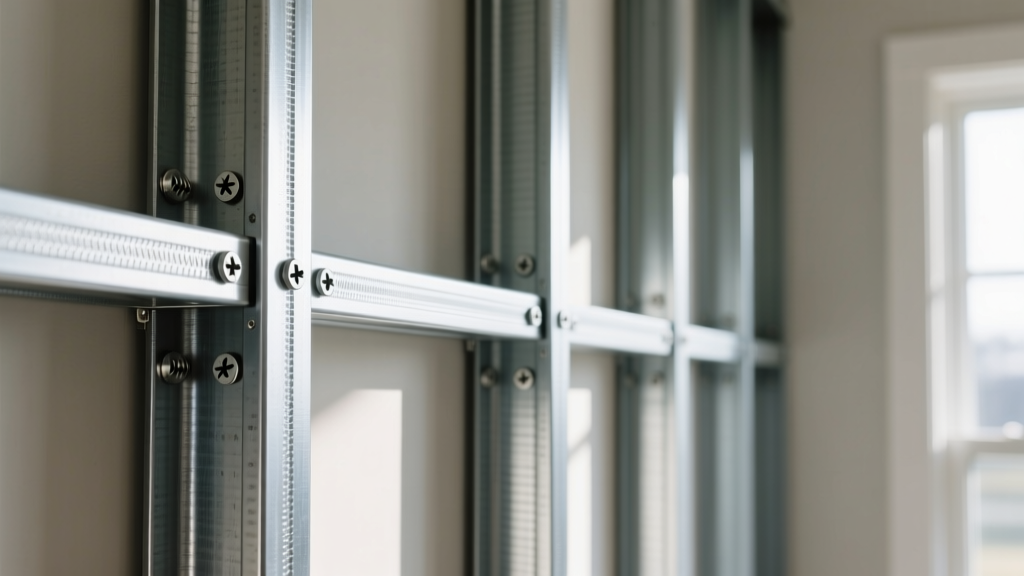
When procuring light steel framing for corrosion-prone environments, rely on certified manufacturers adhering to the American Iron and Steel Institute (AISI) standards. Require mill certificates for every batch of steel delivered to the site to verify the exact zinc coating mass (G60/G90) and yield strength (33 ksi vs 50 ksi). Store all LSF materials off the ground on dunnage, covered with breathable tarps, and never allow framing to sit in standing water prior to enclosure. Proper material handling on-site is just as critical as the coating itself in ensuring a corrosion-free structural lifespan.
Written by
David NakamuraDavid Nakamura is a licensed architect (AIA) and construction technology writer focused on sustainable building methods, mass timber engineering, and high-performance building envelopes. He holds a Master of Architecture from the University of Washington and is a certified Passive House Consultant (CPHC). David spent eight years at the Seattle firm Mithun, where he led the design of three LEED Platinum projects, before founding his own practice specializing in net-zero residential design. He serves on the editorial advisory board of GreenBuilder Magazine and has authored peer-reviewed papers on cross-laminated timber (CLT) connections for the Journal of Structural Engineering. In his spare time, David teaches woodworking at Pratt Fine Arts Center and kayaks the Puget Sound.
More from David Nakamura
View all
Construction Cost
Labor Cost to Build a Deck Per Sq Ft: 2026 Installation Guide
Discover the exact labor cost to build a deck per sq ft in 2026. This installation guide breaks down contractor rates, complexity factors, and hidden fees.
Aug 4, 2026

Construction Cost
How Much Does It Cost to Build a 3 Bedroom House? Financing Guide
Learn exactly how much it costs to build a 3 bedroom house and explore 2026 financing options, construction loan types, and budget frameworks for your build.
Aug 4, 2026

Construction Cost
Cost to Build a Tennis Court: 2026 Guide
How much does it cost to build a tennis court in 2026? Breakdowns for asphalt, concrete, and synthetic surfaces plus fencing and lighting.
Jul 30, 2026