How the 6 Types of Wood Grain Affect Treatment & Preservation
Discover how the 6 types of wood grain impact chemical penetration, pressure treatment success, and long-term preservation in exterior construction.

The Anatomy of Treatability: How Grain Directs Preservatives
Wood preservation is fundamentally an exercise in fluid dynamics. The success of pressure treatment, staining, and sealing relies entirely on the microscopic highways within the timber. While preservative chemistry—such as Alkaline Copper Quaternary (ACQ) or Micronized Copper Azole (MCA)—gets the most attention, the anatomical grain structure dictates whether those chemicals reach the required retention depths. According to the USDA Forest Products Laboratory Wood Handbook, longitudinal penetration (through the end grain) can be 10 to 15 times deeper than radial or tangential penetration (through the side grain). When the grain deviates from a perfectly straight path, preservative uptake becomes highly unpredictable, leading to localized treatment failures and premature rot in exterior applications.
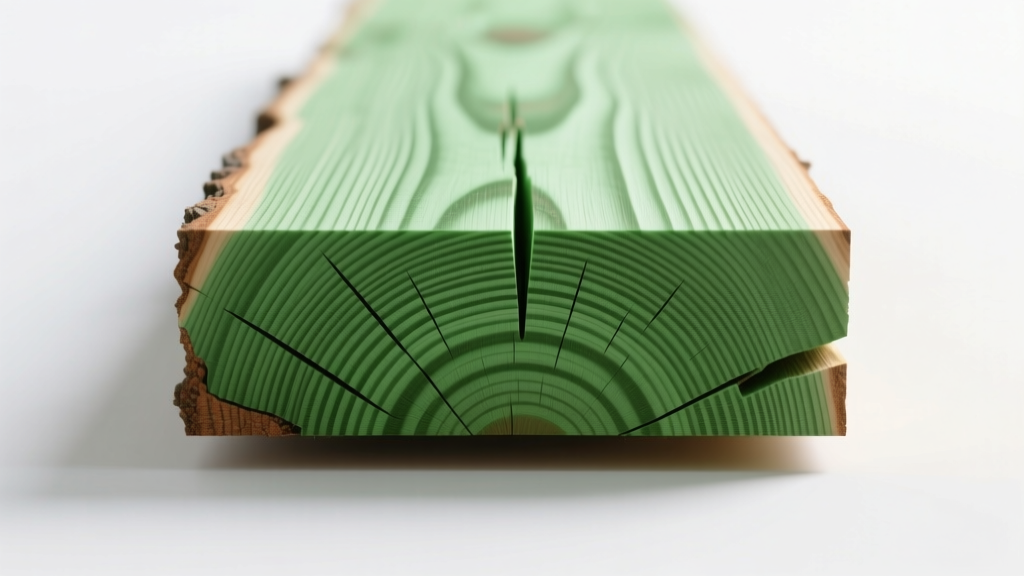
The 6 Types of Wood Grain and Their Preservation Profiles
Wood science categorizes grain direction and figure into six primary anatomical types. Each presents unique challenges for treatment facilities and field preservationists.
1. Straight Grain
Fibers run parallel to the longitudinal axis of the tree. This is the ideal grain pattern for pressure treatment. The continuous, unobstructed tracheids and vessels allow preservatives to travel deep into the wood matrix via capillary action. Southern Yellow Pine, the standard for pressure-treated framing, predominantly exhibits straight grain, allowing it to easily achieve the 0.25 pcf (pounds per cubic foot) retention level required for UC3B (above-ground) and 0.40 pcf for UC4A (ground contact) under American Wood Protection Association (AWPA) standards.
2. Spiral Grain
Fibers twist around the trunk in a helical pattern. Common in Douglas Fir and some pines, spiral grain creates a tortuous path for preservative fluids. During the pressure treatment cycle, spiral grain timber is highly susceptible to warping and twisting as the wood swells unevenly. Treatment facilities must use heavy mechanical restraints (kiln stickers and top-weights) in the retort cylinder to prevent the boards from twisting into unusable corkscrews.
3. Interlocked Grain
The fiber direction reverses every few years, creating alternating left- and right-hand spirals. This pattern, frequently found in tropical hardwoods like Sapele, African Mahogany, and Azobé, makes the wood incredibly resistant to splitting but nearly impervious to radial preservative penetration. Interlocked grain requires aggressive mechanical incising (piercing the surface with steel teeth) to artificially create pathways for the treatment chemicals to bypass the locked fibers.
4. Wavy Grain
Fibers undulate in a continuous wave pattern, producing highly prized decorative figures like "fiddleback" or "curly" maple. From a preservation standpoint, wavy grain causes localized dry spots. Because the fibers constantly change direction relative to the board surface, radial penetration fluctuates wildly along the length of a single board, leaving microscopic pockets of untreated wood vulnerable to fungal decay.
5. Irregular Grain
Fibers swirl, distort, and change direction abruptly, usually around knots, branch unions, or injury sites. Irregular grain creates massive end-grain exposure on the side faces of the board. These localized end-grain patches act as moisture sponges, absorbing water rapidly in the field while simultaneously resisting deep chemical penetration during the initial treatment phase. Boards with heavy irregular grain require localized field-treatment with copper naphthenate on the distorted zones.
6. Diagonal Grain
Often a result of milling error (sawing a tapered log without following the bark line) rather than natural growth, diagonal grain means the fibers intersect the edge of the board at an angle. This "slope of grain" not only drastically reduces the structural load-bearing capacity of the timber but also causes preservative fluids to bleed out of the side faces prematurely during the conditioning and drying phases following treatment.
Treatment Penetration Matrix: Grain Type vs. Chemical Uptake
Understanding how each grain type interacts with waterborne preservatives is critical for specifying materials in high-moisture environments. The matrix below outlines the expected penetration behavior and necessary pre-treatments.
| Grain Type | Primary Species Examples | Longitudinal Uptake | Radial/Tangential Uptake | Required Pre-Treatment Modification |
|---|---|---|---|---|
| Straight | Southern Yellow Pine, Cedar | Excellent (Deep) | Moderate to Good | Standard conditioning |
| Spiral | Douglas Fir, Lodgepole Pine | Good | Poor (Uneven) | Physical restraint in retort to prevent warp |
| Interlocked | Sapele, Mahogany, Azobé | Moderate | Extremely Poor | Deep mechanical incising (1/4" depth) |
| Wavy | Hard Maple, Black Ash | Good | Highly Variable | Extended vacuum/pressure cycles |
| Irregular | Pine (knot-heavy grades) | Excellent at knots | Poor around knots | Pre-boring or localized incising |
| Diagonal | Mixed (Milling dependent) | Good | Poor (Bleeding) | Slower depressurization to prevent weeping |
Overcoming Grain Resistance: Advanced Preservation Techniques
When specifying lumber with less-than-ideal grain structures (such as spiral or interlocked grain) for ground contact (UC4A) or heavy-duty ground contact (UC4B), standard pressure treatment is insufficient. Treatment facilities and field contractors must employ specific mechanical and thermal modifications to force chemical penetration.
For dense, interlocked, or wavy grain species, specify machine incising prior to treatment. The incising rollers must penetrate the wood to a minimum depth of 1/4 inch, with a density of at least 4 to 6 incisions per square inch. This artificially creates longitudinal pathways, increasing radial preservative penetration by up to 400% in species like Douglas Fir and hardwoods.
Thermal Conditioning (Boultonizing)
For green (unseasoned) timber with spiral or irregular grain, standard kiln drying before treatment will cause severe checking and honeycombing. Instead, facilities use the Boulton process: boiling the wood in the treating oil or a hot water bath while pulling a vacuum. This removes moisture and opens the cellular structure without inducing the severe internal stresses that cause spiral-grain boards to warp.
Troubleshooting Treatment Failures by Grain Pattern
Field failures in pressure-treated wood are rarely due to the chemical itself; they are almost always traced back to grain anatomy and improper handling. Use this diagnostic framework to identify and mitigate grain-related preservation failures.
Symptom: Boards twist severely immediately after treatment or upon first exposure to sunlight.
Cause: Spiral grain fibers swell unevenly when absorbing waterborne preservatives.
Fix: Reject heavily spiraled boards for structural framing. For decking, use 5/4x6 dimensions (thicker stock resists twisting better than 1x material) and secure with hidden fastener systems that lock the board to the joist, preventing rotational movement.
Symptom: The board surface remains intact, but the wood immediately surrounding knots turns soft and black.
Cause: Irregular grain around knots creates localized end-grain exposure that absorbs field moisture but blocked the initial preservative penetration due to pitch pockets.
Fix: During installation, apply a heavy brush coat of copper naphthenate (minimum 2% copper metal equivalent) directly to all knots and irregular grain zones on cut ends and drilled holes.
Sourcing and Specifying for Exterior Durability
To ensure long-term durability, architects and builders must align the wood's natural grain characteristics with the appropriate AWPA Use Category. Do not rely solely on the species name; inspect the grain.
- For UC4A (Ground Contact) and UC4B (Heavy Duty): Demand straight-grain Southern Yellow Pine or mechanically incised Douglas Fir. Reject loads with visible diagonal grain slopes exceeding 1:12, as the structural weakness combined with poor chemical retention guarantees premature failure.
- For UC3B (Above Ground) Decking and Fencing: Wavy or interlocked grain hardwoods (like Ipe or Cumaru) can be used untreated due to their natural extractive toxicity, but if using treated softwoods, ensure the grain is predominantly straight to guarantee uniform chemical distribution.
- Field End-Cuts: Regardless of the 6 types of wood grain, any field cut exposes raw longitudinal tracheids. Always seal field cuts with a topical end-cut preservative approved by the treating manufacturer to maintain the warranty and prevent moisture wicking.
By understanding the anatomical reality of the 6 types of wood grain, construction professionals can move beyond generic material specifications. Aligning the grain structure with the correct mechanical pre-treatments and AWPA retention levels ensures that the preservative chemicals actually reach the cellular depths required to protect the structure for decades.
Written by
David NakamuraDavid Nakamura is a licensed architect (AIA) and construction technology writer focused on sustainable building methods, mass timber engineering, and high-performance building envelopes. He holds a Master of Architecture from the University of Washington and is a certified Passive House Consultant (CPHC). David spent eight years at the Seattle firm Mithun, where he led the design of three LEED Platinum projects, before founding his own practice specializing in net-zero residential design. He serves on the editorial advisory board of GreenBuilder Magazine and has authored peer-reviewed papers on cross-laminated timber (CLT) connections for the Journal of Structural Engineering. In his spare time, David teaches woodworking at Pratt Fine Arts Center and kayaks the Puget Sound.
More from David Nakamura
View all
Construction Cost
Labor Cost to Build a Deck Per Sq Ft: 2026 Installation Guide
Discover the exact labor cost to build a deck per sq ft in 2026. This installation guide breaks down contractor rates, complexity factors, and hidden fees.
Aug 4, 2026

Construction Cost
How Much Does It Cost to Build a 3 Bedroom House? Financing Guide
Learn exactly how much it costs to build a 3 bedroom house and explore 2026 financing options, construction loan types, and budget frameworks for your build.
Aug 4, 2026

Construction Cost
Cost to Build a Tennis Court: 2026 Guide
How much does it cost to build a tennis court in 2026? Breakdowns for asphalt, concrete, and synthetic surfaces plus fencing and lighting.
Jul 30, 2026