Best Type of Paint for Wood: Cost vs. Lifespan Value Analysis
Discover the best type of paint for wood by comparing material costs, prep expenses, and expected lifespans to maximize your project's long-term ROI.
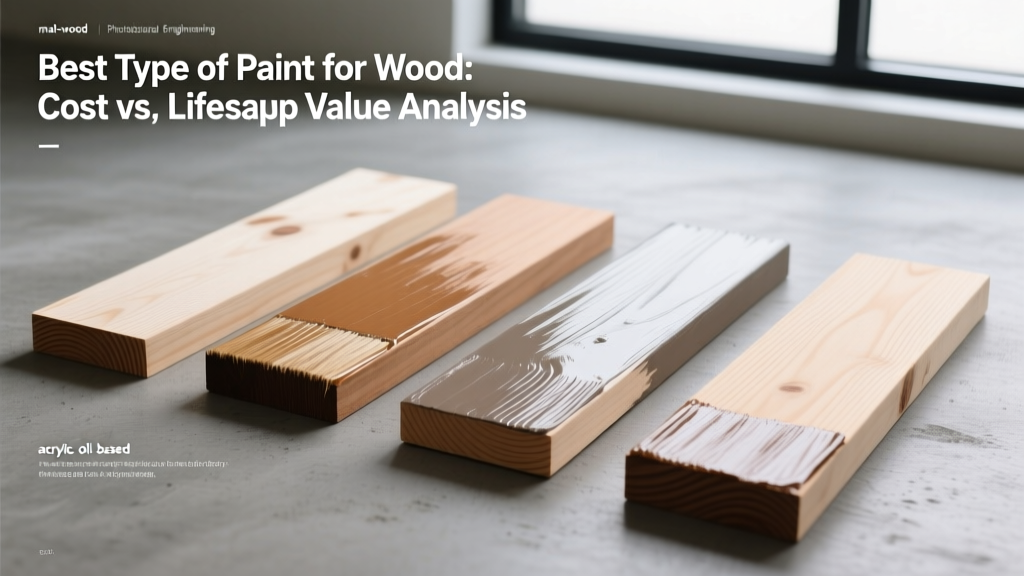
The True Cost Equation: Material vs. Labor and Prep
When determining the best type of paint for wood, contractors and property managers frequently make the mistake of evaluating cost solely by the price per gallon. This metric is fundamentally flawed. Wood is a hygroscopic, dimensionally unstable substrate that expands, contracts, and releases tannins. The true value of a wood coating is calculated using a lifecycle cost formula:
Lifecycle Cost = (Material Cost + Surface Prep Labor + Application Labor) / Expected Service Life in Years
A $40/gallon contractor-grade oil paint that requires extensive sanding, chemical deglossing, and fails in four years due to micro-cracking is vastly more expensive than a $95/gallon advanced waterborne alkyd that requires minimal prep and lasts a decade. In 2026, with skilled painting labor averaging $65 to $95 per hour, minimizing prep time and maximizing recoat intervals are the primary drivers of project ROI.

Wood Paint Categories Analyzed for Long-Term Value
100% Acrylic Latex (Water-Based)
High-quality 100% acrylic latex paints (such as Sherwin-Williams Emerald or Benjamin Moore Aura) represent the highest value for exterior wood siding, fascia, and trim. Acrylic resins remain flexible, allowing the paint film to stretch and compress with the wood's seasonal moisture fluctuations.
- Material Cost: $85 – $115 per gallon.
- Prep Requirements: Moderate. Requires power washing, scraping, and an acrylic bonding primer on bare spots.
- Value Proposition: Excellent UV resistance and color retention. Breathability allows trapped moisture to escape, preventing blistering.
Waterborne Alkyd (Hybrid) & Traditional Oil-Based
For interior wood cabinets, doors, and high-traffic trim, a hard, self-leveling film is mandatory. Traditional oil-based paints are increasingly obsolete due to stringent EPA VOC regulations and yellowing over time. Waterborne alkyds (like Sherwin-Williams ProClassic) offer the leveling and hardness of oil with the soap-and-water cleanup and low VOC profile of acrylics.
- Material Cost: $90 – $110 per gallon.
- Prep Requirements: High for previously painted surfaces (requires deglossing or sanding); low for new, properly primed wood.
- Value Proposition: Superior block resistance (doors won't stick to frames) and exceptional washability, yielding a 10- to 15-year interior lifespan.
Specialty Coatings: Milk and Chalk Paints
While highly popular in boutique furniture flipping, milk and chalk paints offer a poor ROI for architectural wood or high-use surfaces. They require a protective topcoat (wax or polyurethane) to survive daily wear, effectively doubling the material cost and application time.
Chalk paint is highly porous. If applied to kitchen cabinets without a high-performance 2K polyurethane topcoat, it will absorb cooking oils and stain within months. The cost of the specialty topcoat often exceeds the price of simply using a high-end waterborne alkyd from the start.
Cost & Value Matrix: 10-Year ROI Breakdown
The following matrix models the cost to paint 1,000 square feet of exterior wood siding (new, unpainted pine) over a 10-year period, factoring in material, professional prep, and application labor.
| Paint System | Material Cost / Gal | Total Initial Cost (1k sqft) | Expected Lifespan | 10-Year Annualized Cost |
|---|---|---|---|---|
| Economy Vinyl-Acrylic + Standard Primer | $45 | $2,800 | 4 Years | $700 / year |
| Premium 100% Acrylic + Bonding Primer | $95 | $4,200 | 10 Years | $420 / year |
| Solid Color Acrylic Stain | $75 | $3,100 | 7 Years | $442 / year |
As the data demonstrates, the premium acrylic system costs 50% more upfront but reduces the annualized cost by 40% by eliminating the need for a complete scrape-and-repaint cycle at year five.
Substrate-Specific Recommendations and Hidden Costs
The best type of paint for wood changes drastically depending on the specific species and its environment. Ignoring substrate chemistry is the leading cause of premature coating failure.
Cedar and Redwood (Tannin Bleed Management)
These woods contain high levels of water-soluble tannins. If you apply a standard water-based primer, the tannins will bleed through, creating yellow-brown stains within weeks.
The Fix: You must budget for a shellac-based primer like Zinsser B-I-N ($55/gallon). While expensive and requiring mineral spirits for cleanup, it seals tannins instantly and saves thousands in redo labor.
Pressure-Treated Pine (Moisture and Alkalinity)
New pressure-treated lumber is injected with water and alkaline preservatives. Painting it before it cures traps moisture, leading to catastrophic peeling. According to the USDA Forest Products Laboratory, wood moisture content must drop below 15% before any film-forming paint is applied.
The Fix: Budget for a 6- to 12-month weathering period, or use a penetrating oil-based solid stain that tolerates higher moisture thresholds and alkaline environments without saponifying (breaking down into soap).
Interior MDF and Cabinet-Grade Plywood
Medium-density fiberboard (MDF) acts like a sponge on the cut edges, swelling and ruining the finish if water-based primers are used.
The Fix: Use a solvent-based or shellac primer exclusively on MDF edges to seal the fibers before applying your topcoat of waterborne alkyd.
Failure Modes: Where the Money Disappears
Troubleshooting Wood Paint Failures
- Alligatoring / Micro-cracking: Caused by applying a hard, rigid coating (like old oil paint) over a softer, flexible undercoat, or applying the topcoat before the primer fully off-gassed. Solution: Strip to bare wood or use a high-build elastomeric bridging primer.
- Mill Glaze Rejection: New, planed pine often has a burnished surface ("mill glaze") that repels paint. Solution: Sand all new exterior wood with 80-grit paper to open the pores before priming.
- Intercoat Adhesion Loss: Occurs when the recoat window is missed. If an acrylic primer sits exposed to UV and weather for more than 30 days, it chalks and degrades. Solution: Always topcoat within the manufacturer's specified 14-to-30-day window.
2026 Procurement and VOC Compliance
When sourcing materials, be aware that the EPA continues to tighten VOC limits on architectural coatings. Traditional high-VOC oil primers are heavily restricted or banned in many states. Procurement managers must pivot to advanced waterborne blocking primers (such as Sherwin-Williams Extreme Bond or Benjamin Moore Advanced) which now match the adhesion metrics of solvent-based alternatives without the regulatory headaches or hazardous waste disposal fees.
Ultimately, the best type of paint for wood is the system that respects the substrate's moisture dynamics. By investing heavily in substrate-specific primers and premium 100% acrylic or waterborne alkyd topcoats, you shift the budget away from recurring maintenance labor and into long-term asset protection.
For detailed application tolerances and surface prep standards, professionals should consult the Painting Contractors Association (PCA) Standards to ensure contract specifications align with manufacturer warranties.
Written by
David NakamuraDavid Nakamura is a licensed architect (AIA) and construction technology writer focused on sustainable building methods, mass timber engineering, and high-performance building envelopes. He holds a Master of Architecture from the University of Washington and is a certified Passive House Consultant (CPHC). David spent eight years at the Seattle firm Mithun, where he led the design of three LEED Platinum projects, before founding his own practice specializing in net-zero residential design. He serves on the editorial advisory board of GreenBuilder Magazine and has authored peer-reviewed papers on cross-laminated timber (CLT) connections for the Journal of Structural Engineering. In his spare time, David teaches woodworking at Pratt Fine Arts Center and kayaks the Puget Sound.
More from David Nakamura
View all
Construction Cost
Labor Cost to Build a Deck Per Sq Ft: 2026 Installation Guide
Discover the exact labor cost to build a deck per sq ft in 2026. This installation guide breaks down contractor rates, complexity factors, and hidden fees.
Aug 4, 2026

Construction Cost
How Much Does It Cost to Build a 3 Bedroom House? Financing Guide
Learn exactly how much it costs to build a 3 bedroom house and explore 2026 financing options, construction loan types, and budget frameworks for your build.
Aug 4, 2026

Construction Cost
Cost to Build a Tennis Court: 2026 Guide
How much does it cost to build a tennis court in 2026? Breakdowns for asphalt, concrete, and synthetic surfaces plus fencing and lighting.
Jul 30, 2026