Best Types of Wood for Rot Resistance and Long-Term Preservation
Discover the best types of wood for rot resistance. Compare natural durability, AWPA pressure-treatment grades, and field preservation protocols.
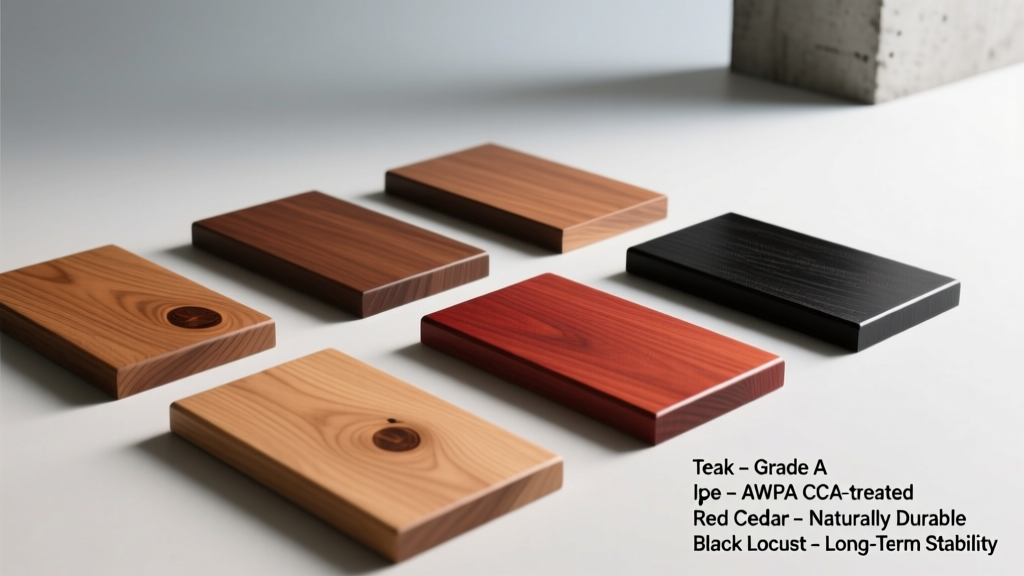
The Economics of Wood Decay: Why Species Selection Matters
Wood failure due to fungal decay and insect infiltration costs the construction industry billions annually in premature replacements and structural remediation. When evaluating the best types of wood for exterior, ground-contact, or high-moisture applications, builders must look beyond initial material costs and calculate the lifecycle expense of the assembly. Moisture content exceeding 20% triggers the biological mechanisms of brown rot and white rot fungi, rapidly compromising structural integrity.
Selecting the correct material requires a precise understanding of natural extractives, heartwood-to-sapwood ratios, and the American Wood Protection Association (AWPA) retention standards. According to the USDA Forest Products Laboratory Wood Handbook, natural decay resistance is strictly a function of the heartwood's chemical composition, not the species' density or structural grading.
The Decay Resistance Matrix: Heartwood vs. Sapwood
The most common error in specifying naturally durable lumber is assuming the entire board possesses rot resistance. In reality, only the heartwood contains the fungicidal extractives required to repel decay. The sapwood—the outer, living layer of the tree—remains highly susceptible to rot and insect attack regardless of the species. Below is a comparative matrix of the most reliable species for preservation-focused projects.
| Species | AWPA Heartwood Durability | Janka Hardness (lbf) | Primary Fungicidal Extractive | Ideal Use Case |
|---|---|---|---|---|
| Black Locust | Class I (Highly Resistant) | 1,700 | Flavonoids / Robin | Ground contact, foundation posts |
| Osage Orange | Class I (Highly Resistant) | 2,620 | 2,3,4,5-Tetrahydroxystilbene | Extreme moisture, marine pilings |
| Western Red Cedar | Class II (Resistant) | 350 | Thujaplicins | Above-ground siding, decking, trim |
| White Oak | Class II (Resistant) | 1,360 | Tannins / Tyloses | Timber framing, boatbuilding, sill plates |
| Redwood (Heart) | Class II (Resistant) | 450 | Polyphenols | Decking, exterior cladding |
Top Naturally Durable Species for Exterior Applications
Black Locust (Robinia pseudoacacia)
Black locust is the premier choice for untreated ground-contact applications in North America. Its heartwood is so dense and chemically fortified that it routinely outlasts standard pressure-treated pine in fence post trials. The wood's natural resistance is so profound that it does not accept liquid preservative treatments effectively; it simply does not need them. For structural posts, agricultural framing, or landscape timbers where chemical leaching is a concern, black locust is the optimal biological solution.
Western Red Cedar (Thuja plicata)
Western red cedar relies on thujaplicins, natural fungicides that give the wood its distinct aroma and decay resistance. However, its Janka hardness is low (350 lbf), making it vulnerable to mechanical wear. Cedar is exceptionally stable with a low shrinkage factor, making it the best type of wood for above-ground exterior cladding, soffits, and trim. It must not be used in direct ground contact without supplemental preservative treatment, as soil microbes will eventually overwhelm its natural extractives.
White Oak (Quercus alba)
Unlike red oak, which has open cellular vessels, white oak features tyloses—balloon-like cellular outgrowths that plug the xylem vessels, rendering the heartwood virtually impermeable to water. This structural anomaly is why white oak is the standard for whiskey barrels and historic timber framing. As a sill plate or timber frame component exposed to intermittent moisture, white oak provides exceptional longevity.
Lumber graded as "Western Red Cedar" or "Redwood" often contains significant sapwood margins, especially in lower grades (e.g., Construction or Standard). Sapwood contains zero natural preservatives. If specifying these woods for critical moisture zones, you must explicitly order "All Heart" (or "Clear Heart") grades. Paying premium prices for a cedar board that is 40% sapwood guarantees premature localized rot.
Pressure-Treated Lumber: Decoding AWPA Retention Levels
When naturally durable species are cost-prohibitive or structurally inadequate, pressure-treated southern yellow pine (SYP) becomes the default. Modern treatments utilize Alkaline Copper Quaternary (ACQ) or Micronized Copper Azole (MCA). The efficacy of these treatments is not determined by the brand name, but by the chemical retention level measured in pounds per cubic foot (pcf). The American Wood Protection Association (AWPA) categorizes these requirements based on exposure severity.
- UC3B (Above Ground, Coated/Uncoated): Requires a minimum retention of 0.25 pcf. Suitable for deck boards, railings, and fascia where water can drain freely.
- UC4A (Ground Contact, General Use): Requires 0.40 pcf. Mandatory for structural deck posts, landscaping timbers, and fence posts embedded in concrete or soil.
- UC4B (Ground Contact, Heavy Duty): Requires 0.50 pcf. Specified for critical structural components, permanent wood foundations, and areas with poor drainage.
- UC4C (Ground Contact, Extreme Duty): Requires 0.60 pcf. Reserved for highway guardrail posts, marine environments (non-saltwater), and agricultural foundation posts.
Always inspect the end tag on pressure-treated lumber. Purchasing UC3B material and installing it in ground contact is a catastrophic code violation that voids manufacturer warranties and guarantees structural failure within a decade.
Field Preservation: Treating Cut Ends and Fastener Holes
Pressure treatment and natural extractives only protect the wood as it was milled. Every saw cut, drill hole, and planed edge exposes untreated, vulnerable interior fibers. Field treatment is not optional; it is a mandatory preservation protocol.
- Select the Correct Preservative: Use a copper naphthenate-based wood preservative (e.g., Cuprinol Green or Tenino) containing a minimum of 2% copper metal equivalent. Avoid generic "water sealers" or clear penetrating oils, which offer zero fungicidal protection.
- Preparation: Ensure the cut surface is clean and free of sawdust. If the wood is wet (moisture content > 19%), allow it to surface-dry so the solvent carrier can penetrate the cellular structure.
- Application: Apply a heavy, flooding coat of copper naphthenate using a brush. The goal is to achieve a retention equivalent to the original pressure treatment.
- Curing: Allow the first coat to penetrate and dry for a minimum of 24 hours before applying a second coat. For ground-contact cuts, trowel a thick layer of copper naphthenate paste directly over the end grain before embedding it in soil or concrete.
According to Penn State Extension forestry guidelines, failing to treat the end grain of naturally durable woods like cedar or redwood accelerates moisture wicking up the board's capillaries, bypassing the protective heartwood entirely.
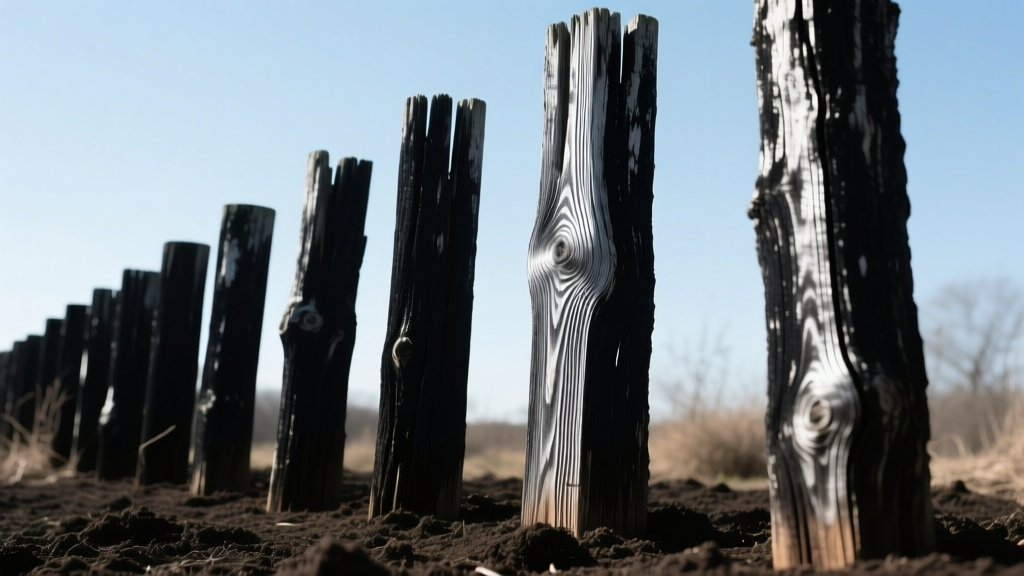
Frequently Asked Questions on Wood Preservation
Can I use naturally rot-resistant wood for structural foundation posts?
Yes, but only specific species. Black locust and osage orange heartwood are proven for structural ground contact. Western red cedar and redwood are not structurally rated for continuous ground contact in high-decay hazard zones (AWPA Hazard Zone 4 or 5) without supplemental treatment. Always verify local building codes, as many jurisdictions mandate AWPA-certified pressure-treated lumber or concrete piers for all structural foundation elements regardless of natural durability claims.
Does staining or sealing wood increase its rot resistance?
Film-forming stains and water repellents manage moisture ingress, which indirectly slows decay by keeping the wood's moisture content below the 20% fungal threshold. However, they do not contain fungicides (unless specifically labeled as a preservative). If a film-forming finish cracks and traps moisture inside the wood, it can actually accelerate localized rot. For true preservation, rely on chemical extractives, pressure treatment, and proper structural detailing (flashing, overhangs, and drainage planes) rather than surface coatings.
Written by
Marcus ChenMarcus Chen is a licensed structural engineer (PE) and building materials analyst with over 12 years of experience across residential, commercial, and industrial construction. He holds a Master of Science in Civil Engineering from UC Berkeley and spent six years at Thornton Tomasetti before transitioning to independent consulting and technical writing. Marcus specializes in material selection for seismic-prone regions, concrete reinforcement strategies, and lifecycle cost analysis. His work has been cited by the American Concrete Institute (ACI) and the Structural Engineers Association of California (SEAOC). When he is not on a job site or at his desk, you will find him hiking the Sierra Nevada or restoring a 1920s craftsman bungalow in Oakland, CA.
More from Marcus Chen
View all
Construction Cost
How Much Did the Eiffel Tower Cost to Build?
How much did the Eiffel Tower cost to build in 1889? We adjust for inflation and compare its budget to modern skyscraper construction.
Aug 4, 2026

Fire Resistance
What Is a Fire Resistant Material? Testing & Certification Guide
Discover what is a fire resistant material through ASTM and UL testing. Learn how fire ratings, certifications, and assemblies work in construction.
Aug 4, 2026

Construction Cost
How Much Did the Burj Khalifa Cost to Build?
How much did the Burj Khalifa cost to build? We break down the $1.5B project and extract 5 money-saving strategies for your next build.
Jul 30, 2026