What Type of Fire Extinguisher for Wood, Paper, and Fabric?
Discover what type of fire extinguisher for wood, paper, and fabric is best. Learn Class A ratings, agent types, and NFPA placement rules.

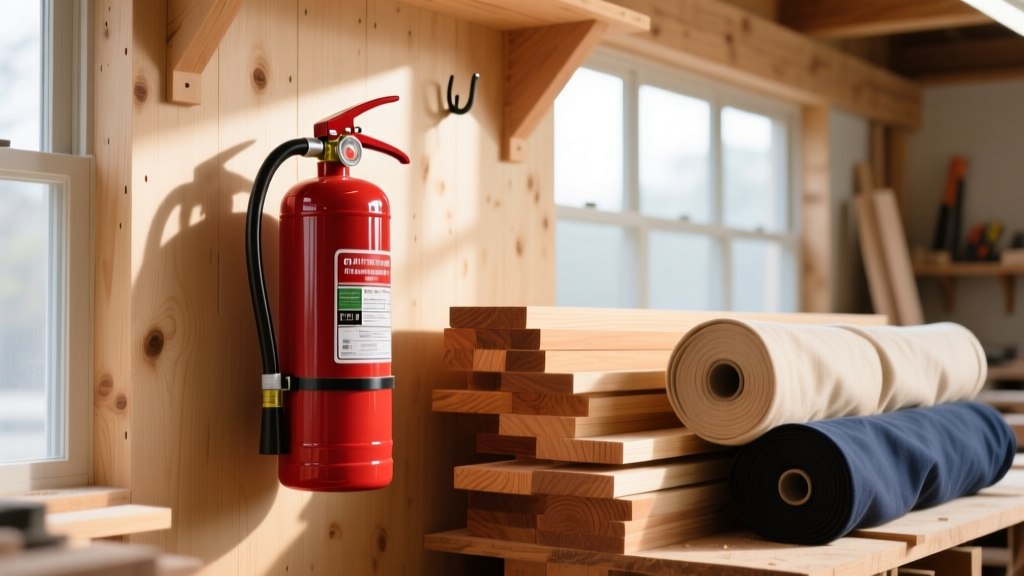
When managing facilities that store or process ordinary combustibles—such as lumber yards, woodworking shops, textile manufacturing plants, or paper archives—selecting the correct fire suppression equipment is a critical life-safety decision. The direct answer to what type of fire extinguisher for wood, paper, and fabric is required is a Class A fire extinguisher. However, simply knowing the classification is insufficient for proper facility protection. You must understand the Underwriters Laboratories (UL) rating system, the thermodynamic differences between extinguishing agents, and the precise placement mandates outlined by the National Fire Protection Association (NFPA).
The Core Classification: Understanding Class A Ratings
Class A fires involve ordinary combustible materials where the primary fuel source is carbon-based and leaves an ash residue. Wood, paper, cloth, rubber, and many plastics fall into this category. The critical danger with Class A fuels, particularly dense timber and tightly rolled fabrics, is deep-seated smoldering. Surface flames may be knocked down, but if the core temperature of the material is not reduced below its ignition point, the fire will reignite.
'Class A fires are fires in ordinary combustible materials, such as wood, paper, rubber, cloth, and some plastics.' — NFPA 10: Standard for Portable Fire Extinguishers
Class A extinguishers are assigned a numerical rating based on their fire-fighting capacity, which correlates to water equivalency. A 1-A rating indicates the extinguisher has the equivalent fire-quenching capability of 1.25 gallons of water. A 2-A rating equals 2.5 gallons, and a 4-A rating equals 5 gallons. For a standard commercial woodworking shop or a fabric storage room, a minimum 2-A rating is typically required by local fire codes, though high-hazard lumber storage areas often mandate 3-A or 4-A units.
Agent Selection Matrix: Cooling vs. Smothering
Not all Class A extinguishers operate on the same physical principles. The choice of agent dictates whether you are cooling the fuel (preventing reignition) or simply smothering the surface flames. Below is a decision matrix for selecting the optimal agent for wood, paper, and fabric environments.
| Extinguishing Agent | Mechanism of Action | Pros for Wood/Fabric | Cons & Limitations | Best Application |
|---|---|---|---|---|
| Pressurized Water (APW) | Cooling and penetration | Maximum cooling; prevents deep-seated reignition; zero chemical residue. | Freezes in unheated spaces; conducts electricity (never use on live panels). | Pure lumber yards, paper archives, textile storage. |
| Water Mist (Deionized) | Cooling and oxygen displacement | Safe for use near electrical equipment; no water damage to delicate fabrics. | Higher initial cost; lower reach distance than solid stream water. | Mixed-use workshops with CNC routers or electronic looms. |
| Aqueous Film Forming Foam (AFFF) | Smothering and vapor suppression | Creates a vapor-sealing blanket; excellent for mixed Class A/B hazards. | Leaves a slippery, difficult-to-clean residue on wood surfaces. | Facilities storing both lumber and finishing solvents/varnishes. |
| ABC Dry Chemical | Chemical chain interruption | Multi-purpose; knocks down surface flames rapidly. | Poor cooling; high risk of deep-seated wood reignition; highly corrosive to metal tools. | General office areas adjacent to, but not inside, the woodshop. |
The Dry Chemical Trap in Woodworking Environments
Many facility managers default to multi-purpose ABC Dry Chemical extinguishers because they cover Class A, B, and C fires. In a heavy wood or fabric environment, this is a dangerous compromise. Monoammonium phosphate (the chemical in ABC extinguishers) interrupts the chemical chain reaction of the fire but provides almost zero cooling effect. If applied to a thick stack of oak lumber or tightly baled cotton, the surface flames will vanish, but the internal temperature will remain above the ignition point. Once the chemical dissipates, the wood will spontaneously reignite. Furthermore, the chemical residue is highly corrosive and will permanently ruin precision woodworking machinery, saw blades, and metal looms.
Step-by-Step Sizing and Placement Framework
Proper selection extends beyond the agent type; it requires calculating the required distribution based on the square footage and hazard level of your facility. According to OSHA regulations and NFPA 10 guidelines, follow this framework to ensure compliance and safety:
- Classify the Hazard Level:
- Light (Low) Hazard: Offices with minimal paper, small fabric display rooms. (Requires 2-A rated units).
- Ordinary (Moderate) Hazard: Standard woodworking shops, commercial laundries, paper processing areas. (Requires 2-A to 4-A rated units).
- Extra (High) Hazard: Large-scale lumber storage, sawmills, bulk textile manufacturing. (Requires 4-A rated units).
- Calculate Maximum Travel Distance: For Class A hazards, NFPA 10 mandates that an employee must never have to travel more than 75 feet to reach a fire extinguisher. Measure the actual walking path, not just the straight-line radius.
- Determine Mounting Heights: Extinguishers weighing 40 lbs or less must be installed so the top of the unit is no more than 5 feet above the floor. The bottom of the unit must be at least 4 inches off the floor to prevent moisture corrosion and facilitate easy cleaning.
- Ensure Clear Visibility: Units must be mounted on columns or walls near exits. If the layout of stacked lumber or fabric rolls obscures the view, you must install highly visible, illuminated directional signage pointing to the nearest unit.
Top Recommended Models for Ordinary Combustibles
When procuring equipment for wood and fabric facilities, prioritize stored-pressure water or deionized water mist models. Below are industry-standard recommendations based on 2026 commercial pricing and UL-listed performance:
- Amerex 240 (2.5 Gallon Stored Pressure Water): The gold standard for pure Class A hazards. Features a 2-A rating, a 55-foot discharge range, and a polished stainless steel cylinder that resists corrosion in humid lumber-drying environments. Estimated Cost: $120 - $140 per unit.
- Buckeye 2.5 Gallon Water Mist (Deionized): Ideal for modern CNC woodworking shops where electrical panels are interspersed with wood dust collection systems. The deionized water and specialized misting nozzle make it non-conductive and safe for Class C (electrical) hazards while still providing excellent Class A cooling. Estimated Cost: $260 - $290 per unit.
- Badger Advantage 2.5 Gallon Water: A heavy-duty alternative with a robust brass valve assembly, designed for rough environments like active sawmills or outdoor lumber staging areas. Estimated Cost: $110 - $130 per unit.
Ongoing Maintenance and Hydrostatic Testing
Selecting the right extinguisher is only the first step; maintaining its operational readiness is a legal requirement. Facility managers must implement a strict inspection protocol. Monthly visual inspections must verify that the pressure gauge is in the green zone, the pull-pin is secured with an intact tamper seal, and the nozzle is free of sawdust, lint, or debris—a common issue in wood and fabric shops.
Annually, a certified fire protection technician must conduct a thorough maintenance check. Furthermore, water-based extinguishers require hydrostatic testing every 5 years to ensure the cylinder can withstand internal pressure without rupturing. (Note: If you utilize ABC Dry Chemical in adjacent office spaces, those require hydrostatic testing every 12 years, but internal maintenance every 6 years). Always document these inspections on the physical tag attached to the cylinder and in your facility's digital compliance ledger to satisfy both local fire marshals and insurance auditors.
Written by
Sarah WhitfieldSarah Whitfield is a chartered quantity surveyor (MRICS) and construction cost analyst with 15 years of experience in material pricing, procurement strategy, and project budgeting. She earned her degree in Construction Management from the University of Reading (UK) and has worked on projects ranging from $2M custom homes to $180M mixed-use developments across North America and Europe. Sarah currently leads cost estimating for BuildMat Insight, maintaining a proprietary database of 4,000+ material price points updated quarterly. She is a frequent contributor to RSMeans cost data panels and has presented at the International Cost Engineering Council (ICEC) congress. Based in Denver, CO, Sarah is an avid trail runner and volunteer mentor for Women in Construction.
More from Sarah Whitfield
View all
Wood & Lumber
What Are the Different Types of Wood? A Builder's Guide
Compare structural softwoods, finish hardwoods, and engineered lumber. Analyze Janka ratings, MOE values, and 2026 pricing for construction.
Aug 4, 2026

Walls & Panels
Steel Framing vs Wood Framing: Corrosion and Moisture Defense
Compare steel framing vs wood framing for moisture resistance. Learn about galvanized coatings, condensation risks, and corrosion protection strategies.
Jul 21, 2026

Stone & Masonry
How to Cut Stone Veneer: Wet Saw vs Grinder Comparison
Compare the best tools for cutting stone veneer. We review wet saws, angle grinders, and chop saws to help you achieve clean, chip-free cuts.
Jul 21, 2026