2026 Cost Guide: Different Types of Wood Fences Compared
Compare material and installation costs for different types of wood fences in 2026. Discover ROI, lifespan, and hidden expenses for pine, cedar, and redwood.
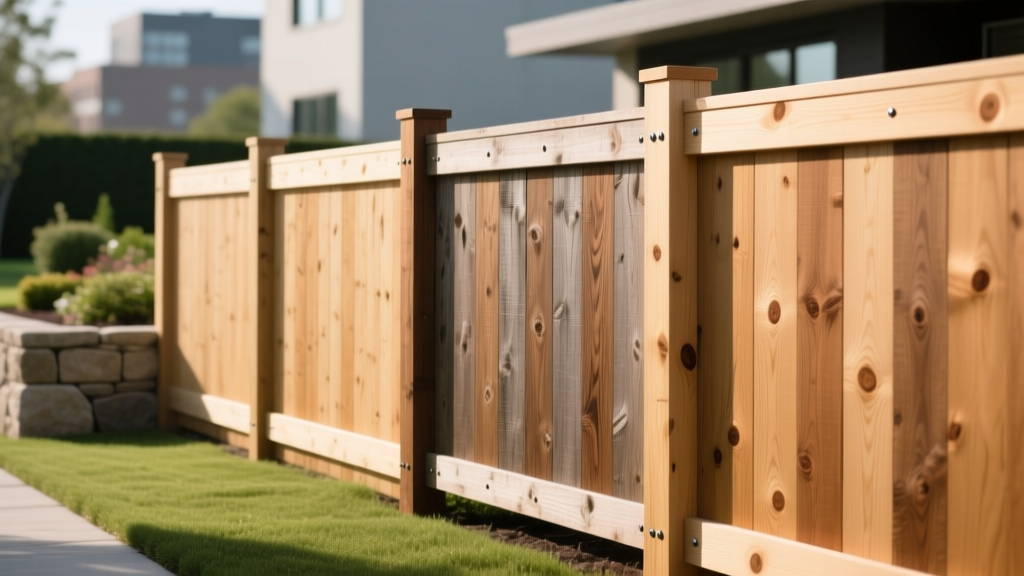
The True Cost of Wood Fencing: Beyond the Price Tag
When evaluating the different types of wood fences, homeowners and contractors frequently fixate on the initial per-linear-foot material cost. However, a genuine cost and value analysis requires calculating the total lifecycle expense, which includes installation variables, maintenance cycles, fastener compatibility, and ultimate lifespan. In 2026, supply chain stabilization has normalized lumber prices, but the gap between budget softwoods and premium hardwoods has widened due to sustainable harvesting regulations.
• Pressure-Treated Pine: $18 – $28 per linear foot (LF)
• Western Red Cedar: $32 – $48 per LF
• California Redwood: $55 – $85 per LF
• Tropical Hardwood (Ipe): $95 – $140 per LF
Material Cost Matrix: Comparing Wood Species
The following matrix breaks down the financial and physical characteristics of the most common wood species used in residential and commercial fencing. Data reflects Q1 2026 national averages for a standard 6-foot-tall privacy fence.
| Wood Species | Material Cost / LF | Installed Cost / LF | Expected Lifespan | Maintenance Cycle |
|---|---|---|---|---|
| Pressure-Treated Pine | $7 – $12 | $18 – $28 | 15 – 20 Years | Every 2–3 Years |
| Western Red Cedar | $15 – $24 | $32 – $48 | 20 – 30 Years | Every 3–5 Years |
| California Redwood | $28 – $45 | $55 – $85 | 25 – 35 Years | Every 3–5 Years |
| Ipe / Cumaru | $50 – $80 | $95 – $140 | 40–50+ Years | Annual (for color) |
Deep Dive: Evaluating the Most Common Wood Fence Types
Pressure-Treated Southern Yellow Pine (The Budget Standard)
Pressure-treated (PT) pine dominates the market due to its accessibility and low upfront cost. The wood is infused with preservatives like micronized copper azole (MCA) to resist rot and insect damage. However, not all PT lumber is created equal. The critical mistake DIYers and inexperienced contractors make is ignoring the AWPA (American Wood Protection Association) Use Category codes.
- UC4A (Ground Contact): Mandatory for fence posts buried in soil. Higher chemical retention prevents subterranean termite and fungal attack.
- UC3B (Above Ground): Suitable only for pickets, rails, and top caps where moisture drains freely and ground clearance exceeds 6 inches.
Failure Mode: Using UC3B posts in concrete footings leads to catastrophic base rot within 5 to 7 years. Furthermore, PT pine is highly susceptible to warping, twisting, and checking (splitting) as it dries. To mitigate this, specify 'Kiln-Dried After Treatment' (KDAT) lumber, which costs roughly 15% more but remains dimensionally stable.
Western Red Cedar (The Premium All-Rounder)
Cedar contains natural extractives called thujaplicins, which act as built-in fungicides and insect repellents. According to the Western Red Cedar Lumber Association, the grade you select drastically alters both the price and the visual outcome.
- Clear Heart: Flawless, vertical-grain boards. Extremely expensive ($35+/LF material only) and usually reserved for high-end architectural features.
- Select Tight Knot (STK): The sweet spot for value. Knots are present but tightly interlocked, preventing them from falling out. STK offers 90% of the structural integrity of Clear grade at roughly 40% less cost.
Fastener Warning: Cedar's natural oils and tannins will rapidly corrode standard galvanized nails, leaving unsightly black streaks. Always use hot-dipped galvanized (ASTM A153) or polymer-coated exterior screws.
California Redwood (The Luxury Investment)
Redwood offers superior dimensional stability and a rich, reddish-brown hue that fades to a distinguished silver-gray if left untreated. When purchasing redwood for fencing, the distinction between heartwood and sapwood is non-negotiable. Sapwood (the outer rings of the tree) lacks the natural decay-resistant extractives found in the heartwood.
For fence posts, you must specify Construction Heart or All Heart grades. 'Construction Common' grades contain sapwood and will rot at the soil line just as quickly as untreated pine. Redwood is also inherently fire-resistant, making it a preferred choice in Wildland-Urban Interface (WUI) zones in California and the Pacific Northwest, where local building codes often restrict combustible fencing materials.
Tropical Hardwoods: Ipe and Cumaru (The Indestructible Option)
If budget is secondary to absolute longevity, tropical hardwoods like Ipe (Brazilian Walnut) and Cumaru are unmatched. Ipe boasts a Janka hardness rating of 3,680 lbf—roughly seven times harder than cedar. It is naturally impervious to rot, termites, and even marine borers.
Installation Realities: You cannot simply nail Ipe. Its density requires pre-drilling every hole with carbide-tipped bits, and cutting it generates dust that requires respiratory protection. Fasteners must be Type 305 or 316 stainless steel; lesser metals will snap under the wood's expansion and contraction forces. While the material cost is staggering, the long-term value analysis shows Ipe can outlast the mortgage on the home itself, eliminating replacement cycles entirely.
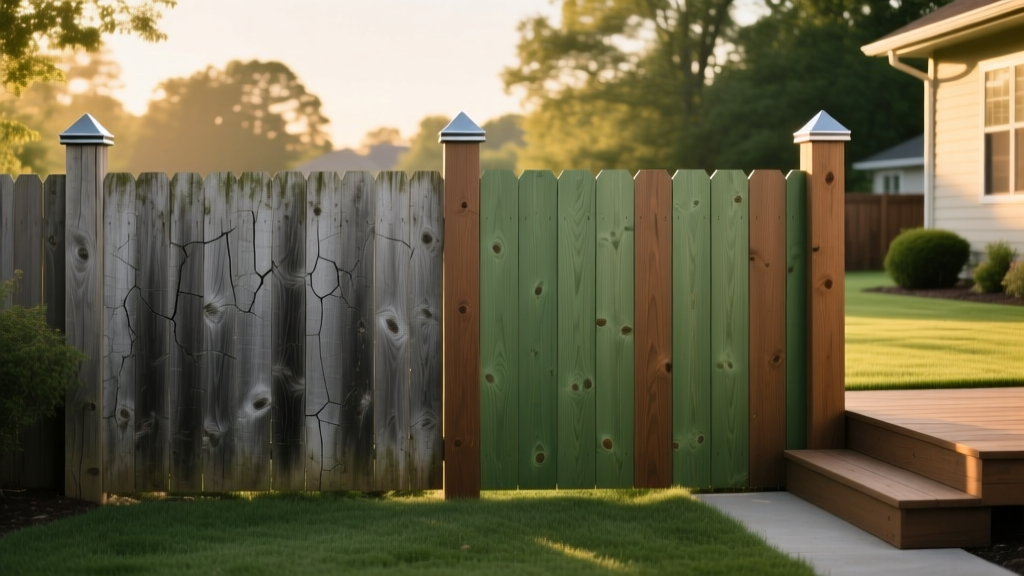
Hidden Costs That Destroy Fence Budgets
When comparing the different types of wood fences, contractors often quote a base 'per linear foot' rate that excludes critical site-specific variables. Budget for the following hidden costs to avoid mid-project change orders:
- Old Fence Demolition & Haul-Away: $3 to $6 per LF. If the old posts are set in concrete, excavation costs can double.
- Rocky or Clay Soil Upcharges: $5 to $12 per post. Digging post holes in caliche, bedrock, or heavy clay requires specialized augers or manual rock-bar labor.
- Sloped Terrain (Racking vs. Stepping): Stepping a fence down a steep grade requires custom-cut pickets and longer posts, adding 15% to 25% to total labor costs.
- Permitting and Utility Marking: $50 to $200 for municipal permits. Calling 811 for utility marking is free, but hitting an unmarked irrigation line can cost $500+ in repairs.
Post-Setting Strategy: Concrete vs. Crushed Gravel
The method used to set your 4x4 or 6x6 wooden posts dictates the lifespan of the fence more than the wood species itself.
Concrete Footings
Best for: Sandy soils, high-wind zones, and gate posts requiring sheer strength.
The Risk: Concrete acts as a sponge, trapping water against the wood base and accelerating rot in freeze-thaw climates.
Crushed Gravel (3/4-inch)
Best for: Clay soils and USDA Hardiness Zones 5 and below (heavy frost).
The Benefit: Gravel provides structural tamping while allowing water to drain away from the wood base, virtually eliminating frost heave and base rot.
Long-Term Value & ROI Analysis
"A well-maintained cedar or redwood fence yields a 65% to 75% return on investment at resale by boosting curb appeal and defining property lines, whereas a rotting, warped pine fence can actually trigger buyer repair credits that exceed the original cost of the fence." — National Association of Realtors (NAR) Remodeling Impact Data
To maximize ROI, factor in the cost of UV-inhibiting, penetrating oil stains. Film-forming sealers (like polyurethane) will peel and flake within two years on horizontal fence rails, requiring expensive chemical stripping. Penetrating oils (such as Armstrong Clark or TWP) soak into the wood fibers and fade gracefully, requiring only a light power-wash and reapplication every three years.
Decision Framework: Which Wood Fence Should You Buy?
Use this conditional framework to select the optimal wood species for your specific project parameters:
IF your primary constraint is immediate budget and you plan to move within 10 years...
THEN choose Pressure-Treated Pine (UC4A posts, KDAT pickets). Apply a semi-transparent stain immediately upon installation to minimize warping.
IF you want the best balance of natural beauty, rot resistance, and mid-range pricing...
THEN choose Western Red Cedar (Select Tight Knot grade). It offers the premium look of clear cedar without the luxury price tag.
IF you live in a strict fire-hazard zone (WUI) or demand a 30-year lifespan with minimal structural maintenance...
THEN choose Construction Heart California Redwood. Ensure all fasteners are hot-dipped galvanized to prevent tannin streaking.
IF you are building a generational estate, live in a high-humidity coastal environment, and refuse to ever replace the fence...
THEN choose Ipe or Cumaru. Budget for stainless steel hardware and specialized hardwood labor.
By looking past the initial linear-foot quote and analyzing the lifecycle costs, fastener requirements, and grade specifications of the different types of wood fences, you can make a capital improvement that secures your property and retains its value for decades.
Written by
Marcus ChenMarcus Chen is a licensed structural engineer (PE) and building materials analyst with over 12 years of experience across residential, commercial, and industrial construction. He holds a Master of Science in Civil Engineering from UC Berkeley and spent six years at Thornton Tomasetti before transitioning to independent consulting and technical writing. Marcus specializes in material selection for seismic-prone regions, concrete reinforcement strategies, and lifecycle cost analysis. His work has been cited by the American Concrete Institute (ACI) and the Structural Engineers Association of California (SEAOC). When he is not on a job site or at his desk, you will find him hiking the Sierra Nevada or restoring a 1920s craftsman bungalow in Oakland, CA.
More from Marcus Chen
View all
Construction Cost
How Much Did the Eiffel Tower Cost to Build?
How much did the Eiffel Tower cost to build in 1889? We adjust for inflation and compare its budget to modern skyscraper construction.
Aug 4, 2026

Fire Resistance
What Is a Fire Resistant Material? Testing & Certification Guide
Discover what is a fire resistant material through ASTM and UL testing. Learn how fire ratings, certifications, and assemblies work in construction.
Aug 4, 2026

Construction Cost
How Much Did the Burj Khalifa Cost to Build?
How much did the Burj Khalifa cost to build? We break down the $1.5B project and extract 5 money-saving strategies for your next build.
Jul 30, 2026