Cost and Value Analysis of Common Types of Wooden Joints
Compare the labor, equipment, and material costs of various types of wooden joints to determine the best ROI for cabinetry, furniture, and structural framing.
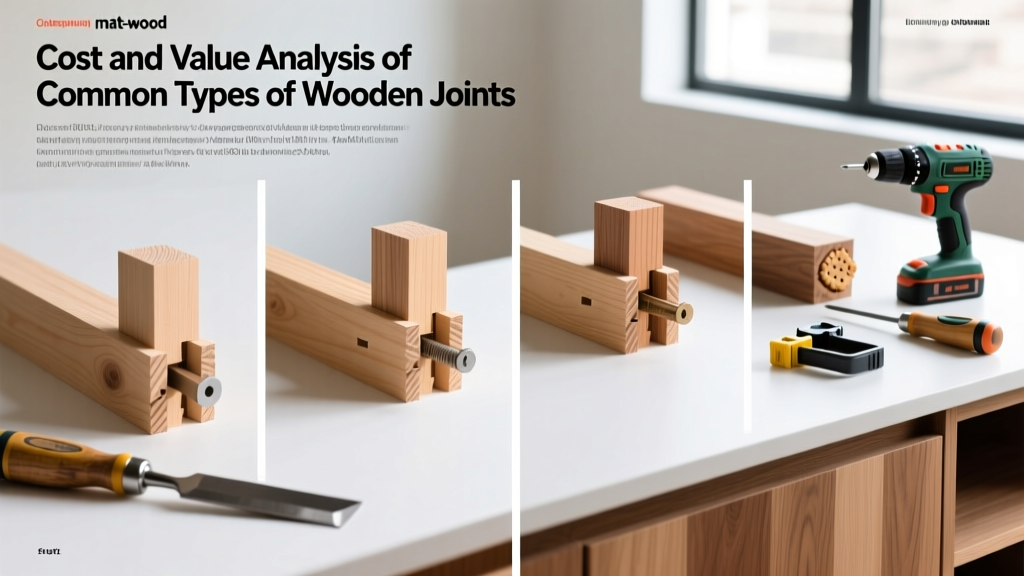
The Economics of Wood Joinery: Beyond the Glue Pot
When evaluating the types of wooden joints for a construction, millwork, or furniture project, the conversation rarely stays confined to sheer mechanical strength. In commercial and high-end residential woodworking, the true cost of a joint is a composite metric: it encompasses equipment amortization, consumable fasteners, adhesive costs, labor minutes, and the secondary finishing time required to hide the joint's mechanics. A joint that takes three minutes to cut but requires fifteen minutes of wood filling and sanding is inherently more expensive than a joint that takes eight minutes to cut and requires zero surface remediation.
This cost and value analysis breaks down the primary types of wooden joints through the lens of production economics, helping contractors, cabinetmakers, and custom builders optimize their return on investment (ROI) without compromising structural integrity or aesthetic standards.
Cost-Benefit Breakdown of Primary Joint Types
1. Butt Joints and Pocket Hole Reinforcement (The Budget Baseline)
The standard butt joint relies entirely on adhesive surface area and mechanical fasteners. In modern production, this is almost exclusively executed via pocket hole joinery. While the upfront equipment cost is negligible—a professional-grade Kreg 720PRO jig retails around $150—the hidden costs accumulate in the finishing phase.
- Consumables: 1.25-inch washer-head pocket screws cost approximately $0.12 to $0.18 each. A standard face-frame cabinet requires 16 to 24 screws ($2.00 to $4.32 in fasteners alone).
- Labor & Finishing: Drilling and driving takes roughly 1.5 minutes per joint. However, if the pocket holes are exposed on the interior of a premium cabinet, they must be filled with wood putty or solid wood plugs. Plugging, trimming, and sanding adds 3 to 5 minutes per joint.
- Value Proposition: Ideal for face frames, structural carcass backing, and concealed utility cabinetry. It fails the value test for high-end visible millwork due to the high finishing labor cost.
2. Dowel and Biscuit Joints (The Mid-Tier Production Standard)
Dowel and biscuit (plate) joints serve primarily as alignment aids and secondary reinforcement for edge-gluing and panel construction. They offer a massive step up in aesthetics over pocket holes since the mechanics are entirely hidden.
- Equipment: A professional plate joiner (lamello) costs between $250 and $400. Precision doweling jigs or CNC boring machines range from $150 (manual) to $15,000+ (automated).
- Consumables: Fluted birch dowels cost roughly $0.04 each; beech biscuits cost about $0.08 each. Polyvinyl acetate (PVA) glue adds $0.10 per joint.
- Value Proposition: Biscuits offer the fastest alignment for long panel glue-ups (like tabletops) but provide minimal structural shear strength. Dowels offer superior shear strength and are the backbone of mid-tier European-style frameless cabinet construction.
3. Dado and Rabbet Joints (The Cabinet Maker's Workhorse)
Cutting a trench (dado) or an edge recess (rabbet) creates a mechanical interlock that drastically increases glue surface area and supports vertical loads. This is the undisputed standard for shelving and casegoods.
- Equipment: Requires a router table or table saw equipped with a dado stack. A high-quality 8-inch dado stack (e.g., Freud SD508) costs around $200 and requires a 3HP+ table saw to run safely.
- Labor: Setup time for a dado stack takes 10 to 15 minutes. Once dialed in, cutting a dado takes less than 30 seconds per pass.
- Value Proposition: The high initial setup time makes dado joints economically unviable for one-off custom pieces but incredibly cost-effective for batch production. The mechanical support eliminates the need for expensive shelf pins or visible fasteners, elevating the perceived value of the final product.
4. Mortise and Tenon & Dovetails (The Premium Investment)
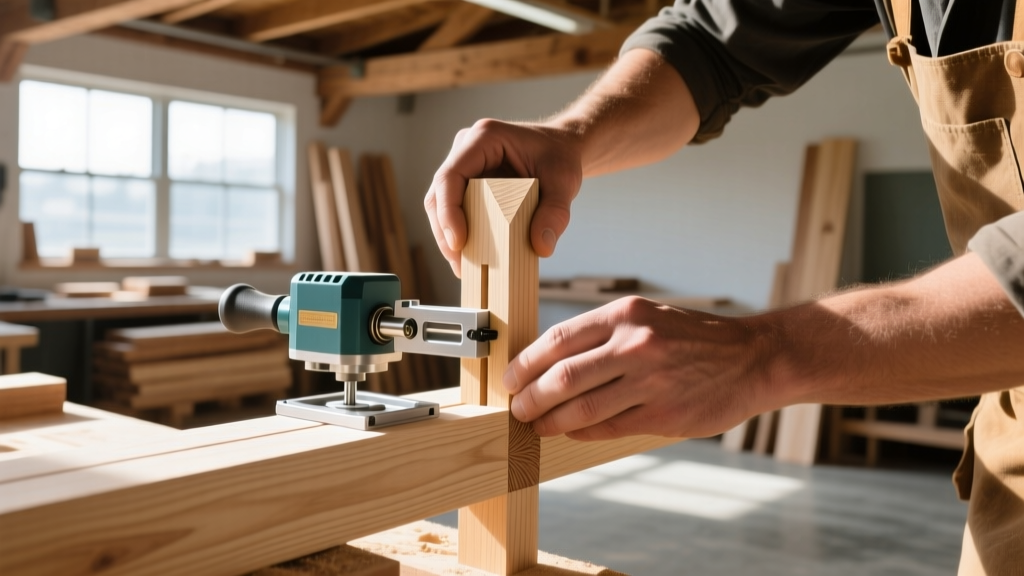
Historically the domain of master craftsmen, these interlocking joints represent the pinnacle of woodcraft. Today, the economics of these joints have been radically altered by advanced power tools and CNC automation.
- The Domino Effect: The Festool Domino DF500 and DF700 (retailing between $1,100 and $1,600) utilize floating tenons to replicate traditional mortise and tenon strength in a fraction of the time. A joint that takes 20 minutes to chop by hand takes 45 seconds with a Domino.
- Dovetail Economics: Hand-cut dovetails require high skill and 30+ minutes per corner. Router jigs (like the Leigh D4R at $500) reduce this to 5 minutes, while 3-axis CNC routers can cut them in under 2 minutes, though CNC programming and fixturing add upfront time.
- Value Proposition: These joints command a 30% to 50% price premium in the custom furniture and luxury millwork market. The ROI is achieved not in labor savings, but in the ability to charge heirloom-tier pricing for the final product.
Comparative Cost & Labor Matrix
The following matrix illustrates the estimated costs per joint for a mid-sized production run (50 units), factoring in equipment amortization, consumables, and average shop labor rates ($45/hour).
| Joint Type | Equipment Cost | Consumables per Joint | Labor Time (Cut/Assemble) | Finishing Labor | Est. Total Cost per Joint |
|---|---|---|---|---|---|
| Pocket Hole | $150 | $0.36 (screws) | 1.5 mins | 3 mins (if plugged) | $3.78 |
| Biscuit | $300 | $0.24 (biscuit/glue) | 2 mins | 0 mins | $1.74 |
| Dado/Rabbet | $200 (stack) | $0.10 (glue) | 1 min (batch) | 0 mins | $0.85 |
| Floating Tenon | $1,200 | $0.60 (tenon/glue) | 1.5 mins | 0 mins | $1.72 |
| Hand Dovetail | $250 (hand tools) | $0.10 (glue) | 35 mins | 5 mins (sanding) | $30.10 |
Hidden Costs: Wood Movement and Glue Starvation
When analyzing the long-term value of wooden joints, builders must account for hygroscopic movement. According to data published by The Wood Database, wood expands and contracts primarily across the grain (tangentially and radially), with longitudinal movement being negligible.
Gluing a solid wood panel into a rigid frame using standard mortise and tenon or dowel joints without allowing for seasonal expansion will result in catastrophic panel splitting. The cost of a warranty repair or complete rebuild vastly outweighs the cost of using specialized hardware, elongated mortises, or floating panel construction techniques. Always calculate the tangential shrinkage coefficient of your specific wood species before finalizing joint tolerances.
Furthermore, glue starvation is a frequent hidden cost in tight-fitting joints like dowels and machined dovetails. If the joint is cut too tightly, the adhesive is scraped off the wood fibers during assembly, resulting in a dry joint that relies solely on mechanical friction. This leads to warranty claims and joint failure within the first 12 months of HVAC cycling. Proper tolerance (typically 0.005 to 0.010 inches for hardwoods) ensures the glue line remains intact, securing the long-term value of the piece.
AWI Standards and Commercial Millwork Value
For commercial contractors, the value of a joint is often dictated by compliance with the Architectural Woodwork Institute (AWI) Standards. AWI categorizes millwork into Economy, Custom, and Premium grades.
- Economy Grade: Permits exposed pocket holes, stapled butt joints, and basic rabbets. The focus is on lowest initial cost.
- Custom Grade: Requires concealed joinery, doweled or pocket-screwed face frames with proper wood filler, and dado-joined shelving.
- Premium Grade: Demands tight tolerances, floating tenons or true mortise and tenon for structural frames, and seamless veneer matching.
Upgrading a commercial bid from Custom to Premium requires a shift in joinery strategy. Bidding a Premium project using pocket hole jigs will result in failed inspections and costly rework. Conversely, bidding an Economy project using floating tenons will price the contractor out of the market. Aligning joint selection with AWI specifications is the most critical step in protecting project profit margins.
Decision Framework: Matching the Joint to the Project Budget
To systematize joint selection, production managers should apply the following decision matrix based on volume and visibility:
- Is the joint visible in the final installation?
- Yes: Eliminate pocket holes and exposed fasteners. Default to floating tenons, dowels, or machined dovetails.
- No: Proceed to step 2.
- Does the joint bear significant structural or shear loads (e.g., chair frames, heavy shelving)?
- Yes: Use mortise and tenon (floating or traditional) or deep dados. Avoid biscuits and standard pocket screws.
- No: Proceed to step 3.
- Is the production volume greater than 25 identical units?
- Yes: Invest time in CNC programming or table saw dado stack setup. The per-unit labor savings will absorb the setup time.
- No: Utilize portable, quick-setup jigs like the Festool Domino or manual doweling jigs to minimize non-billable setup hours.
Expert Insights on Long-Term Value and Repairability
The ultimate measure of a wooden joint's value is its repairability. Furniture and architectural millwork will inevitably suffer impact damage or water ingress over a 50-year lifespan. Joints that rely heavily on mechanical fasteners (screws, staples) or high-strength epoxies are notoriously difficult to disassemble and repair without destroying the surrounding timber.
Conversely, traditional hide glue used in conjunction with precise mortise and tenon or dovetail joints can be reversed using heat and moisture. This allows master restorers to disassemble, repair, and re-glue a damaged component a century later. For high-value residential projects and heritage commercial builds, specifying reversible joinery methods and traditional adhesives (where climate permits) adds a layer of intrinsic, long-term value that justifies premium upfront labor costs. As noted by the US Forest Service Forest Products Laboratory, understanding the mechanical properties and adhesive interactions of specific wood species is paramount to ensuring joint longevity and structural predictability over decades of service.
Written by
Marcus ChenMarcus Chen is a licensed structural engineer (PE) and building materials analyst with over 12 years of experience across residential, commercial, and industrial construction. He holds a Master of Science in Civil Engineering from UC Berkeley and spent six years at Thornton Tomasetti before transitioning to independent consulting and technical writing. Marcus specializes in material selection for seismic-prone regions, concrete reinforcement strategies, and lifecycle cost analysis. His work has been cited by the American Concrete Institute (ACI) and the Structural Engineers Association of California (SEAOC). When he is not on a job site or at his desk, you will find him hiking the Sierra Nevada or restoring a 1920s craftsman bungalow in Oakland, CA.
More from Marcus Chen
View all
Construction Cost
How Much Did the Eiffel Tower Cost to Build?
How much did the Eiffel Tower cost to build in 1889? We adjust for inflation and compare its budget to modern skyscraper construction.
Aug 4, 2026

Fire Resistance
What Is a Fire Resistant Material? Testing & Certification Guide
Discover what is a fire resistant material through ASTM and UL testing. Learn how fire ratings, certifications, and assemblies work in construction.
Aug 4, 2026

Construction Cost
How Much Did the Burj Khalifa Cost to Build?
How much did the Burj Khalifa cost to build? We break down the $1.5B project and extract 5 money-saving strategies for your next build.
Jul 30, 2026