What Is the Hardest Type of Wood? The Ultimate Janka Guide
Discover what is the hardest type of wood using the Janka scale. Compare exotic and domestic hardwoods for flooring, decking, and structural use.

The Science of Wood Hardness: Understanding the Janka Scale
When architects, builders, and homeowners ask what is the hardest type of wood, the answer depends on whether they are seeking botanical trivia or practical building materials. In the construction and woodworking industries, hardness is not a subjective feel; it is a rigorously quantified metric. The global standard for measuring this is the Janka hardness test, governed in the United States by ASTM D143.
Understanding the Janka scale is critical for material selection. A wood species with a Janka rating below 1,000 lbf (like Eastern White Pine at 380 lbf) will dent easily under foot traffic or dropped tools. Conversely, species exceeding 3,000 lbf offer near-indestructible surface performance but introduce severe challenges in milling, fastening, and finishing.
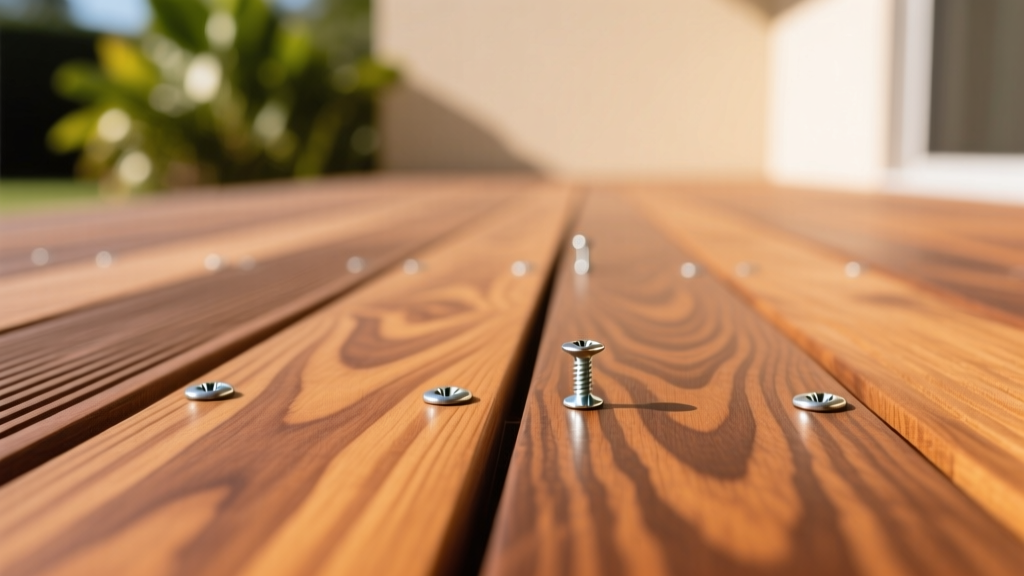
What Is the Hardest Type of Wood in the World?
From a purely botanical and scientific standpoint, the hardest wood on Earth is Australian Buloke (Allocasuarina luehmannii). According to extensive testing documented by The Wood Database, Australian Buloke achieves an astonishing Janka rating of 5,060 lbf. Its density is so extreme that it sinks in water and rapidly destroys standard steel cutting tools.
Historically, Lignum Vitae (Guaiacum officinale) held the crown at 4,500 lbf. Prized for its natural oils and self-lubricating properties, it was used for submarine propeller shaft bearings. However, Lignum Vitae is now listed under CITES Appendix II due to overharvesting, making it virtually unavailable and illegal to import for general construction without strict permitting. Therefore, while Australian Buloke and Lignum Vitae answer the trivia question, they are irrelevant for modern building specifications.
Top Hardest Woods Available for Construction and Flooring
For practical applications in 2026, the 'hardest' woods are those that balance extreme Janka ratings with commercial availability, sustainable harvesting, and workable (albeit difficult) fabrication characteristics. Below is a comparison matrix of the hardest commercially viable species.
| Wood Species | Janka Hardness (lbf) | Avg. Density (lbs/ft³) | Primary Application | 2026 Material Cost (per sq. ft.) |
|---|---|---|---|---|
| Ipe (Brazilian Walnut) | 3,510 | 69 | Exterior Decking, Boardwalks | $14.00 - $22.00 |
| Cumaru (Brazilian Teak) | 3,330 | 67 | Heavy-Duty Flooring, Decking | $9.00 - $14.00 |
| Hickory (Pecan) | 1,820 | 50 | Interior Flooring, Tool Handles | $6.50 - $10.00 |
| Hard Maple (Sugar Maple) | 1,450 | 44 | Gymnasium Floors, Butcher Blocks | $5.50 - $9.00 |
| White Oak | 1,350 | 47 | Structural Timber, Interior Floors | $7.00 - $12.00 |
Deep Dive: Ipe (Handroanthus spp.)
Ipe is the undisputed king of commercially available hardwoods. With a Janka rating of 3,510 lbf, it is roughly seven times harder than California Redwood. Its cellular structure is so dense that it achieves a Class A fire rating—the same as steel and concrete—without chemical treatments. According to the USDA Forest Products Laboratory, Ipe's natural resistance to decay, rot, and insect attack allows it to last 40 to 75 years in exterior applications without sealants. However, strict Brazilian export regulations and FSC-certification requirements have pushed 2026 prices to a premium $14 to $22 per square foot for milled decking boards.
Deep Dive: Hickory (Carya spp.)
If your project requires domestic sourcing, Hickory is the hardest commercially harvested North American wood. At 1,820 lbf, it outperforms both Oak and Maple. Hickory's high shock resistance makes it the mandatory choice for high-impact interior environments, such as commercial gymnasiums and heavy-traffic residential flooring. Its dramatic color variation (from pale sapwood to dark brown heartwood) is a defining aesthetic characteristic, though it requires careful acclimation to a 6-8% moisture content (MC) before interior installation to prevent seasonal gapping.
The Hardness vs. Workability Trade-Off
Selecting the hardest type of wood introduces significant fabrication challenges. As the Janka rating increases, the wood's shear strength and silica content typically increase as well, drastically altering how the material must be handled on the job site.
- Tool Wear and Blade Selection: Woods exceeding 2,500 lbf (like Ipe and Cumaru) contain high levels of silica. Standard high-speed steel (HSS) blades will dull within a few dozen cuts. You must use premium carbide-tipped blades. For crosscutting Ipe, specify a minimum 60-tooth to 80-tooth carbide blade with a negative hook angle to prevent tear-out and reduce burning.
- Pre-Drilling is Mandatory: You cannot drive a standard nail or screw directly into wood harder than 2,000 lbf without risking fastener shear or wood splitting. All fastening points must be pre-drilled using titanium-coated or cobalt drill bits. The pilot hole should be exactly 85% of the fastener's shank diameter.
- Fastener Compatibility: Dense tropical hardwoods contain high levels of tannins and natural oils that will corrode standard galvanized steel, causing severe black staining and eventual fastener failure. Always use Type 304 stainless steel for standard exterior applications, and upgrade to Type 316 marine-grade stainless steel for coastal installations or ground-contact applications.
- Gluing Challenges: The natural oils in Cumaru and Ipe inhibit standard PVA (polyvinyl acetate) wood glues. For structural bonding or edge-gluing, wipe the joint surfaces with a solvent like acetone immediately before applying a two-part epoxy or a high-quality polyurethane adhesive (e.g., Titebond Polyurethane).
Decision Framework: Choosing the Right Hardwood
Do not default to the highest Janka rating available. Over-specifying wood hardness leads to inflated budgets and unnecessary labor costs. Use this framework to match the material to the project parameters:
- For Exterior Decking in High-Traffic/Commercial Zones: Choose Ipe. The 3,510 lbf hardness ensures it will not dent from heavy patio furniture, commercial foot traffic, or dropped equipment. Budget for premium stainless steel hidden fastener systems.
- For Exterior Decking on a Moderate Budget: Choose Cumaru. At 3,330 lbf, it offers 95% of the surface hardness of Ipe but typically costs 30% less. Note that Cumaru has a highly interlocked grain, making it slightly more prone to surface checking than Ipe if not properly sealed end-grains with paraffin wax.
- For Interior Residential Flooring (High Impact): Choose Hickory. It provides the maximum domestic dent-resistance for homes with large dogs or heavy foot traffic, without requiring the exotic tooling and respiratory precautions (Ipe dust can cause severe allergic reactions) needed for tropical species.
- For Interior Commercial Flooring (Uniform Wear): Choose Hard Maple. At 1,450 lbf, it is hard enough to resist daily wear but soft enough to be easily sanded and refinished every 10-15 years. Its tight, closed grain also makes it highly resistant to moisture penetration and staining.
Frequently Asked Questions
Does a higher Janka rating mean the wood is structurally stronger?
No. The Janka test measures surface indentation resistance, not structural load-bearing capacity. Structural strength is determined by the Modulus of Elasticity (MOE) and Modulus of Rupture (MOR). For example, Southern Yellow Pine has a relatively low Janka rating (870 lbf) but possesses exceptional MOR, making it a premier choice for structural framing and joists, whereas a harder wood might be too brittle for spanning loads.
What is the hardest wood native to North America?
Hickory (specifically the Pecan Hickory grouping) is the hardest commercially available native North American wood at 1,820 lbf. While Persimmon and Osage Orange technically score higher on the Janka scale (around 2,300 to 2,600 lbf), they grow in small, irregular shapes and are not milled into dimensional lumber or flooring, restricting them to specialty turning and tool-handle applications.
How does engineered hardwood compare in hardness to solid hardwood?
The surface hardness of engineered hardwood is determined entirely by its top veneer layer. An engineered board with a 4mm Ipe wear layer will have the exact same 3,510 lbf Janka rating as solid Ipe. However, engineered hardwood is dimensionally more stable, allowing you to install hard exotic species over radiant heating systems or concrete slabs where solid hardwood would warp or cup.
Written by
Elena RodriguezElena Rodriguez is a civil engineer and technical writer specializing in concrete technology, masonry systems, and ASTM/ACI compliance. She earned her B.S. in Civil Engineering from Texas A&M University and spent a decade at a materials testing laboratory, performing over 2,000 concrete compressive strength tests and masonry prism evaluations. Elena is an ACI-certified Field Testing Technician (Grade I) and a member of ASTM Committee C12 on Natural Building Stone. She currently consults on forensic engineering cases involving concrete failures and moisture intrusion. Based in San Antonio, TX, Elena is a proud member of the Society of Women Engineers (SWE) and coaches her daughter's FIRST Robotics team.
More from Elena Rodriguez
View all
Walls & Panels
Cost Analysis: Light Gauge Steel Framing Advantages and Disadvantages
Evaluate light gauge steel framing advantages and disadvantages through a strict cost analysis lens, comparing material, labor, and lifecycle expenses.
Aug 4, 2026

Walls & Panels
Gypsum Board Types: Exact Specifications, Thickness & Dimensions
Compare standard, Type X, and moisture-resistant gypsum board types. Get exact specifications, thicknesses, dimensions, and ASTM standards for your project.
Aug 4, 2026

Fire Resistance
Best Fire-Resistant Outdoor Decking Materials: 2026 Buyer Guide
Discover the best fire-resistant outdoor decking materials for 2026. Compare Class A PVC, aluminum, and hardwood options for WUI compliance and safety.
Aug 4, 2026