What Type of Exterior Paint Finish Is Best for Structural Wood?
Discover what type of exterior paint finish is best for wood in structural applications. Compare acrylics, alkyds, and elastomerics for timber protection.
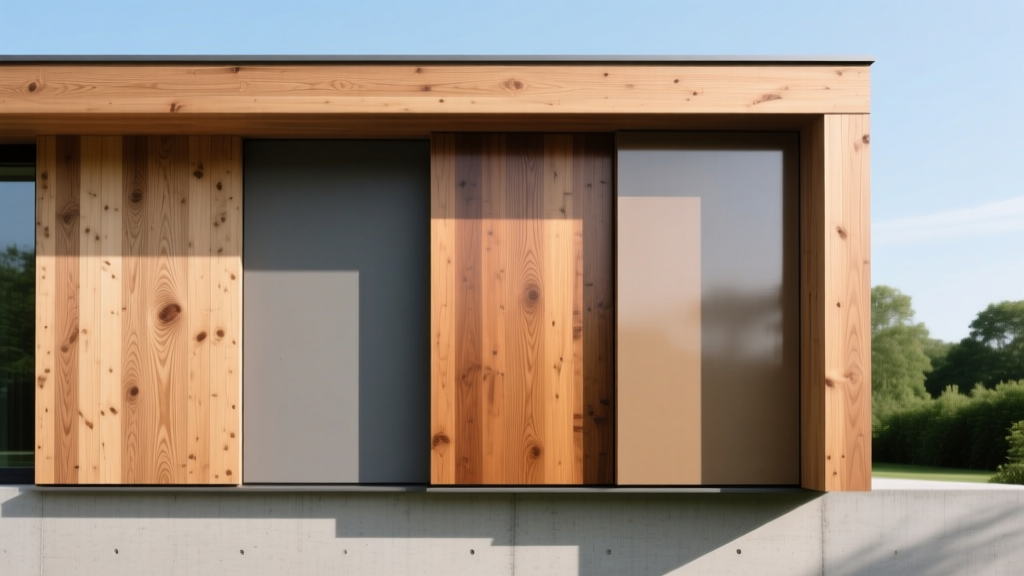
The Structural Stakes: Moisture Content and Dimensional Stability
When evaluating what type of exterior paint finish is best for wood in structural applications, the primary objective shifts from mere aesthetic enhancement to rigorous moisture management and dimensional stabilization. Structural timber—including glulam beams, cross-laminated timber (CLT) panels, and heavy dimensional lumber—must maintain a moisture content (MC) below 19% to prevent fungal decay and structural degradation. According to research from the USDA Forest Products Laboratory, wood-destroying fungi cannot thrive when MC is consistently maintained below this critical threshold. The ideal equilibrium moisture content (EMC) for exterior structural wood in most North American climates ranges between 12% and 15%.
Never apply high-build elastomeric coatings (often rated below 1 perm for moisture vapor transmission) to structural wood. While they bridge masonry cracks effectively, elastomerics trap internal moisture inside timber members, creating a microclimate that accelerates internal rot and compromises the structural integrity of load-bearing joints.
Unlike decorative trim, structural wood members experience significant hygroscopic movement. A 12-inch glulam beam can swell or shrink by up to 1/4 inch across its width depending on seasonal humidity shifts. Therefore, the coating system must possess high elasticity and a high Moisture Vapor Transmission Rate (MVTR) to allow the wood to 'breathe' while shedding liquid water. This fundamental requirement dictates the chemical hierarchy of exterior wood finishes.
Finish Chemistry: Decoding the Best Coatings for Heavy Timber
To determine the optimal finish, we must analyze the resin chemistry, pigment load, and permeability of available exterior coatings. The consensus among structural engineers and coating chemists is that 100% acrylic latex paints and high-build solid acrylic stains offer the superior balance of UV resistance, elasticity, and breathability required for mass timber and structural framing.
| Finish Type | Dry Mil Thickness | MVTR (Perms) | Elasticity | Best Structural Application |
|---|---|---|---|---|
| 100% Acrylic Latex Paint | 4.0 - 6.0 mils | 10 - 15 | High | Smooth-planed glulam, exterior CLT facades, structural columns |
| Solid Acrylic Stain | 2.0 - 3.5 mils | 15 - 25 | Very High | Rough-sawn structural timbers, exposed roof purlins, heavy decking |
| Alkyd / Oil-Based Paint | 3.0 - 5.0 mils | 2 - 5 | Low (Brittle) | Not recommended for large structural members (prone to cracking) |
| Elastomeric Coating | 10.0 - 20.0 mils | < 1.0 | Extreme | Masonry only; strictly avoid on structural wood |
Products like Sherwin-Williams WoodScapes or Benjamin Moore Aura Exterior utilize 100% acrylic resins that remain flexible at temperatures as low as -20°F, preventing the micro-fracturing that occurs when rigid alkyd coatings are subjected to the thermal expansion and contraction of massive timber members. Furthermore, opaque acrylic paints containing high levels of titanium dioxide (TiO2) pigment effectively block the ultraviolet radiation that degrades lignin—the structural polymer that binds wood fibers together.
Surface Preparation Protocols for Engineered Wood
The APA – The Engineered Wood Association emphasizes that coating failure on structural wood is rarely a product defect; it is almost always a preparation failure. Engineered wood products like glulam and LVL (Laminated Veneer Lumber) are manufactured using high-pressure industrial planers that compress the surface fibers, creating a 'mill glaze' that prevents paint penetration.
- Moisture Verification: Use a pinless moisture meter (e.g., Wagner Meters Orion 930) to verify the timber MC is below 15%. Applying a coating over wood with 18% MC will trap moisture and guarantee blistering within six months.
- Mill Glaze Removal: Mechanically abrade all smooth-planed glulam and CLT surfaces using an 80-grit aluminum oxide abrasive. Do not use finer grits (120+), as they polish the wood and reduce the mechanical profile required for coating adhesion.
- End-Grain Sealing: Structural timber joints and cut ends expose the longitudinal tracheids, which act like microscopic straws wicking water deep into the beam. Apply two heavy coats of a specialized end-grain sealer, such as Anchorseal, before the primary topcoat.
- Alkali-Resistant Priming: If the structural wood has been treated with borate fire retardants or alkaline preservatives, apply an alkali-resistant acrylic primer to prevent the chemicals from bleeding through and saponifying the topcoat.
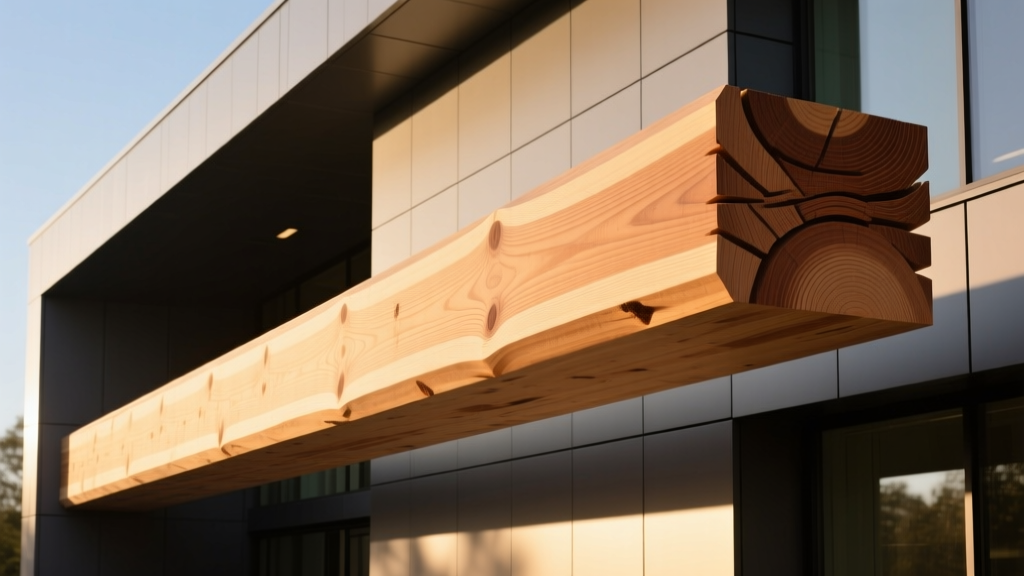
Troubleshooting Common Structural Wood Coating Failures
Even with premium 100% acrylic paints, structural wood presents unique failure modes due to its mass and joint detailing. Recognizing these symptoms early prevents catastrophic moisture ingress.
- Symptom: Deep Blistering on Glulam Beams. Cause: Moisture trapped within the lamination lines during manufacturing is heated by the sun, creating vapor pressure that pushes the paint off the surface. Fix: Scrape blisters, allow the timber to dry to 12% MC, and apply a breathable solid acrylic stain rather than a high-build paint.
- Symptom: Peeling at Finger-Joints. Cause: Differential movement between the micro-joints and the main timber body breaks the paint film. Fix: Route a shallow 1/8-inch V-groove over the joint line and fill with a high-modulus polyurethane sealant (e.g., Sikaflex-1a) before priming and painting.
- Symptom: Chalking and Fading on South-Facing Elevations. Cause: UV degradation of the binder, exposing the TiO2 pigment. Fix: Wash with a TSP (trisodium phosphate) solution, rinse, and apply a maintenance coat of high-quality 100% acrylic paint with a Light Reflectance Value (LRV) above 40 to reduce thermal loading.
Life-Cycle Cost Analysis for Structural Coatings
When specifying exterior finishes for mass timber buildings or structural canopies, facility managers must evaluate the life-cycle cost rather than just the initial material price. The Paint Quality Institute notes that premium acrylic systems cost more upfront but drastically reduce the frequency of expensive scaffolding and swing-stage rentals required for multi-story timber maintenance.
| Coating System | Material Cost (per sq ft) | Expected Lifespan | 15-Year Maintenance Cost |
|---|---|---|---|
| Economy Alkyd Paint | $0.35 - $0.50 | 3 - 5 Years | $4.50 - $6.00 |
| Premium 100% Acrylic Latex | $0.75 - $1.10 | 8 - 12 Years | $2.00 - $2.80 |
| High-Build Solid Acrylic Stain | $0.60 - $0.85 | 7 - 10 Years | $2.20 - $3.00 |
Final Specification Guidance
For smooth, planed structural glulam and CLT exposed to direct weather, specify a two-coat system of 100% acrylic latex exterior paint applied at 4 to 6 dry mils over an alkali-resistant acrylic primer. For rough-sawn structural timbers, heavy decking, and exposed purlins, bypass film-forming paints entirely and utilize a high-build solid acrylic stain that penetrates the deep grain profile without forming a brittle surface film. By aligning the coating chemistry with the specific hygroscopic and structural behavior of the timber, engineers and architects can ensure the longevity and structural integrity of the wood for decades.
Written by
Elena RodriguezElena Rodriguez is a civil engineer and technical writer specializing in concrete technology, masonry systems, and ASTM/ACI compliance. She earned her B.S. in Civil Engineering from Texas A&M University and spent a decade at a materials testing laboratory, performing over 2,000 concrete compressive strength tests and masonry prism evaluations. Elena is an ACI-certified Field Testing Technician (Grade I) and a member of ASTM Committee C12 on Natural Building Stone. She currently consults on forensic engineering cases involving concrete failures and moisture intrusion. Based in San Antonio, TX, Elena is a proud member of the Society of Women Engineers (SWE) and coaches her daughter's FIRST Robotics team.
More from Elena Rodriguez
View all
Walls & Panels
Cost Analysis: Light Gauge Steel Framing Advantages and Disadvantages
Evaluate light gauge steel framing advantages and disadvantages through a strict cost analysis lens, comparing material, labor, and lifecycle expenses.
Aug 4, 2026

Walls & Panels
Gypsum Board Types: Exact Specifications, Thickness & Dimensions
Compare standard, Type X, and moisture-resistant gypsum board types. Get exact specifications, thicknesses, dimensions, and ASTM standards for your project.
Aug 4, 2026

Fire Resistance
Best Fire-Resistant Outdoor Decking Materials: 2026 Buyer Guide
Discover the best fire-resistant outdoor decking materials for 2026. Compare Class A PVC, aluminum, and hardwood options for WUI compliance and safety.
Aug 4, 2026