Types of Flooring That Looks Like Wood: 2026 Cost & Value Guide
Compare the top types of flooring that looks like wood. Analyze 2026 material costs, installation ROI, and lifespan to find the best value for your project.
The Economics of Wood-Aesthetic Flooring
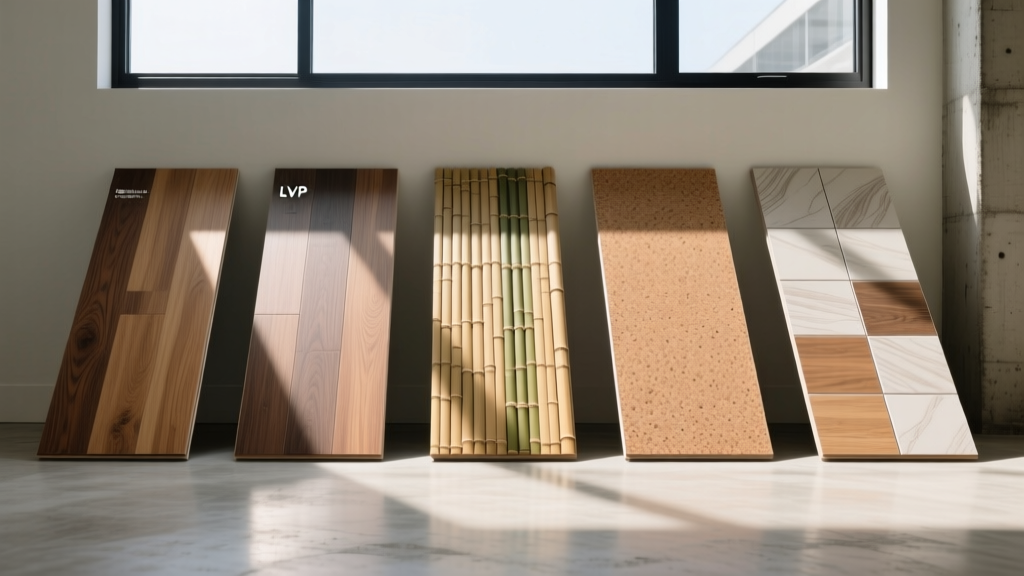
Solid hardwood remains the gold standard for aesthetic warmth, but its vulnerability to moisture, high material cost ($8 to $14 per square foot), and strict acclimation requirements make it impractical for many modern builds. When evaluating the various types of flooring that looks like wood, the primary differentiator is no longer just visual fidelity; it is the core composition, wear layer technology, and total lifecycle cost. In 2026, advancements in high-definition embossed-in-register (EIR) printing and rigid polymer cores have effectively closed the visual gap between natural timber and synthetic alternatives, shifting the buyer's focus entirely to performance metrics and installation economics.
2026 Pricing & Performance Matrix
The following matrix breaks down the current market rates for the four dominant wood-look flooring categories. Prices reflect national averages for mid-to-high-tier residential products, excluding subfloor remediation.
| Material Type | Material Cost (Sq. Ft.) | Installed Cost (Sq. Ft.) | Core Composition | Moisture Tolerance | Expected Lifespan |
|---|---|---|---|---|---|
| Flexible LVP | $2.50 - $4.00 | $5.50 - $7.50 | PVC / Fiberglass | 100% Waterproof | 10 - 15 Years |
| Rigid Core (SPC/WPC) | $3.50 - $6.50 | $7.00 - $10.50 | Stone-Plastic / Wood-Plastic | 100% Waterproof | 15 - 25 Years |
| Water-Resistant Laminate | $1.80 - $3.50 | $5.00 - $8.00 | High-Density Fiberboard (HDF) | Surface Only (72hr limit) | 15 - 20 Years |
| Wood-Look Porcelain Tile | $4.00 - $9.00 | $12.00 - $18.00 | Fired Ceramic / Porcelain | 100% Waterproof | 50+ Years |
Material Deep-Dive: Where the Value Actually Lies
Rigid Core (SPC) vs. Flexible LVP
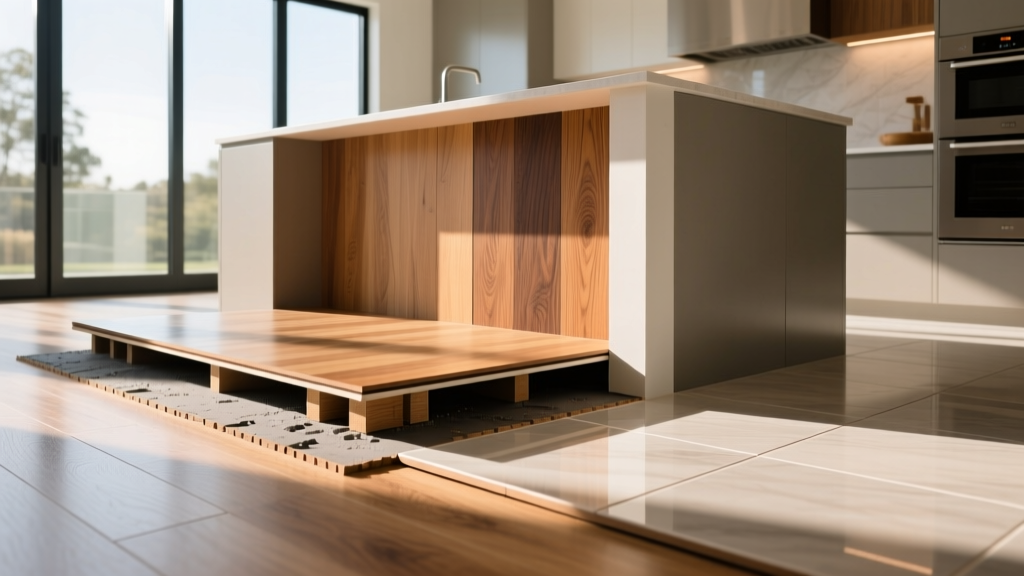
Flexible Luxury Vinyl Plank (LVP) relies on a PVC core that requires a perfectly flat subfloor. Any deviation greater than 3/16-inch over a 10-foot radius will cause the planks to flex, eventually breaking the click-lock mechanisms and causing edge peeling. Stone Plastic Composite (SPC) flooring utilizes a limestone-dust and PVC core that is entirely rigid. While SPC costs roughly $1.00 to $2.00 more per square foot upfront, it eliminates the need for extensive subfloor leveling in older homes, often resulting in a lower total installed cost. For high-traffic areas, specify an SPC product with a minimum 20-mil wear layer (such as COREtec Pro Plus or Armstrong Rigid Core) to prevent micro-scratches from pet claws and grit.
Laminate: The Budget Trap and AC Ratings
Laminate flooring utilizes a photographic layer sealed under an aluminum oxide wear layer, bonded to an HDF core. The visual depth of modern laminate is exceptional, often surpassing mid-tier vinyl. However, the HDF core is inherently susceptible to water damage. Even 'water-resistant' laminates only protect the surface; if water breaches the seams, the core swells irreversibly. When purchasing laminate, ignore marketing terms like 'scratch-proof' and look strictly at the AC (Abrasion Class) rating. For residential living areas, AC4 is the minimum acceptable standard. AC3 will show wear patterns in high-traffic corridors within three years. According to Consumer Reports flooring tests, laminate consistently scores highest for scratch resistance but lowest for moisture tolerance, making it a poor ROI choice for kitchens, basements, or full bathrooms.
Wood-Look Porcelain Tile: The Premium Standard
Porcelain tile offers the highest material longevity but carries a severe installation penalty. To achieve a realistic wood aesthetic, installers must use rectified-edge tiles (where edges are mechanically cut to exact 90-degree angles) allowing for 1/16-inch grout lines. The true cost driver is the labor: large-format porcelain planks (e.g., 8x48 or 9x60 inches) require a perfectly flat substrate and specialized large-and-heavy-tile (LHT) mortar to prevent lippage. Furthermore, you must budget for color-matched epoxy or urethane grout, which costs three times more than standard cementitious grout but prevents the grout lines from darkening and breaking the visual illusion of wood.
Hidden Installation Costs That Destroy Margins
When budgeting for types of flooring that looks like wood, contractors and homeowners frequently overlook the ancillary materials required for a warrantied installation. These hidden costs can inflate the final invoice by 15% to 25%.
- Subfloor Leveling: Self-leveling compound (SLC) costs approximately $40 to $55 per 50-lb bag, covering only 40 square feet at a 1/4-inch depth. A severely uneven subfloor in a 500 sq. ft. room can add $400+ in SLC material alone.
- Underlayment: While many SPC products feature attached cork or IXPE foam pads, flexible LVP and laminate require a separate 6-mil polyethylene vapor barrier and acoustic underlayment, adding $0.50 to $0.85 per square foot.
- Transition Moldings: T-moldings, stair noses, and flush reducers are notoriously expensive in the vinyl category. Manufacturer-matched stair noses often cost $60 to $90 per linear foot, drastically increasing the cost of multi-level homes.
- Baseboard and Quarter-Round: Floating floors require an expansion gap of 1/4-inch to 3/8-inch around the perimeter. If existing baseboards are not removed and reinstalled, you must install quarter-round shoe molding, adding $1.50 to $3.00 per linear foot in labor and materials.
Lifecycle ROI & Decision Framework
The value of a flooring material is determined by its holding period. A cheap floor is only a good value if you plan to sell the property before it requires replacement. The National Wood Flooring Association (NWFA) notes that while real estate agents consistently rank hardwood as a top buyer preference, high-end wood-look alternatives are now widely accepted in moisture-prone zones where real wood fails.
- Scenario A (Basement / Below-Grade): Choose SPC Rigid Core. Solid hardwood and laminate will fail due to concrete slab moisture vapor emission rates (MVER). SPC provides the necessary dimensional stability.
- Scenario B (Quick Flip / Investment Property): Choose 12-mil flexible LVP or AC3 Laminate. The goal is immediate visual appeal at the lowest capital expenditure. Do not over-invest in 28-mil commercial wear layers for a property you will sell in 12 months.
- Scenario C (Forever Home / Primary Residence): Choose Wood-Look Porcelain Tile or 4mm+ veneer Engineered Hardwood. The higher upfront labor cost of porcelain is amortized over a 50-year lifespan, yielding the lowest cost-per-year of ownership.
Ultimately, selecting the right wood-look flooring requires matching the material's physical properties to the specific environmental stressors of the room. By prioritizing core stability and wear layer thickness over superficial marketing claims, you can secure a floor that delivers both the aesthetic warmth of timber and the financial predictability of modern synthetic engineering.
Written by
Sarah WhitfieldSarah Whitfield is a chartered quantity surveyor (MRICS) and construction cost analyst with 15 years of experience in material pricing, procurement strategy, and project budgeting. She earned her degree in Construction Management from the University of Reading (UK) and has worked on projects ranging from $2M custom homes to $180M mixed-use developments across North America and Europe. Sarah currently leads cost estimating for BuildMat Insight, maintaining a proprietary database of 4,000+ material price points updated quarterly. She is a frequent contributor to RSMeans cost data panels and has presented at the International Cost Engineering Council (ICEC) congress. Based in Denver, CO, Sarah is an avid trail runner and volunteer mentor for Women in Construction.
More from Sarah Whitfield
View all
Wood & Lumber
What Are the Different Types of Wood? A Builder's Guide
Compare structural softwoods, finish hardwoods, and engineered lumber. Analyze Janka ratings, MOE values, and 2026 pricing for construction.
Aug 4, 2026

Walls & Panels
Steel Framing vs Wood Framing: Corrosion and Moisture Defense
Compare steel framing vs wood framing for moisture resistance. Learn about galvanized coatings, condensation risks, and corrosion protection strategies.
Jul 21, 2026

Stone & Masonry
How to Cut Stone Veneer: Wet Saw vs Grinder Comparison
Compare the best tools for cutting stone veneer. We review wet saws, angle grinders, and chop saws to help you achieve clean, chip-free cuts.
Jul 21, 2026