Non Wood Deck Material vs Traditional Wood Species Guide
Compare top non wood deck material options against traditional wood species. Analyze costs, lifespans, structural needs, and 2026 pricing data.
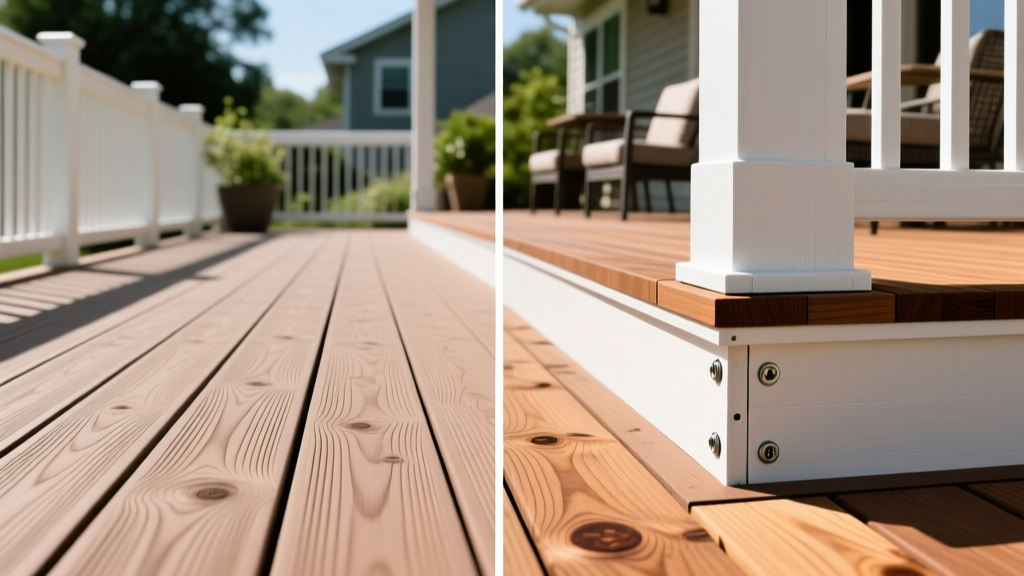
The Evolution of Decking: Beyond Natural Timber
When planning an exterior living space, the initial decision invariably centers on the decking surface. Historically, natural lumber dictated the market, with builders relying on pressure-treated pine, cedar, or dense tropical hardwoods. However, advancements in polymer science and metallurgy have introduced highly durable alternatives. Today, selecting a non wood deck material is no longer a compromise; it is often the optimal engineering choice for specific climates, maintenance budgets, and structural requirements. This guide contrasts traditional wood species with modern synthetic and metal alternatives, providing exact 2026 pricing, structural specifications, and failure-mode analysis to inform your material selection.
Baseline: Traditional Wood Decking Species
Before evaluating synthetics, it is critical to establish the performance baseline of natural timber. Wood remains a viable option, but its physical properties dictate strict maintenance and installation protocols.
Pressure-Treated Southern Yellow Pine
The most economical option on the market, pressure-treated (PT) pine is infused with alkaline copper quaternary (ACQ) or copper azole preservatives to resist rot and insect damage. While the upfront material cost is low ($3.50 to $5.00 per square foot), PT pine is highly susceptible to dimensional instability. It shrinks, twists, and cups as it dries, requiring annual sealing and bi-annual power washing to prevent splintering and premature decay.
Western Red Cedar and Redwood
Valued for their natural tannins and extractives that resist decay without chemical treatment, cedar and redwood offer superior dimensional stability compared to pine. Western Red Cedar typically ranges from $6.00 to $8.50 per square foot. However, these softwoods lack surface hardness. The Janka hardness rating for Western Red Cedar is only 350 lbf, making it highly vulnerable to scratching from patio furniture and pet claws. Furthermore, UV exposure will rapidly turn untreated cedar to a silvery-gray within 12 to 18 months.
Tropical Hardwoods (Ipe and Cumaru)
Tropical hardwoods represent the pinnacle of natural wood decking. Ipe (Tabebuia spp.) boasts a Janka hardness of 3,680 lbf and a density of 69 lbs/ft³, making it naturally resistant to rot, termites, and surface abrasion. According to data from the USDA Forest Products Laboratory, properly ventilated Ipe decks can achieve a 40+ year structural lifespan. The trade-off is cost ($11.00 to $16.00 per square foot) and fabrication difficulty. Ipe requires pre-drilling for every fastener, carbide-tipped saw blades, and immediate end-grain sealing with products like Anchorseal to prevent checking.
Leading Non Wood Deck Material Categories
The modern non wood deck material market is segmented into three primary categories, each engineered to solve specific failure modes inherent to natural timber.
Capped Wood-Plastic Composite (WPC)
Modern composite decking utilizes a core of recycled high-density polyethylene (HDPE) and wood flour, encased in a proprietary polymer shell. Products like the Trex Transcend Lineage series feature a multi-layered cap that resists staining, fading, and mold. Unlike early-generation composites that suffered from moisture absorption and surface flaking, 2026 capped WPCs are virtually impervious to water intrusion. Material costs range from $9.50 to $12.50 per square foot. WPCs are heavier than wood, requiring strict adherence to manufacturer joist span tables to prevent sagging under thermal loads.
Cellular PVC
Cellular PVC (Polyvinyl Chloride) contains no organic wood fibers, making it entirely immune to rot, mold, and moisture absorption. Brands like TimberTech AZEK utilize advanced polymer alloys that mimic the grain texture of natural wood while offering superior slip resistance. PVC is lighter than composite but exhibits higher thermal expansion. Installers must account for longitudinal movement, typically allowing 1/8 inch of expansion per 10 feet of board length for every 40°F temperature fluctuation. Expect to pay between $11.00 and $14.00 per square foot for premium PVC lines.
Powder-Coated Aluminum
Aluminum decking, such as Nexan Building Products or LockDry systems, is the ultimate non wood deck material for extreme environments. Extruded aluminum planks are finished with AAMA 2604 compliant powder coatings, providing exceptional UV and scratch resistance. Aluminum is non-combustible, impervious to water, and requires zero sealing. The primary drawbacks are acoustic resonance (it can sound hollow underfoot) and higher thermal conductivity, though modern reflective pigments have significantly reduced surface heat retention. Pricing is the highest in the sector, ranging from $14.00 to $18.00 per square foot.
2026 Material Comparison Matrix
The following matrix synthesizes critical performance metrics across natural and synthetic options, utilizing current 2026 market data for material-only costs (excluding substructure and labor).
| Material Type | Avg. Cost (per sq ft) | Expected Lifespan | Maintenance Hours/Year | Joist Spacing (Perpendicular) | Heat Retention |
|---|---|---|---|---|---|
| PT Southern Yellow Pine | $3.50 - $5.00 | 10 - 15 Years | 8 - 12 Hours | 16' OC | Moderate |
| Western Red Cedar | $6.00 - $8.50 | 15 - 20 Years | 6 - 10 Hours | 16' OC | Low |
| Tropical Hardwood (Ipe) | $11.00 - $16.00 | 30 - 50 Years | 2 - 4 Hours | 16' OC | High |
| Capped Composite (WPC) | $9.50 - $12.50 | 25 - 30 Years | 1 - 2 Hours | 16' OC | Moderate-High |
| Cellular PVC | $11.00 - $14.00 | 30 - 40 Years | 1 - 2 Hours | 16' OC | Moderate |
| Extruded Aluminum | $14.00 - $18.00 | 50+ Years | 0 - 1 Hours | 16' - 24' OC | Low (Reflective) |
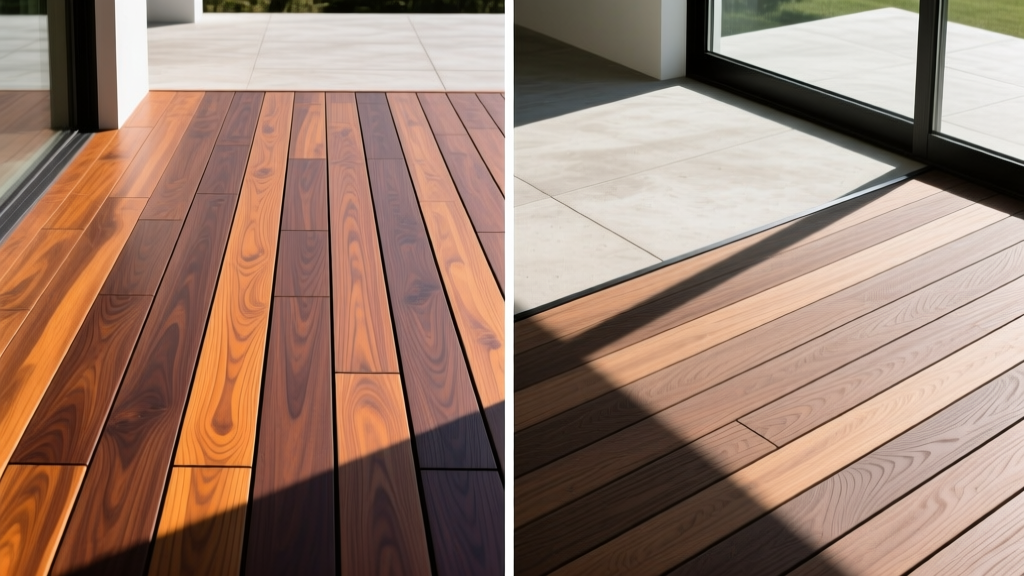
Critical Structural and Installation Differences
Transitioning from a wood species to a non wood deck material requires fundamental adjustments to the framing substructure and fastening methodology. Ignoring these differences is the leading cause of premature deck failure.
Expert Insight: Never assume a 16-inch on-center (OC) joist spacing is universally applicable. While adequate for perpendicular wood and composite installations, diagonal (45-degree) installs for composite and PVC often mandate a 12-inch OC spacing to prevent deflection and fastener pop-through, as detailed in the American Wood Council Span Tables.
Thermal Movement and Gapping
Natural wood moves primarily across its width (tangential and radial shrinkage) based on moisture content. Conversely, synthetic non wood deck materials move longitudinally (end-to-end) based on temperature. When installing cellular PVC or composite in cold weather, installers must leave a 3/16-inch gap at end joints to accommodate summer expansion. Failure to do so will result in board buckling and fastener shear.
Fastening Systems and Hidden Hardware
Top-down face screwing is standard for PT pine and cedar. However, tropical hardwoods and synthetics rely on hidden fastener systems to maintain aesthetic integrity and allow for lateral movement. For Ipe, stainless steel clip systems like the Tiger Claw TC-G are driven into pre-routed side grooves. For composite and PVC, manufacturer-specific hidden fasteners (e.g., Trex Hideaway or TimberTech Cortex) are mandatory to preserve the product's structural warranty. Using generic, off-brand clips on capped composites often voids the manufacturer's 50-year fade and stain warranty.
Ventilation and Moisture Management
Wood species require cross-ventilation to allow the underside of the boards to dry at the same rate as the top surface, preventing cupping. Capped composites and PVC also require minimum ground clearances (typically 12 inches for unventilated spaces) to prevent heat buildup and moisture trapping, which can cause the polymer shell to delaminate from the core over time. Aluminum decking systems often feature integrated water-shedding channels, allowing them to be installed over fully enclosed, unventilated spaces without risk of degradation.
Decision Framework: Selecting the Right Material
Use the following scenario-based framework to align your project constraints with the optimal decking material. Recent data from NAHB Housing Economics indicates a strong buyer preference for low-maintenance exterior spaces, heavily influencing material selection in new builds and remodels.
Scenario A: Strict Budget Constraints (Under $6/sq ft)
Recommendation: Pressure-Treated Southern Yellow Pine.
Actionable Advice: To maximize lifespan, specify KDAT (Kiln-Dried After Treatment) lumber to minimize post-installation shrinkage and twisting. Apply a penetrating oil-based sealer within 30 days of installation, and ensure all cut ends are treated with a copper naphthenate preservative.
Scenario B: Coastal, Saltwater, or High-Moisture Environments
Recommendation: Cellular PVC or Powder-Coated Aluminum.
Actionable Advice: Avoid wood-plastic composites in direct saltwater splash zones, as the wood flour core can wick moisture if the cap is scored. Specify cellular PVC with a co-extruded cap, and use only 316-grade marine stainless steel fasteners and substructure hardware to prevent galvanic corrosion.
Scenario C: Maximum ROI and Zero Maintenance for Resale
Recommendation: Premium Capped Wood-Plastic Composite.
Actionable Advice: Select a composite line with a multi-width board profile (e.g., TimberTech Reserve) to mimic the random plank widths of natural hardwood. Pair with a color-matched composite fascia and aluminum powder-coated railings to create a fully synthetic, maintenance-free envelope that appraises highly in the current real estate market.
Final Structural Considerations
Regardless of whether you choose a traditional wood species or a non wood deck material, the longevity of the surface is entirely dependent on the substructure. Upgrading the joists and beams to ground-contact rated pressure-treated lumber, or utilizing galvanized steel framing systems like Fortress Evolution, ensures that the skeleton of the deck outlasts the surface boards. Always verify local building codes regarding live load requirements (typically 40 psf for residential decks) and guardrail post anchoring before finalizing your material takeoff.
Written by
Elena RodriguezElena Rodriguez is a civil engineer and technical writer specializing in concrete technology, masonry systems, and ASTM/ACI compliance. She earned her B.S. in Civil Engineering from Texas A&M University and spent a decade at a materials testing laboratory, performing over 2,000 concrete compressive strength tests and masonry prism evaluations. Elena is an ACI-certified Field Testing Technician (Grade I) and a member of ASTM Committee C12 on Natural Building Stone. She currently consults on forensic engineering cases involving concrete failures and moisture intrusion. Based in San Antonio, TX, Elena is a proud member of the Society of Women Engineers (SWE) and coaches her daughter's FIRST Robotics team.
More from Elena Rodriguez
View all
Walls & Panels
Cost Analysis: Light Gauge Steel Framing Advantages and Disadvantages
Evaluate light gauge steel framing advantages and disadvantages through a strict cost analysis lens, comparing material, labor, and lifecycle expenses.
Aug 4, 2026

Walls & Panels
Gypsum Board Types: Exact Specifications, Thickness & Dimensions
Compare standard, Type X, and moisture-resistant gypsum board types. Get exact specifications, thicknesses, dimensions, and ASTM standards for your project.
Aug 4, 2026

Fire Resistance
Best Fire-Resistant Outdoor Decking Materials: 2026 Buyer Guide
Discover the best fire-resistant outdoor decking materials for 2026. Compare Class A PVC, aluminum, and hardwood options for WUI compliance and safety.
Aug 4, 2026