Preserving Cool Types of Wood: Exotic Timber Treatment Guide
Learn how to treat, seal, and preserve cool types of wood like Purpleheart, Zebrawood, and Bocote with expert finishing techniques and UV protection.

The Challenge of Exotic and Highly Figured Timbers
When architects, fine woodworkers, and custom home builders seek out cool types of wood, they are typically drawn to exotic species with extreme density, vibrant heartwood colors, or dramatic chatoyance. However, the very biological traits that make these timbers visually striking—high extractive content, dense cellular structures, and natural oils—make them notoriously hostile to standard preservation and finishing protocols. Applying a conventional interior polyurethane to an oily exotic hardwood often results in adhesion failure, permanent tackiness, or rapid UV degradation.
Preserving these materials requires a chemical and mechanical understanding of the wood's extractives. This guide details the exact preparation solvents, barrier coats, and topcoats required to stabilize and protect high-value exotic timbers in both interior and protected exterior applications.
Top "Cool" Wood Species and Their Preservation Profiles
Before selecting a finish, you must understand the specific preservation threat posed by the species. The USDA Forest Products Laboratory and independent botanical databases categorize these woods by their extractive profiles and Janka hardness ratings, which dictate sanding and sealing strategies.
| Species | Janka Hardness | Extractive/Oil Profile | Primary Preservation Threat | Ideal Finish Strategy |
|---|---|---|---|---|
| Purpleheart | 2,520 lbf | Low oil, high water-soluble resins | Photo-oxidation (turns brown) | UV-blocking film finish |
| Zebrawood | 1,575 lbf | Moderate oil, interlocked grain | Grain tear-out, finish bleed | Dewaxed shellac barrier + film |
| Bocote | 2,000 lbf | High natural oil and resin | Finish rejection, adhesion loss | Solvent wipe + penetrating hardwax |
1. Purpleheart (Peltogyne spp.) - The UV Fading Problem
Purpleheart is prized for its vivid violet-purple heartwood, but this color is highly photosensitive. When exposed to ultraviolet light, the wood undergoes photo-oxidation, permanently shifting to a dull, dark brown. To preserve the color, you must use a finish with high UV inhibitors. Standard interior lacquers will not suffice. For interior architectural millwork, a specialized marine-grade varnish like Epifanes RapidClear (which contains UV absorbers) or a dedicated exterior hardwax oil like Osmo UV-Protection Oil 420 is mandatory. Note that even with UV blockers, prolonged direct sunlight will eventually cause fading; these finishes merely delay the inevitable by blocking the specific UV wavelengths that trigger the chemical shift.
2. Zebrawood (Microberlinia brazzavillensis) - Preventing Alternating Grain Tear-Out and Finish Rejection
According to The Wood Database, Zebrawood features a coarse texture and highly interlocked grain that creates its signature dark and light striping. This interlocked grain makes sanding difficult, often leaving microscopic tear-outs that trap air and cause film-forming finishes to blister. Furthermore, the dark stripes contain higher concentrations of extractives that can bleed into light-colored finishes. The mandatory preservation step for Zebrawood is applying a barrier coat of Zinsser SealCoat (a 100% dewaxed shellac) after sanding to 320 grit. The shellac seals the extractives and provides a mechanical tooth for subsequent topcoats like conversion varnish or pre-catalyzed lacquer.
3. Bocote (Cordia spp.) - Managing High Oil and Resin Exudation
Bocote features dramatic, chaotic grain patterns and a high natural oil content that actively repels water-based and standard oil-based finishes. If you attempt to apply a film finish directly to Bocote, the natural oils will migrate to the surface and break the surface tension of the curing finish, causing "fish-eyes" and craters. The preservation protocol requires chemically stripping the surface oils immediately before finishing using a fast-evaporating solvent like naphtha or acetone, followed immediately by a penetrating hardwax oil (such as Rubio Monocoat 2C) which bonds molecularly with the wood's cellulose rather than sitting on top of the oily surface.
Step-by-Step Surface Preparation for Dense Exotics
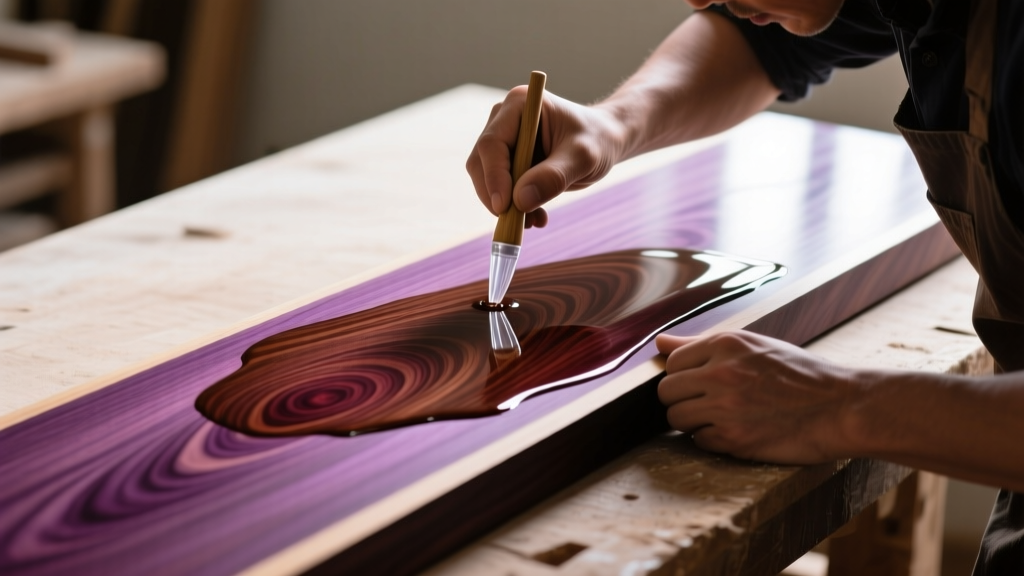
Proper preservation of cool types of wood relies 80% on surface preparation and 20% on the finish itself. Dense exotics require a stricter preparation protocol than domestic hardwoods like oak or maple.
- Progressive Sanding: Begin at 80 grit to remove mill marks. Progress through 120, 180, and 220. For highly figured woods like Zebrawood, stop at 220; sanding finer can burnish the dense fibers, closing the pores and preventing penetrating oils from absorbing. For film finishes on Bocote, you may progress to 320 grit.
- Compressed Air and Tack Cloth: Exotic woods generate extremely fine, heavy dust due to their density. Use compressed air (regulated to 40 PSI to avoid embedding dust) followed by a solvent-dampened tack cloth.
- The Solvent Wipe (Crucial for Oily Woods):strong> Dampen a clean, lint-free cotton rag with VM&P Naphtha or Acetone. Wipe the wood surface vigorously to dissolve and lift natural oils to the surface. Timing is critical: You must apply your sealer or finish within 15 to 30 minutes of the solvent wiping, before the deeper oils migrate back to the surface. Acetone evaporates faster than naphtha, requiring a tighter working window but offering superior oil extraction.
- Barrier Coat Application: Apply a single, thin mist coat of dewaxed shellac (1 lb cut). Allow 45 minutes to dry, then lightly scuff-sand with 400-grit synthetic steel wool to remove raised grain nibs.
Advanced Finish Selection Matrix
Selecting the right preservation chemistry depends on the wood's oil content and the project's environmental exposure.
| Finish Category | Specific Product Examples | Best For | Pros | Cons |
|---|---|---|---|---|
| Penetrating Hardwax Oils | Osmo Polyx-Oil 3043, Rubio Monocoat 2C | Bocote, Cocobolo, Teak (High Oil) | Bonds to cellulose, ignores surface oils, matte aesthetic, easy spot-repair. | Low moisture resistance, requires annual reapplication in high-wear areas. |
| Dewaxed Shellac Barrier | Zinsser SealCoat (1 lb cut) | Zebrawood, Rosewood, Macassar Ebony | Blocks extractive bleed, universally compatible as a sealer under any topcoat. | Not a standalone topcoat; low heat and alcohol resistance. |
| UV-Blocking Marine Varnish | Epifanes Wood Finish Matte, TotalBoat Gleam | Purpleheart, Padauk (UV Sensitive) | Superior UV protection, builds a thick protective film, high moisture resistance. | Requires meticulous sanding between coats, long cure times, high VOCs. |
Troubleshooting Common Preservation Failures
Even with meticulous preparation, exotic woods can behave unpredictably. Use this diagnostic matrix to identify and correct finish failures.
| Symptom | Underlying Cause | Corrective Action |
|---|---|---|
| Finish remains tacky after 72 hours | Wood antioxidants are inhibiting the oxidative curing of the oil-based polyurethane. | Strip the finish using a chemical methylene chloride stripper. Re-prep with acetone, apply a dewaxed shellac barrier, and switch to a pre-catalyzed lacquer or water-based poly. |
| Small craters or "fish-eyes" in film finish | Surface tension broken by migrating natural oils or silicone contamination. | Sand the affected area to bare wood. Wipe with naphtha. Add a silicone-free "fish-eye eliminator" additive to your topcoat, or switch to a penetrating hardwax oil. |
| White, cloudy patches under the finish | Moisture trapped under a film finish, often due to sealing the wood before it acclimated to the shop's humidity (40-45% RH). | Strip the finish. Allow the wood to acclimate in a climate-controlled environment (68°F, 45% RH) for 14 days before re-sealing. |
| Rapid color shift from vibrant purple/red to brown | UV radiation penetrating a standard clear coat lacking adequate UV absorbers. | Sand the oxidized layer off (revealing fresh colored wood underneath). Seal immediately with a marine-grade varnish containing specific UV inhibitors (e.g., Epifanes). |
Preserving cool types of wood requires abandoning the "one-size-fits-all" approach to finishing. By respecting the unique cellular chemistry of exotic timbers—managing their oils, blocking their extractives, and shielding their photosensitive pigments—builders and craftsmen can ensure these striking materials retain their structural integrity and visual brilliance for decades.
Written by
Marcus ChenMarcus Chen is a licensed structural engineer (PE) and building materials analyst with over 12 years of experience across residential, commercial, and industrial construction. He holds a Master of Science in Civil Engineering from UC Berkeley and spent six years at Thornton Tomasetti before transitioning to independent consulting and technical writing. Marcus specializes in material selection for seismic-prone regions, concrete reinforcement strategies, and lifecycle cost analysis. His work has been cited by the American Concrete Institute (ACI) and the Structural Engineers Association of California (SEAOC). When he is not on a job site or at his desk, you will find him hiking the Sierra Nevada or restoring a 1920s craftsman bungalow in Oakland, CA.
More from Marcus Chen
View all
Construction Cost
How Much Did the Eiffel Tower Cost to Build?
How much did the Eiffel Tower cost to build in 1889? We adjust for inflation and compare its budget to modern skyscraper construction.
Aug 4, 2026

Fire Resistance
What Is a Fire Resistant Material? Testing & Certification Guide
Discover what is a fire resistant material through ASTM and UL testing. Learn how fire ratings, certifications, and assemblies work in construction.
Aug 4, 2026

Construction Cost
How Much Did the Burj Khalifa Cost to Build?
How much did the Burj Khalifa cost to build? We break down the $1.5B project and extract 5 money-saving strategies for your next build.
Jul 30, 2026