What Type of Wood is Pressure Treated? Cost & Value Guide
Discover what type of wood is pressure treated, comparing species like SYP, Douglas Fir, and SPF. Analyze costs, retention levels, and long-term value.

Answering the Core Question: What Type of Wood is Pressure Treated?
When specifying materials for ground contact, high-moisture environments, or structural outdoor framing, the immediate question is often: what type of wood is pressure treated? The short answer is that while almost any wood can be forced through a pressure vessel, commercial treaters heavily favor species with high sapwood permeability. The cellular structure of the wood dictates how deeply and evenly preservative chemicals—like Micronized Copper Azole (MCA) or Copper Azole Type C (CA-C)—can penetrate.
From a cost and value perspective, selecting the wrong species for your specific climate or structural requirement leads to premature rot, warped framing, or unnecessary material premiums. Below is a deep-dive analysis into the species used, the hidden structural costs of treatment, and how to calculate true long-term value.
The Big Three: Commercial Treated Species
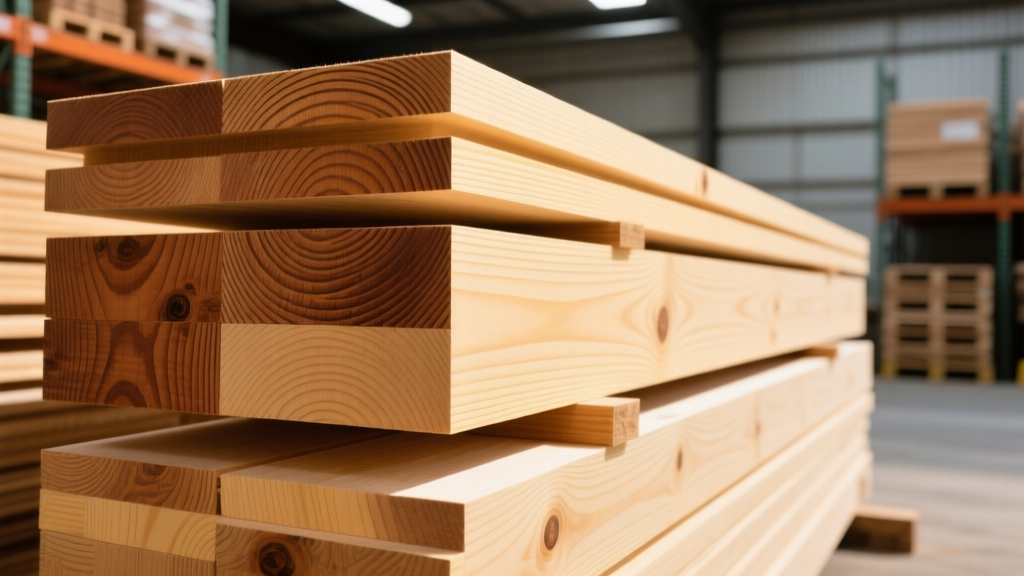
- Southern Yellow Pine (SYP): The undisputed industry standard, accounting for over 80% of treated lumber in North America. SYP features a high ratio of sapwood to heartwood and an open cellular structure that allows deep, uniform chemical penetration without mechanical alteration. Cost Baseline: $2.50 – $3.80 per board foot (bf).
- Douglas Fir & Hem-Fir: Dominant in the Pacific Northwest and Western US. These species have highly resistant heartwood and tight cellular structures. To achieve ground-contact retention levels, the lumber must be incised (mechanically pierced with tiny slits). Cost Baseline: $3.50 – $5.20 per bf.
- Spruce-Pine-Fir (SPF): Rarely treated for ground contact due to poor treatability. When treated, it is generally restricted to above-ground applications (UC3A or UC3B) and is common in northern US and Canadian markets. Cost Baseline: $2.20 – $3.00 per bf.
The Incising Penalty: A Hidden Structural Cost
If you are building in a region where Douglas Fir or Hem-Fir is the primary treated species, you must account for the "incising penalty." Because these woods resist chemical absorption, treaters run the boards through rollers with teeth that pierce the surface to allow preservatives to reach the core.
SYP does not require incising for standard residential retention levels, meaning a #2 grade SYP board retains its full structural design values after treatment. This makes SYP not only cheaper upfront but structurally more efficient pound-for-pound in treated applications.
Decoding Retention Levels: Where the Real Value Lies
The cost of pressure-treated lumber is directly tied to its chemical retention level, measured in pounds of preservative per cubic foot of wood (pcf). The American Wood Protection Association (AWPA) categorizes these into Use Categories (UC). Buying a higher UC than necessary destroys your budget; buying a lower UC destroys your asset.
| Use Category | Application | Target Retention (MCA/CA-C) | Cost Premium vs. UC3B |
|---|---|---|---|
| UC2 | Interior, dry (sill plates on concrete) | 0.15 pcf | - 10% |
| UC3B | Exterior, above ground (decking, joists) | 0.25 pcf | Baseline |
| UC4A | Exterior, ground contact (posts, retaining walls) | 0.40 pcf | + 18% to 22% |
| UC4B | Heavy-duty ground contact (agricultural, freshwater) | 0.60 pcf | + 45% to 60% |
Source data aligns with standard guidelines published by the Environmental Protection Agency (EPA) regarding wood preservative registrations and use categories.
The KDAT Premium: Is Kiln-Dried After Treatment Worth It?
Standard pressure-treated lumber is shipped wet, often with a moisture content (MC) between 35% and 75%. As it dries in place, it shrinks, twists, and checks (cracks). Kiln-Dried After Treatment (KDAT) lumber is dried back to ~19% MC before shipping.
- Material Cost: KDAT commands a 25% to 35% premium over standard wet treated lumber.
- Labor Value: KDAT is lighter (reducing labor fatigue), holds nails/screws tighter immediately, and can be stained right away (wet lumber requires 3-6 months of weathering before sealing).
- Verdict: For structural framing hidden from view, standard wet SYP is the better value. For exposed decking, fascia, or high-end visible architectural elements, the KDAT premium pays for itself by eliminating board replacement and call-backs for warped lumber.
Hidden Costs: Fasteners and Hardware Corrosion
A critical mistake in cost analysis is ignoring the hardware required for modern treated wood. Older treatments like CCA (Chromated Copper Arsenate) were highly corrosive, but modern MCA and CA-C treatments still contain dissolved copper, which acts as a galvanic catalyst when paired with the wrong metals.
Upgrading from standard zinc-plated joist hangers and nails to HDG or ZMAX-coated hardware (like Simpson Strong-Tie's ZMAX line) will increase your fastener and connector budget by approximately 40% to 60%. However, this is a non-negotiable cost to maintain the structural integrity and warranty of the build.
Lifespan Value Matrix: SYP vs. Composite Alternatives
To understand the true value of pressure-treated wood, we must compare its lifecycle cost against the most common alternative: capped composite decking. While composites solve the rot issue, they introduce thermal expansion and structural span limitations.
| Metric | #2 SYP Pressure Treated (UC3B) | Capped Composite Decking |
|---|---|---|
| Upfront Material Cost (per sq ft) | $3.50 - $5.00 | $9.00 - $14.00 |
| Expected Lifespan (Above Ground) | 15 - 25 years (with bi-annual sealing) | 25 - 30+ years |
| Maintenance Cost (10-Year) | $400 - $800 (cleaning & sealing) | $50 - $100 (cleaning only) |
| Structural Span Capability (2x6) | 24" on center (OC) | 16" OC (requires wood substructure) |
For comprehensive data on the mechanical properties and degradation timelines of various wood species, the USDA Forest Products Laboratory's Wood Handbook remains the definitive engineering reference.
Expert Decision Framework: Specifying Your Lumber
Use this conditional framework to finalize your lumber order and prevent value leakage:
- Is the wood touching the ground or embedded in concrete?
Yes: Specify UC4A (0.40 pcf) minimum. If the soil has poor drainage or high organic decay, upgrade to UC4B (0.60 pcf). Use SYP if available in your region to avoid the incising structural penalty. - Is the wood exposed to weather but elevated (joists, decking)?
Yes: Specify UC3B (0.25 pcf). If the project is high-visibility or requires immediate staining, pay the 30% premium for KDAT to eliminate shrinkage and warping. - Are you framing interior sill plates on a concrete slab?
Yes: Specify UC2 or standard borate-treated lumber. Borate treatments are highly effective against termites and dry rot in interior applications, are completely non-toxic to humans, and do not require expensive HDG fasteners. - Are you building within 1,000 feet of a saltwater coast?
Yes: The copper in MCA/CA-C combined with salt air creates an aggressive corrosive environment. You must pair your treated lumber with Type 316 Stainless Steel fasteners and hardware. Standard HDG will fail prematurely.
Understanding the intersection of wood species biology, chemical retention levels, and regional supply chains is what separates a standard lumber purchase from a highly optimized material strategy. By matching the exact Use Category to the environmental exposure and accounting for the hidden costs of incising and fastener upgrades, you secure both the structural longevity and the financial efficiency of the project.
Written by
Sarah WhitfieldSarah Whitfield is a chartered quantity surveyor (MRICS) and construction cost analyst with 15 years of experience in material pricing, procurement strategy, and project budgeting. She earned her degree in Construction Management from the University of Reading (UK) and has worked on projects ranging from $2M custom homes to $180M mixed-use developments across North America and Europe. Sarah currently leads cost estimating for BuildMat Insight, maintaining a proprietary database of 4,000+ material price points updated quarterly. She is a frequent contributor to RSMeans cost data panels and has presented at the International Cost Engineering Council (ICEC) congress. Based in Denver, CO, Sarah is an avid trail runner and volunteer mentor for Women in Construction.
More from Sarah Whitfield
View all
Wood & Lumber
What Are the Different Types of Wood? A Builder's Guide
Compare structural softwoods, finish hardwoods, and engineered lumber. Analyze Janka ratings, MOE values, and 2026 pricing for construction.
Aug 4, 2026

Walls & Panels
Steel Framing vs Wood Framing: Corrosion and Moisture Defense
Compare steel framing vs wood framing for moisture resistance. Learn about galvanized coatings, condensation risks, and corrosion protection strategies.
Jul 21, 2026

Stone & Masonry
How to Cut Stone Veneer: Wet Saw vs Grinder Comparison
Compare the best tools for cutting stone veneer. We review wet saws, angle grinders, and chop saws to help you achieve clean, chip-free cuts.
Jul 21, 2026