Types of Sheets of Wood: A 2026 Cost and Value Analysis
Compare the 2026 costs and long-term value of different types of sheets of wood, including plywood, OSB, and MDF, with real pricing and application data.

The Hidden Economics of Sheet Goods
When budgeting a construction or cabinetry project, the sticker price of a 4x8 panel is only the beginning of the financial equation. The true cost of sheet materials factors in edge treatment, fastener compatibility, structural longevity, and cutting yield. In 2026, supply chain stabilization has normalized base lumber prices, but the divergence in value between structural and decorative sheet goods has widened. Understanding the specific types of sheets of wood—and their hidden lifecycle costs—is critical for protecting your project margins.
Core Types of Sheets of Wood: Material Breakdown
Structural Plywood (CDX and Exposure 1)
Composed of thin wood veneers glued with alternating grain directions, structural plywood remains the benchmark for shear strength. CDX (C-grade face, D-grade back, Exterior glue) is the standard for roof and wall sheathing. According to APA - The Engineered Wood Association, modern Exposure 1 plywood utilizes advanced phenol-formaldehyde resins that withstand prolonged construction delays without delamination. However, the face veneers are rough, requiring significant filling and sanding if intended for visible applications.
Oriented Strand Board (OSB)
OSB is manufactured by compressing rectangular wood strands with wax and synthetic resin adhesives. It is uniformly dense and lacks the core voids sometimes found in lower-grade plywood. While OSB is generally 15% to 20% cheaper upfront than CDX plywood, it has a critical vulnerability: edge swelling. Once the factory-sealed edges are cut on-site, OSB absorbs moisture rapidly, leading to 'edge swell' that can telegraph through flooring or compromise structural connections if not sealed immediately.
Medium Density Fiberboard (MDF)
MDF is an engineered composite of fine wood fibers and urea-formaldehyde resin, pressed under high heat. The Composite Panel Association notes that MDF's homogeneous density makes it the premier substrate for painted cabinet doors and intricate routed profiles. It machines cleanly without tear-out. However, MDF is exceptionally heavy (a 3/4-inch 4x8 sheet weighs roughly 95 lbs) and lacks internal screw-holding strength, necessitating specialized hardware.
Hardwood Veneer Plywood (Cabinet Grade)
Featuring a structural softwood or MDF core wrapped in thin slices of premium hardwood (like oak, maple, or walnut), this material bridges structural integrity and aesthetic finish. The cost is driven by the veneer slicing method: rotary-cut veneers are cheaper but show wild grain patterns, while plain-sliced (flat-cut) veneers mimic solid lumber and command a 30% to 50% premium.
2026 Cost and Performance Matrix
The following table outlines average market pricing for standard 4x8 sheets in early 2026, alongside critical performance metrics that dictate long-term value.
| Material Type | Standard Thickness | Avg. Sheet Price (4x8) | Cost per Sq. Ft. | Primary Application | Hidden Cost / Failure Mode |
|---|---|---|---|---|---|
| OSB (Structural) | 7/16" | $38 - $46 | $1.18 - $1.43 | Wall sheathing, subflooring | Edge swelling requires $15/panel in edge-sealer labor/materials. |
| CDX Plywood | 1/2" | $58 - $72 | $1.81 - $2.25 | Roof decking, shear walls | Surface voids require wood filler if used as an underlayment. |
| Standard MDF | 3/4" | $48 - $62 | $1.50 - $1.93 | Painted cabinetry, shelving | Requires expensive Confirmat screws or pocket-hole jigs for joints. |
| Hardwood Plywood (Oak) | 3/4" | $115 - $145 | $3.59 - $4.53 | Visible cabinetry, furniture | Edge banding adds $0.75 - $1.50 per linear foot in material and labor. |
| Marine Grade Plywood | 3/4" | $175 - $230 | $5.46 - $7.18 | Boat building, wet-area framing | High upfront cost; requires marine-grade epoxy encapsulation to justify. |
The "True Cost" Calculation: Upfront Price vs. Lifecycle Value
Evaluating the types of sheets of wood strictly by the receipt total leads to costly field modifications. Consider the subfloor debate between OSB and Plywood. While OSB saves approximately $15 per sheet upfront, the USDA Forest Products Laboratory highlights that OSB's permeability makes it highly susceptible to rain exposure during framing. If an OSB subfloor absorbs water and swells at the seams, contractors must spend $2.50 to $4.00 per square foot to sand down the swollen edges before laying hardwood or tile. In this scenario, the 'cheaper' OSB results in a net financial loss.
Expert Insight: When calculating material yield, always account for the saw kerf. A standard 10-inch table saw blade removes 1/8" (3.175mm) of material per cut. If you are ripping a 4x8 sheet of $140 hardwood plywood into 12-inch wide strips, you will lose nearly 1.5 inches of total width to sawdust. Failing to calculate kerf loss on expensive sheet goods routinely results in a 5% to 8% material shortage, forcing emergency purchases at premium retail markups.
Application-Specific Decision Framework
Use this conditional logic to select the most cost-effective sheet material for your specific project parameters:
- IF the application is structural sheathing AND the project timeline is tight (high rain exposure risk) THEN use CDX Plywood. The premium over OSB is offset by zero edge-sealing labor and no sanding callbacks.
- IF the application is interior wall sheathing in a climate-controlled environment AND budget is the primary constraint THEN use OSB. Moisture risks are negligible, maximizing the upfront savings.
- IF the application requires painted, routed cabinet doors AND the design features heavy shaker profiles THEN use MDF. Solid wood will expand and crack the paint at the joints; MDF remains dimensionally stable, eliminating warranty callbacks.
- IF the application is high-end visible shelving AND the span exceeds 32 inches THEN use Hardwood Plywood with a lumber core. Standard MDF or particleboard will sag under load over 32 inches, whereas a lumber-core plywood maintains rigidity without requiring visible steel supports.
Fastener Compatibility and Hardware Yield
The hidden cost of sheet goods is most pronounced in fastener selection. Driving a standard #8 coarse-thread drywall screw into the edge of 3/4" MDF will cause the board to split or the screw to strip out under minimal torque. To properly assemble MDF cabinetry, you must use specialized fasteners like SPAX MDF screws or Hafele Confirmat screws, which cost roughly $0.15 to $0.25 each—compared to $0.02 for standard wood screws. Furthermore, hanging heavy doors on MDF panels requires threaded inserts and machine bolts, adding $1.50 per hinge point in hardware and drilling time.
Conversely, structural plywood accepts standard framing nails and structural screws (like Simpson Strong-Tie SDWS) with high withdrawal resistance. When evaluating the types of sheets of wood for load-bearing furniture or structural diaphragms, the ability to use cheap, readily available fasteners significantly tilts the value proposition back toward plywood over composite alternatives.
Minimizing Waste: The 5% Rule
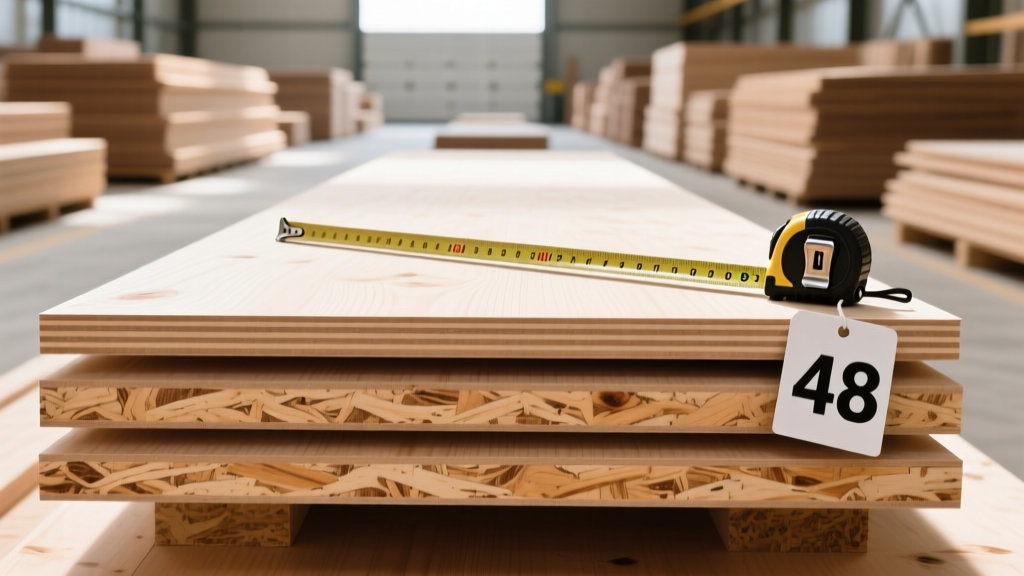
Sheet goods are manufactured to a nominal 48" x 96". However, many imported panels are metric (1220mm x 2440mm), making them 48.03" x 96.06". While this extra fraction of an inch seems beneficial, it can cause binding on precision CNC tables or misalignment in automated edge-banding machinery. Always measure the actual diagonal of your sheet stack before programming cut lists. To maximize value, utilize nested cut-list software (like CutList Plus or MaxCut) to optimize grain direction and offcuts. A well-optimized cut list can reduce sheet waste from an industry average of 15% down to 4%, effectively saving the cost of one full sheet of hardwood plywood for every seven sheets purchased.
Written by
Elena RodriguezElena Rodriguez is a civil engineer and technical writer specializing in concrete technology, masonry systems, and ASTM/ACI compliance. She earned her B.S. in Civil Engineering from Texas A&M University and spent a decade at a materials testing laboratory, performing over 2,000 concrete compressive strength tests and masonry prism evaluations. Elena is an ACI-certified Field Testing Technician (Grade I) and a member of ASTM Committee C12 on Natural Building Stone. She currently consults on forensic engineering cases involving concrete failures and moisture intrusion. Based in San Antonio, TX, Elena is a proud member of the Society of Women Engineers (SWE) and coaches her daughter's FIRST Robotics team.
More from Elena Rodriguez
View all
Walls & Panels
Cost Analysis: Light Gauge Steel Framing Advantages and Disadvantages
Evaluate light gauge steel framing advantages and disadvantages through a strict cost analysis lens, comparing material, labor, and lifecycle expenses.
Aug 4, 2026

Walls & Panels
Gypsum Board Types: Exact Specifications, Thickness & Dimensions
Compare standard, Type X, and moisture-resistant gypsum board types. Get exact specifications, thicknesses, dimensions, and ASTM standards for your project.
Aug 4, 2026

Fire Resistance
Best Fire-Resistant Outdoor Decking Materials: 2026 Buyer Guide
Discover the best fire-resistant outdoor decking materials for 2026. Compare Class A PVC, aluminum, and hardwood options for WUI compliance and safety.
Aug 4, 2026