What Type of Ants Eat Wood? A Structural Timber Guide
Discover what type of ants eat wood, how carpenter ants compromise structural timber, and engineering defenses to protect framing lumber.

The Core Misconception: Do Ants Actually Eat Wood?
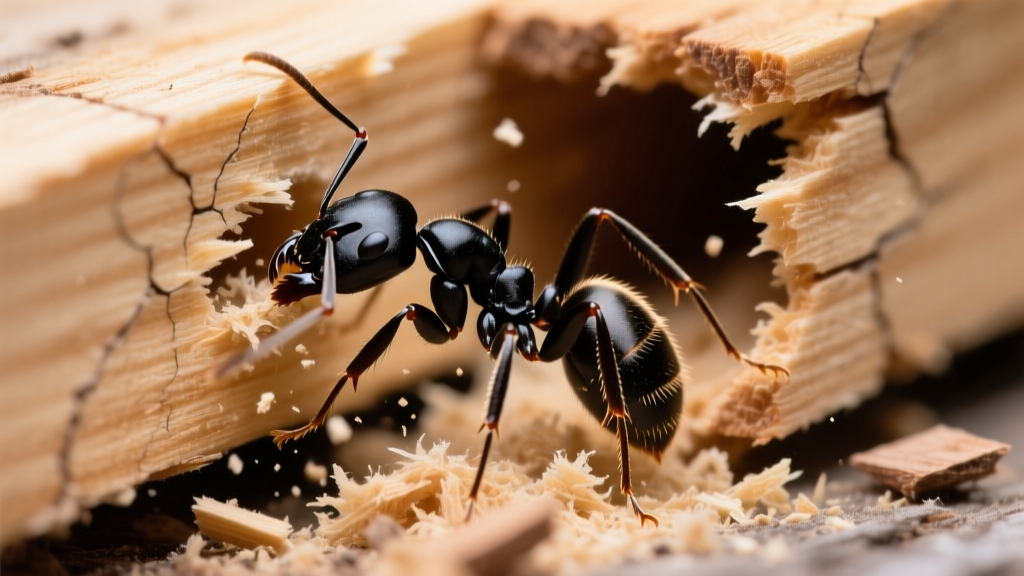
When builders and homeowners ask, 'what type of ants eat wood,' the most critical structural fact to understand is that no ant species actually consumes wood for nutrition. Unlike subterranean termites, which possess symbiotic gut protozoa to digest cellulose, ants lack the biological machinery to derive nutrients from timber. The insects responsible for wood damage in structural framing are Carpenter Ants (genus Camponotus), specifically the Black Carpenter Ant (Camponotus pennsylvanicus) in the East and the Western Carpenter Ant (Camponotus modoc) in the West.
Understanding this biological distinction dictates how structural engineers and pest control professionals approach remediation. Because carpenter ants are primarily seeking shelter rather than food, their infestation patterns are heavily dictated by moisture intrusion and pre-existing fungal decay, rather than the nutritional value of the lumber species.
Identifying the Threat: Carpenter Ants vs. Wood-Destroying Insects
Accurate identification on the job site prevents misallocation of remediation budgets. Treating a structural beam for termites when the damage is caused by carpenter ants leads to unnecessary chemical soil trenching and missed moisture envelope repairs.
| Characteristic | Carpenter Ants (Camponotus) | Subterranean Termites | Drywood Termites |
|---|---|---|---|
| Diet | Proteins, sugars (do not eat wood) | Cellulose (eat wood) | Cellulose (eat wood) |
| Gallery Appearance | Smooth, clean, follows grain | Rough, packed with soil/mud | Smooth, cross-grain chewing |
| Frass (Debris) | Coarse sawdust, insect parts | Mud tubes, no loose frass | Hard, hexagonal pellets |
| Moisture Requirement | Primary nests require >20% MC | Require constant soil contact/moisture | Survive in dry wood (<12% MC) |
Structural Vulnerability: Lumber Grades and Engineered Wood
Not all structural timber presents an equal risk profile for carpenter ant excavation. The susceptibility of framing lumber is governed by moisture content (MC), heartwood-to-sapwood ratios, and manufacturing resins.
Moisture Content and Fungal Decay Correlation
Carpenter ants strongly prefer wood that has been softened by fungal decay. According to research published by the Penn State Extension, primary colonies are almost exclusively established in wood with a moisture content exceeding 20%. In structural applications, this typically points to chronic envelope failures: leaky roof flashings, improperly graded soil wicking moisture into mudsills, or plumbing condensation dripping onto floor joists.
- Below 15% MC: Wood is generally immune to primary carpenter ant nesting. Fungal decay cannot initiate.
- 15% - 20% MC: Marginal risk. Fungal spores may begin to germinate, softening the earlywood bands in species like Spruce-Pine-Fir (SPF).
- Above 20% MC: High risk. Decay fungi break down lignin and cellulose, allowing ants to excavate galleries with minimal mandible wear.
Engineered Wood Products (LVL, PSL, Glulam)
A major advantage of modern engineered lumber in structural applications is its inherent resistance to carpenter ants. Laminated Veneer Lumber (LVL) and Parallel Strand Lumber (PSL) are manufactured at high temperatures and pressures, resulting in a core moisture content of roughly 8% to 12%. Furthermore, the phenol-formaldehyde or MDI (methylene diphenyl diisocyanate) resins used to bind the veneers act as a mild deterrent. While ants may occasionally score the surface of an LVL beam if it is subjected to chronic, severe water intrusion, they rarely establish deep galleries within engineered wood products compared to solid-sawn #2 Grade Douglas Fir or Southern Yellow Pine.
Engineering Defenses: Protecting Structural Wood Systems
When building in high-risk zones (e.g., the Pacific Northwest or heavily wooded lots in the Northeast), relying solely on visual inspections is insufficient. Structural protection requires chemical and physical interventions during the framing stage.
Borate Treatments (DOT)
Disodium octaborate tetrahydrate (DOT) is the industry standard for protecting structural timber from both fungal decay and wood-destroying insects. Products like Bora-Care or Tim-bor are applied to bare, unsealed wood during the pre-drywall phase of construction.
Application Specifics: DOT solutions require the wood to have a minimum moisture content of 15% for optimal capillary penetration. A standard application rate is 1 gallon of mixed solution per 800 square feet of wood surface area. Once the water carrier evaporates, the borate salts remain in the wood permanently, killing ants that attempt to ingest the excavated frass or absorb it through their tarsi.
Cost Breakdown for Preventative Treatments
Integrating borate treatments into new construction or major renovation budgets is highly cost-effective compared to post-infestation structural sistering.
| Intervention Method | Estimated Cost (2026) | Best Application Phase |
|---|---|---|
| DOT Borate Spray (New Framing) | $1.25 - $2.50 per sq. ft. of wood | Pre-drywall / Open Framing |
| Borate Foam Injection (Existing Walls) | $4.00 - $7.00 per linear foot | Retrofit / Remediation |
| Perimeter Bifenthrin Barrier | $300 - $600 per home | Annual Maintenance |
Assessing Structural Damage: When to Replace vs. Reinforce
If a structural timber has been compromised by carpenter ants, a structural engineer or qualified inspector must evaluate the remaining cross-sectional area. The excavation of wood by ants primarily affects the shear capacity and the bending moment resistance of the member.
The 15% Tension Zone Rule
For horizontal bending members like floor joists and rafters, the bottom edge represents the tension zone. If carpenter ant galleries have removed more than 15% of the cross-sectional area in the bottom third of a solid-sawn joist, the member's load-bearing capacity is mathematically compromised according to standard American Wood Council (AWC) span tables.
Remediation Protocol for Compromised Joists:
- Eradicate the Colony: Use non-repellent transfer toxicants (e.g., Fipronil-based baits) to ensure the queen and satellite nests are eliminated before sealing the wood. Consult the UC Statewide IPM Program for current chemical protocols.
- Address the Moisture Source: Repair the roof leak, flashing defect, or grading issue. If the wood does not dry below 15% MC, fungal rot will continue even after the ants are gone.
- Sister the Joist: Install a new piece of lumber (matching the original depth, e.g., 2x10) alongside the damaged joist. Apply a continuous bead of polyurethane construction adhesive (like PL Premium) between the members.
- Fastening Schedule: Secure the sistered joist using 16d galvanized nails or structural screws (e.g., Simpson Strong-Tie SDWS), staggered in two rows every 12 inches on center, with additional fasteners at the bearing points over the sill plate or beam.
Building Code Compliance and WDI Inspections
In many jurisdictions, particularly those with high humidity or heavy forest cover, building codes mandate Wood Destroying Insect (WDI) inspections prior to the issuance of a Certificate of Occupancy or during real estate transactions. While the International Residential Code (IRC) primarily targets termites, the structural damage caused by carpenter ants is classified under the same WDI reporting frameworks.
Builders utilizing pressure-treated lumber (AWPA Use Category UC4A or higher) for sill plates, rim joists, and post bases inherently satisfy most code requirements for ground-contact insect resistance. The alkaline copper quaternary (ACQ) or copper azole (CA-C) preservatives used in modern pressure-treated wood are highly toxic to carpenter ants, effectively preventing them from establishing galleries in the most vulnerable, moisture-prone areas of the structural envelope.
Ultimately, answering 'what type of ants eat wood' requires shifting the focus from pest eradication to moisture management and structural detailing. By specifying engineered wood products in high-risk zones, applying DOT borate treatments to vulnerable solid-sawn timber, and maintaining strict moisture barriers, builders can effectively neutralize the threat of carpenter ant excavation in structural applications.
Written by
Sarah WhitfieldSarah Whitfield is a chartered quantity surveyor (MRICS) and construction cost analyst with 15 years of experience in material pricing, procurement strategy, and project budgeting. She earned her degree in Construction Management from the University of Reading (UK) and has worked on projects ranging from $2M custom homes to $180M mixed-use developments across North America and Europe. Sarah currently leads cost estimating for BuildMat Insight, maintaining a proprietary database of 4,000+ material price points updated quarterly. She is a frequent contributor to RSMeans cost data panels and has presented at the International Cost Engineering Council (ICEC) congress. Based in Denver, CO, Sarah is an avid trail runner and volunteer mentor for Women in Construction.
More from Sarah Whitfield
View all
Wood & Lumber
What Are the Different Types of Wood? A Builder's Guide
Compare structural softwoods, finish hardwoods, and engineered lumber. Analyze Janka ratings, MOE values, and 2026 pricing for construction.
Aug 4, 2026

Walls & Panels
Steel Framing vs Wood Framing: Corrosion and Moisture Defense
Compare steel framing vs wood framing for moisture resistance. Learn about galvanized coatings, condensation risks, and corrosion protection strategies.
Jul 21, 2026

Stone & Masonry
How to Cut Stone Veneer: Wet Saw vs Grinder Comparison
Compare the best tools for cutting stone veneer. We review wet saws, angle grinders, and chop saws to help you achieve clean, chip-free cuts.
Jul 21, 2026