Wood Species Guide: Cost to Build a House in the Philippines
Discover how selecting the right lumber species impacts the cost to build a house in the Philippines, from structural framing to premium finishes.

The Hidden Variable in Philippine Construction Costs
When estimating the cost to build a house in the Philippines, contractors typically quote a per-square-meter rate ranging from PHP 25,000 for standard finishes to PHP 45,000+ for high-end builds. However, this metric often obscures the massive financial variability introduced by timber selection. Wood accounts for 12% to 18% of the total material budget in a typical two-story Philippine residential build, heavily influencing roof trusses, door and window jambs, interior finishing, and temporary formwork.
Navigating the Philippine lumber market in 2026 requires understanding the strict divide between legally restricted heritage hardwoods, commercially viable plantation species, and imported engineered alternatives. Selecting the wrong species for a specific structural or architectural application leads to catastrophic failures from typhoon wind loads, subterranean termites (Coptotermes gestroi), and high ambient humidity.
Structural Framing vs. Architectural Finishes: A Species Breakdown
Premium Hardwoods (Class 1 & 2)
Historically, species like Molave, Yakal, and Narra were the backbone of Philippine structural framing. Today, these are classified as premium, heavily restricted species. Under current Department of Environment and Natural Resources (DENR) regulations, logging these from natural forests is banned. Any Class 1 or 2 hardwood used in modern construction must be sourced from reclaimed structures (e.g., old Spanish-era churches or demolished ancestral homes) or possess rigorous CITES and DENR transport permits. Using reclaimed Molave for structural posts or premium flooring can cost upwards of PHP 250 per board foot (bdft), making it a luxury finish rather than a standard framing material.
Commercial Workhorses (Class 3 & 4)
For the vast majority of residential builds, plantation-grown and imported species dominate the market:
- Philippine Mahogany (Plantation): Not a true mahogany, but a mix of Shorea species and African/Honduran plantation imports. It is the undisputed standard for solid wood doors, window frames, and interior trim. It machines well, takes paint excellently, and costs between PHP 45 to PHP 70 per bdft.
- Tangile: A red lauan species prized for its stability. It is the preferred material for door jambs, window sills, and stair treads where dimensional stability is critical to prevent binding during the wet season. Expect to pay PHP 65 to PHP 95 per bdft.
- Imported Softwoods (Douglas Fir / SPF): Spruce-Pine-Fir (SPF) and Douglas Fir are heavily imported from North America for light-frame construction, ceiling joists, and engineered roof trusses. They are graded structurally (Select Structural, No. 1, No. 2) and cost PHP 40 to PHP 60 per bdft.
Purchasing cheap, undocumented 'Lauan' or 'Red Wood' from informal roadside lumberyards carries severe legal risks. The DENR requires a Certificate of Timber Origin (CTO) for all transported lumber. Confiscation of undocumented wood at checkpoints can halt your construction schedule by weeks and result in heavy fines, drastically inflating your overall build costs.
2026 Lumber Pricing Matrix: Cost per Board Foot (PHP)
The following matrix reflects Q1 2026 wholesale pricing from major Metro Manila and Cebu timber importers, adjusted for current logistics and tariff rates. Data trends are consistent with construction material indices tracked by the Philippine Statistics Authority (PSA).
| Wood Species | Primary Application | Price Range (PHP / bdft) | Termite Resistance |
|---|---|---|---|
| Reclaimed Molave / Yakal | Accent flooring, heritage posts | ₱200 - ₱350+ | Very High |
| Tangile (Kiln-Dried) | Door jambs, window sills, stairs | ₱65 - ₱95 | Moderate |
| Plantation Mahogany | Solid doors, cabinets, trim | ₱45 - ₱70 | Low to Moderate |
| Douglas Fir (Imported) | Structural framing, trusses | ₱50 - ₱65 | Low (Requires Treatment) |
| Gmelina / Falcata | Temporary formwork, pallets | ₱20 - ₱35 | Very Low |
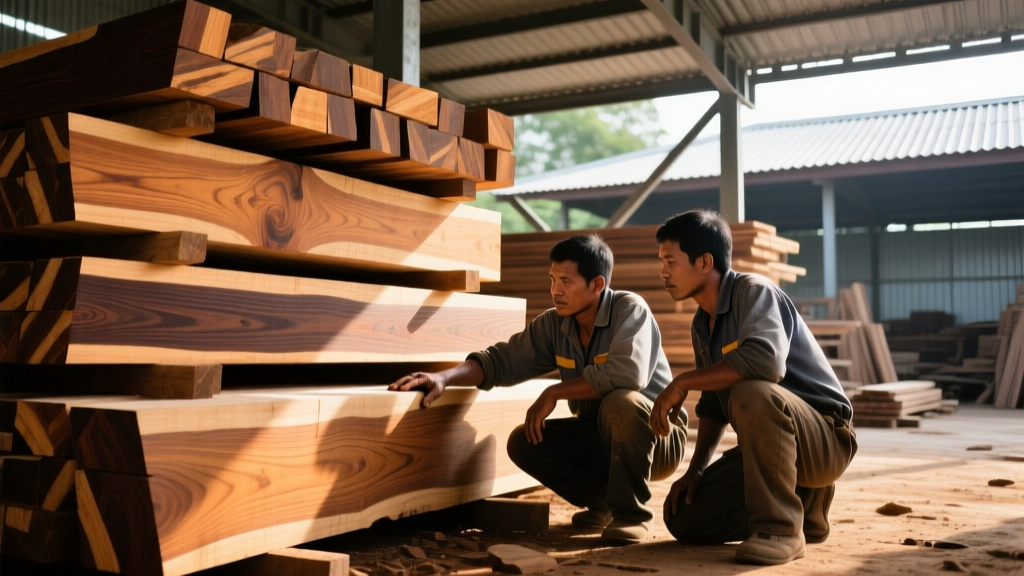
Quantifying the Impact on Total Build Costs
To understand how wood selection shifts the cost to build a house in the Philippines, consider a standard 150-square-meter, two-story residential build. Here is how timber budgeting breaks down across three critical phases:
1. Roof Trusses and Structural Framing
Traditional Philippine construction relies heavily on hollow concrete blocks and reinforced concrete (CHB/RC) for walls, but roof structures remain predominantly timber or light-gauge steel. If opting for a timber roof truss system using imported Douglas Fir or SPF, expect to spend between PHP 120,000 and PHP 180,000 for materials alone. Substituting this with locally fabricated light-gauge steel trusses (C-purlins) can reduce material costs by 15%, though steel requires specialized welding and anti-rust treatments in coastal zones.
2. Doors, Windows, and Jambs
A typical 150 sqm home requires 12-15 interior doors, 2-3 exterior doors, and multiple window frames. Using solid Plantation Mahogany for interior doors (PHP 4,500 each) and Tangile for jambs (PHP 2,500 per set) will allocate roughly PHP 110,000 to PHP 140,000 to this category. Downgrading to engineered wood (MDF/HDF core with veneer) can halve this cost, but engineered woods fail rapidly if exposed to the high humidity and occasional water intrusion common in Philippine wet seasons.
3. Finishing and Cabinetry
Kitchen and bathroom cabinetry represent the largest wood volume in the finishing phase. While marine plywood (PHP 1,200 - PHP 1,800 per 4x8 sheet) forms the carcass, the facing material dictates the price. Solid Narra or Tindalo accents will push cabinetry costs above PHP 40,000 per linear meter, whereas Mahogany or laminate finishes keep it around PHP 15,000 to PHP 20,000 per linear meter.
Durability: Termites, Typhoons, and Moisture
The Philippine climate demands rigorous material specifications. The National Structural Code of the Philippines (NSCP) mandates specific wind load resistances, making the structural integrity of roof-to-wall timber connections critical.
Wood installed in the Philippines must be kiln-dried to a moisture content (MC) of 12% to 15% for interior finishes, and maximum 19% MC for exterior framing. Green lumber (MC >20%) will warp and shrink, cracking concrete interfaces and popping drywall seams. Furthermore, always specify 304 or 316 stainless steel fasteners or hot-dipped galvanized structural connectors for timber. Standard electroplated nails will corrode within 3 years in coastal or high-humidity provinces, compromising structural tie-downs during typhoons.
For termite mitigation, avoid using untreated Gmelina or Falcata anywhere near the ground or within 300mm of concrete slabs. If utilizing imported softwoods for framing, ensure they have been pressure-treated with Copper Azole (CA) or Alkaline Copper Quaternary (ACQ). Borate treatments are effective for interior, dry-zone framing but will leach out if exposed to rain during the construction phase.
Regulatory Compliance and Sourcing Strategies
Managing the cost to build a house in the Philippines effectively means avoiding supply chain disruptions. Sourcing timber requires navigating local logistics and environmental laws.
- Verify the CTO: Before any lumber leaves the yard, demand to see the Certificate of Timber Origin. Match the batch numbers on the CTO with the physical stamps on the timber ends.
- Buy Direct from Importers: For large builds (over 200 sqm), bypass retail hardware stores. Purchase directly from major importers in the Navotas or Mandaue timber yards to save 15-20% on middleman markups.
- Specify Exact Dimensions: Philippine lumber yards often sell 'rough-sawn' dimensions. A nominal 2x4 inch piece may actually measure 1.75 x 3.75 inches. Always specify 'S4S' (Surfaced Four Sides) if exact structural dimensions are required for engineered truss joints.
Expert Verdict: Optimizing Your Timber Budget
Controlling the cost to build a house in the Philippines does not mean buying the cheapest wood available; it means aligning the species' natural properties with its specific architectural function. Reserve your budget for kiln-dried Tangile on high-wear jambs and premium Mahogany for entry doors, while utilizing pressure-treated imported softwoods or light-gauge steel for hidden structural framing. By strictly enforcing moisture content limits and demanding DENR compliance documentation, you protect both your financial investment and the long-term structural integrity of the home.
Written by
David NakamuraDavid Nakamura is a licensed architect (AIA) and construction technology writer focused on sustainable building methods, mass timber engineering, and high-performance building envelopes. He holds a Master of Architecture from the University of Washington and is a certified Passive House Consultant (CPHC). David spent eight years at the Seattle firm Mithun, where he led the design of three LEED Platinum projects, before founding his own practice specializing in net-zero residential design. He serves on the editorial advisory board of GreenBuilder Magazine and has authored peer-reviewed papers on cross-laminated timber (CLT) connections for the Journal of Structural Engineering. In his spare time, David teaches woodworking at Pratt Fine Arts Center and kayaks the Puget Sound.
More from David Nakamura
View all
Construction Cost
Labor Cost to Build a Deck Per Sq Ft: 2026 Installation Guide
Discover the exact labor cost to build a deck per sq ft in 2026. This installation guide breaks down contractor rates, complexity factors, and hidden fees.
Aug 4, 2026

Construction Cost
How Much Does It Cost to Build a 3 Bedroom House? Financing Guide
Learn exactly how much it costs to build a 3 bedroom house and explore 2026 financing options, construction loan types, and budget frameworks for your build.
Aug 4, 2026

Construction Cost
Cost to Build a Tennis Court: 2026 Guide
How much does it cost to build a tennis court in 2026? Breakdowns for asphalt, concrete, and synthetic surfaces plus fencing and lighting.
Jul 30, 2026