What Type of Gravel for Concrete Base? The Pro Guide
Discover what type of gravel for concrete base applications ensures maximum slab longevity. Compare #57, #411, and recycled stone costs and specs.

The Critical Role of the Subbase in Concrete Performance
When determining what type of gravel for concrete base layers will yield the most durable slab, the answer hinges on understanding load transfer and moisture management. A concrete slab is only as strong as the ground beneath it. The native soil (subgrade) often shifts, retains water, or expands during freeze-thaw cycles. The gravel layer (subbase) acts as a structural bridge, distributing the slab's load evenly across the subgrade while breaking capillary action that draws groundwater upward.
According to the American Concrete Institute (ACI) guidelines on subbases, a properly compacted, open-graded gravel base reduces slab curling, prevents frost heave, and provides a stable working platform for heavy equipment during the pour. Choosing the wrong aggregate leads to differential settlement, resulting in catastrophic cracking within the first year of curing.
Quick-Reference Decision Matrix: Matching Gravel to Project Scope
Not all gravel performs equally under compression. Below is a framework for selecting the correct aggregate based on your specific structural requirements and drainage needs.
| Gravel Type | Aggregate Size | Drainage | Compaction Lock | Best Application |
|---|---|---|---|---|
| #57 Crushed Stone | 3/4' to 1' | Excellent | Moderate | Patios, basement floors, high-water-table zones |
| #411 / Crusher Run | 3/4' down to fines | Moderate | Superior | Driveways, heavy-load commercial pads, warehouse floors |
| Recycled Concrete (RCC) | 1.5' down to fines | Good | High | Budget-conscious driveways, temporary access roads |
Deep Dive: The Top 3 Gravel Types for Concrete Bases
1. #57 Crushed Stone: The Drainage Champion
#57 stone is an angular, washed aggregate typically measuring between 3/4 inch and 1 inch in diameter. Because it is washed, it contains no fine particles (stone dust). This creates high void space between the rocks, allowing water to drain freely away from the bottom of the concrete slab.
- Pros: Unmatched drainage; prevents hydrostatic pressure buildup; easy to spread and grade.
- Cons: The lack of fines means the stones do not 'lock' together as tightly as crusher run. It requires careful vibratory compaction to prevent lateral shifting during the concrete pour.
- Pro Tip: Use #57 stone in regions with heavy clay subgrades where water pooling is a primary concern. Pair it with a non-woven geotextile fabric to prevent the clay from migrating up into the void spaces.
2. #411 Gravel (Crusher Run): The Compaction King
#411 is a blend of #57 stone and fine stone dust (quarry screenings). When compacted, the stone dust fills the voids between the larger angular rocks, creating a dense, nearly impermeable matrix that mimics solid rock. The Federal Highway Administration (FHWA) frequently specifies graded aggregate bases like #411 for heavy-load pavement structures due to their high California Bearing Ratio (CBR).
- Pros: Achieves 95%+ Standard Proctor density easily; provides an incredibly stiff platform that minimizes slab deflection under heavy point loads (like vehicle tires or forklift wheels).
- Cons: Poor drainage compared to washed stone. If the subgrade is poorly drained, water can become trapped in the base layer.
- Pro Tip: #411 must be laid at its Optimum Moisture Content (OMC)—usually around 5-8% water by weight. If it is too dry, the dust will not bind; if too wet, it becomes spongy. A simple field test: squeeze a handful. It should hold its shape without water dripping out.
3. Recycled Crushed Concrete (RCC): The Sustainable Alternative
RCC is produced by crushing demolished concrete structures, screening out rebar, and grading the remaining material. It is highly cost-effective and environmentally friendly. Furthermore, the residual cement paste on the recycled aggregates can re-hydrate when exposed to moisture, creating a weak pozzolanic bond that increases base stiffness over time.
- Pros: 30% to 50% cheaper than virgin aggregate; excellent compaction characteristics; reduces landfill waste.
- Cons: Quality varies wildly by supplier. Risk of embedded steel debris or asphalt contamination. Higher absorption rate can draw moisture out of freshly poured concrete if not properly dampened before the pour.
Warning: The Pea Gravel and River Rock Trap
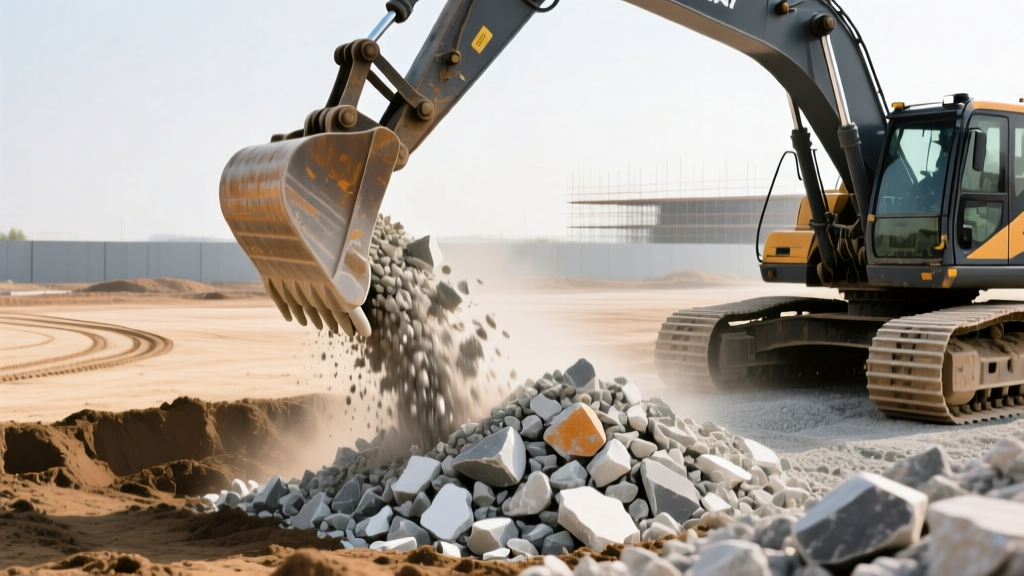
Never use pea gravel, river rock, or any naturally rounded aggregate for a structural concrete base. Rounded stones lack angular faces, meaning they cannot mechanically interlock. Under the weight of a concrete truck or the point-load of a vehicle, rounded gravel behaves like a bed of marbles, shifting laterally and causing immediate differential settlement and slab cracking. Always specify crushed (angular) stone.
Thickness and Sizing Specifications by Load Class
The depth of your gravel base is just as critical as the material type. The required thickness scales with the anticipated live loads and the bearing capacity of the native subgrade.
Residential Patios and Walkways (Light Load)
- Target Thickness: 4 inches compacted.
- Material: #57 Crushed Stone or #411.
- Subgrade Prep: Remove topsoil and organic matter. Compact native soil to 90% Proctor density.
Residential Driveways and Garage Floors (Medium Load)
- Target Thickness: 6 inches compacted.
- Material: #411 Crusher Run (preferred for vehicle traffic).
- Subgrade Prep: Excavate to 10 inches to account for 4 inches of concrete plus 6 inches of base. Use a vibratory roller for compaction.
Commercial Pads and Heavy Equipment Zones (High Load)
- Target Thickness: 8 to 12 inches compacted.
- Material: #411 or engineered recycled concrete.
- Subgrade Prep: Geotechnical soil testing required. Install a woven geotextile separation layer over soft clay subgrades before placing gravel.
2026 Material Cost Breakdown
Pricing for aggregate materials fluctuates based on regional quarry availability and diesel fuel surcharges. Below are the current national average costs for bulk delivery (excluding spreading and compaction labor).
| Material | Cost Per Ton | Cost Per Cubic Yard | Coverage (at 4' depth) |
|---|---|---|---|
| #57 Crushed Limestone/Granite | $35 - $55 | $50 - $80 | ~80 sq. ft. per ton |
| #411 Crusher Run | $30 - $45 | $45 - $70 | ~85 sq. ft. per ton |
| Recycled Crushed Concrete | $15 - $30 | $25 - $45 | ~75 sq. ft. per ton |
Note: Always order 10% to 15% excess material to account for subgrade irregularities and compaction settlement.
Step-by-Step Base Preparation and Compaction Flow
Achieving the required structural density requires a methodical approach. Follow this sequence to ensure your subbase meets engineering standards.
- Subgrade Excavation and Proof-Rolling: Excavate to the total depth (slab thickness + base thickness). Run a heavy vehicle (like a loaded dump truck) over the exposed dirt. If the tires sink or the soil pumps, excavate the soft spots and backfill with compacted #411.
- Geotextile Installation (If Required): Roll out non-woven geotextile fabric over soft clay subgrades. Overlap seams by 18 inches. This prevents the gravel from punching down into the mud over time.
- Spread in 2-Inch Lifts: Never dump and spread 6 inches of gravel at once. A standard vibratory plate compactor can only effectively compact a maximum of 2 to 3 inches of aggregate depth. Spread the first 2-inch layer, grade it, and compact.
- Moisture Conditioning: If using #411, lightly mist the aggregate with a hose during spreading to reach the Optimum Moisture Content. Avoid saturating the base.
- Vibratory Compaction: Run a reversible vibratory plate compactor (minimum 5,000 lbs of centrifugal force for driveways) over the lift in overlapping passes. Make at least two passes in perpendicular directions.
- Final Grade and Seal: After the final lift is compacted, use a laser level to verify the grade matches the desired slab slope (minimum 1/8 inch per foot for exterior drainage). Lightly mist the top layer of #411 and run the plate compactor one last time to create a smooth, sealed surface that will not tear the polyethylene vapor barrier during rebar placement.
'The most common cause of early-age slab cracking is not the concrete mix design, but inadequate subbase compaction and moisture control. A $500 investment in proper base preparation saves thousands in slab replacement.' — Industry Best Practices for Flatwork, Portland Cement Association
Final Verdict: Which Should You Choose?
If your primary concern is heavy vehicular traffic and absolute structural rigidity, #411 Crusher Run is the undisputed best choice for a concrete base. Its ability to lock together into a dense, unyielding matrix provides the ultimate support for 4,000 PSI concrete mixes. However, if you are building a basement slab, a ground-floor patio in a wet climate, or working over a highly expansive clay subgrade where drainage is paramount, #57 Washed Stone paired with a vapor barrier and geotextile fabric is the superior engineering decision. Avoid rounded aggregates entirely, and always respect the 2-inch lift rule for compaction to guarantee a crack-free slab.
Written by
Elena RodriguezElena Rodriguez is a civil engineer and technical writer specializing in concrete technology, masonry systems, and ASTM/ACI compliance. She earned her B.S. in Civil Engineering from Texas A&M University and spent a decade at a materials testing laboratory, performing over 2,000 concrete compressive strength tests and masonry prism evaluations. Elena is an ACI-certified Field Testing Technician (Grade I) and a member of ASTM Committee C12 on Natural Building Stone. She currently consults on forensic engineering cases involving concrete failures and moisture intrusion. Based in San Antonio, TX, Elena is a proud member of the Society of Women Engineers (SWE) and coaches her daughter's FIRST Robotics team.
More from Elena Rodriguez
View all
Walls & Panels
Cost Analysis: Light Gauge Steel Framing Advantages and Disadvantages
Evaluate light gauge steel framing advantages and disadvantages through a strict cost analysis lens, comparing material, labor, and lifecycle expenses.
Aug 4, 2026

Walls & Panels
Gypsum Board Types: Exact Specifications, Thickness & Dimensions
Compare standard, Type X, and moisture-resistant gypsum board types. Get exact specifications, thicknesses, dimensions, and ASTM standards for your project.
Aug 4, 2026

Fire Resistance
Best Fire-Resistant Outdoor Decking Materials: 2026 Buyer Guide
Discover the best fire-resistant outdoor decking materials for 2026. Compare Class A PVC, aluminum, and hardwood options for WUI compliance and safety.
Aug 4, 2026