Types of Concrete Blocks: PDF Guide & Mix Design Specs
Ditch outdated PDFs. Explore our dynamic guide to concrete block types, ASTM mix designs, density specs, and structural applications for modern masonry.
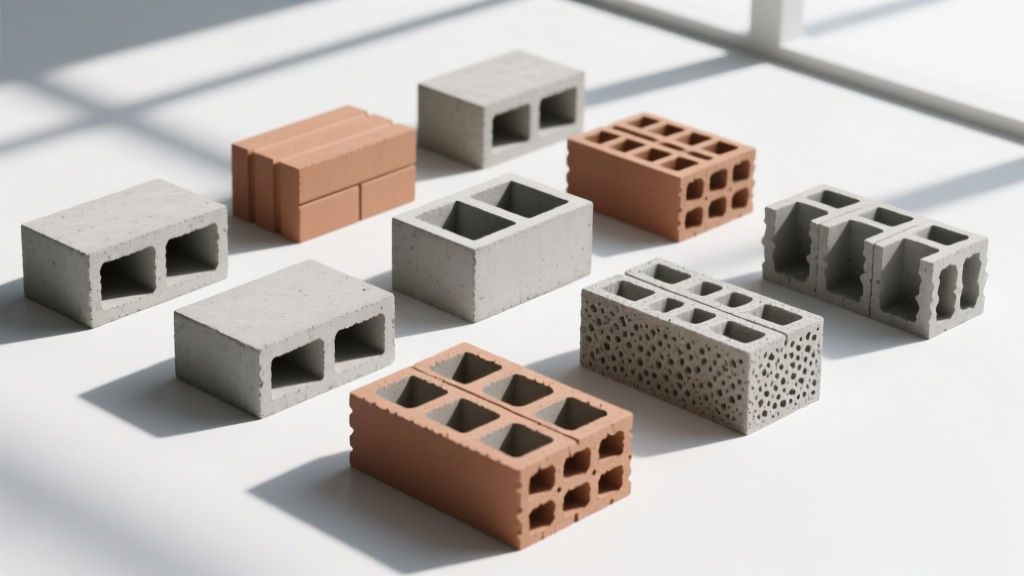
Why Ditch the Static PDF? The Modern Concrete Block Matrix
Many contractors and estimators search for a "types of concrete blocks pdf" to keep in the job site trailer or hand out to masonry crews. While static PDFs offer a quick snapshot, they quickly become obsolete as ASTM standards update, admixture technologies evolve, and regional aggregate availability shifts. This dynamic digital guide replaces the need for a downloaded document, providing an always-up-to-date, comprehensive reference matrix for concrete masonry units (CMUs).
Understanding the exact mix design, density, and structural classification of concrete blocks is not just about code compliance; it directly impacts mortar adhesion, thermal mass, acoustic insulation, and long-term durability against freeze-thaw cycles. Below is the master classification matrix that every site superintendent should bookmark.
The Master Classification Matrix: Density & Application
Concrete blocks are primarily categorized by their unit weight, which is dictated by the aggregate used in the mix design. The National Concrete Masonry Association (NCMA) classifies CMUs into three distinct weight categories based on oven-dry density.
| Block Classification | Oven-Dry Density (lb/ft³) | Primary Aggregate Type | Compressive Strength (psi) | Best Application |
|---|---|---|---|---|
| Lightweight | Less than 105 | Expanded shale, clay, or slate | 2,000 - 3,500 | Interior partitions, firewalls, high-rise infill |
| Medium Weight | 105 to 125 | Blend of lightweight & sand/gravel | 2,500 - 4,000 | Exterior load-bearing walls, commercial facades |
| Normal Weight | 125 to 145+ | Sand, gravel, crushed limestone | 3,000 - 5,000+ | Foundations, retaining walls, heavy structural loads |
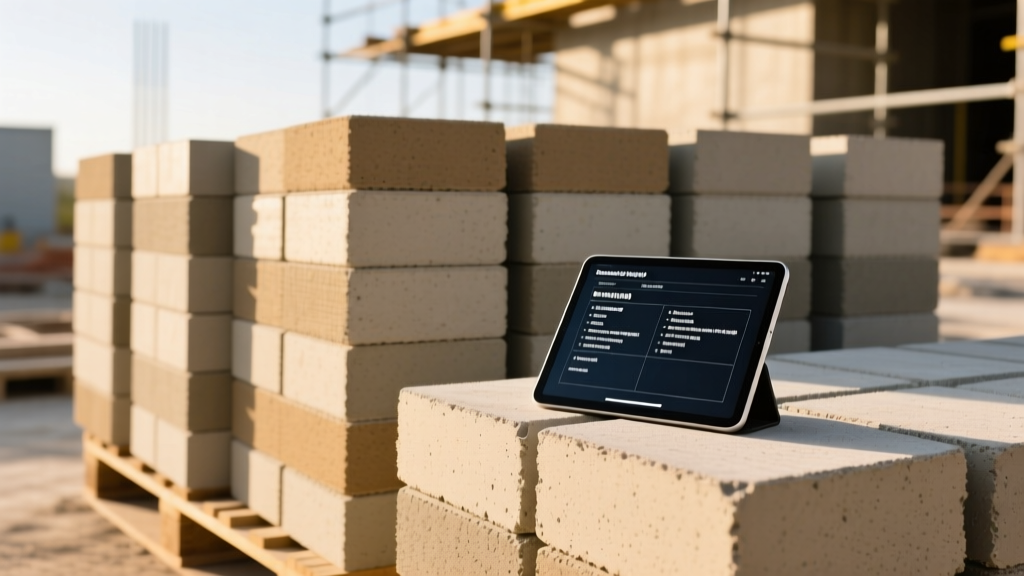
Decoding the Mix Design: Zero-Slump & Vibration Compaction
Unlike the high-slump concrete poured into foundation forms, CMUs are manufactured using a zero-slump concrete mix. According to the Portland Cement Association (PCA), the mix must be dry enough to hold its shape immediately upon extrusion from the block machine, yet wet enough to allow for high-frequency vibration compaction.
Standard Proportions & Water-Cement Ratios
- Cement-to-Aggregate Ratio: Typically ranges from 1:4 to 1:8 by volume. Normal weight blocks lean toward 1:6, while high-strength architectural blocks may use 1:4.
- Water-to-Cement (w/cm) Ratio: Strictly maintained between 0.40 and 0.55. Exceeding 0.55 causes the block to sag in the mold; dropping below 0.35 prevents proper hydration and results in weak, crumbly units.
- Admixtures: Air-entraining agents are critical in northern climates, targeting 4% to 7% microscopic air voids to prevent spalling during freeze-thaw cycles. Integral water repellents (like stearates) are often added at the batching plant to limit moisture absorption to less than 8 lbs/ft³.
Site Super Cheat Sheet: Curing & Kiln Specs
Blocks do not air-dry on the yard. After molding, they are immediately moved to low-pressure steam kilns. The temperature is raised to 150°F to 180°F with 100% relative humidity for 12 to 24 hours. This accelerated curing process allows the blocks to reach 70% of their 28-day compressive strength before they are cubed, strapped, and shipped to your job site. If a supplier delivers blocks that are chalky or easily scratched, they likely bypassed proper kiln curing.
Structural vs. Non-Structural: Navigating ASTM Standards
When reviewing supplier submittals, you must verify the ASTM designation. Confusing these two standards is a common cause of structural failure in masonry walls.
ASTM C90: Loadbearing Concrete Masonry Units
This is the gold standard for structural work. ASTM C90 mandates strict minimums for compressive strength (typically 2,000 psi net area minimum for the unit, translating to higher assembly strengths), maximum water absorption limits, and minimum face-shell and web thicknesses. A standard 8x8x16 inch C90 block must have a face-shell thickness of at least 1.25 inches and web thicknesses of 1.0 inch.
ASTM C129: Nonloadbearing Concrete Masonry Units
These blocks are engineered strictly for partition walls, veneers, or fire separations where they carry no vertical roof or floor loads. Because they do not bear structural weight, ASTM C129 allows for thinner face shells and webs, making them significantly lighter and cheaper. Never substitute C129 blocks in a load-bearing shear wall.
Specialty Block Profiles & Niche Applications
Beyond the standard stretcher block, modern mix designs are cast into specialized profiles to eliminate the need for excessive cutting and reduce mortar joints.
- Lintel Blocks (U-Blocks): Feature a deep trough to hold horizontal rebar and grout, creating a continuous reinforced concrete beam over doors and windows. Requires a high-flow grout mix (slump 8-11 inches) to fill the voids without honeycombing.
- Jamb Blocks: Cast with a vertical sash slot to receive window and door frames, allowing for direct mechanical fastening and seamless caulking.
- Bullnose Blocks: Feature one or two rounded exterior corners. Frequently used in stairwells, hospitals, and schools to prevent drywall and plaster chipping at high-traffic corners.
- Score-Face / Slump Blocks: Manufactured with a deliberate textured or "slumped" face to mimic the aesthetic of hand-laid brick or natural split stone. These require a stiffer mix design to hold the aggregate pattern during the slumping process.
Troubleshooting Block Failures: Mix Design Red Flags
When masonry assemblies fail, the root cause almost always traces back to the block's original mix design or curing process. Use this diagnostic table to identify and correct supplier issues.
| Field Symptom | Root Cause in Mix Design | Corrective Action for Future Batches |
|---|---|---|
| Severe Efflorescence (white powdery staining) | High alkali content in cement; excessive water absorption rate. | Specify Class F fly ash substitution (15-20%) to reduce alkalis; require integral water repellent admixture. |
| Spalling & Face Delamination in Winter | Lack of air-entraining agents; high w/cm ratio leading to permeable matrix. | Mandate 5% air content per ASTM C90; verify absorption is below 8 lbs/ft³. |
| Poor Mortar Adhesion (blocks pull away from joint) | Overly dense, smooth face-shell; excessive use of integral waterproofing. | Request a "sand-faced" or open-pore finish; reduce integral water repellent dosage by 30%. |
| Blocks Crack During Transit/Unloading | Under-cured in the kiln; insufficient early-stage hydration. | Audit supplier kiln logs; ensure minimum 12 hours at 150°F before cubing. |
Digital Submittals: What to Demand from Your Supplier
Instead of relying on a generic "types of concrete blocks pdf" found online, require your local masonry supplier to provide a project-specific digital submittal package. This package must include:
- Mill Test Reports (MTRs): Verifying the exact Portland cement type (Type I/II or Type III for high early strength) and aggregate source.
- Third-Party Lab Breaks: Independent compressive strength and absorption test results from the current production run, not a generic catalog spec sheet.
- Mortar & Grout Compatibility Data: Recommendations for the specific Type N or Type S mortar mix that pairs best with their block's absorption rate to ensure optimal bond strength.
By shifting from static PDFs to dynamic, data-backed submittals and understanding the zero-slump mix designs that govern CMU production, you ensure your masonry assemblies meet the rigorous demands of modern commercial and residential construction.
Written by
Elena RodriguezElena Rodriguez is a civil engineer and technical writer specializing in concrete technology, masonry systems, and ASTM/ACI compliance. She earned her B.S. in Civil Engineering from Texas A&M University and spent a decade at a materials testing laboratory, performing over 2,000 concrete compressive strength tests and masonry prism evaluations. Elena is an ACI-certified Field Testing Technician (Grade I) and a member of ASTM Committee C12 on Natural Building Stone. She currently consults on forensic engineering cases involving concrete failures and moisture intrusion. Based in San Antonio, TX, Elena is a proud member of the Society of Women Engineers (SWE) and coaches her daughter's FIRST Robotics team.
More from Elena Rodriguez
View all
Walls & Panels
Cost Analysis: Light Gauge Steel Framing Advantages and Disadvantages
Evaluate light gauge steel framing advantages and disadvantages through a strict cost analysis lens, comparing material, labor, and lifecycle expenses.
Aug 4, 2026

Walls & Panels
Gypsum Board Types: Exact Specifications, Thickness & Dimensions
Compare standard, Type X, and moisture-resistant gypsum board types. Get exact specifications, thicknesses, dimensions, and ASTM standards for your project.
Aug 4, 2026

Fire Resistance
Best Fire-Resistant Outdoor Decking Materials: 2026 Buyer Guide
Discover the best fire-resistant outdoor decking materials for 2026. Compare Class A PVC, aluminum, and hardwood options for WUI compliance and safety.
Aug 4, 2026