Concrete Paint vs Epoxy: Technical Specs & Performance Data
Compare concrete paint vs epoxy with technical specs, ASTM adhesion data, mil thickness, moisture limits, and chemical resistance for 2026 projects.

The Chemistry of Coating: Acrylics vs. Epoxies
The fundamental divergence between concrete paint and epoxy lies in their chemical architecture and film-forming mechanisms. Standard concrete paints are typically 100% acrylic latex or styrene-acrylic emulsions (one-component, or 1K). They cure through coalescence and water evaporation, forming a breathable, flexible thermoplastic film that sits primarily on the surface and slightly penetrates the concrete capillaries.
Epoxy coatings, conversely, are two-component (2K) thermosetting polymers. A standard industrial floor epoxy consists of a bisphenol-A or bisphenol-F resin base reacted with a polyamine or polyamide hardener. This chemical cross-linking creates a rigid, highly dense, and chemically inert thermoset matrix. As of 2026, 100% solids epoxies dominate commercial specifications due to strict EPA guidelines on Volatile Organic Compounds (VOCs), eliminating the solvent carriers that historically caused film shrinkage and indoor air quality issues.
• Concrete Paint (Acrylic): 1K system, 2-4 mils DFT, vapor permeable, UV stable.
• Epoxy (100% Solids): 2K system, 10-20 mils DFT, vapor barrier, requires UV topcoat.
Adhesion Mechanics & Surface Preparation Standards
Adhesion is the primary failure point in concrete coatings. The International Concrete Repair Institute (ICRI) surface preparation guidelines mandate specific Concrete Surface Profiles (CSP) based on the coating's mil thickness and chemical bond requirements.
Concrete Paint: Mechanical Interlock (CSP 1-2)
Acrylic masonry paints rely on mechanical interlock and slight pore penetration. They require a CSP 1 or 2, achievable through thorough power washing, light scarification, or mild acid etching (using a 10% muriatic acid solution followed by neutralization). Pull-off adhesion testing per ASTM D7234 typically yields 150 to 250 psi for high-quality acrylics. Failure usually occurs adhesively at the coating-concrete interface if the substrate was dusty or efflorescent.
Epoxy: Chemical Bond & Micro-Mechanical Anchor (CSP 2-3)
Epoxies require a CSP 2 to 3, achieved exclusively through mechanical abrasion like shot blasting or diamond grinding. Acid etching is strictly prohibited for epoxy substrates, as residual salts and altered surface pH compromise the amine cross-linking. Properly applied 100% solids epoxy achieves pull-off adhesion strengths of 400 to 800+ psi per ASTM D7234. In fact, the bond is often stronger than the concrete's tensile strength, resulting in cohesive failure where the concrete itself tears before the epoxy detaches.
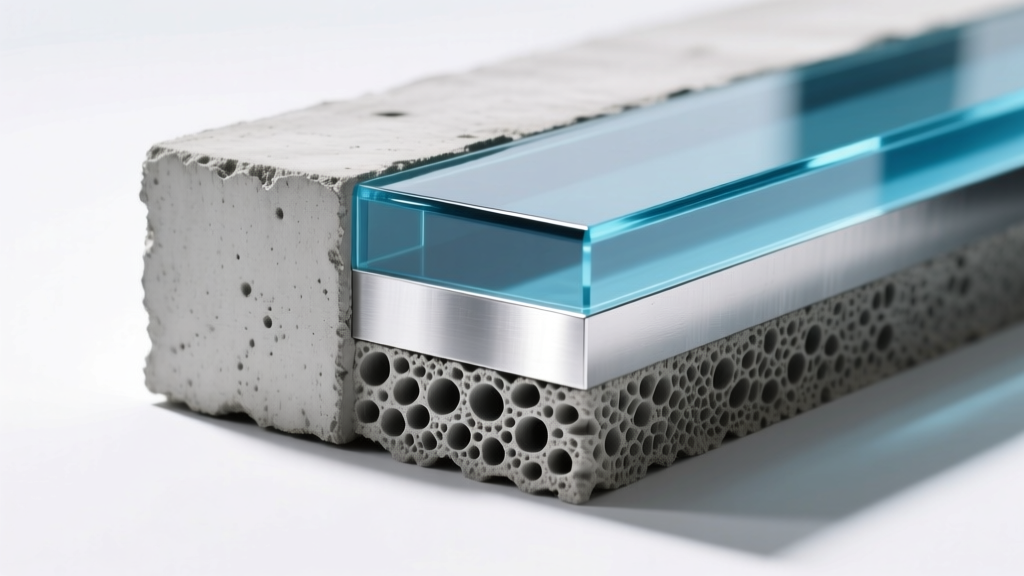
Moisture Vapor Transmission (MVT) & Hydrostatic Limits
Moisture is the most critical variable in concrete coating specifications. Applying the wrong system over a slab with high Moisture Vapor Transmission (MVT) guarantees catastrophic failure.
- Acrylic Paint (Breathable): Acrylics possess a high permeance rating (typically 5 to 15 perms). They allow water vapor to pass through the film without building hydrostatic pressure. This makes them ideal for exterior slabs, unconditioned warehouses, and below-grade walls where moisture migration is expected.
- Epoxy (Vapor Barrier): Epoxies have a permeance of less than 0.1 perms. They act as a vapor barrier. If applied over a slab emitting more than 3 lbs of moisture per 1,000 square feet per 24 hours (measured via ASTM F1869 Calcium Chloride test) or exceeding 75% Relative Humidity (ASTM F2170 in-situ RH probes), osmotic blistering will occur. The vapor pressure pushes against the impermeable epoxy, creating fluid-filled blisters that eventually rupture.
Abrasion Resistance & Mil Thickness (ASTM D4060)
Durability under foot and vehicular traffic is quantified using the Taber Abraser test (ASTM D4060), which measures weight loss in milligrams after 1,000 cycles with a CS-17 abrasive wheel under a 1,000-gram load.
| Specification Metric | 100% Acrylic Concrete Paint | 100% Solids Polyamine Epoxy |
|---|---|---|
| Dry Film Thickness (DFT) | 2.0 - 4.0 mils | 10.0 - 20.0 mils (up to 125 mils for self-leveling) |
| Taber Abrasion (Weight Loss) | 100 - 150 mg | 20 - 40 mg |
| Impact Resistance (ASTM D2794) | High (flexible, resists chipping) | Moderate (rigid, may micro-crack under sharp point impact) |
| Tensile Strength (ASTM D638) | ~300 - 500 psi | ~4,000 - 8,000 psi |
| UV Stability | Excellent (non-yellowing) | Poor (requires aliphatic polyurethane topcoat) |
Alkalinity, pH Tolerance, and Efflorescence
Fresh concrete is highly alkaline, with surface pH levels frequently exceeding 12.5. Coating systems must tolerate this environment without saponifying (breaking down into soap-like compounds).
Standard acrylic latex paints can suffer from alkali burn if applied to concrete that has not cured for a minimum of 28 days or has not been properly neutralized. High-performance masonry paints are formulated to tolerate pH levels up to 11.5. Epoxies are inherently resistant to high alkalinity once fully cross-linked, making them the preferred choice for new construction where rapid turnaround is required, provided the moisture content is within acceptable limits. However, if soluble salts (efflorescence) are present on the surface, they will become trapped beneath the epoxy film, creating a weak boundary layer that leads to delamination. American Concrete Institute (ACI) Materials Journal literature emphasizes that all surface laitance and efflorescence must be mechanically removed prior to any 2K resin application.
Decision Framework: When to Specify Paint vs. Epoxy
Selecting between concrete paint and epoxy requires evaluating the substrate condition, environmental exposure, and mechanical load. Use the following technical framework to finalize your specification.
Specify 100% Acrylic Concrete Paint When:
- The substrate is exterior and exposed to UV: Acrylics will not chalk or degrade under direct sunlight without a topcoat.
- MVT exceeds 3 lbs/1,000 sq ft: The breathable nature of acrylics prevents osmotic blistering on damp slabs or vertical retaining walls.
- The concrete is uneven or broom-finished: Paint's thin mil thickness will not fill voids, but it will not create trip hazards or thick ridges on rough profiles.
- Budget and downtime are constrained: Acrylics dry to the touch in 1-2 hours and can be recoated in 4 hours, requiring minimal surface prep (CSP 1).
Specify 100% Solids Epoxy When:
- The environment involves chemical spills: Epoxies resist automotive fluids, hydraulic oils, and mild acids (pH 4-10) that would instantly stain or degrade acrylics.
- Heavy vehicular traffic is present: The 10-20 mil DFT and high tensile strength protect against steel-wheel forklift traffic and metal shavings.
- Hygiene and cleanability are paramount: The non-porous, seamless nature of epoxy (especially when coved up the walls) meets FDA and USDA requirements for food processing and pharmaceutical facilities.
- The slab is interior, climate-controlled, and fully cured: Ensuring MVT is negligible allows the epoxy to act as a permanent, impermeable wear surface.
Written by
Sarah WhitfieldSarah Whitfield is a chartered quantity surveyor (MRICS) and construction cost analyst with 15 years of experience in material pricing, procurement strategy, and project budgeting. She earned her degree in Construction Management from the University of Reading (UK) and has worked on projects ranging from $2M custom homes to $180M mixed-use developments across North America and Europe. Sarah currently leads cost estimating for BuildMat Insight, maintaining a proprietary database of 4,000+ material price points updated quarterly. She is a frequent contributor to RSMeans cost data panels and has presented at the International Cost Engineering Council (ICEC) congress. Based in Denver, CO, Sarah is an avid trail runner and volunteer mentor for Women in Construction.
More from Sarah Whitfield
View all
Wood & Lumber
What Are the Different Types of Wood? A Builder's Guide
Compare structural softwoods, finish hardwoods, and engineered lumber. Analyze Janka ratings, MOE values, and 2026 pricing for construction.
Aug 4, 2026

Walls & Panels
Steel Framing vs Wood Framing: Corrosion and Moisture Defense
Compare steel framing vs wood framing for moisture resistance. Learn about galvanized coatings, condensation risks, and corrosion protection strategies.
Jul 21, 2026

Stone & Masonry
How to Cut Stone Veneer: Wet Saw vs Grinder Comparison
Compare the best tools for cutting stone veneer. We review wet saws, angle grinders, and chop saws to help you achieve clean, chip-free cuts.
Jul 21, 2026