How Much Does It Cost to Build a Web Application in 2026?
Discover exactly how much it costs to build a web application in 2026. Explore phase-by-phase budgets, team rates, and hidden infrastructure fees.
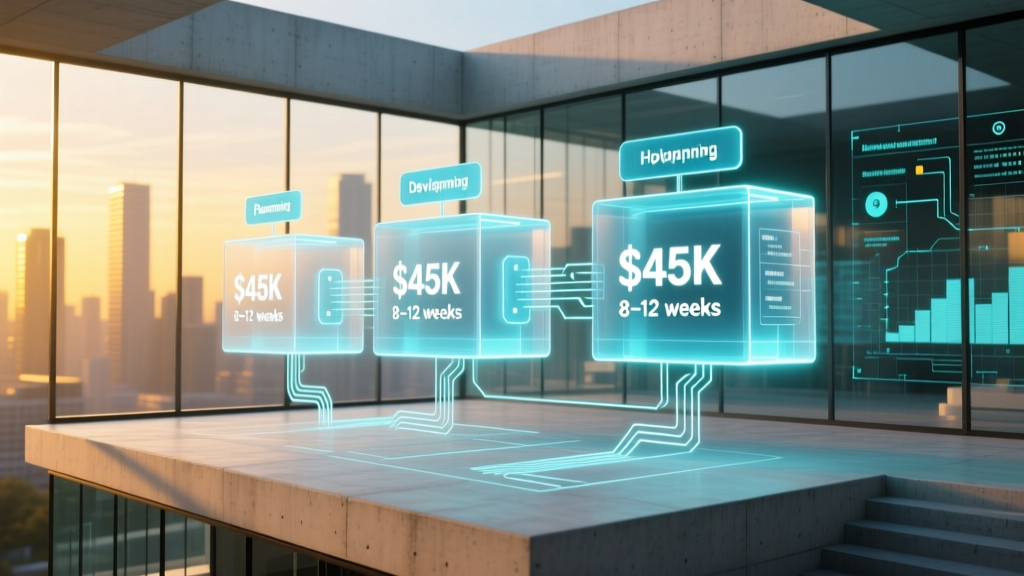
The 2026 Web Application Cost Matrix
When stakeholders ask how much it costs to build a web application, the answer depends entirely on architectural complexity, integration requirements, and compliance needs. In 2026, the baseline for a secure, scalable web application has shifted due to the standardization of edge computing, AI-assisted coding, and serverless infrastructure. Below is the current market matrix for custom web application development.
| Complexity Tier | Typical Features | Estimated Cost Range | Timeline |
|---|---|---|---|
| Simple MVP | Basic CRUD operations, standard email auth, single user role, minimal third-party APIs. | $15,000 – $35,000 | 4 – 8 Weeks |
| Mid-Market SaaS | Multi-tenant architecture, Stripe billing integration, role-based access control (RBAC), real-time dashboards. | $45,000 – $95,000 | 3 – 5 Months |
| Enterprise / Complex | Custom AI/ML pipelines, WebSockets for real-time sync, HIPAA/SOC2 compliance, legacy system migration. | $120,000 – $300,000+ | 6 – 12 Months |
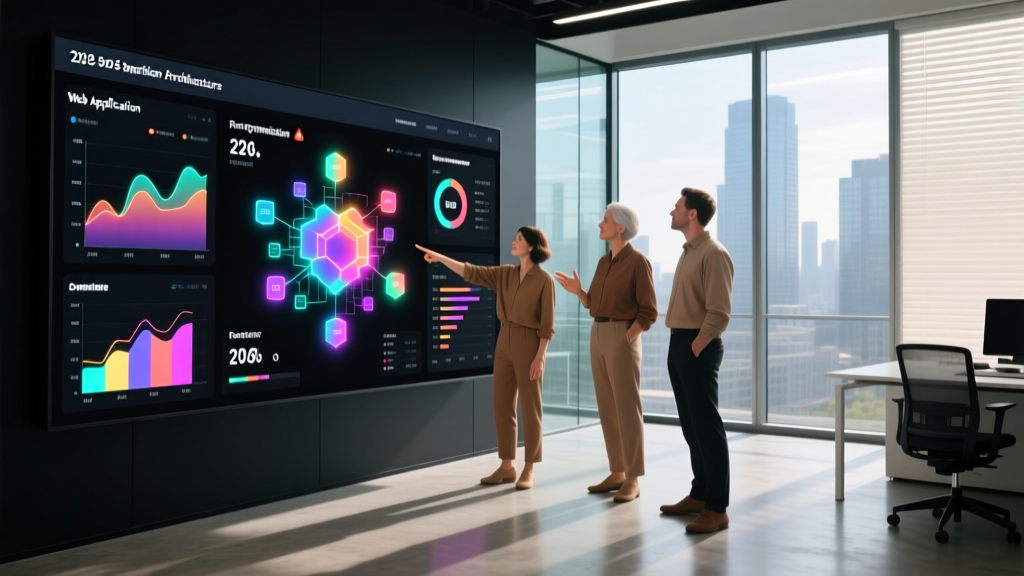
Phase-by-Phase Budget Allocation
Understanding where your capital is deployed prevents scope creep and budget overruns. For a standard $80,000 mid-market SaaS application, expect the budget to distribute across the following phases:
1. Discovery & Architecture (10% | $8,000)
Technical scoping, database schema design, API contract definitions, and selecting the tech stack. Skipping this phase is the primary cause of mid-project architectural rewrites.
2. UI/UX Design & Prototyping (15% | $12,000)
Wireframing, high-fidelity Figma mockups, and interactive prototyping. In 2026, this phase heavily includes designing for AI-driven conversational interfaces and accessibility (WCAG 2.2 AA compliance).
3. Frontend & Backend Engineering (50% | $40,000)
The core build. Frontend development (typically React 19 or Next.js 15) and backend API development (Node.js, Go, or Python). This includes database setup, state management, and core business logic implementation.
4. QA, Security & Deployment (15% | $12,000)
Automated testing pipelines (Jest, Playwright), penetration testing, load testing, and CI/CD pipeline configuration via GitHub Actions or GitLab CI.
5. Post-Launch Hypercare (10% | $8,000)
30 to 60 days of immediate bug fixing, server monitoring adjustments, and performance optimization post-deployment.
Sourcing Talent: Agency vs. Nearshore vs. Freelance
Labor is the largest variable in web application pricing. According to industry data tracked by the Clutch.co Web Application Developers Directory, hourly rates vary drastically by geography and engagement model. Choosing the wrong model for your project's complexity can result in abandoned codebases.
| Sourcing Model | Average Hourly Rate (2026) | Best Use Case | Risk Profile |
|---|---|---|---|
| US/UK Enterprise Agency | $160 – $250/hr | Complex enterprise apps, strict compliance (HIPAA/FINRA), high-stakes IP. | Low risk, high cost. |
| LatAm Nearshore Team | $75 – $110/hr | Mid-market SaaS, startups needing timezone alignment with US HQ. | Medium risk, excellent time-zone synergy. |
| Eastern Europe Agency | $60 – $95/hr | Heavy backend engineering, complex algorithms, data-heavy platforms. | Medium risk, potential communication lag. |
| Freelance Platforms | $40 – $120/hr | Simple MVPs, isolated feature additions, tight bootstrapped budgets. | High risk, requires strong internal technical project management. |
Hidden Costs That Derail Web App Budgets
Development agencies often quote for the build, but the total cost of ownership (TCO) includes infrastructure, licensing, and compliance. When calculating how much it costs to build a web application, you must factor in these operational expenditures.
Cloud Infrastructure & Edge Hosting
Modern web apps rely on distributed networks. While a basic Vercel or Netlify deployment might start at $20/month per user, scaling to enterprise traffic requires dedicated AWS or GCP resources. According to the AWS Official Pricing Calculator, a standard production environment utilizing RDS (Managed PostgreSQL), ElastiCache (Redis), and ECS Fargate will cost between $400 and $1,200 per month before factoring in egress fees and data transfer costs.
Third-Party API Dependencies
- Authentication: Auth0 or Clerk (Free tier up to 7,000 MAUs, then scales to $200+/month).
- Transactional Email: SendGrid or Postmark ($50–$150/month for high-volume delivery).
- Observability: Datadog or Sentry ($15–$50 per host/month for error tracking and APM).
- AI/LLM Inference: OpenAI API or Anthropic (Highly variable; a mid-traffic app can easily burn $500–$2,000/month on token usage if caching and rate-limiting are not strictly implemented).
Compliance and Security Audits
If your application handles healthcare data (HIPAA) or processes enterprise vendor contracts (SOC 2 Type II), the development cost is only the beginning. Achieving SOC 2 compliance typically requires an external auditor and platforms like Vanta or Drata, adding $25,000 to $40,000 to your first-year budget. Gartner Software Development Insights consistently highlights that security and compliance retrofits cost up to 30x more than implementing 'shift-left' security practices during the initial discovery phase.
Actionable Framework: Scoping Your MVP
To prevent budget bloat, apply the 'Core Loop' framework before requesting agency proposals:
- Define the Core Loop: What is the single action a user must take to get value? (e.g., 'Upload a document and receive an AI summary').
- Strip the Periphery: Remove 'nice-to-have' features like dark mode, complex onboarding tours, and native mobile wrappers for V1.
- Leverage BaaS (Backend-as-a-Service): Use Supabase or Firebase for authentication and database management to cut backend development time by 30-40%.
- Implement Usage Caps: If integrating AI or heavy compute, build hard usage limits into the MVP billing logic to prevent runaway API costs during beta testing.
Frequently Asked Questions
Can I build a web application for under $10,000?
Yes, but only if you rely heavily on no-code/low-code platforms like Bubble or FlutterFlow, or if you are building a highly constrained internal tool using a boilerplate SaaS starter kit. Custom-coded, scalable applications with unique business logic rarely fall below the $15,000 threshold when accounting for proper QA and security.
How much does it cost to maintain a web app annually?
Expect to spend 15% to 20% of the initial development cost on annual maintenance. For an $80,000 application, budget $12,000 to $16,000 per year for dependency updates, server patching, minor feature tweaks, and bug fixes.
Does using AI coding assistants reduce development costs?
AI tools like GitHub Copilot and Cursor have increased developer velocity by roughly 20-30% in 2026. However, this primarily reduces the cost of boilerplate generation and unit testing. It does not replace the need for senior-level architectural planning, meaning the overall project cost decreases modestly, but the quality and speed-to-market improve significantly.
Written by
Elena RodriguezElena Rodriguez is a civil engineer and technical writer specializing in concrete technology, masonry systems, and ASTM/ACI compliance. She earned her B.S. in Civil Engineering from Texas A&M University and spent a decade at a materials testing laboratory, performing over 2,000 concrete compressive strength tests and masonry prism evaluations. Elena is an ACI-certified Field Testing Technician (Grade I) and a member of ASTM Committee C12 on Natural Building Stone. She currently consults on forensic engineering cases involving concrete failures and moisture intrusion. Based in San Antonio, TX, Elena is a proud member of the Society of Women Engineers (SWE) and coaches her daughter's FIRST Robotics team.
More from Elena Rodriguez
View all
Walls & Panels
Cost Analysis: Light Gauge Steel Framing Advantages and Disadvantages
Evaluate light gauge steel framing advantages and disadvantages through a strict cost analysis lens, comparing material, labor, and lifecycle expenses.
Aug 4, 2026

Walls & Panels
Gypsum Board Types: Exact Specifications, Thickness & Dimensions
Compare standard, Type X, and moisture-resistant gypsum board types. Get exact specifications, thicknesses, dimensions, and ASTM standards for your project.
Aug 4, 2026

Fire Resistance
Best Fire-Resistant Outdoor Decking Materials: 2026 Buyer Guide
Discover the best fire-resistant outdoor decking materials for 2026. Compare Class A PVC, aluminum, and hardwood options for WUI compliance and safety.
Aug 4, 2026