Cost Per Sq Ft to Build Deck: 2026 Lifespan & ROI Analysis
Analyze the true cost per sq ft to build deck in 2026. Compare wood, composite, and PVC durability, lifespan, and long-term ROI to maximize your investment.

The Deception of Initial Decking Costs
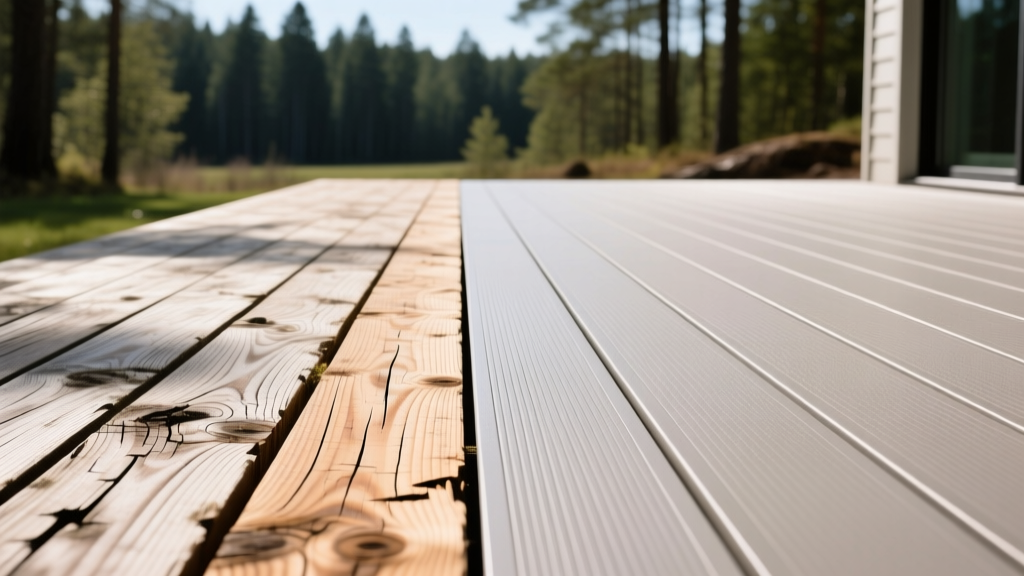
When homeowners research the cost per sq ft to build deck structures, they typically encounter baseline material and labor estimates. However, evaluating a deck strictly on initial installation cost is a financial trap that ignores the realities of material degradation, climate exposure, and mandatory upkeep. In 2026, the delta between the cheapest and most expensive decking materials has narrowed when calculated across a 25-year lifecycle. A $20 per square foot pressure-treated pine deck and a $55 per square foot cellular PVC deck yield vastly different total costs of ownership (TCO) once staining, sealing, board replacement, and structural fatigue are factored in.
2026 Material Breakdown: Installed Cost vs. Expected Lifespan
The following matrix outlines current national averages for fully installed decking (materials, substructure, and labor). Lifespan estimates align with industry standards published by InterNACHI for exterior wood and synthetic components.
| Decking Material | 2026 Installed Cost / Sq Ft | Expected Lifespan | 10-Year Maintenance Cost | Primary Failure Mode |
|---|---|---|---|---|
| Pressure-Treated Pine | $18 - $26 | 10 - 15 years | $1,200 - $1,800 | End-grain moisture intrusion, checking, joist rot |
| Cedar / Redwood | $28 - $38 | 15 - 20 years | $1,000 - $1,500 | UV graying, soft-tissue decay in high-moisture zones |
| Capped Composite | $38 - $52 | 25 - 30 years | $200 - $400 | Uncapped edge swelling, thermal expansion buckling |
| Cellular PVC | $48 - $65 | 30 - 50 years | $150 - $300 | Surface scratching, heat retention in dark colors |
| Aluminum | $65 - $85 | 50+ years | $50 - $100 | Galvanic corrosion if improper fasteners are used |
Pressure-Treated Wood: The High-Maintenance Budget Option
Modern pressure-treated lumber utilizes Alkaline Copper Quaternary (ACQ) or Copper Azole (CA-C) preservatives. While highly resistant to initial termite and fungal attacks, PT wood remains dimensionally unstable. As the wood dries, it shrinks and checks (splits). If the end-grains of cut boards are not immediately sealed with a copper naphthenate-based end-cut sealer, moisture wicks directly into the core, bypassing the treated shell. Furthermore, the acidic nature of modern preservatives requires hot-dipped galvanized or stainless steel fasteners; using standard zinc-plated screws will result in severe galvanic corrosion within 3 to 5 years, compromising the structural integrity of the deck floor.
Composite & PVC: The Premium Lifecycle Investment
Capped composite decking (a wood-plastic core wrapped in a polyethylene or polypropylene shell) dominates the mid-to-high tier market. The critical durability factor here is the cap thickness and coverage. Boards capped on only three sides leave the bottom exposed to ground-level moisture vapor, leading to a phenomenon known as "mushrooming" or edge-swell. For maximum lifespan, specify 4-sided capped composites or fully cellular PVC boards like Trex Transcend or Azek Landmark. PVC contains no organic wood fibers, rendering it completely immune to rot and mold, though it requires strict adherence to manufacturer-specified hidden fastener gaps (typically 1/8" to 1/4" depending on installation temperature) to accommodate thermal expansion.
Calculating the True Cost of Ownership (TCO)
To determine the actual financial impact of your deck, you must calculate the Total Cost of Ownership over your expected time in the home. This shifts the focus from the initial cost per sq ft to build deck structures toward long-term capital efficiency.
The TCO Formula
TCO = Initial Installation Cost + (Annual Maintenance × Years Owned) + Premature Replacement Costs - Residual Home Value Addition
Example: Over 20 years, a $6,000 PT wood deck will require approximately $3,000 in stain, sealants, and professional cleaning, plus $1,500 in localized board replacements. A $12,000 PVC deck requires only $400 in basic soap-and-water cleaning over the same period. The true 20-year cost gap is merely $4,100, not the $6,000 initial delta.
Structural Framing: The Hidden Lifespan Bottleneck
The most common cause of premature deck failure is not the surface decking, but the substructure. According to the American Wood Council prescriptive deck construction guidelines, the framing must support immense dead and live loads while resisting constant moisture exposure. Installing a 50-year PVC deck over standard untreated SPF (Spruce-Pine-Fir) joists guarantees that the substructure will rot out in 15 to 20 years, forcing a complete tear-down of the pristine surface boards to rebuild the frame.
To align the framing lifespan with premium decking materials, implement the following substructure upgrades:
- Joist Protection Tape: Apply butyl-based flashing tape (e.g., Trex Protect or G-Tape) to the top edge of all wooden joists and the ledger board. This seals the screw penetrations and prevents water from pooling on the horizontal joist surfaces, extending wood framing life by 15+ years.
- Steel Framing Systems: For ground-level decks or high-moisture coastal environments, utilize structural steel joists like Fortress Evolution or Trex Elevate. Steel is impervious to rot, termites, and warping, ensuring the frame outlasts the decking itself.
- Ledger Board Flashing: 90% of deck collapses originate at the ledger board connection. Use a continuous, self-adhering membrane flashing system that integrates with the home's weather-resistive barrier (WRB) to prevent water from trapping against the house rim joist.
Environmental Factors That Alter Material Lifespans
The published lifespan of any decking material assumes moderate conditions. Extreme microclimates will accelerate degradation if the wrong material is specified:
- High UV / Desert Climates: Dark-colored PVC and composite boards can reach surface temperatures exceeding 150°F in direct summer sun, causing thermal softening and excessive expansion. Specify lighter colors or mineral-based composite boards with high solar reflectance index (SRI) ratings.
- Coastal / Saltwater Environments: Salt spray accelerates the oxidation of wood preservatives and metallic fasteners. Aluminum decking or marine-grade PVC paired with 316-grade stainless steel hidden fasteners is mandatory to prevent galvanic corrosion.
- Heavy Shade / Forested Areas: Organic debris and constant shade promote algae and mold growth. While PVC resists this inherently, capped composites with deep wood-grain embossing can trap moisture in the grooves. Opt for straight-edge (non-grooved) boards with a micro-texture surface for easier clearing.
Actionable Framework: Which Deck Material Fits Your Timeline?
Use this decision matrix to select your decking material based on your specific ownership horizon and maintenance tolerance:
IF you plan to sell the home in 1 to 5 years:
Build with high-grade Cedar or premium Pressure-Treated wood. The initial cost per sq ft to build deck structures with wood is lower, and fresh staining will yield an excellent ROI for the home sale without over-investing in 50-year synthetic materials.
IF you plan to stay for 7 to 15 years and hate weekend chores:
Invest in 4-sided Capped Composite. You will avoid the bi-annual sanding and sealing required by wood, and the material will easily outlast your time in the home, adding verifiable resale value.
IF this is your forever home or a high-moisture vacation property:
Specify Cellular PVC or Aluminum decking paired with a steel substructure or heavily taped wood framing. The high upfront cost is entirely offset by the elimination of maintenance, replacement cycles, and the guarantee of a rot-free outdoor living space for the next three to five decades.
Written by
Sarah WhitfieldSarah Whitfield is a chartered quantity surveyor (MRICS) and construction cost analyst with 15 years of experience in material pricing, procurement strategy, and project budgeting. She earned her degree in Construction Management from the University of Reading (UK) and has worked on projects ranging from $2M custom homes to $180M mixed-use developments across North America and Europe. Sarah currently leads cost estimating for BuildMat Insight, maintaining a proprietary database of 4,000+ material price points updated quarterly. She is a frequent contributor to RSMeans cost data panels and has presented at the International Cost Engineering Council (ICEC) congress. Based in Denver, CO, Sarah is an avid trail runner and volunteer mentor for Women in Construction.
More from Sarah Whitfield
View all
Wood & Lumber
What Are the Different Types of Wood? A Builder's Guide
Compare structural softwoods, finish hardwoods, and engineered lumber. Analyze Janka ratings, MOE values, and 2026 pricing for construction.
Aug 4, 2026

Walls & Panels
Steel Framing vs Wood Framing: Corrosion and Moisture Defense
Compare steel framing vs wood framing for moisture resistance. Learn about galvanized coatings, condensation risks, and corrosion protection strategies.
Jul 21, 2026

Stone & Masonry
How to Cut Stone Veneer: Wet Saw vs Grinder Comparison
Compare the best tools for cutting stone veneer. We review wet saws, angle grinders, and chop saws to help you achieve clean, chip-free cuts.
Jul 21, 2026