True Cost to Build a Deck Per Square Foot: 2026 Pricing Breakdown
Discover the true cost to build a deck per square foot in 2026. Get detailed pricing for wood, composite, and PVC materials plus labor and framing costs.
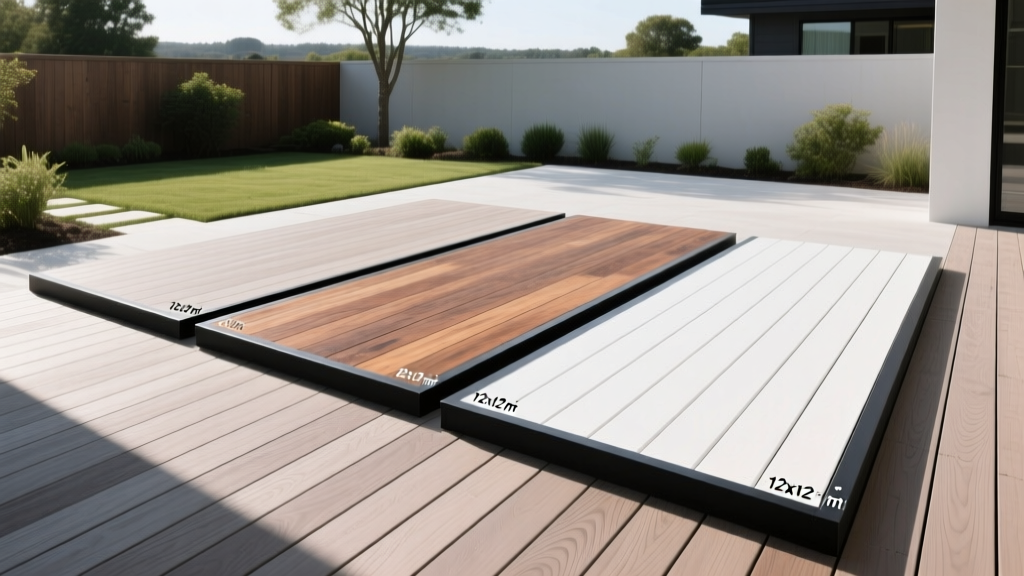
The Baseline: National Average Cost to Build a Deck Per Square Foot
When planning an outdoor living space, the most common metric homeowners and contractors use is the cost to build a deck per square foot. However, relying solely on a flat square-footage multiplier is a primary reason deck budgets spiral out of control. In 2026, the national average cost to build a deck per square foot ranges from $30 to $75 fully installed, but this number is a blended average that obscures massive variances in material tiers, structural requirements, and design geometry.
• Economy (Pressure-Treated Pine): $25 - $35 per sq. ft.
• Mid-Range (Standard Composite): $40 - $55 per sq. ft.
• Premium (Capped PVC / Aluminum): $60 - $90+ per sq. ft.
According to the latest data from Remodeling Magazine's Cost vs. Value Report, a mid-range composite deck addition yields a strong return on investment, but the initial capital outlay requires precise forecasting. To accurately budget, you must deconstruct the 'per square foot' metric into its three core components: surface materials, substructure/framing, and labor/site preparation.
Material Cost Matrix: Wood, Composite, PVC, and Aluminum
The surface decking and railing materials represent roughly 30% to 40% of your total project cost. Below is a detailed breakdown of material-only costs versus fully installed costs for the most common decking categories in 2026.
| Material Type | Material Cost (Per Sq. Ft.) | Installed Cost (Per Sq. Ft.) | Lifespan & Maintenance |
|---|---|---|---|
| Pressure-Treated Pine | $3.50 - $6.00 | $25 - $35 | 15-20 years; requires annual sealing |
| Cedar / Redwood | $7.00 - $11.00 | $35 - $50 | 20-25 years; requires bi-annual oiling |
| Capped Composite (e.g., Trex Transcend) | $12.00 - $18.00 | $45 - $65 | 25-30 years; soap and water cleaning |
| Capped PVC (e.g., Azek Landmark) | $16.00 - $24.00 | $60 - $80 | 30-50 years; zero moisture absorption |
| Aluminum (e.g., Wolf Serenity) | $20.00 - $28.00 | $75 - $95+ | 50+ years; fireproof, zero rot |
According to the USDA Forest Products Laboratory, natural wood decking remains highly susceptible to fungal decay and dimensional warping if moisture content exceeds 20%. While the upfront per-square-foot cost of pressure-treated lumber is the lowest, the 10-year total cost of ownership (including stain, sealants, and labor for maintenance) often eclipses that of mid-tier composite decking.
The Substructure: Where 'Per Square Foot' Estimates Fail
Homeowners frequently fixate on the decking boards, forgetting that the substructure dictates the longevity of the entire build. The American Wood Council's DCA-6 Prescriptive Residential Deck Construction Guide outlines strict span tables and load-bearing requirements that directly impact framing costs.
Framing Material Upgrades
Standard pressure-treated SPF (Spruce-Pine-Fir) joists cost roughly $8 to $12 per linear foot installed. However, if you are installing premium PVC or composite decking, pairing it with a wood substructure creates a structural mismatch: the boards will outlast the joists. Upgrading to a steel framing system (like Trex Elevate or Fortress Evolution) adds $12 to $18 per square foot to your total project cost, but eliminates joist warping, shrinking, and rot, ensuring the substructure matches the 30-year warranty of your premium decking.
Footings and Foundation Variables
The soil bearing capacity on your site drastically alters the cost per square foot. Standard poured concrete footings (typically 12 to 18 inches in diameter and below the local frost line) cost $150 to $250 per pier. If your design requires building on expansive clay, steep slopes, or near waterways, engineers will often mandate helical piles. Helical piles are mechanically screwed into the earth to a specific torque rating, costing $300 to $500 per pier. A 300-square-foot deck requiring 12 helical piles will instantly add $4,200 to your foundation budget, inflating your per-square-foot cost by $14 before a single decking board is laid.
Design Geometry: How Shape Inflates the Square Foot Price
A 400-square-foot deck is not always priced the same as another 400-square-foot deck. The geometric complexity of your design introduces 'waste factors' and 'labor complexity multipliers' that generic online calculators ignore.
- The Rectangle Premium: A simple rectangular deck minimizes off-cuts. Material waste is typically kept under 5%.
- Angles and Radius Cuts: Every 45-degree angle or curved fascia requires custom cutting, specialized hidden fastener clips, and increases material waste to 12% - 18%. Contractors will increase their labor rate per square foot by 15% to account for the meticulous mitering and blocking required.
- Picture Framing and Inlays: 'Picture framing' the perimeter of a deck with a contrasting board color hides the end-grain cuts and provides a finished look. However, it requires additional blocking, extra fascia materials, and doubles the cutting time at the perimeter, adding $4 to $7 per square foot to the labor and material cost.
- Staircase Complexity: Stairs are the most expensive component per linear foot. A standard 4-foot wide staircase with 4 treads costs roughly $800 to $1,200. If your design calls for wraparound stairs or flared stair treads, the cost per square foot of the stair footprint can exceed $150.
Building a 150-square-foot deck will cost significantly more per square foot than building a 500-square-foot deck. Fixed costs—such as permit fees, equipment mobilization, concrete mixing, and minimum material delivery charges—are amortized over a much smaller area. Expect small decks (under 200 sq. ft.) to carry a 20% to 30% higher per-square-foot premium.
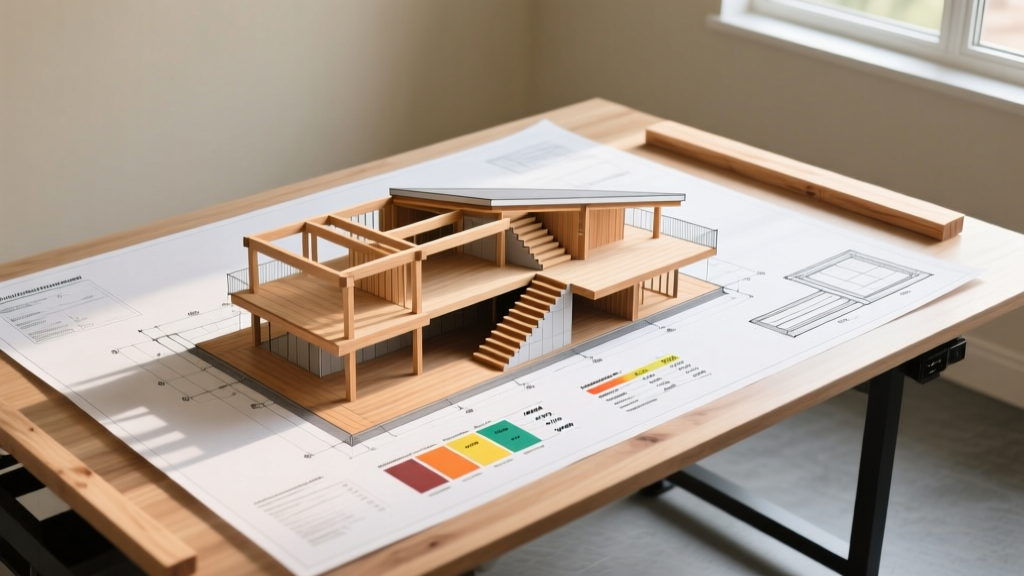
Labor, Permitting, and Site Accessibility
Labor typically accounts for 50% to 60% of the total cost to build a deck per square foot. In 2026, skilled deck carpenters charge between $65 and $110 per hour, depending on regional labor markets. However, site accessibility is a hidden variable that can derail your budget.
If your backyard requires materials to be carried manually through a narrow side gate, or if a concrete truck cannot reach the footing locations and a pump truck must be hired (adding $800 to $1,500 to the site prep budget), your labor costs will surge. Furthermore, local permitting fees generally range from $150 to $600, but if your municipality requires a stamped engineering plan due to high wind loads or seismic zones, add $1,500 to $3,000 for architectural and engineering fees.
Strategic Budgeting: The 40/40/20 Rule
To prevent budget overruns during the design phase, allocate your total capital using the 40/40/20 framework:
- 40% Surface & Railings: Decking boards, fascia, skirting, and railing systems (including gates and lighting).
- 40% Substructure & Site: Footings, posts, beams, joists, blocking, hardware (like structural screws and hidden fasteners), and site demolition/prep.
- 20% Contingency & Upgrades: Reserved for unforeseen soil issues, permit delays, or late-stage design upgrades like built-in bench seating, pergola attachments, or low-voltage LED stair riser lights.
Frequently Asked Questions
Is it cheaper to build a deck myself to save on the per-square-foot cost?
DIY construction eliminates the 50% labor premium, reducing the cost to build a deck per square foot to just the material and permit costs (roughly $15 to $35 per sq. ft.). However, improper flashing at the ledger board, incorrect joist spanning, or failing to use structural-grade lag screws can lead to catastrophic structural failure. If you DIY, strictly adhere to the DCA-6 prescriptive guidelines and invest in a professional inspection before closing up the substructure.
Does adding a roof or pergola change the deck cost per square foot?
Yes, drastically. Adding a louvered aluminum roof or a timber-frame pergola requires upgrading the deck's substructure to handle the 'dead load' of the roof and the 'uplift load' from wind. This requires larger footings, heavier beams (often doubled or tripled 2x12s), and specialized post-to-beam hurricane ties, adding $25 to $60 per square foot to the overall footprint cost.
How do hidden fasteners affect the total budget?
Standard face-screwing with color-matched composite screws is the most economical installation method. Upgrading to hidden clip systems (like Trex Hideaway or Tiger Claw) adds $2.50 to $4.00 per square foot in material costs and increases installation time by roughly 15%, slightly raising the labor cost. However, hidden fasteners are virtually mandatory for premium PVC and aluminum decking to maintain a clean, luxury aesthetic and allow for thermal expansion.
Written by
Elena RodriguezElena Rodriguez is a civil engineer and technical writer specializing in concrete technology, masonry systems, and ASTM/ACI compliance. She earned her B.S. in Civil Engineering from Texas A&M University and spent a decade at a materials testing laboratory, performing over 2,000 concrete compressive strength tests and masonry prism evaluations. Elena is an ACI-certified Field Testing Technician (Grade I) and a member of ASTM Committee C12 on Natural Building Stone. She currently consults on forensic engineering cases involving concrete failures and moisture intrusion. Based in San Antonio, TX, Elena is a proud member of the Society of Women Engineers (SWE) and coaches her daughter's FIRST Robotics team.
More from Elena Rodriguez
View all
Walls & Panels
Cost Analysis: Light Gauge Steel Framing Advantages and Disadvantages
Evaluate light gauge steel framing advantages and disadvantages through a strict cost analysis lens, comparing material, labor, and lifecycle expenses.
Aug 4, 2026

Walls & Panels
Gypsum Board Types: Exact Specifications, Thickness & Dimensions
Compare standard, Type X, and moisture-resistant gypsum board types. Get exact specifications, thicknesses, dimensions, and ASTM standards for your project.
Aug 4, 2026

Fire Resistance
Best Fire-Resistant Outdoor Decking Materials: 2026 Buyer Guide
Discover the best fire-resistant outdoor decking materials for 2026. Compare Class A PVC, aluminum, and hardwood options for WUI compliance and safety.
Aug 4, 2026