Solving Common Problems with Composite Decking Material
Diagnose and fix common problems with composite decking material, from thermal expansion and sagging to surface scratching and mold growth.

The Reality of Modern Composite Decking
Composite decking has evolved significantly since the first-generation wood-plastic composites (WPC) of the 1990s. Modern capped composite and advanced PVC boards feature dense polymer shells that resist fading and moisture. However, the phrase 'low maintenance' is frequently misinterpreted as 'no maintenance.' In 2026, composite materials still present unique structural and aesthetic challenges that differ fundamentally from natural wood. Understanding the physical properties of polyethylene (PE) and polyvinyl chloride (PVC) composites is critical for diagnosing failures and executing proper repairs.
Thermal Expansion and Fastener Failure
Unlike natural wood, which expands primarily in width due to moisture absorption, composite decking expands and contracts longitudinally (along its length) due to temperature fluctuations. A 16-foot capped composite board can expand up to 1/4 inch or more between winter and summer. When installers fail to account for this thermal movement, boards push against each other, causing 'popping' fasteners, buckling, or warped fascia.
Temperature-Based Gap Requirements
To prevent structural stress, you must leave precise gaps at the butt joints based on the ambient temperature during installation. According to Fine Homebuilding, ignoring these manufacturer-specified gaps is the leading cause of composite deck failure.
| Installation Temperature | Required Gap at Butt Joints (16ft Board) | Required Gap at Fixed Objects (Walls/Posts) |
|---|---|---|
| Below 40°F (4°C) | 5/16 inch | 1/2 inch |
| 40°F - 60°F (4°C - 15°C) | 1/4 inch | 3/8 inch |
| 60°F - 80°F (15°C - 26°C) | 3/16 inch | 1/4 inch |
| Above 80°F (26°C) | 1/8 inch | 1/4 inch |
Joist Span Deflection and Sagging
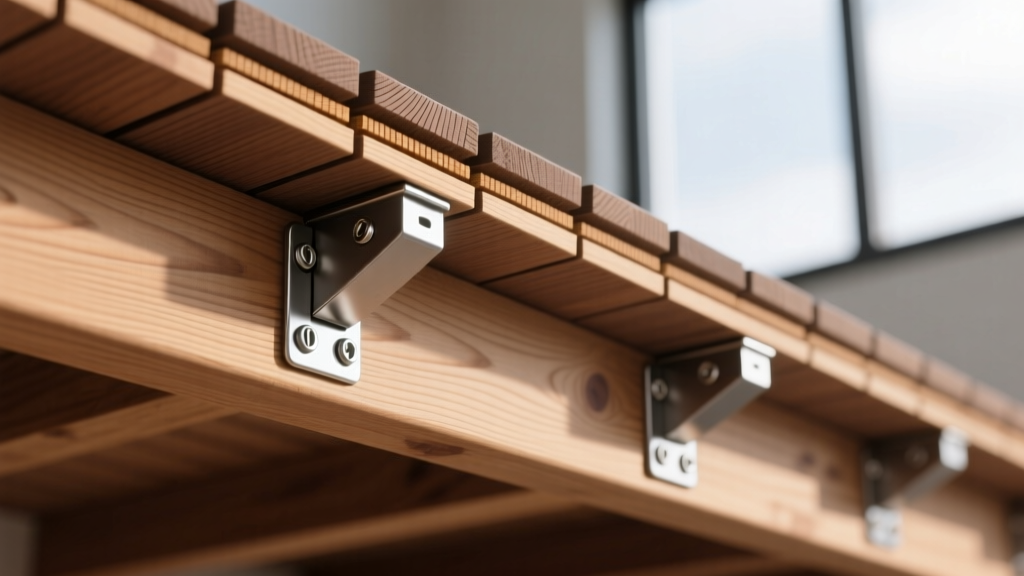
Composite boards are heavier and inherently less stiff than pressure-treated pine or cedar. A common problem with composite decking material is mid-span sagging, which occurs when builders use standard 24-inch on-center (OC) joist spacing intended for thick wood decking. Composite materials require stricter framing tolerances to maintain structural rigidity and prevent a 'spongy' feel underfoot.
• Straight Lay (90 degrees): Maximum 16-inch OC joist spacing.
• Diagonal Lay (45 degrees): Maximum 12-inch OC joist spacing.
• Commercial/High-Traffic: Maximum 12-inch OC regardless of layout.
If an existing deck is sagging, the fix requires reinforcing the substructure. You must sister the existing joists or add intermediate blocking to reduce the span to 12 inches OC. The North American Decking and Railing Association (NADRA) emphasizes that substructure integrity is just as vital as the surface material for long-term deck safety.
Surface Mold and Organic Staining
First-generation uncapped composites were notorious for internal mold growth because the exposed wood fibers absorbed moisture. Modern capped composites solve this by encasing the core in a polymer shield. However, mold, mildew, and algae can still grow on top of the polymer shell if dirt, pollen, and organic debris are allowed to accumulate in the embossed wood-grain textures.
The Chemistry of Cleaning Composites
Never use chlorine bleach (sodium hypochlorite) to clean composite decking. Chlorine bleach degrades the polymer cap, accelerates UV fading, and leaves behind salts that attract more dirt. Instead, use an oxygen bleach solution (sodium percarbonate). Oxygen bleach lifts organic stains from the embossed textures without damaging the polyethylene or PVC shell. For heavy algae buildup, apply the oxygen bleach, let it dwell for 15 minutes, and agitate with a soft-bristle brush before rinsing with a garden hose. Avoid pressure washers exceeding 1,500 PSI, as high pressure can etch the polymer cap and expose the vulnerable wood-flour core beneath.
Scratching and Marring on Capped Boards
The polymer caps on composite boards are highly resistant to moisture but vulnerable to abrasion. Dragging metal patio furniture, using metal snow shovels, or allowing pets with unclipped nails to run on the surface will leave permanent white or gray scratches. Because the color is consistent throughout the cap layer, deep scratches cannot be sanded out like natural wood.
- Prevention: Apply heavy-duty felt or woven nylon pads to all furniture legs. Avoid rubber-backed mats, as the chemical plasticizers in rubber can cause irreversible discoloration and staining on composite surfaces.
- Snow Removal: Use a plastic-blade shovel with a non-stick coating. Push the snow rather than scraping the surface.
- Repair: For minor surface marring, a heat gun applied carefully on a low setting can sometimes melt the polymer cap just enough to blend the scratch, though this requires extreme caution to avoid blistering the board.
Edge Fraying and Core Exposure
When composite boards are ripped (cut lengthwise) to fit against a house or to create a border, the protective polymer cap is removed from the cut edge. This exposes the wood-plastic core to moisture intrusion, which can lead to edge swelling, fraying, and fungal growth. To mitigate this, always seal ripped edges with a high-quality, UV-resistant polyurethane sealant or use manufacturer-specific edge-trim profiles that snap over the exposed core.
Material Comparison Matrix: Problem Profiles
Understanding how different composite formulations behave helps in selecting the right product for specific environmental challenges.
| Material Type | Core Composition | Primary Vulnerability | Thermal Expansion Rate | Scratch Resistance |
|---|---|---|---|---|
| Uncapped WPC (Legacy) | Wood flour + HDPE | Moisture absorption, internal mold | Moderate | Low |
| Capped Composite | Wood flour + HDPE with PE shell | Edge core exposure, surface scratching | High | Medium |
| Advanced PVC | 100% Cellular PVC (No wood flour) | Thermal expansion, cost | Very High | High |
Frequently Asked Questions
Why is my composite deck fading unevenly?
Uneven fading is usually caused by inconsistent UV exposure or chemical reactions. Planters left in the same spot for months will protect the board beneath, creating a dark outline once moved. Additionally, runoff from copper flashing or certain fertilizers can chemically react with the polymer cap, causing localized bleaching. Rotate furniture and planters bi-annually to ensure even UV weathering.
Can I use ice melt on composite decking?
Yes, but you must choose the correct chemical. Calcium chloride-based ice melts are generally safe for composite surfaces and will not harm the polymer cap. Avoid rock salt (sodium chloride), which can leave a corrosive, abrasive residue that scratches the surface when walked upon. Always rinse the deck thoroughly with water once the ice has melted to remove residual salts.
How do I fix a composite board that has bowed upward?
Bowing (crowning) occurs when a board is installed too tightly between two fixed points without adequate expansion gaps, forcing it upward as it expands in the heat. To fix this, remove the hidden fasteners or face screws on the bowed section, cut a 1/4-inch relief gap at the nearest butt joint using a multi-tool, and re-secure the board to the joists.
For comprehensive guidance on maintaining outdoor structures and ensuring proper ventilation to prevent moisture buildup beneath your deck, refer to the Environmental Protection Agency (EPA) guidelines on moisture and mold management in residential environments.
Written by
Sarah WhitfieldSarah Whitfield is a chartered quantity surveyor (MRICS) and construction cost analyst with 15 years of experience in material pricing, procurement strategy, and project budgeting. She earned her degree in Construction Management from the University of Reading (UK) and has worked on projects ranging from $2M custom homes to $180M mixed-use developments across North America and Europe. Sarah currently leads cost estimating for BuildMat Insight, maintaining a proprietary database of 4,000+ material price points updated quarterly. She is a frequent contributor to RSMeans cost data panels and has presented at the International Cost Engineering Council (ICEC) congress. Based in Denver, CO, Sarah is an avid trail runner and volunteer mentor for Women in Construction.
More from Sarah Whitfield
View all
Wood & Lumber
What Are the Different Types of Wood? A Builder's Guide
Compare structural softwoods, finish hardwoods, and engineered lumber. Analyze Janka ratings, MOE values, and 2026 pricing for construction.
Aug 4, 2026

Walls & Panels
Steel Framing vs Wood Framing: Corrosion and Moisture Defense
Compare steel framing vs wood framing for moisture resistance. Learn about galvanized coatings, condensation risks, and corrosion protection strategies.
Jul 21, 2026

Stone & Masonry
How to Cut Stone Veneer: Wet Saw vs Grinder Comparison
Compare the best tools for cutting stone veneer. We review wet saws, angle grinders, and chop saws to help you achieve clean, chip-free cuts.
Jul 21, 2026