Lounge Flooring Options: 2026 Cost Analysis & Budget Guide
Compare 2026 costs for top lounge flooring options. Explore material prices, installation rates, and lifetime ROI for hardwood, LVP, tile, and carpet.

The True Cost of Lounge Flooring in 2026
The lounge is the emotional and functional center of a home, demanding a floor that balances high-end aesthetics with heavy foot traffic, pet claws, and spilled drinks. When evaluating lounge flooring options, homeowners frequently fall into the trap of calculating only the per-square-foot material cost. In 2026, a comprehensive budget must account for subfloor preparation, specialized underlayments, acclimation time, and long-term maintenance. According to recent industry data from HomeGuide, the national average for fully installed flooring ranges from $6 to $18 per square foot, but this variance widens dramatically based on the specific material and regional labor rates.
The 2026 Lounge Flooring Budget Formula
Total Project Cost = (Material Cost + Waste Factor 10%) + (Subfloor Leveling & Prep) + (Specialty Underlayment/Membrane) + (Labor & Installation) + (Post-Install Finishing/Sealing).
Pro Tip: Always purchase 10-15% overage for hard surfaces to account for cutting waste and future repairs, and 5-7% for broadloom carpet.
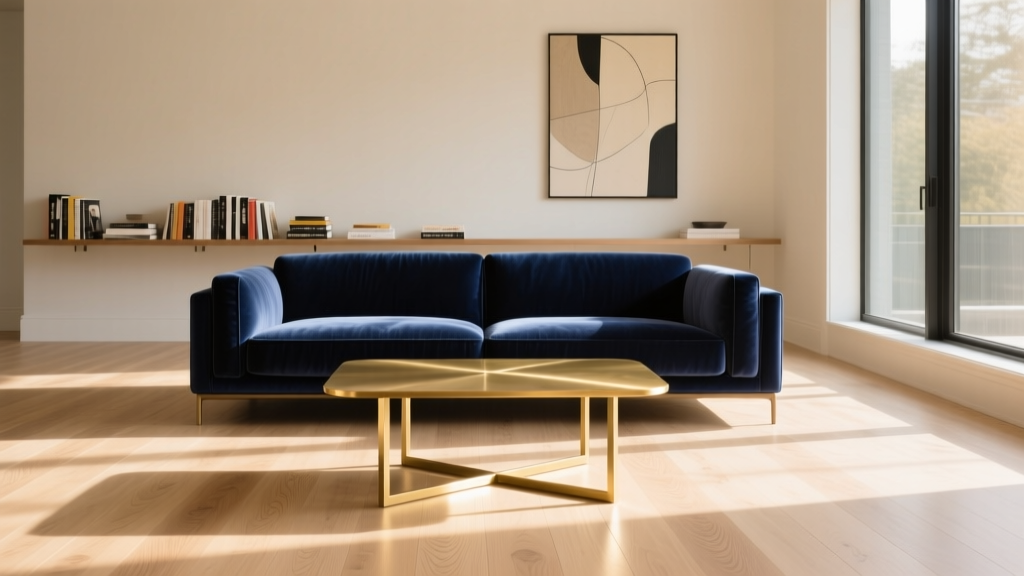
Material Cost Matrix: Lounge Flooring Options Compared
The following matrix breaks down the fully loaded costs for the four dominant lounge flooring categories in 2026. Prices reflect mid-to-high-grade residential materials suitable for a primary living space.
| Material Type | Material Cost (sq ft) | Install Cost (sq ft) | Total Range (sq ft) | Expected Lifespan |
|---|---|---|---|---|
| Engineered Hardwood | $6.50 - $14.00 | $4.00 - $8.00 | $10.50 - $22.00 | 30 - 50+ Years |
| Rigid Core LVP / SPC | $3.50 - $7.50 | $2.50 - $5.00 | $6.00 - $12.50 | 15 - 25 Years |
| Large-Format Porcelain Tile | $4.00 - $12.00 | $8.00 - $15.00 | $12.00 - $27.00 | 50+ Years |
| High-Density Nylon/Triexta Carpet | $3.00 - $8.00 | $1.50 - $3.50 | $4.50 - $11.50 | 10 - 15 Years |
Deep Dive: Top Lounge Flooring Options & Hidden Costs
1. Engineered Hardwood (The Premium Standard)
Engineered hardwood remains the gold standard for lounges, offering the authentic warmth and acoustic dampening of solid wood with superior dimensional stability. For a lounge environment, specify a product with a minimum 3mm to 4mm top wear layer (such as those found in Shaw's Epic or Mohawk's TecWood lines). This thickness allows for 2 to 3 professional sand-and-refinish cycles over the floor's lifetime.
The Hidden Costs: The most frequent budget overrun with engineered wood is subfloor moisture mitigation. If installing over a concrete slab, a calcium chloride test or relative humidity (RH) probe test is mandatory. If moisture vapor emission rates (MVER) exceed 3-5 lbs per 1,000 square feet, you must apply a two-part epoxy moisture barrier (like Bona TBA or Mapei ECO Prim Grip), adding $2.50 to $4.00 per square foot to the prep budget. Additionally, glue-down installations require premium urethane adhesives, which cost roughly $80 to $120 per pail, covering only 35-45 square feet.
2. Rigid Core Luxury Vinyl Plank (The Budget Champion)
Stone Plastic Composite (SPC) and Wood Plastic Composite (WPC) vinyl planks have dominated market share due to their 100% waterproof cores and click-lock installation. For a lounge that sees heavy dog traffic or wheelchair use, mandate a minimum 20-mil commercial-grade wear layer. Avoid 12-mil residential grades, which will show micro-scratches and dulling within three years in high-traffic pathways. Brands like COREtec ProPlus and Karndean Korlok offer exceptional rigid core stability.
The Hidden Costs: LVP is notorious for "telegraphing"—meaning any imperfection in the subfloor will eventually push through the vinyl and break the click-lock joints. Budget $1.50 to $3.00 per square foot for self-leveling compound (SLC) and primer if your subfloor deviates more than 3/16" over a 10-foot radius. Furthermore, while many SPC products come with an attached cork or IXPE pad, adding a separate 6-mil polyethylene vapor barrier is required over concrete, adding $0.30 per square foot.
3. Large-Format Porcelain Tile (The Durability Heavyweight)
Porcelain tile offers unmatched scratch resistance and thermal mass, making it ideal for lounges with radiant underfloor heating or direct sun exposure. Select tiles with a PEI (Porcelain Enamel Institute) rating of IV or V, and ensure the edges are "rectified" (mechanically cut to exact 90-degree angles) to allow for tight 1/16" grout lines. Large formats (24"x48" or 32"x64") create a seamless, expansive look that visually enlarges the lounge.
The Hidden Costs: Tile installation is highly labor-intensive. According to Angi's 2026 flooring cost data, specialized tile labor can easily double the material cost. Large-format tiles require a perfectly flat substrate to prevent "lippage" (uneven edges). You must budget for an uncoupling membrane like Schluter-DITRA ($1.80 - $2.20 per sq ft) to prevent cracked grout lines due to joist deflection. Additionally, large tiles require large-and-heavy-tile (LHT) modified thinset mortar, which is 30% more expensive than standard thinset.
4. High-Density Carpet (The Acoustic & Comfort Choice)
While hard surfaces trend in open-concept homes, carpet remains unmatched for acoustic dampening and underfoot comfort in dedicated, sunken, or media-centric lounges. Avoid standard polyester, which mats down rapidly. Instead, specify continuous filament Nylon 6,6 or Triexta (e.g., Mohawk SmartStrand) with a face weight of 50 to 60 ounces and a twist level of 5 to 6 twists per inch (TPI). This density ensures the fibers spring back after heavy furniture is moved.
The Hidden Costs: The padding dictates the lifespan of the carpet. Do not use the standard 6-pound rebond pad provided for free by big-box stores. Upgrade to an 8-pound, 7/16" thick rebond pad with a moisture barrier and odor-neutralizing treatment (like Healthier Choice cushion), which adds $0.80 to $1.20 per square foot but effectively doubles the carpet's structural longevity.
Regional Labor Variations & Subfloor Realities
Material costs are relatively uniform nationwide, but labor rates fluctuate wildly. In high-cost-of-living metropolitan areas (e.g., San Francisco, New York, Boston), expect union or premium licensed installer rates to push labor costs 40% to 60% above the national average. Conversely, in the Midwest and Southeast, labor rates remain highly competitive.
The existing subfloor is the ultimate budget wildcard. If your lounge sits over a crawlspace with dimensional lumber joists, you may need to sister joists or add a layer of 1/2" CDX plywood to achieve the L/360 deflection rating required for natural stone or large-format tile. This structural reinforcement can add $3.00 to $5.00 per square foot before the flooring installation even begins.
"Homeowners often allocate 90% of their budget to the visible floor and 10% to the subfloor prep. In reality, a $15,000 engineered hardwood floor will fail in five years if installed over a $500 unlevel subfloor. The prep work is the foundation of your investment."
— 2026 National Wood Flooring Association (NWFA) Installation Guidelines
ROI and Resale Value Impact
When analyzing lounge flooring options, the return on investment at resale is a critical metric. Hardwood floors consistently yield the highest ROI, often recouping 70% to 80% of their installed cost upon sale, and frequently serve as a dealbreaker for premium homebuyers. High-end LVP yields a moderate ROI (50% to 60%) but is increasingly accepted by buyers as a practical, waterproof alternative. Carpet, regardless of quality, typically yields the lowest ROI (20% to 30%) and is often credited by appraisers merely as a "neutralizer" rather than a value-add.
Decision Framework: Choosing Your Lounge Floor
Use this conditional framework to finalize your material selection based on your specific household variables:
- IF your lounge features direct outdoor access, high moisture, or large, active dogs → Choose Rigid Core SPC Vinyl (20-mil wear layer) for scratch and water resistance.
- IF maximizing resale value and architectural authenticity is the primary goal → Choose Engineered Hardwood (4mm wear layer, matte polyurethane finish).
- IF the lounge is a dedicated home theater, sunken den, or requires maximum soundproofing between floors → Choose High-Density Nylon Carpet with an 8-lb acoustic pad.
- IF the lounge incorporates radiant hydronic heating and requires zero maintenance → Choose Rectified Porcelain Tile installed over an uncoupling membrane.
By mapping your specific lifestyle demands against the true, fully-loaded costs outlined above, you can select a lounge floor that performs flawlessly without derailing your renovation budget.
Written by
Elena RodriguezElena Rodriguez is a civil engineer and technical writer specializing in concrete technology, masonry systems, and ASTM/ACI compliance. She earned her B.S. in Civil Engineering from Texas A&M University and spent a decade at a materials testing laboratory, performing over 2,000 concrete compressive strength tests and masonry prism evaluations. Elena is an ACI-certified Field Testing Technician (Grade I) and a member of ASTM Committee C12 on Natural Building Stone. She currently consults on forensic engineering cases involving concrete failures and moisture intrusion. Based in San Antonio, TX, Elena is a proud member of the Society of Women Engineers (SWE) and coaches her daughter's FIRST Robotics team.
More from Elena Rodriguez
View all
Walls & Panels
Cost Analysis: Light Gauge Steel Framing Advantages and Disadvantages
Evaluate light gauge steel framing advantages and disadvantages through a strict cost analysis lens, comparing material, labor, and lifecycle expenses.
Aug 4, 2026

Walls & Panels
Gypsum Board Types: Exact Specifications, Thickness & Dimensions
Compare standard, Type X, and moisture-resistant gypsum board types. Get exact specifications, thicknesses, dimensions, and ASTM standards for your project.
Aug 4, 2026

Fire Resistance
Best Fire-Resistant Outdoor Decking Materials: 2026 Buyer Guide
Discover the best fire-resistant outdoor decking materials for 2026. Compare Class A PVC, aluminum, and hardwood options for WUI compliance and safety.
Aug 4, 2026