How to Maintain Popular Options for Garage Floor Surfaces
Extend the lifespan of your garage flooring. Explore specific cleaning protocols, repair costs, and maintenance schedules for epoxy, tiles, and sealers.
The Hidden Costs of Garage Floor Neglect
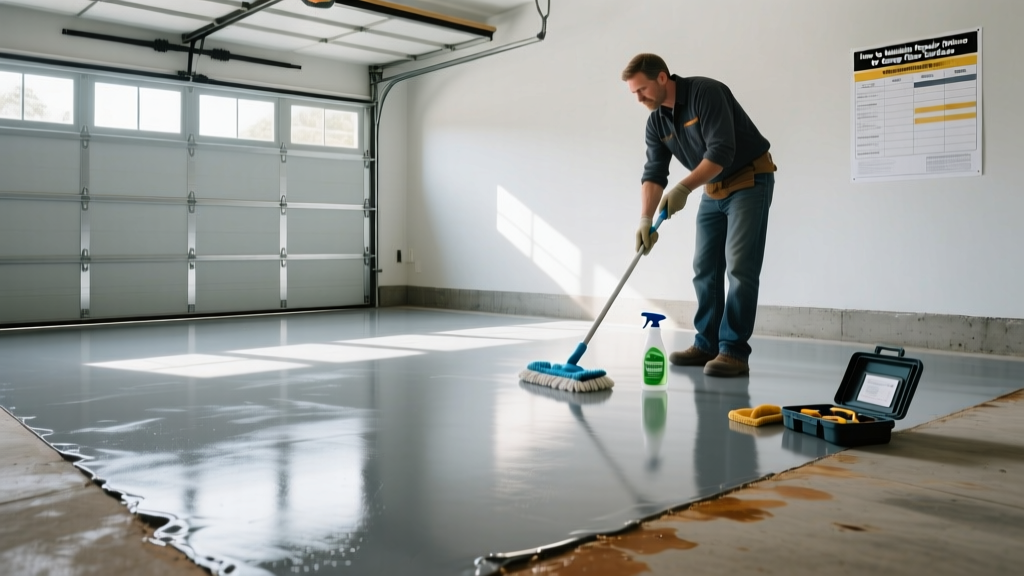
Garage floors endure extreme thermal shock, chemical spills, and abrasive friction that would destroy standard interior flooring. When homeowners evaluate options for garage floor installations, long-term durability is dictated not just by the initial material quality, but by the rigor of the ongoing maintenance protocol. A neglected 100% solids epoxy floor will degrade faster than a meticulously maintained penetrating sealer. This guide provides exact chemical compatibilities, repair costs, and structural maintenance schedules for the most common garage flooring systems in 2026.
Flooring Maintenance Matrix: Quick Reference
| Flooring Type | Primary Vulnerability | Weekly Maintenance | Recoat/Repair Cycle | Est. Maintenance Cost |
|---|---|---|---|---|
| 100% Solids Epoxy | Micro-scratching, UV ambering | pH-neutral microfiber mopping | Polyurethane topcoat every 5-7 years | $1.50 - $2.50 / sq ft |
| Polyaspartic / Polyurea | Chemical etching from battery acid | Diluted degreaser (10:1 ratio) | Rarely requires recoating (10+ years) | $0.50 - $1.00 / sq ft |
| Interlocking PVC Tiles | Subfloor moisture trapping, tar stains | Shop-vac and mild soap extraction | Tile replacement as needed | $4.00 - $8.00 / per tile |
| Silane/Siloxane Sealer | Hydrostatic pressure, efflorescence | Enzymatic oil cleaner for spots | Reapply sealer every 3-5 years | $0.30 - $0.60 / sq ft |
Maintaining Resinous Coatings: Epoxy and Polyaspartic
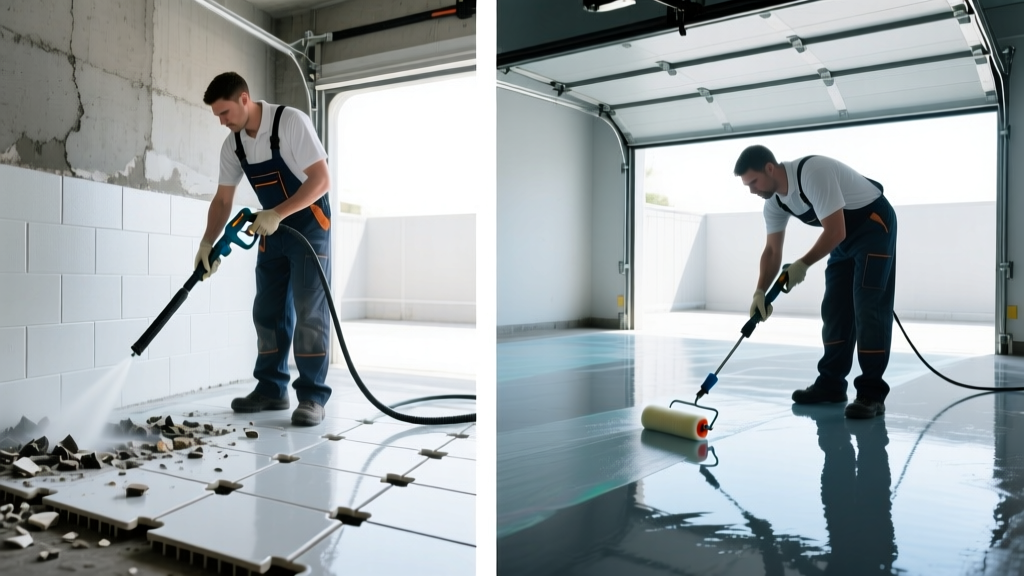
Resinous coatings create a non-porous, monolithic membrane over concrete. However, the maintenance requirements differ vastly between standard epoxies and modern polyaspartics.
Combating Hot Tire Pickup and Plasticizer Migration
Vehicle tires contain stearic acid and plasticizers that heat up to 140°F or more after highway driving. When parked on inferior water-based or solvent-based epoxies, these chemicals break the cross-link bond, causing the coating to peel—a phenomenon known as 'hot tire pickup.' If your existing epoxy shows tire marks, the resin matrix is compromised. The only permanent fix is to mechanically abrade the surface with 120-grit aluminum oxide and apply an aliphatic polyurethane topcoat (such as Sherwin-Williams Rexthane), which provides a sacrificial, chemical-resistant barrier.
Preventing Micro-Scratches and Gloss Loss
For high-gloss 100% solids epoxy and polyaspartic floors, the primary enemy is silica sand tracked in from the driveway. Silica ranks at a 7 on the Mohs hardness scale, which is harder than most epoxy topcoats. Over time, foot traffic grinds this sand into the floor, causing a hazy 'micro-scratch' pattern.
- Daily/Weekly: Use a soft-bristle push broom or a commercial microfiber dust mop. Never use stiff-bristled shop brooms.
- Monthly Deep Clean: Mix a pH-neutral cleaner (like Simple Green diluted at a 10:1 water ratio) in a bucket. Mop the floor, then use a squeegee to push the dirty water toward the garage door. Leaving dirty water to evaporate will leave alkaline residue that dulls the gloss.
Expert Warning: Never use citrus-based degreasers (containing d-limonene) or ammonia-based glass cleaners on epoxy floors. D-limonene actively softens epoxy resins, while ammonia causes polyaspartic topcoats to cloud and lose UV stability.
Interlocking Modular Tiles: PVC and Polypropylene
Modular tiles (like Swisstrax or RaceDeck) are popular options for garage floor upgrades because they bypass the need for concrete prep. However, their floating nature introduces unique maintenance challenges, primarily regarding the hidden subfloor.
The Subfloor Moisture Trap
Because these tiles float above the concrete, water, road salt, and organic debris wash through the seams and become trapped underneath. In humid climates, this creates a breeding ground for mildew and can accelerate concrete spalling if the slab is unsealed.
Annual Subfloor Protocol: Once a year, 'unzip' a 10x10 foot section of tiles starting from the center of the room. Sweep the exposed concrete, treat any biological growth with a quaternary ammonium mildewcide, and allow it to dry completely before snapping the tiles back into place.
Removing Tar and Rubber Scuffs
Polypropylene tiles (rigid) resist chemicals well but can crack under point-loads like motorcycle kickstands in freezing temperatures. PVC tiles (flexible) absorb impact but are highly susceptible to staining from tire rubber and asphalt tar. To remove tar from PVC tiles, apply a small amount of mineral spirits to a rag and wipe gently. Never use a metal putty knife to scrape tar, as it will permanently gouge the PVC surface; use a hard plastic scratcher instead.
Penetrating Sealers: Silane and Siloxane
For those who prefer the natural look of bare concrete, penetrating silane/siloxane sealers are the best options for garage floor protection. Unlike topical coatings, these sealers do not build a surface film; instead, they penetrate up to 1/4 inch into the concrete pores and react with free lime to form a hydrophobic resin matrix.
The Water-Drop Degradation Test
Because penetrating sealers are invisible, homeowners often fail to realize they have degraded until oil stains the concrete. To test your sealer's efficacy, place three drops of water in high-traffic areas. If the water beads up, the sealer is intact. If the concrete absorbs the water and darkens within 45 seconds, the hydrophobic barrier has failed. Reapplication requires cleaning the slab with an alkaline degreaser, allowing 48 hours of drying time, and applying a new coat of silane/siloxane via a low-pressure pump sprayer at a coverage rate of 150 square feet per gallon.
Troubleshooting Common Garage Floor Failures
Symptom: White, Powdery Residue (Efflorescence)
Cause: Hydrostatic pressure from a high water table is pushing moisture and soluble salts through the concrete capillaries. This is common in garages built on expansive clay soils without a proper vapor barrier.
Fix: Do not simply seal over it. Wash the area with a muriatic acid solution (1 part acid to 10 parts water) to dissolve the salts. Neutralize the slab with a baking soda and water rinse. Install a French drain exterior to the garage footing to relieve hydrostatic pressure before resealing.
Symptom: 'Fish-Eyes' in Newly Applied Clear Coat
Cause: Silicone contamination. Automotive tire shine products (like Armor All) contain silicone emulsions that transfer to the floor. Silicone lowers surface tension, causing liquid coatings to pull away and form craters.
Fix: Stop applying the coating immediately. Wipe the affected area thoroughly with denatured alcohol followed by xylene to strip the silicone. Lightly sand the craters once dry and reapply.
Long-Term Care Yields High ROI
Selecting the right materials is only the first step. According to industry data tracked by the Concrete Network, properly maintained sealed concrete and resinous coatings can extend the functional lifespan of a garage slab by 15 to 20 years, preventing costly sub-slab repairs. Furthermore, real estate appraisers increasingly factor in finished, well-maintained garage spaces when evaluating property value. By adhering to these specific chemical compatibilities and structural maintenance schedules, you ensure your garage floor remains a durable, high-performance asset rather than a recurring maintenance liability. For deeper insights into initial installation and material selection, resources from Bob Vila's home improvement guides offer excellent foundational knowledge on coating thickness and concrete prep standards.
Written by
Elena RodriguezElena Rodriguez is a civil engineer and technical writer specializing in concrete technology, masonry systems, and ASTM/ACI compliance. She earned her B.S. in Civil Engineering from Texas A&M University and spent a decade at a materials testing laboratory, performing over 2,000 concrete compressive strength tests and masonry prism evaluations. Elena is an ACI-certified Field Testing Technician (Grade I) and a member of ASTM Committee C12 on Natural Building Stone. She currently consults on forensic engineering cases involving concrete failures and moisture intrusion. Based in San Antonio, TX, Elena is a proud member of the Society of Women Engineers (SWE) and coaches her daughter's FIRST Robotics team.
More from Elena Rodriguez
View all
Walls & Panels
Cost Analysis: Light Gauge Steel Framing Advantages and Disadvantages
Evaluate light gauge steel framing advantages and disadvantages through a strict cost analysis lens, comparing material, labor, and lifecycle expenses.
Aug 4, 2026

Walls & Panels
Gypsum Board Types: Exact Specifications, Thickness & Dimensions
Compare standard, Type X, and moisture-resistant gypsum board types. Get exact specifications, thicknesses, dimensions, and ASTM standards for your project.
Aug 4, 2026

Fire Resistance
Best Fire-Resistant Outdoor Decking Materials: 2026 Buyer Guide
Discover the best fire-resistant outdoor decking materials for 2026. Compare Class A PVC, aluminum, and hardwood options for WUI compliance and safety.
Aug 4, 2026