2026 Cost of Foundation Repair in Texas: Full Breakdown
Discover the true cost of foundation repair in Texas for 2026. Compare prices for pressed concrete pilings, steel piers, and polyjacking methods.

The Texas Soil Factor: Why Foundations Fail Here
Texas presents one of the most hostile environments for residential concrete slab foundations in the United States. The primary culprit is high-plasticity expansive clay, particularly prevalent in the Blackland Prairie region (Dallas-Fort Worth, Austin, San Antonio) and the Beaumont formation. According to geotechnical data referenced by the American Society of Civil Engineers (ASCE), these soils possess a Plasticity Index (PI) frequently exceeding 40. When PI exceeds 35, the soil undergoes extreme volumetric changes during the state's cyclical drought and heavy rainfall seasons.
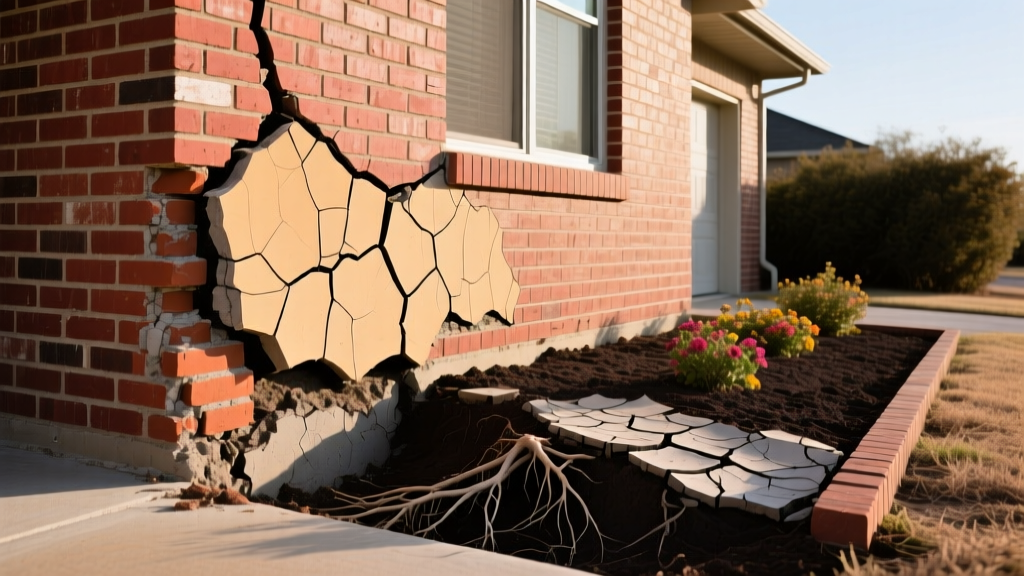
During a drought, clay soils shrink and pull away from the foundation, causing edge settlement. During heavy rains, the soil absorbs water, swells, and exerts upward hydrostatic pressure (heave). This constant differential movement fractures grade beams, snaps post-tension cables, and causes severe drywall and masonry distress. Understanding this soil mechanics reality is critical because the cost of foundation repair in Texas is directly tied to the depth required to bypass this active clay zone and anchor the structure into stable substrata or bedrock.
2026 Foundation Repair Cost Matrix for Texas Homes
Pricing for foundation stabilization varies based on the repair method, the weight of the structure, and the depth to load-bearing strata. The table below outlines the current 2026 market rates for the most common repair techniques utilized across Texas municipalities.
| Repair Method | Cost Per Unit (2026) | Average Total Job Cost | Best Application |
|---|---|---|---|
| Pressed Concrete Pilings | $160 - $240 per pier | $5,500 - $12,000 | Standard slab-on-grade, perimeter settling |
| Steel Push Piers | $280 - $400 per pier | $10,000 - $22,000 | Heavy masonry, deep bedrock anchoring |
| Polyurethane Foam (Polyjacking) | $18 - $28 per sq. ft. | $3,000 - $8,500 | Interior slab leveling, void filling |
| Drilled Bell-Bottom Piers | $800 - $1,200 per pier | $15,000 - $35,000+ | New construction, severe heave zones |
| Root Barriers (High-Density Poly) | $65 - $90 per linear ft. | $1,500 - $4,000 | Preventative, large oak trees near perimeter |
Method Deep-Dive: Pressed Concrete vs. Steel Piers
Texas foundation repair companies heavily debate the efficacy of pressed concrete versus steel push piers. Both methods aim to transfer the structural load past the active clay zone, but their installation mechanics and long-term performance differ significantly.
Pressed Concrete Pilings
This is the most common and cost-effective method in Texas. Contractors use a hydraulic ram to press 6-inch diameter cylindrical concrete segments into the ground, utilizing the weight of the house as resistance. Installation typically reaches depths of 12 to 20 feet until "refusal" (a point where the soil friction prevents further pressing).
- Pros: Lower upfront cost; utilizes high-strength 5,000 PSI concrete (per American Concrete Institute standards); wide bearing surface.
- Cons: Relies on skin friction rather than true bedrock end-bearing; can deflect or shift if soil moisture changes drastically at the refusal depth.
Steel Push Piers
Steel piers involve driving galvanized or epoxy-coated steel pipe sections (typically 2 7/8" or 3.5" OD) through the soil until they physically embed into load-bearing bedrock or a highly compacted load-bearing stratum. In the DFW metroplex, this often requires driving piers 25 to 45 feet deep to reach the Austin Chalk or Fort Worth Limestone formations.
- Pros: True end-bearing support on bedrock; minimal soil disturbance during installation; highly resistant to lateral soil movement.
- Cons: Significantly higher cost; requires heavy hydraulic reaction forces; overkill for minor, localized slab settlement.
Polyjacking vs. Traditional Mudjacking for Slab Leveling
When a Texas homeowner experiences interior slab settlement—often manifesting as diagonal drywall cracks at door corners or sloping floors—underpinning the perimeter is not always the solution. Interior slab voids must be filled. Historically, mudjacking (pumping a slurry of cement, topsoil, and water) was the standard. Today, polyurethane foam jacking has largely superseded it.
Polyjacking involves drilling 5/8-inch holes through the slab and injecting a two-part high-density structural foam. The foam expands up to 25 times its liquid volume, compacting loose soils and lifting the concrete. While mudjacking costs roughly $8 to $12 per square foot, the heavy slurry (weighing 120+ lbs per cubic foot) can actually overburden weak, moisture-saturated Texas clay, leading to secondary settlement. Polyurethane foam weighs merely 2 to 4 lbs per cubic foot, adds negligible load to the subgrade, and cures in 15 minutes, allowing immediate foot traffic. According to environmental guidelines from the Texas Commission on Environmental Quality (TCEQ), inert polyurethane foams do not leach chemicals into the soil, making them safe for residential plumbing environments.
Hidden Costs: Permitting, Landscaping, and Plumbing Tests
The quoted cost per pier rarely reflects the final invoice. Texas homeowners must budget for ancillary expenses that arise during the repair process.
- Municipal Permits: Cities like Austin, San Antonio, and Plano have strict foundation repair permitting processes. Permit fees range from $150 to $450. Furthermore, these cities require a licensed Professional Engineer (P.E.) to draft the repair plan and conduct a final inspection, adding $800 to $1,500 in engineering fees.
- Hydrostatic Plumbing Tests: Because foundation lifting can stress and break rigid cast-iron or PVC sewer lines, most Texas municipalities mandate a hydrostatic plumbing test before and after the lift. A licensed plumber will charge $350 to $600 to perform this test. If a leak is found, tunneling or spot repairs will add $1,500 to $4,000 to the project.
- Landscaping and Hardscape Restoration: Accessing the perimeter grade beam requires removing shrubs, irrigation lines, and sometimes concrete patios. Contractors typically charge $50 to $100 per shrub for removal and temporary replanting, but concrete demolition and replacement are billed separately at $12 to $18 per square foot.
Decision Framework: Which Method Do You Actually Need?
Selecting the right repair method requires matching the symptom to the structural requirement. Use this framework to evaluate contractor proposals:
- Scenario A: Perimeter settling with minor interior cracks (Gaps at exterior frieze boards, doors sticking at the top).
Recommendation: Pressed concrete pilings along the affected exterior perimeter. This provides the necessary lift at the lowest cost per linear foot. - Scenario B: Severe structural distress, brick veneer cracking, and heavy tile/masonry interiors.
Recommendation: Steel push piers. The heavier load requires the deep bedrock anchoring that only steel piers can reliably provide without long-term creep. - Scenario C: Interior floor sloping, but exterior walls and brickwork are perfectly plumb.
Recommendation: Polyurethane foam jacking (Polyjacking). The issue is localized subgrade erosion or interior voiding, not global perimeter failure. - Scenario D: Large Live Oak or Pecan trees located within 15 feet of the foundation.
Recommendation: Install HDPE root barriers concurrently with whatever underpinning method is chosen. Tree roots extract massive amounts of moisture from clay soils, causing localized subsidence that will defeat any pier system if the moisture imbalance is not addressed.
Expert Tips for Hiring a Texas Foundation Contractor
The Texas foundation repair industry is highly competitive but unevenly regulated. To protect your investment, verify that the contractor provides a transferable lifetime warranty that is backed by a third-party surety bond, not just the company's promise. Demand that the proposal specifies the exact depth of refusal, the PSI rating of the concrete cylinders (minimum 5,000 PSI), and the inclusion of steel shims for final leveling. Finally, never accept a bid based solely on a salesperson's laser level reading; insist on a third-party structural engineer's report to dictate the exact pier placement and spacing.
Written by
Sarah WhitfieldSarah Whitfield is a chartered quantity surveyor (MRICS) and construction cost analyst with 15 years of experience in material pricing, procurement strategy, and project budgeting. She earned her degree in Construction Management from the University of Reading (UK) and has worked on projects ranging from $2M custom homes to $180M mixed-use developments across North America and Europe. Sarah currently leads cost estimating for BuildMat Insight, maintaining a proprietary database of 4,000+ material price points updated quarterly. She is a frequent contributor to RSMeans cost data panels and has presented at the International Cost Engineering Council (ICEC) congress. Based in Denver, CO, Sarah is an avid trail runner and volunteer mentor for Women in Construction.
More from Sarah Whitfield
View all
Wood & Lumber
What Are the Different Types of Wood? A Builder's Guide
Compare structural softwoods, finish hardwoods, and engineered lumber. Analyze Janka ratings, MOE values, and 2026 pricing for construction.
Aug 4, 2026

Walls & Panels
Steel Framing vs Wood Framing: Corrosion and Moisture Defense
Compare steel framing vs wood framing for moisture resistance. Learn about galvanized coatings, condensation risks, and corrosion protection strategies.
Jul 21, 2026

Stone & Masonry
How to Cut Stone Veneer: Wet Saw vs Grinder Comparison
Compare the best tools for cutting stone veneer. We review wet saws, angle grinders, and chop saws to help you achieve clean, chip-free cuts.
Jul 21, 2026