How Much Does Foundation Crack Repair Cost? 2026 Type Comparison
Compare 2026 foundation crack repair costs by crack type. Detailed pricing for epoxy, polyurethane, carbon fiber, and wall anchor systems.
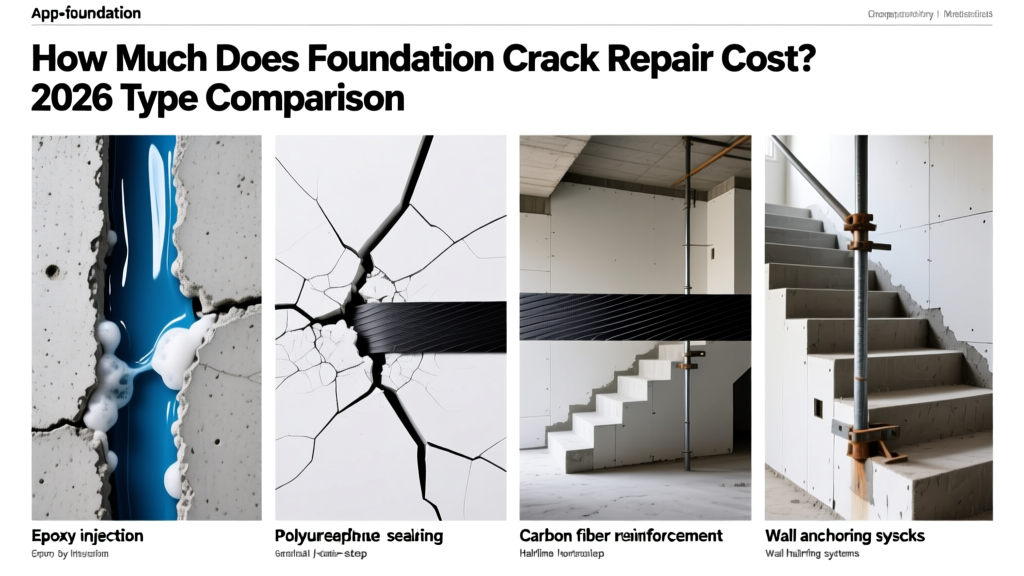
The True Cost of Foundation Crack Repair in 2026
When evaluating how much does foundation crack repair cost, homeowners must first identify the specific geometry and underlying cause of the fracture. A generic average is misleading; while minor shrinkage cracks may cost under $500 to seal, horizontal fractures indicating hydrostatic failure can push repair invoices past $10,000. According to current industry data from Angi's Foundation Repair Cost Guide, the national average for foundation repairs sits between $4,000 and $7,500, but this figure blends minor crack sealing with major structural underpinning.
To provide actionable clarity, this guide breaks down foundation crack repair costs by crack type, comparing the material science, structural implications, and exact 2026 pricing for each repair methodology.
| Crack Type | Primary Cause | Standard Repair Method | 2026 Cost Range |
|---|---|---|---|
| Hairline / Vertical | Concrete shrinkage, minor settlement | Epoxy or Polyurethane Injection | $300 – $800 per crack |
| Diagonal | Differential settlement | Routing/Sealing or Helical Piers | $500 – $2,500+ per pier |
| Horizontal | Hydrostatic pressure, soil expansion | Carbon Fiber, Wall Anchors, I-Beams | $400 – $1,500 per reinforcement |
| Stair-Step | Masonry shear, differential settlement | Tuckpointing or Helical Ties | $800 – $3,000 per wall section |
Vertical and Hairline Cracks: Epoxy vs. Polyurethane Injection
Vertical cracks are the most common in poured concrete foundations, typically resulting from the natural curing and shrinkage process or minor, uniform settlement. While they rarely threaten the structural integrity of the home, they are primary conduits for water intrusion and radon gas.
Structural Epoxy Injection
Epoxy is a rigid, high-tensile-strength resin used to structurally 'weld' the concrete back together. High-quality structural epoxies (such as Sikadur 52 LV) boast tensile strengths exceeding 7,000 PSI, making the repaired crack stronger than the surrounding concrete. Epoxy is strictly for dry, inactive cracks. If water is actively flowing through the fissure, the epoxy will not cure properly and will fail to bond.
- Cost: $10 to $15 per linear foot, or $300 to $600 per standard 8-foot basement crack.
- Best Application: Dry, static vertical cracks where structural monolithic restoration is required.
Hydrophobic Polyurethane Foam
Polyurethane is a flexible, expanding foam designed specifically for water-stopping. Upon contact with moisture, hydrophobic polyurethane expands up to 20 times its liquid volume, chasing water out of the crack and forming a watertight, flexible gasket. Because it remains flexible, it can accommodate minor seasonal expansion and contraction of the concrete without tearing.
- Cost: $12 to $18 per linear foot, or $400 to $800 per crack.
- Best Application: Actively leaking vertical cracks, cold joints, and pipe penetrations.
Horizontal Cracks: Managing Hydrostatic Pressure and Bowed Walls
Horizontal cracks in poured concrete or block foundations are critical structural failures. They are caused by lateral hydrostatic pressure from water-saturated soil outside the foundation. If left untreated, the wall will bow inward, eventually collapsing. Repair costs here scale with the severity of wall deflection (inward movement).
Carbon Fiber Straps and Grids
Carbon fiber reinforcement (e.g., Fortress Stabilization grids) involves bonding high-tensile carbon-kevlar straps to the interior wall using structural epoxy. This prevents further inward movement but cannot straighten an already bowed wall. Carbon fiber is only viable if the wall deflection is less than 2 inches.
- Cost: $400 to $700 per strap, with straps typically spaced every 4 feet.
- Total Wall Cost: $2,000 to $4,500 for a standard 20-foot wall.
Earth Anchors and Wall Plates
For walls bowed between 2 and 4 inches, earth anchors are required. This involves drilling a steel rod through the foundation wall into the exterior soil, attaching an exterior earth anchor, and securing an interior wall plate. By tightening the rod, contractors can slowly pull the wall back toward plumb over several months.
- Cost: $800 to $1,200 per anchor.
- Total Wall Cost: $4,000 to $7,000 depending on spacing and exterior excavation requirements.
Steel I-Beams (PowerBrace Systems)
When exterior excavation is impossible (due to property lines, porches, or landscaping), galvanized steel I-beams are bolted to the interior floor joists and the concrete slab. These beams act as interior retaining walls. Modern adjustable I-beam systems allow for gradual wall straightening.
- Cost: $1,000 to $1,500 per beam.
- Total Wall Cost: $5,000 to $9,000 for a standard wall.
Diagonal and Stair-Step Cracks: Settlement and Masonry Failures
Diagonal cracks in poured concrete, and stair-step cracks in concrete block (CMU) or brick foundations, almost always indicate differential settlement—one section of the foundation is sinking faster than the rest. Sealing these cracks is purely cosmetic; the underlying soil failure must be addressed to prevent recurring damage to drywall, doors, and windows.
Underpinning with Helical or Push Piers
To arrest differential settlement, structural engineers specify underpinning. Helical piers are screwed into the ground like giant lag bolts until they reach load-bearing strata, while push piers are hydraulically driven. The foundation is then bracketed to the piers and lifted.
- Helical Piers: $1,800 to $2,500 per pier.
- Push Piers: $1,500 to $2,200 per pier.
- Project Scope: Stabilizing a single settled corner typically requires 3 to 5 piers, bringing the localized cost to $5,400 to $12,500.
Stair-Step Masonry Repair
If the settlement is minimal and the stair-step cracks are narrow, structural tuckpointing (grinding out the mortar and injecting high-strength epoxy mortar) combined with helical wall ties can stabilize the block wall for $800 to $1,500. If the blocks are shattered or displaced by more than an inch, partial wall rebuilding is required, costing $150 to $250 per square foot.
Decision Matrix: Matching the Crack to the Correct Repair
Use this diagnostic framework to determine the necessary repair protocol before soliciting contractor bids. Data sourced from HomeGuide's Foundation Repair Database and structural engineering standards.
- IF the crack is vertical, less than 1/8-inch wide, and dry → Route and seal with structural epoxy. (Budget: $400)
- IF the crack is vertical, wider than 1/8-inch, and actively leaking → Inject with hydrophobic polyurethane foam. (Budget: $600)
- IF the crack is horizontal and the wall is bowing less than 2 inches → Install carbon fiber straps. (Budget: $3,500 per wall)
- IF the crack is horizontal and the wall is bowing more than 2 inches → Install steel I-beams or earth anchors. (Budget: $6,000+ per wall)
- IF the crack is diagonal/stair-step and doors above are sticking → Hire a structural engineer to design a helical pier underpinning system. (Budget: $8,000+)
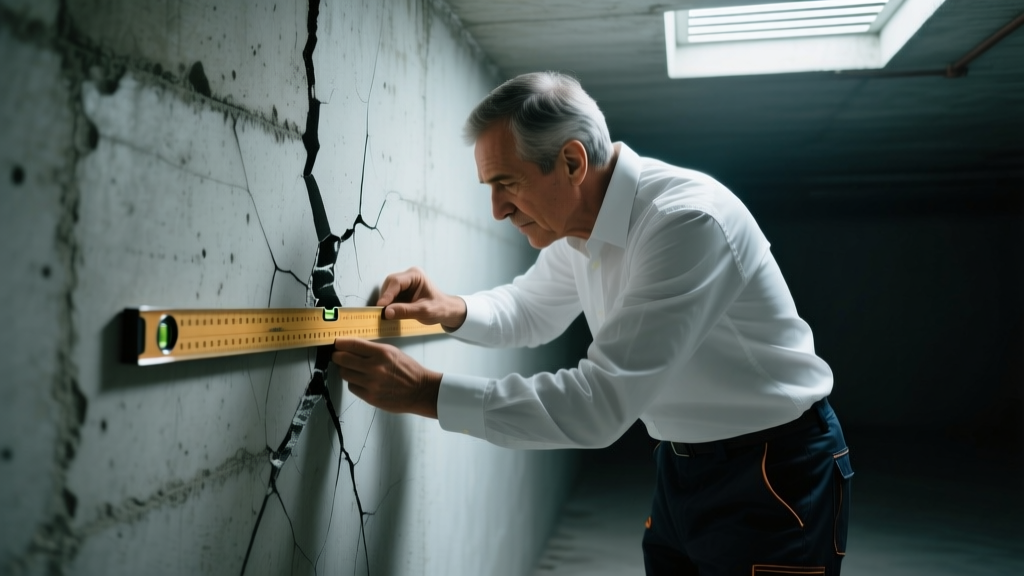
Hidden Variables That Inflate Your Final Invoice
When calculating how much foundation crack repair costs, contractors often omit secondary expenses from their initial quotes. Factor these into your 2026 project budget:
- Structural Engineering Report ($500 - $1,200): Never rely solely on a foundation repair contractor's assessment for horizontal or settlement cracks. An independent, licensed structural engineer (P.E.) must diagnose the failure and write the repair specifications to ensure you aren't oversold on unnecessary piers or beams.
- Interior Finishing Removal ($1,000 - $3,000): Installing I-beams, carbon fiber, or injecting large cracks requires bare concrete. If your basement is finished, drywall, insulation, and framing must be demolished and later replaced.
- Exterior Excavation and Grading ($2,000 - $5,000): Repairing horizontal cracks from the exterior requires digging down to the footing. Furthermore, if the crack was caused by poor surface drainage, regrading and extending downspouts is mandatory to prevent the repair from failing.
- Municipal Permits ($150 - $400): Structural alterations, underpinning, and major wall reinforcement require local building department permits and subsequent inspections.
Frequently Asked Questions
Does home insurance cover foundation crack repair?
Standard homeowners insurance policies explicitly exclude foundation cracking caused by soil settlement, shrinkage, or poor drainage. Coverage is typically only triggered if the crack is the direct result of a sudden, covered peril, such as a burst plumbing pipe washing away the supporting soil, or a vehicle striking the foundation.
How long does polyurethane crack injection last?
When applied correctly to a clean, properly prepped crack, hydrophobic polyurethane foam is considered a permanent repair. The material does not degrade in the presence of water or soil chemicals, and its flexibility allows it to survive minor thermal expansion and contraction cycles indefinitely.
Can I repair a horizontal foundation crack myself?
No. Horizontal cracks indicate that the foundation wall is actively failing under the weight of the surrounding soil. DIY surface patches will not stop the lateral movement. Attempting to brace a bowed wall without engineering calculations can lead to sudden wall collapse, severe property damage, and fatal injuries. Always consult the Bob Vila Foundation Crack Guidelines or a local P.E. for structural failures.
Written by
Elena RodriguezElena Rodriguez is a civil engineer and technical writer specializing in concrete technology, masonry systems, and ASTM/ACI compliance. She earned her B.S. in Civil Engineering from Texas A&M University and spent a decade at a materials testing laboratory, performing over 2,000 concrete compressive strength tests and masonry prism evaluations. Elena is an ACI-certified Field Testing Technician (Grade I) and a member of ASTM Committee C12 on Natural Building Stone. She currently consults on forensic engineering cases involving concrete failures and moisture intrusion. Based in San Antonio, TX, Elena is a proud member of the Society of Women Engineers (SWE) and coaches her daughter's FIRST Robotics team.
More from Elena Rodriguez
View all
Walls & Panels
Cost Analysis: Light Gauge Steel Framing Advantages and Disadvantages
Evaluate light gauge steel framing advantages and disadvantages through a strict cost analysis lens, comparing material, labor, and lifecycle expenses.
Aug 4, 2026

Walls & Panels
Gypsum Board Types: Exact Specifications, Thickness & Dimensions
Compare standard, Type X, and moisture-resistant gypsum board types. Get exact specifications, thicknesses, dimensions, and ASTM standards for your project.
Aug 4, 2026

Fire Resistance
Best Fire-Resistant Outdoor Decking Materials: 2026 Buyer Guide
Discover the best fire-resistant outdoor decking materials for 2026. Compare Class A PVC, aluminum, and hardwood options for WUI compliance and safety.
Aug 4, 2026